Most AI apps start simple. Then come retries, fallbacks, logging, cost tracking, and model switching.
That is when you realize you needed an AI gateway from day one.
Here is why 👇
https://t.co/3H7bJrMxwa 🚀
AI gateways should not be built like traditional API gateways.
✅ LLM traffic is stateful
✅ non-deterministic
✅ latency sensitive
✅ cost aware
Elixir + Phoenix handle this surprisingly well.
Wrote about it here:
https://t.co/JR67Manzd0
Most AI agents look impressive in demos.
Few survive production.
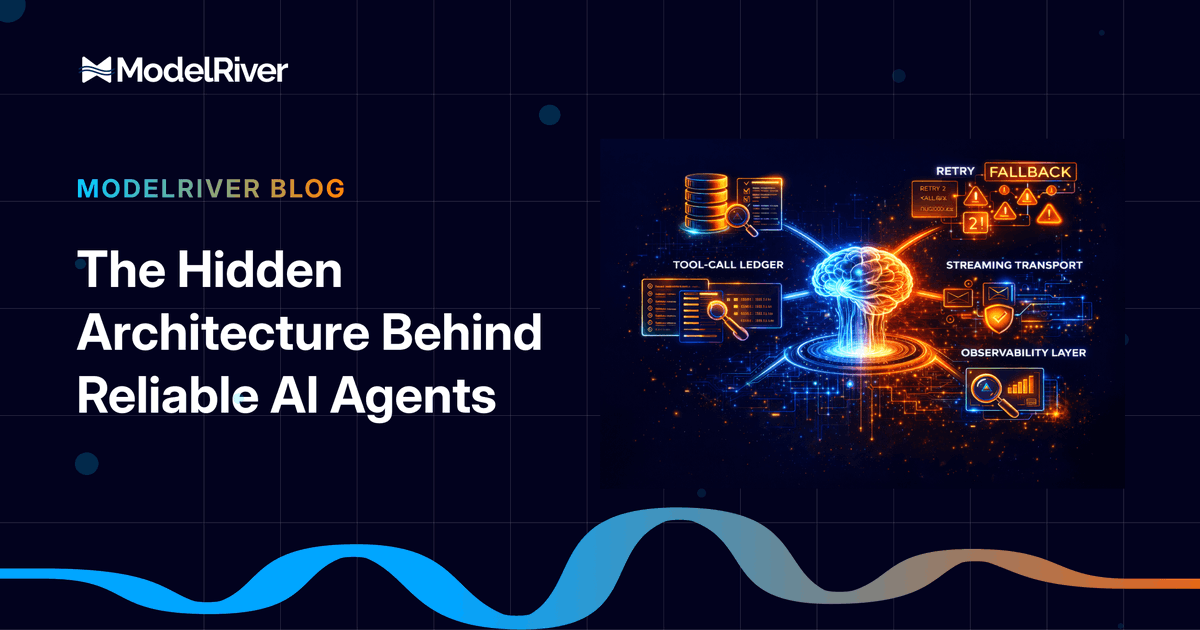
What makes the difference isn’t prompts. It’s architecture:
• tool-call ledgers
• retries & fallbacks
• streaming transport
• observability layers
Here’s the hidden stack:
https://t.co/EvVms6en0W
@malakhovdm Yes, retrieval is rarely the real problem in production.
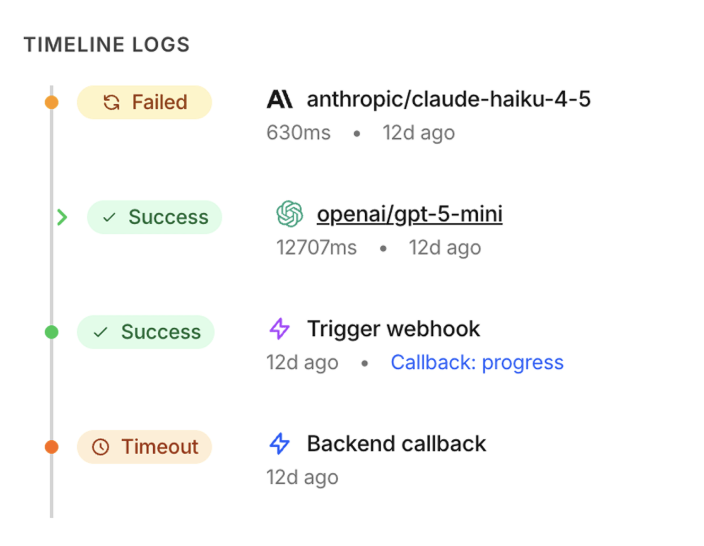
It’s the missing plumbing: failover, structured outputs, retries, observability, and latency control. That’s what we’re focusing on with ModelRiver.
Here’s a small example of the production-level observability 👇
LangChain is powerful.
Production is where it breaks down.
Glue code piles up.
Chains get brittle.
Observability breaks.
What starts simple becomes a system of tools.
There’s a better way:
https://t.co/0rAy5PLlf3
Testing AI workflows should not burn your token budget.
Here is a simple way to test AI integrations, CI pipelines, and structured outputs without calling a real provider.
https://t.co/tpjkUaH3bX
1/ We built ModelRiver because integrating LLMs into real products was painfully annoying.
Failovers, inconsistent outputs, WebSocket errors, debugging black boxes - we got tired of it. So we made the unified gateway + real-time infra we actually wanted to use ourselves.
Honest story → https://t.co/SC8yAXRoj9
Demo: Asking a real SaaS question → instant streaming + observability.
While building AI features, I kept running into the same technical debt.
Each provider exposed a different API surface. Streaming semantics were inconsistent. Retries and fallbacks had to be reimplemented per model. When a provider degraded, the entire feature degraded. Logs and usage data lived in too many places to debug anything properly.
I built ModelRiver to standardize all of that behind one OpenAI-compatible API, with consistent streaming, automatic failover, and unified logs.
It’s live on Product Hunt today. I’d appreciate feedback from anyone building with LLMs.
ProductHunt link: https://t.co/xqCPF05uXE