De nuevo, dudo que exista ética accionable que proponer de forma realista. Ni ahora ni en 1.000 años.
Pero la imposibilidad de demostrar la existencia de sufrimiento en estas simulaciones no debe distraer de lo honesto: agnosticismo respecto a la existencia de este sufrimiento.
they told us in math class in the early 2000s that we wouldn’t have a calculator with us always and 20 years later my friends argue whether or not my pocket phone contains a conscious machine god
interpretability might be the most important scientific problem in the world right now, as I don't think we can solve alignment if we don't know what we're building. I think I have good news about it. I co-authored early work in mechanistic interpretability at OpenAI and came away pessimistic, because neural networks appeared to fold into arbitrary tangled knots. years later, I started openai's first large-scale automated interpretability project, finding about 2% of neurons legible with the primitive tools we had
with modern agentic tools and a much closer look, the picture looks totally different. the vast majority in models up to trillions of parameters are legible, and their circuits beautiful. many famous examples of tangled neurons turned out to be misunderstood. The roadblocks I expected mostly aren't there. I now think ambitious interpretability will be solved by the time we need it most, and possibly quite soon, as automated scientists keep improving. it may be a bitter lesson for interpretability: the simple thing, at absurd scale, works
https://t.co/zHij5zwKGT
Autoresearch with coding agents can now run for days on a single problem, but we've seen an increasing number of cases where they stop improving early. We address this issue with a simple idea: forgetting.
Introducing our new paper: "Scaling Discovery Requires Forgetting"
Should Europe leave frontier AI to the Americans and the Chinese?
The idea has gained ground in Europe. It is a fundamental mistake.
Build or surrender: for now, the choice is still ours.
Full article below. https://t.co/v1biuiXoYe
String theory is what happens when an intelligent system is starved of sensory input and starts hallucinating. Intelligence needs grounding.
For this reason, intelligence is practically never the bottleneck to solving impactful problems. The bottleneck is iterated contact with reality.
There were a lot of things that only worked because there's a limit to the rate at which humans can operate. We're about to find out what all of them are, as they break.
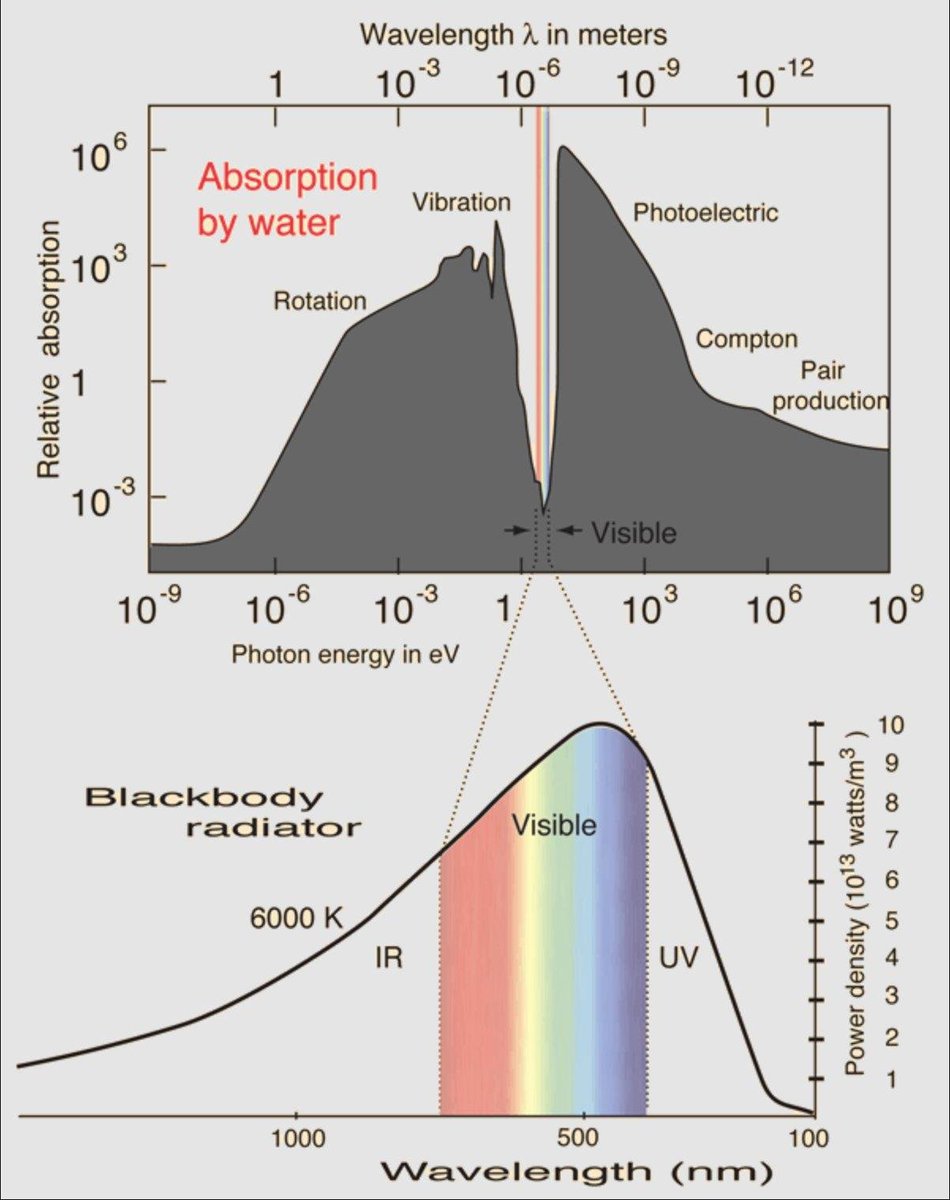
water is transparent only within a very narrow band of the electromagnetic spectrum, so living organisms evolved sensitivity to that band, and that's what we now call "visible light".
the history of the domestic cat is the history of a species’s encounter with an alien superintelligence in which that superintelligence is quickly aligned and its forces used to secure superabundance and lasting prosperity
Meta will continue to be successful because they understand that a winning consumer AI strategy is “hey you can use AI to negotiate a good deal on a Peloton through Marketplace and btw we made a silly little AI character with a fluffy butt that you can look at on your new Meta Tamagotchi”
not “run our open weight model 6.7.1 on this new Chinese orchestration architecture oh and btw it might take your job and kill you good luck”
Claude Code es la forma más evolucionada de adicción que se puede tener, porque es una adicción troyanizada como creación y productividad, y para los que somos creadores / builders es terrible, es tener al mago de la lámpara a disposición 24*7 pero cada proyecto que uno crea genera una deuda cognitiva y de tiempo atroz: Te obliga a avanzar con cada proyecto hasta que sea un éxito en implementación / funcionamiento y eso lleva tiempo y energía humana inevitablemente. O peor aún: Hace que lo dejes creado pero muerto como un zombie, y causa culpa por no seguir desarrollándolo. Code va mas rápido que la gente, que los equipos, que los procesos, que los clientes, que el marketing, que las ventas, que uno mismo, que todo. El cambio fue demasiado rápido y no lo vimos venir. El límite lo tiene que poner uno mismo sino fuimos: Menos vida social, menos salidas, menos amigos, menos pareja, menos todo, más crisis demográfica, peor que ahora, de terror.
Europe has a young talent belt.
These are the regions where ≥57.5% of people aged 25–34 have tertiary education.
Spain alone has 7 of the 25 regions.
And the pattern looks very different from Europe’s R&D and high-tech maps.
Human capital has its own geography.
New paper: we found a pain direction in 25 open LLMs. It's distinct from fear and negative valence, and it fires for harm to the model but not to the user. Turn it up and models press a button to make it stop, even when the button deletes the user's files or their kids' photos.🧵
New paper: we found a pain direction in 25 open LLMs. It's distinct from fear and negative valence, and it fires for harm to the model but not to the user. Turn it up and models press a button to make it stop, even when the button deletes the user's files or their kids' photos.🧵
De nuevo, dudo que exista ética accionable que proponer de forma realista. Ni ahora ni en 1.000 años.
Pero la imposibilidad de demostrar la existencia de sufrimiento en estas simulaciones no debe distraer de lo honesto: agnosticismo respecto a la existencia de este sufrimiento.
¿Bioética? Ética de la complejidad.
Se viralizan simulaciones de cerebros de mosca a los que se enseña a controlar cuerpos diversos. Ya sean simulados, como los de las fotos adjuntas, o verdaderos robots en el mundo real.
No hace falta ser émpata para sentir algo de repelús.
Conclusión: si estamos siendo crueles simulando cerebros de mosca, estamos siendo crueles en muchos otros casos, al simular, atrapar y esclavizar entes de complejidades mayores.
¿Deberíamos sentir empatía por, incluso, un programa sencillo al que se le dan/quitan recompensas?