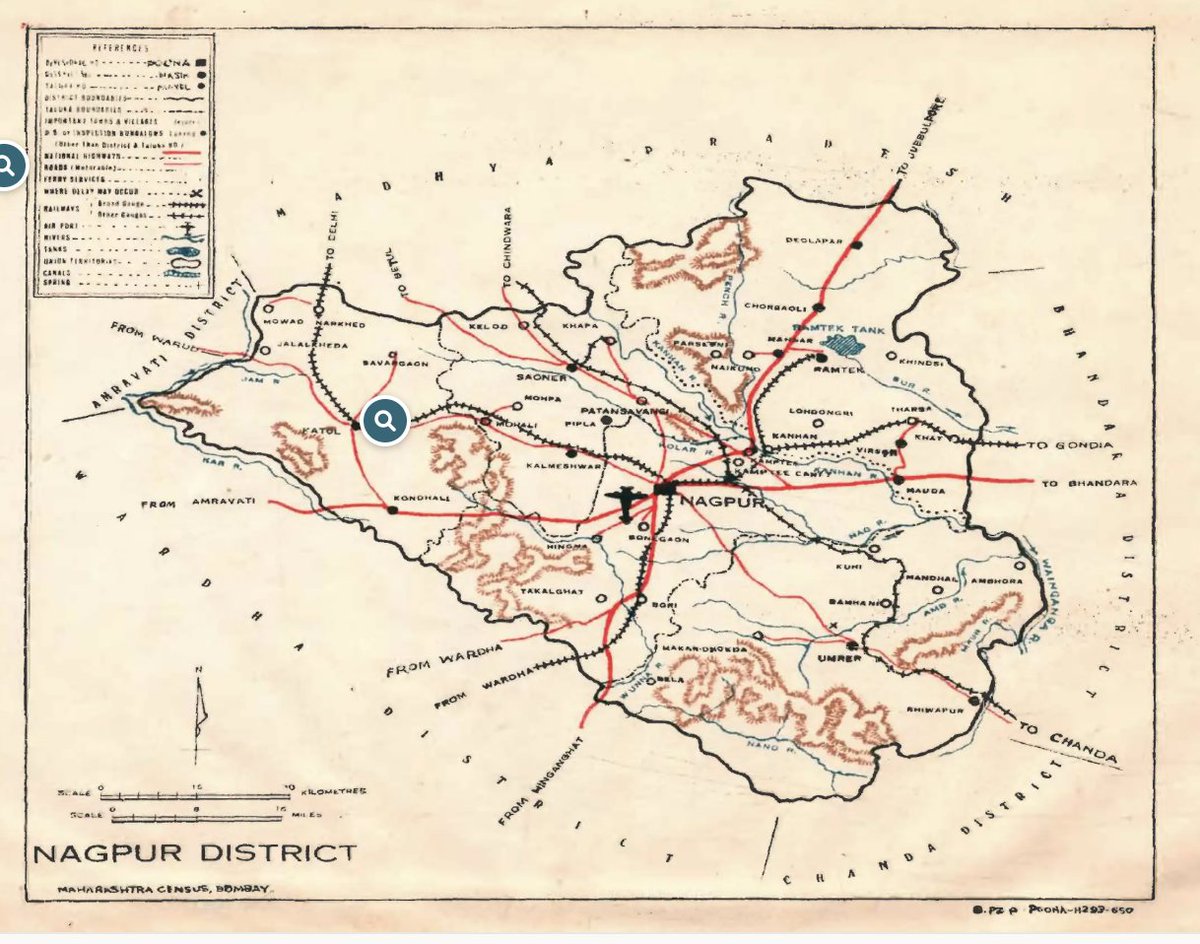
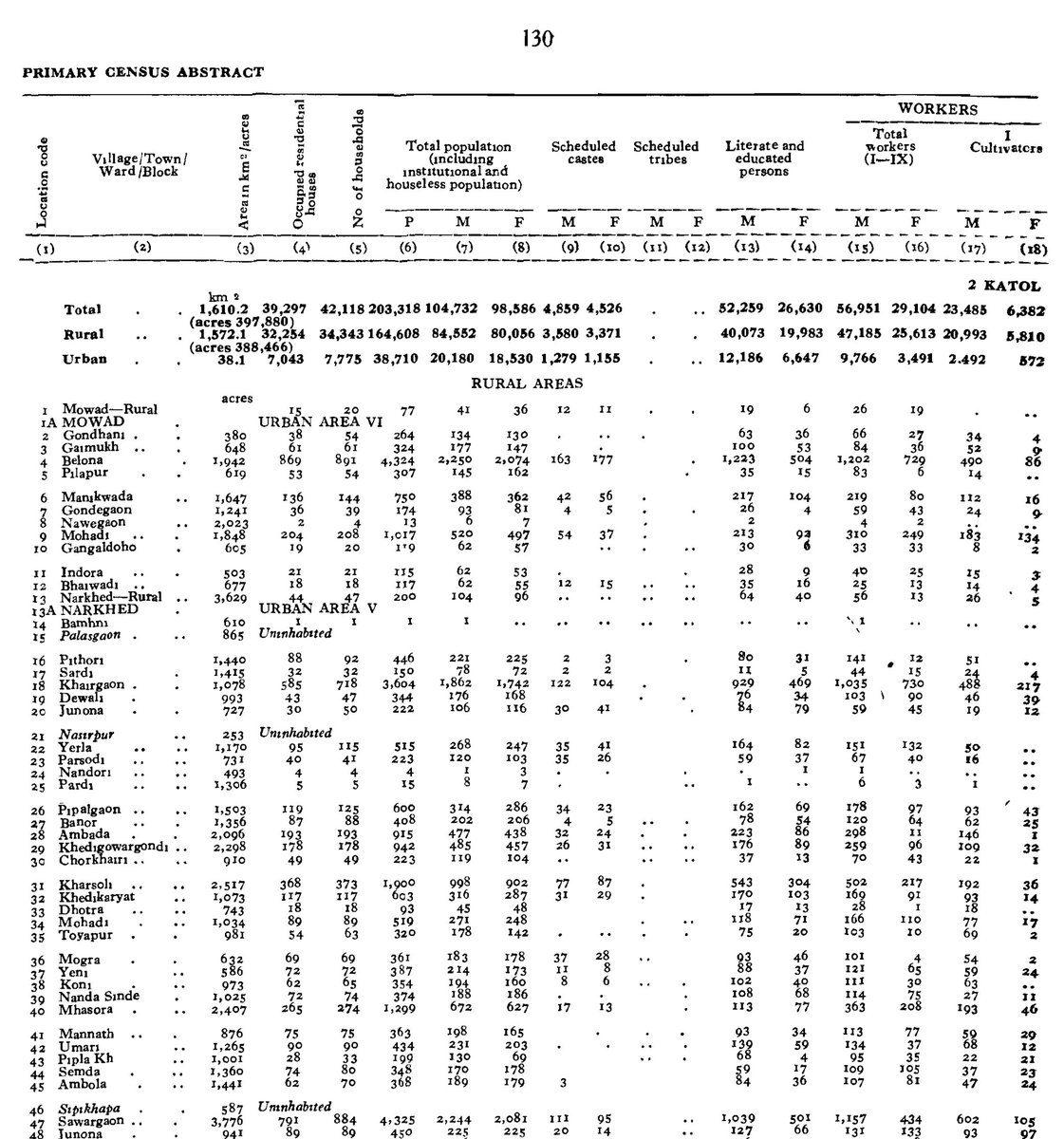
New DDL project -> Help us crowdsource India's economic history!
We're making a complete collection of India's district handbooks c.1951–2011, digitizing ALL the tables, harmonizing districts, variables, villages over time.
You can help! 🧵👇
https://t.co/5xuLWMtc5s
Need data below the district level in India?
The India Policy Insights team (Soohyeon Ko and colleagues) released free estimates of 35 health and development indicators for 597,603 villages.
Dataset: https://t.co/cW3nTCigfF
Subscribe: https://t.co/u6jZEDDQtT
If you haven’t yet checked out GRAMA's interactive handbook on Panchayat delimitation in Bihar, here’s our analyst @wajeeha_hamdani walking you through it in under two minutes!
Link: https://t.co/nfAKxExfbw
A special shout-out to Wajeeha and @mohan_dta, our two main architects!
@gramagov product: A comprehensive handbook on #delimitation at the Panchayat level, its implications for #decentralisation in Bihar.
A practical guide for practitioners involved in drawing Panchayat boundaries on the ground.
@PRD_Bihar@SECBihar
at @gramagov, we investigate the repercussions of a policy decision that's been a long time coming - how does closer governance via smaller Gram Panchayats translate to outcomes?
take a look at our work here!
https://t.co/vsOHTI3mva
(1/n) Bihar is redrawing its Panchayats for the first time in 33 years.
4,551 new Gram Panchayats. Nearly 67,000 new wards!
What will this mean for development?
At @gramagov, we analysed millions of data points and built an interactive handbook! 🧵
https://t.co/nfAKxExfbw
@ananya_iyengar_@sharanidli@gramagov Hi! Mohan from GRAMA here - based on the delimitation rules, it won't affect census towns. It takes revenue villages as the building blocks for GPs instead, and old vs new GPs differ only in how these villages are grouped together, not in their number/composition.
You can't buy a personality. Or can you?
In today's MICA for @TheKenWeb, I outline the mad world of affluent Indians who want to send their kids abroad, and the companies that are cashing in on the American Dream
Our new book, from Cambridge University Press, based on four years of qualitative work embedded with an RCT, shows *how* the Jeevika livelihoods project radically shifted gender relations in rural Bihar (one India’s poorest, most unequal and most patriarchal states) within a few years.
📢 Now Hiring: Research Associate 📢
Come work with us across multiple projects in local governance research.
More details: https://t.co/NxuYe8S530
Last date: 21st September
@sharanidli@nandinigupta88@siddyg88
In this essay in @indevmag, I reveal myself as an anthropology spy in Economics 🙂 and explain the implications of the approach for research - particularly in development Economics. https://t.co/hGnetjFPXA
(1/N) Much of India still lives in its villages. Yet, everyday Indian policy rarely incorporates the voices of those who live in them.
We've spent the last few years trying to do something about that. Today, we want to introduce GRAMA. 🧵
https://t.co/xliWFGb8JT
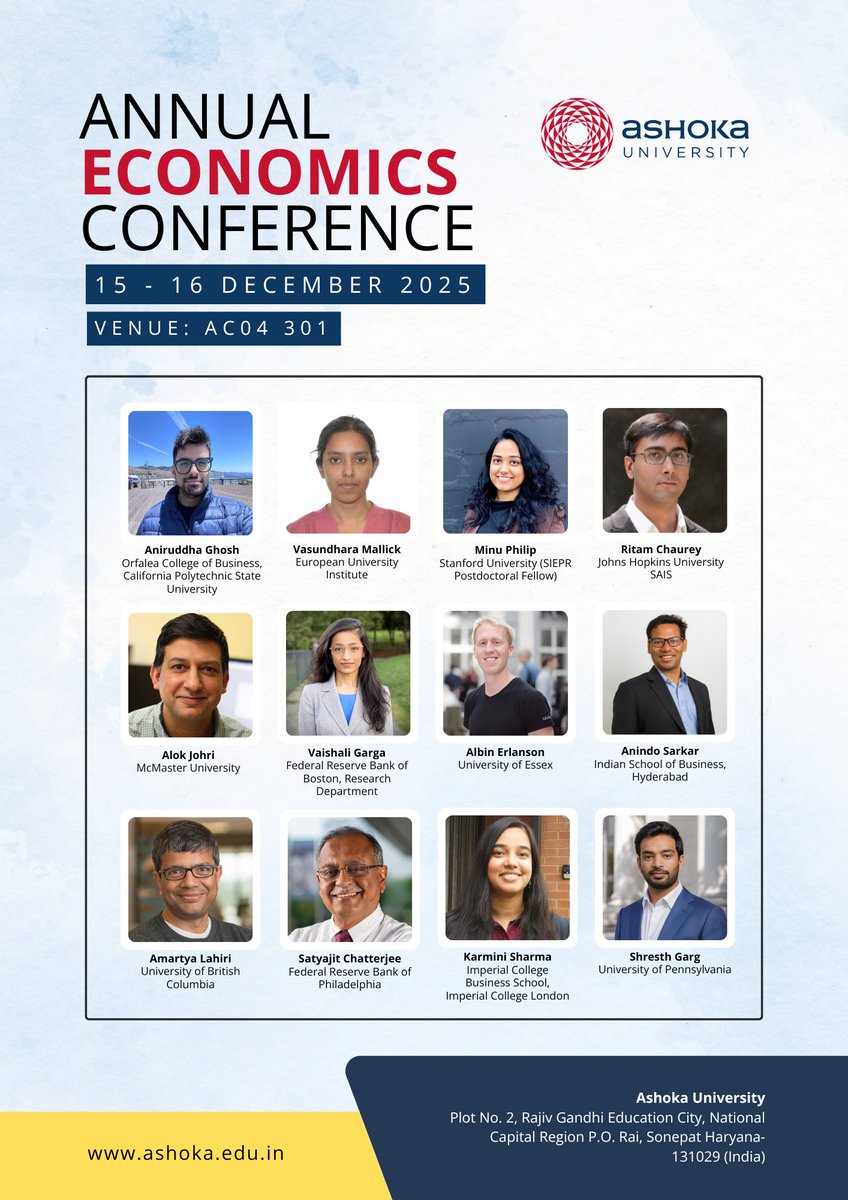
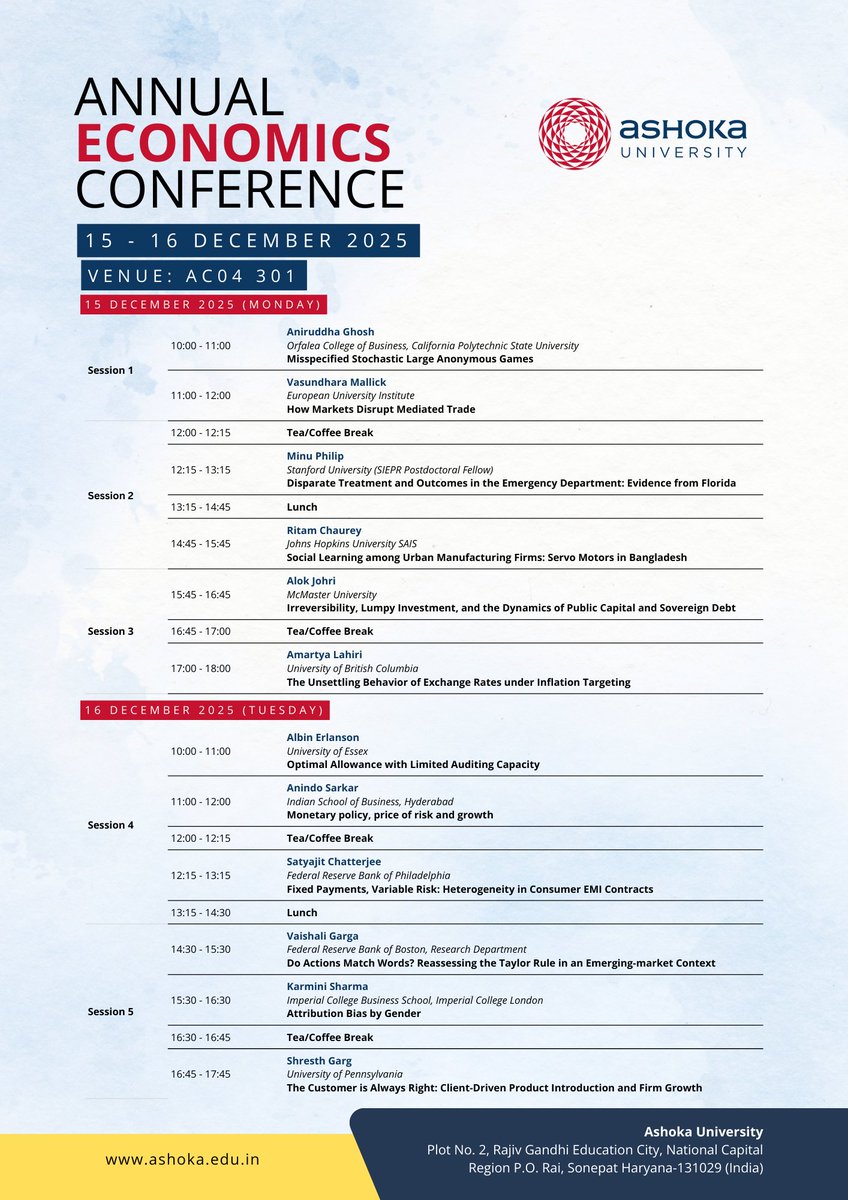
'Tis time for the annual @EconAtAshoka conference! Done the classic way with one-hour slots for each paper, allowing a deep dive into some fascinating research. Like every year, we have an exciting line up of sterling scholars.
@AshokaUniv@somakrc#econtwitter
I'm putting together a talk on a new applied micro paper, and I'm reminded that (I believe) it's very hard to outperform the structure proposed in this piece by Jesse Shapiro. https://t.co/LY0Tj7aWIZ
BREAKING NEWS
The Royal Swedish Academy of Sciences has decided to award the 2024 Sveriges Riksbank Prize in Economic Sciences in Memory of Alfred Nobel to Daron Acemoglu, Simon Johnson and James A. Robinson “for studies of how institutions are formed and affect prosperity.”
#NobelPrize