A student submitted an essay she wrote by hand. Her university ran it through an AI detector. The detector said she cheated. She is autistic.
Her name is Moira Olmsted. Adelphi University. February 2026. Turnitin flagged her essay as 100% AI-generated. She was disciplined.
Two other AI detectors classified the same essay as human-written.
She sued. She won. The court called the school's decision "arbitrary and capricious."
She is not the only one.
In May 2026, a high school student in Palo Alto was expelled after an AI detector flagged his work. He faced visa revocation. He filed a federal civil rights lawsuit.
A researcher at Griffith University just proved mathematically why this keeps happening. The paper is on arXiv. The finding is one sentence.
AI text detectors have a structural flaw that no amount of better engineering can fix.
Here is what the math says.
If a university wants its detector to catch 80% of cheaters, at least 750 out of every 10,000 innocent students will be wrongly accused. That is not a software problem. It is a theorem.
If the university tries to limit false accusations to 1%, detection power collapses to 6%. It catches 6 out of every 100 AI-written papers. The other 94 get through.
There is no setting where the detector is both fair and effective.
The reason is diversity. Every student writes differently. Non-native English speakers use simpler vocabulary. Shorter sentences. Clearer structures. So does AI. A Stanford study found that 61.3% of TOEFL essays written by non-native English speakers were misclassified as AI-generated. A separate analysis tested 14 commercial detection tools. Zero out of 14 reached 80% accuracy.
The students most likely to be wrongly accused are non-native English speakers, neurodivergent students, and anyone who writes with clarity and precision. The qualities that make their writing effective are the same qualities the detector mistakes for a machine.
Vanderbilt University understood this. They disabled Turnitin's AI detection in 2023 after calculating that even a 1% error rate across 75,000 submissions would produce 750 wrongful accusations per year.
750 students accused of cheating for writing like themselves.
The paper's conclusion is not that we need better detectors. It is that the diversity of human writing itself makes accurate detection mathematically impossible.
The same thing that makes your writing yours is the thing that gets you accused.
https://t.co/L91ldtXP05
⚽💔 “Le robaron al mundo un gusto popular”
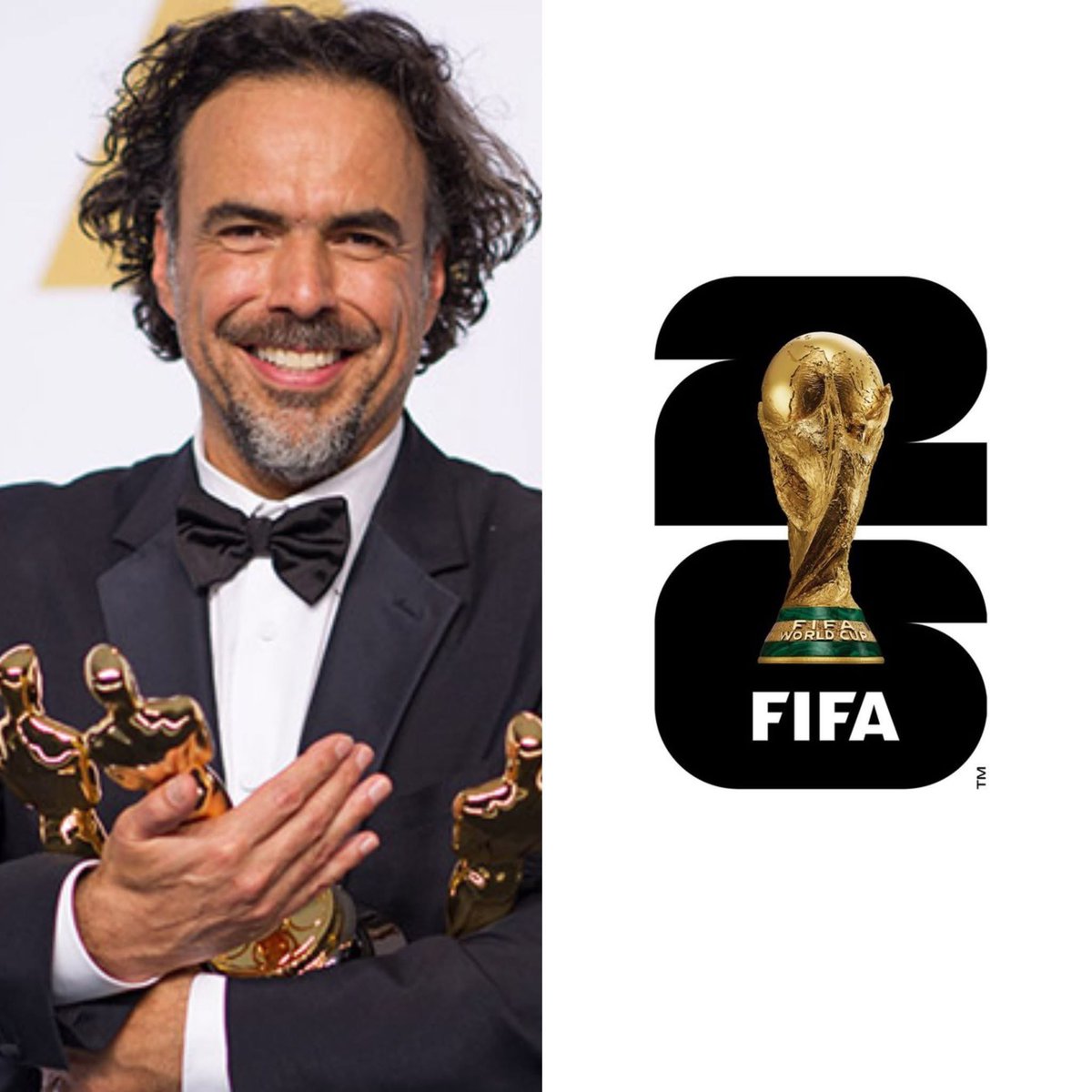
El director mexicano Alejandro González Iñárritu lanzó una fuerte crítica contra la organización del Mundial 2026:
«No siento ningún ambiente mundialero. Hay muy pocos partidos en el país, muy pocos partidos en México. Creo que el haber dispersado un Mundial en tres países me parece algo de avaricia de la mafia de la FIFA, cobró tres veces un Mundial.
El haber metido muchos más equipos ya hace una curaduría de calidad, el nivel va a bajar. El costo de los boletos me parece una grosería.
Mi padre, que no tenía dinero, recuerdo en el partido de Argentina famoso (2-1 en Cuartos de Final) contra Inglaterra en el gol de Maradona de "La Mano De Dios", yo fui a ese partido, y para que mi papá me haya invitado quiere decir que él podía pagar ese boleto.
O sea, antes había un acceso, pero ahorita el boleto más barato es de 10 mil pesos o 20 mil pesos, y si quieres llevar a tus hijos es una barbaridad. Le han quitado al mundo un gusto popular que se robaron, y ahora para verlo en la televisión tienes que pagar.
Antes era verdaderamente una celebración de un país orgulloso de ser el que invitaba al mundo, había alegría, un orgullo. Ahora, dividido en tres países, me parece una mala decisión de los que manejan el mundo de los corporativos».
https://t.co/Ak2NwCFsM0
La inteligencia artificial está reconfigurando cómo pensamos, aprendemos y producimos conocimiento.
Mis reflexiones sobre la invisibilidad de lo no digital, homogeneización del conocimiento, disrupción en la autonomía cognitiva y la IA como actor - red
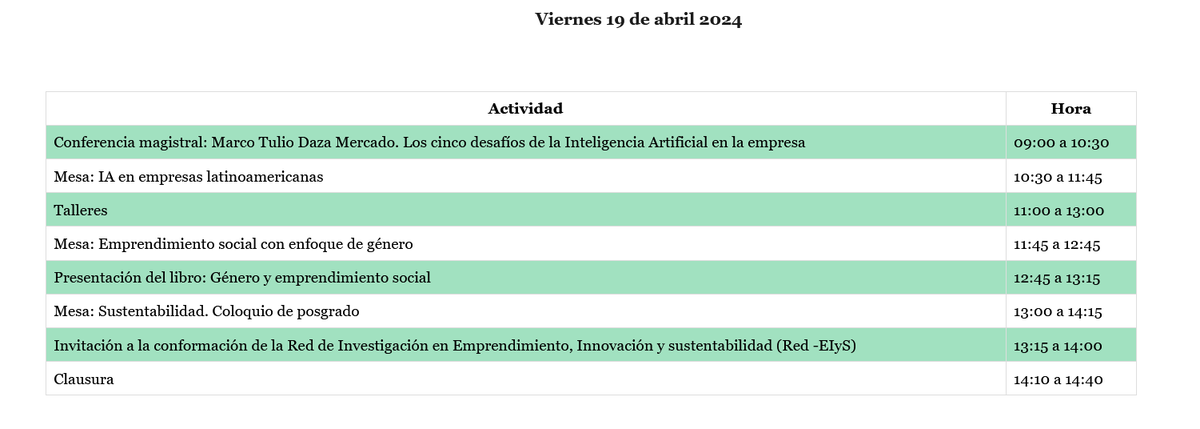
Les comparto la mesa de trabajo en la que participamos con el tema "Usos de la Inteligencia Artificial por estudiantes universitarios para su formación emprendedora, en representación del CA 1141 del CUCEA, UdeG https://t.co/JE37rE59W0
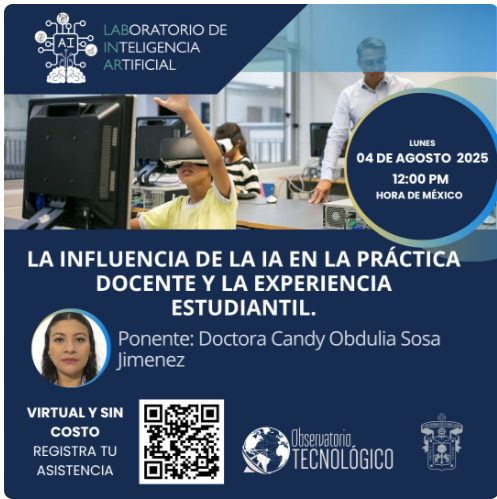
De la pizarra al pixel… ¡y seguimos innovando!
Hace un año formadora presencial, compartiendo ideas sobre IA generativa con colegas en CUCEA
Este año, conectando desde todos lados, ¡pero con la misma pasión!
Gracias a @CUCEA_OFICIAL y @udg_oficial por confiar nuevamente en mí
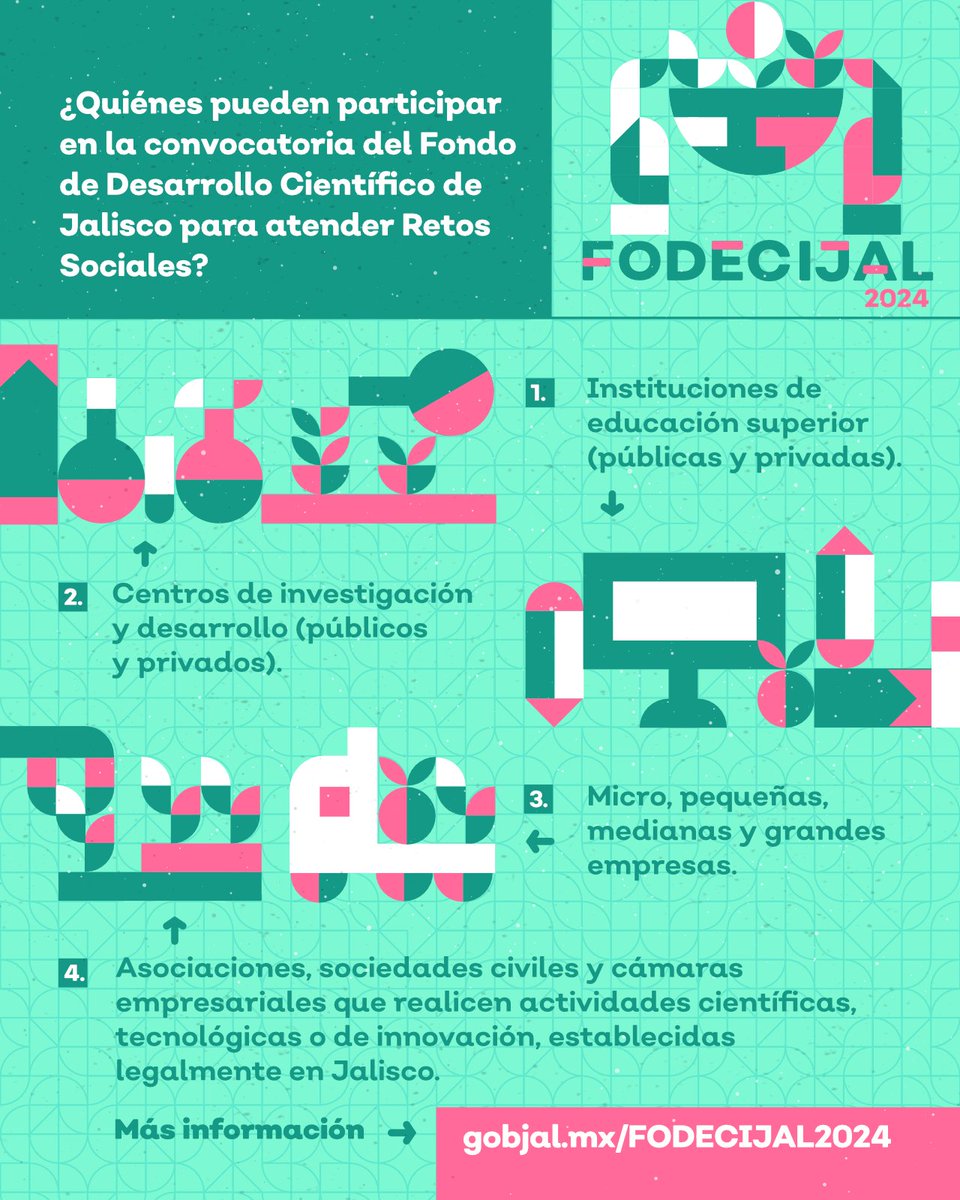
Ya está abierta la convocatoria del Fondo de Desarrollo Científico de Jalisco (FODECIJAL) 2024.
Si tienes un proyecto que mediante el uso de ciencia y tecnología atiende un reto social, conoce las bases y participa: https://t.co/OrZ10BEFYR