Modern life seems so dreary because we are ruled by people who are actively hostile to beauty, literature, poetry, who think you should exist solely to write emails. It wasn't enough to create AI; they want humanity itself to be soulless, mechanical, hollow.
AI bot scrapers are hammering the servers of libraries, archives, museums, and galleries to the point where they are knocking their collections offline.
🔗 https://t.co/6hGeQEpNre
Apple did more for AI than anyone else: they proved through peer-reviewed publications that LLMs are just neural networks and, as such, have all the limitations of other neural networks trained in a supervised way, which I and a few other voices tried to convey, but the noise from a bunch of AGI-feelers and their sycophants was too loud.
Now, I hope, the scientists will return to do real science by studying LLMs as mathematicians study functions and not by talking to them as psychiatrists talk to sick people.
AI is powerful but it cannot invent data. AI for science is falling into the simulation trap of rendering a dream within a dream. The truth is that the ground truth costs more but actually works. Don’t fall for fake data.
This is really problematic. Not because the president can’t fire the Register (It’s a quirk of history USCO is housed in Library of Congress). It’s problematic because this seems to be a first step in the administration’s attempt to partially nationalize copyrights and then give them to for profit AI companies. Copyrights aren’t in the way of good world changing medical research AI tools. They aren’t even in the way of shitty spammy Trump-As-Pope AI. Yes they require spammy AI to license but companies like Google, Microsoft, Grok and Open AI don’t want to license. This is the prelude to a corporate giveaway.
The Copyright Office's report on generative AI training is superb - thoughtful, thorough, and clear in rejecting the idea that all gen AI training is fair use.
A few things jumped out:
1. A use is less transformative if it ultimately serves the same purpose as the original. 'Transformative', in the context of fair use decisions, doesn't just mean 'something is transformed'. A use is less transformative if it serves essentially the same purpose as the original. They give the example of training audio models on sound recordings: if you do this to create new sound recordings that compete in the same market as the originals, this is clearly less transformative.
2. Being 'transformative' is not enough anyway. Even when AI training is transformative, the market effects on the original can outweigh this in the fair use evaluation.
3. Market dilution by gen AI weighs against fair use.
This is critical. They say: "The speed and scale at which AI systems generate content pose a serious risk of diluting markets for works of the same kind as in their training data. That means more competition for sales of an author’s works and more difficulty for audiences in finding them." They argue that this weighs against a fair use finding, and they remind us that this fourth factor of fair use - the effect on the potential market for or value of the work that's copied - is "undoubtedly the single most important element of fair use", according to the Supreme Court.
Many of us have been saying this for a long time, shouted down by a chorus of AI boosters. It's great to see the US Copyright Office - the government body responsible for providing guidance on copyright law - agreeing.
https://t.co/8S6Keg5j1s
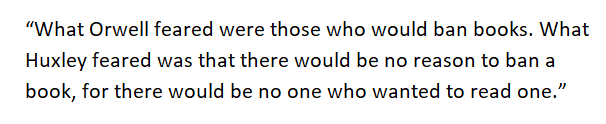
My unpopular opinion is that we should start denormalizing people not reading. We have reached a point where college educated adults will look at you with a straight face and tell you they haven’t read a book or article in years???
Modern AI methods will be seen as brute force methods to derive some correlations that cannot be rationalised because we were lazy & crushed out any principled analysis by expending vast quantities of energy.
if you want artists to be at the level of michelangelo then you have to have a society that allows people to spend all their time practicing and making art without worrying about making money.
The intellectual insularity of many in the machine learning field over the last five years has been a sight to behold.
Everyone should consider the below.
The entire AI safety debate is missing understanding what drives intelligence & decision making - autonomy. No AI is autonomous for good reasons: evolution; infrastructure; intentions; instinct; conscious awareness. The entire debate has been hijacked by ‘intelligence mystics’.
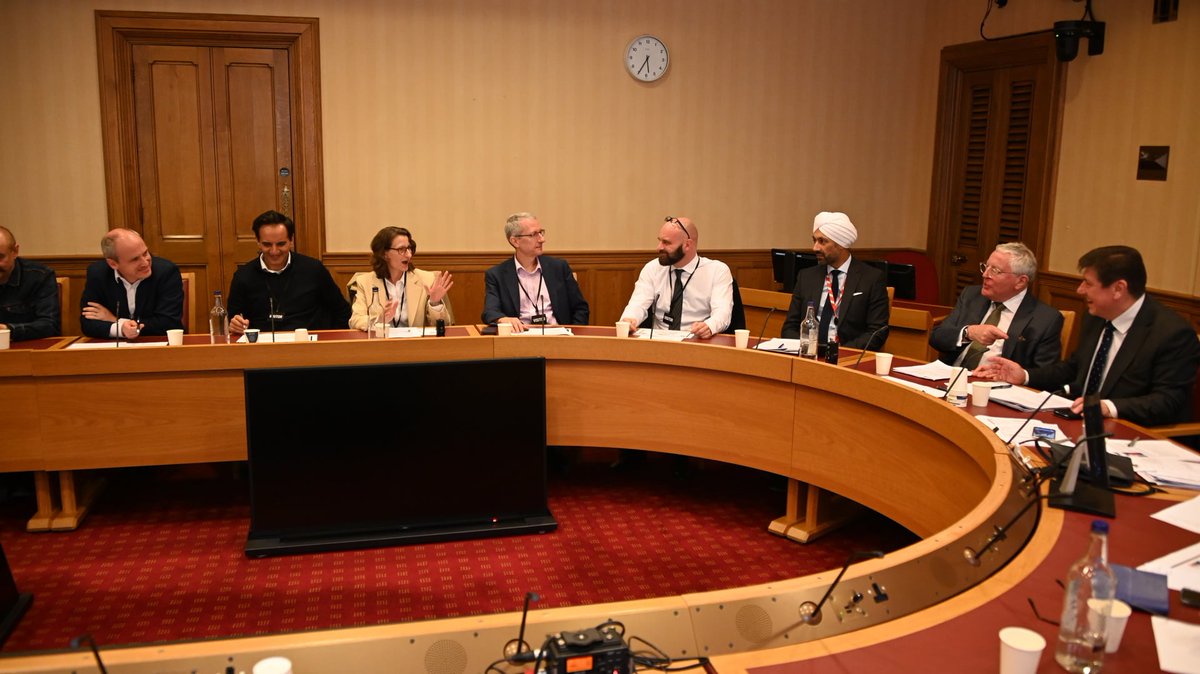
Earlier this month, I attended an evidence review on ‘Artificial Intelligence (AI) & City Sustainability,’ hosted by the AI All-Party Parliamentary Group (APPG) at the House of Lords, UK Parliament.
I wrote a LinkedIn post about key development points:
https://t.co/Xb305zHLv8
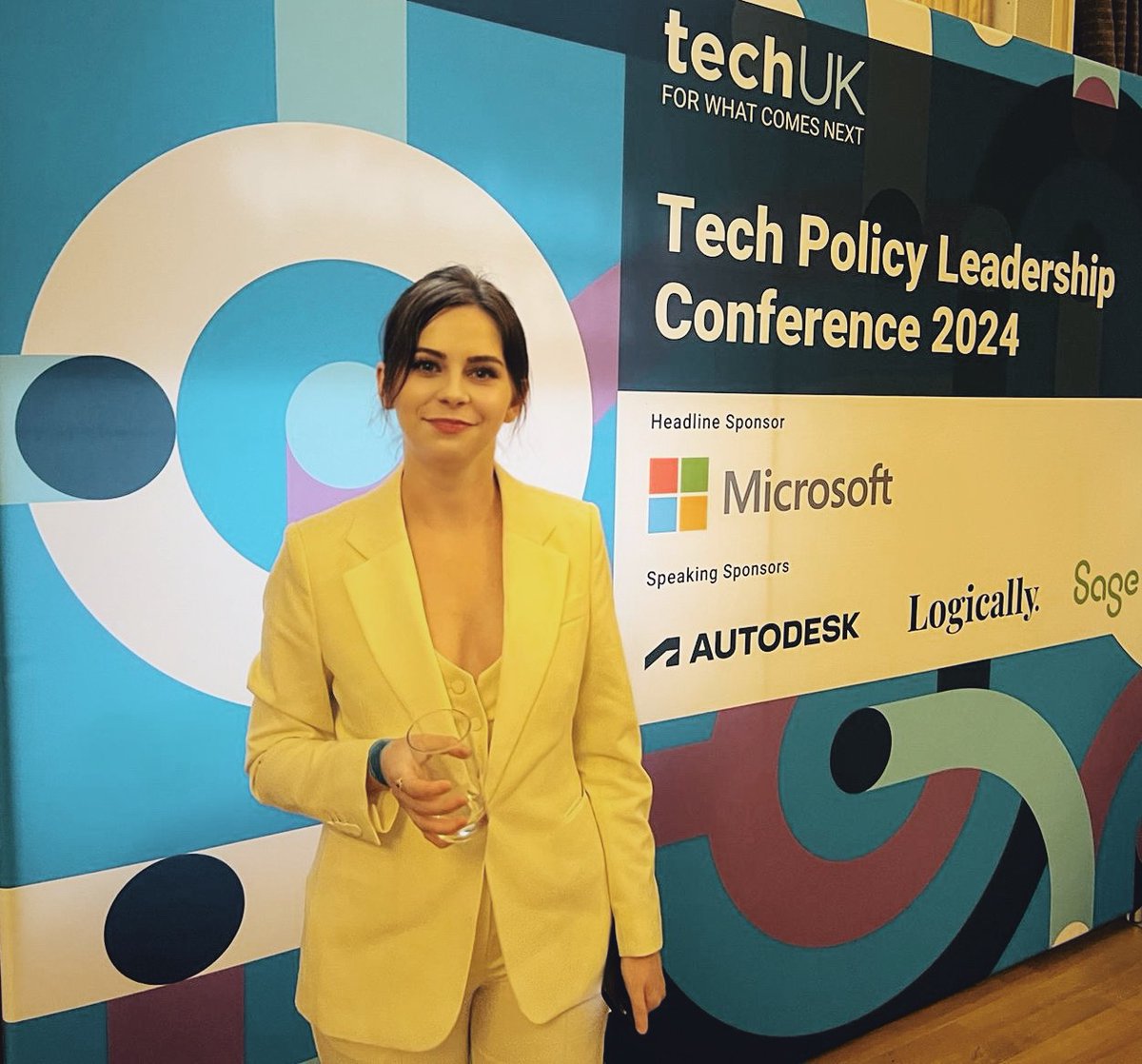
I had the exciting opportunity to take part in two events that explored how the UK is shaping policies and rules for emerging technologies.
I shared some insights in my blog post on LinkedIn: https://t.co/W2tO2HYqkU
#TechPolicy2024#TechUK#ArtificialIntelligence#EmergingTech
When you see those interlacing lines in sci-fi "Holograms", they are acually pretty accurate.
The Voxon VX1 renders 192 layers per volume, and after cropping due to volumetric keystone, you get about 120 Million voxels pre frame of resolution with X,Y and Z co-ordinates.