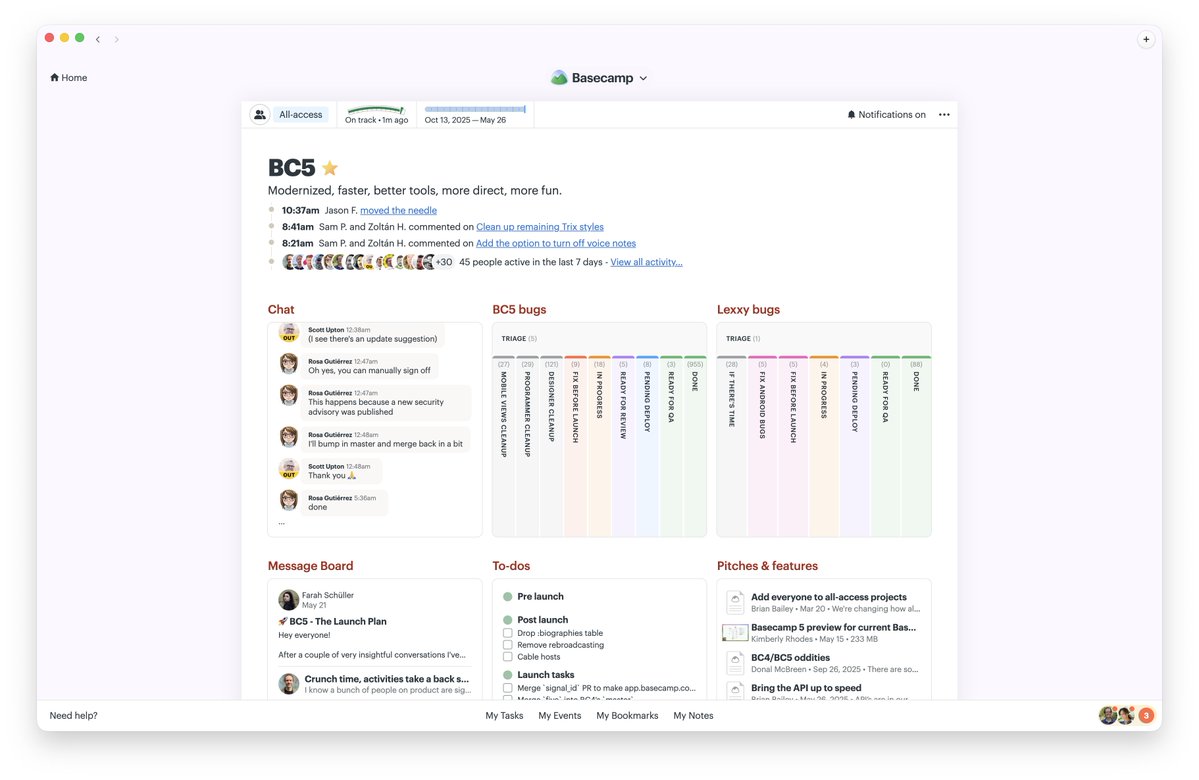
Here's a ~20-min one-take video walking through some of the major (and minor) improvements to the project page in Basecamp 5. The project page is the heart of Basecamp.
I actively flip back and forth between 4 and 5 so you can really see the contrast. Sorry 4, you lose, but you put up a good fight for years!
In the video I go through significant quality-of-life/work improvements in to-dos, documents, page structure, readability, card tables, inviting people, etc.
Check it out.
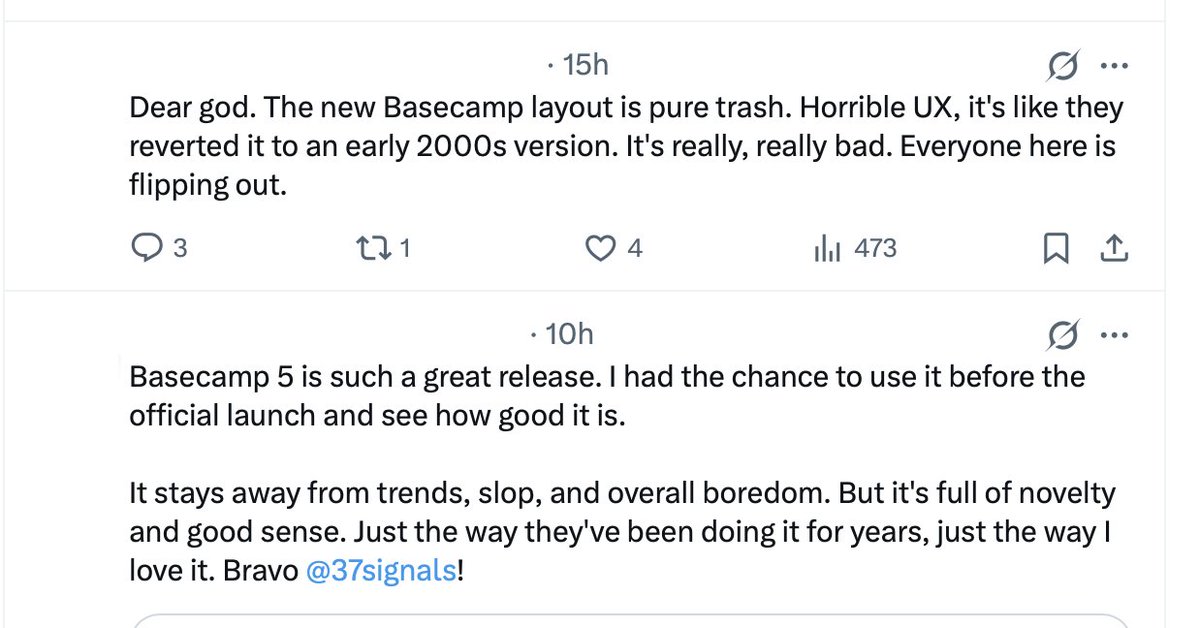
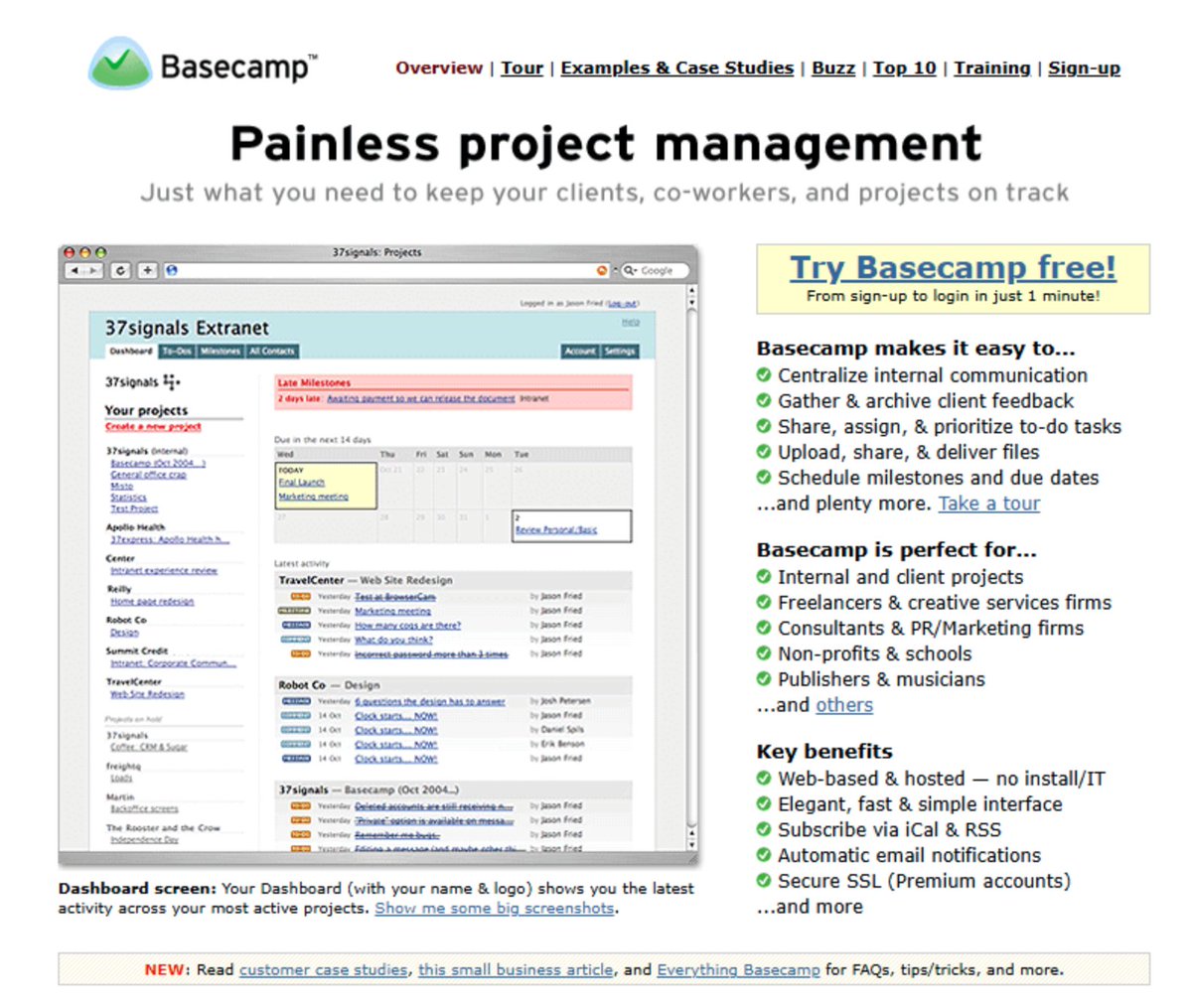
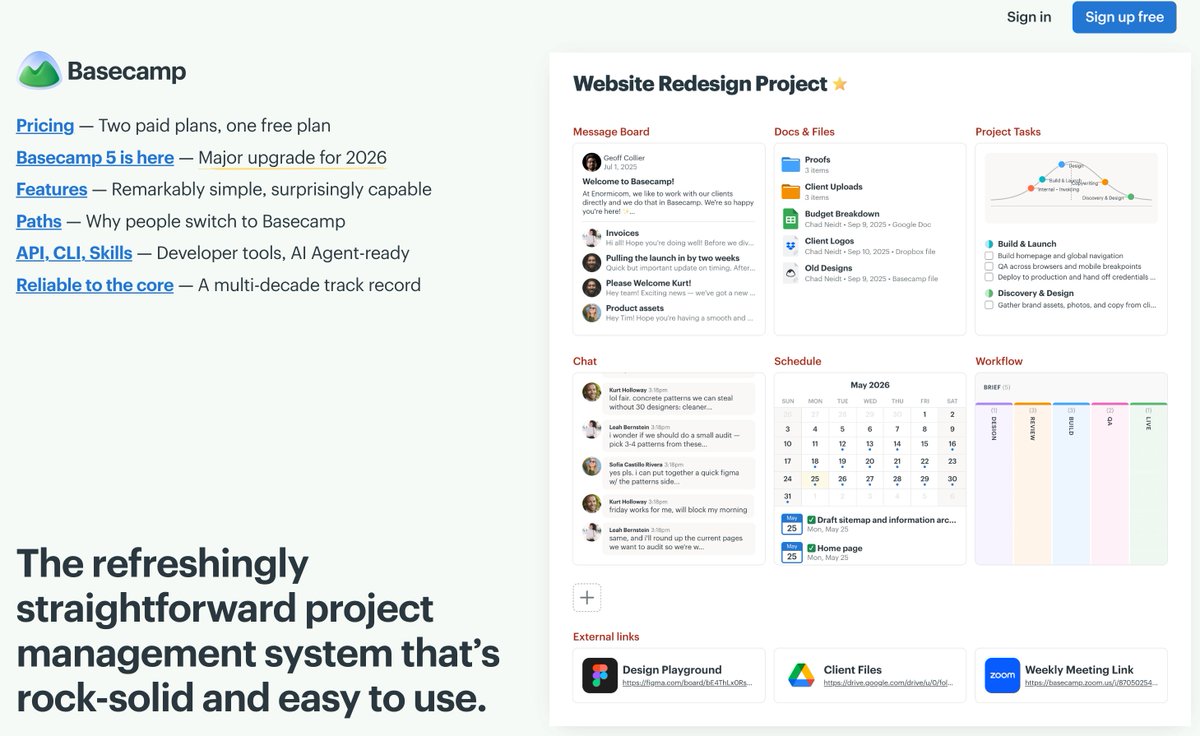
Basecamp 5 is live! And the new website is a throwback to a simpler time. Just show the damn product. Just list the features. Yes, it's agent accessible, but it's not agent hysteric. https://t.co/axaNKqnq9L
Five is so good. Can't wait for everyone else to be able to use it. Basecamp has been going for over 22(!!) years now, and we're still finding ways to make it better, faster, easier.
Faith in eventually.
Making something new takes patience. But it also takes faith. Faith that everything will work out in the end.
During the development of most any product, there are always times when things aren’t quite right. Times when you feel like you may be going backwards a bit. Times where it’s almost there, but you can’t yet figure out why it isn’t. Times when you hate the thing today that you loved yesterday. Times when what you had in your head isn’t quite what you’re seeing in front of you. Yet. That’s when you need to have faith.
There are designs that are close, but not there yet. There are obvious conflicts that will need to be resolved. There are lingering things that confound you, confuse you, or upset you, but you know that eventually they’ll work themselves out. Eventually you’ll find the right way to do something you’ve been struggling with.
It’s hard to live with something that isn’t quite right yet – especially when it’s your job to get it right. It’s important to know when to say “it’s fine for now, but it won’t be fine for later.” Because moving forward is critical to getting somewhere. And, eventually, you’ll figure it all out. It’ll all work out in the end.
This is what I’ve always believed, and have always tried to practice. A dedicated faith in the eventual resolution of a problem, the eventual execution of a concept, and the eventual realization of the right design. Even when something’s poking out you don’t like, or something isn’t aligning quite right, or the words aren’t as elegant as you’d hoped, or something just isn’t easy enough yet, you need to have confidence it’ll all come together eventually.
Remember that what you’re making is in a perpetual state of almost right up until the end. And it's never right even after.
In the meantime, you just press on and keep making things, trying things, and getting closer and closer to the time when you can tie the loose ends into a perfect bow and present it to the world. What fun it is!
We're please to announce that @flavorjones has joined the Rails Committers team. His work on framework security in particular has been greatly appreciated! https://t.co/TWBNXdg8QG
Working with @flavorjones at both @37signals and in @rails has been such a delight. Great to have him on the committers team alongside this fine gang of excellent programmers working to advance Rails.
New in the Rails docs: The Rails Accessibility Guide covers everything you need to build inclusive apps: semantic HTML, ARIA, screen reader behavior, keyboard navigation, and legal requirements like WCAG 2.2.
Written by @brunoprietog, commissioned by the Rails Foundation, and ready for your input. If you have experience in making Rails apps more accessible and want to help others do the same, please review the PR here: https://t.co/YkEBZYUcO3
It's interesting seeing the industry double down on proving just how badly end of life plans are needed for games. This is exactly the sort of thing #StopKillingGames wants regulators / MEPs to see. Customers increasingly have no protections when it comes to video games.