The family of multi-award-winning Filipino poet and screenwriter Jerry B. Gracio is appealing for financial assistance after he suffered a stroke and was hospitalized for urgent treatment.
Gracio’s family said they are facing mounting expenses for his hospitalization, medicines, laboratory tests, and continuing medical care as he begins his road to recovery.
“Kami po ay kumakatok sa inyong mabubuting puso upang humingi ng tulong para sa aming minamahal na si Kuya Jerry Gracio, na kasalukuyang na-stroke at nangangailangan ng agarang gamutan at patuloy na pangangalaga,” the appeal read.
The family stressed that any amount could help ease the financial burden of his treatment. Those unable to donate are also being asked to pray for Gracio and share the appeal so it can reach more people.
Gracio, 57, is one of the country’s acclaimed contemporary writers, with a body of work spanning poetry, books, film, and television. He has received multiple Carlos Palanca Memorial Awards and was named Makata ng Taon by the Komisyon sa Wikang Filipino in 2017.
As a screenwriter, Gracio has worked on films including “Ligo Na Ü, Lapit Na Me,” “Isda,” “Emir,” and “Balangiga: Howling Wilderness,” as well as television projects such as “The Greatest Love” and “A Soldier’s Heart.”
He also served as a commissioner of the Komisyon sa Wikang Filipino representing the Samar-Leyte languages and has been a prominent voice for Filipino writers, workers, and the LGBTQIA+ community.
For those who wish to extend financial assistance, the family provided the following channels:
GCash
Grace Sapulmo
0916 693 2690
Bank of Commerce
Julius Karlo Macli-ing Gracio
Account No. 096200048188
“Maraming-maraming salamat po sa inyong kabutihan, suporta, at panalangin para kay Kuya Jerry Gracio,” the family said.
They are also asking the public to share the appeal as Gracio continues to receive treatment and care following the stroke.
SOARING TO ANOTHER GOLD 🥇
Olympic pole vaulter EJ Obiena leaps to another gold, after clearing 5.83m at the Stabhochsprung Meeting in Jockgrim, Germany.
This marks the seventh gold medal for Obiena in the 2026 season. (📷: Instagram/ernestobienapv) | via @PaigeJavier
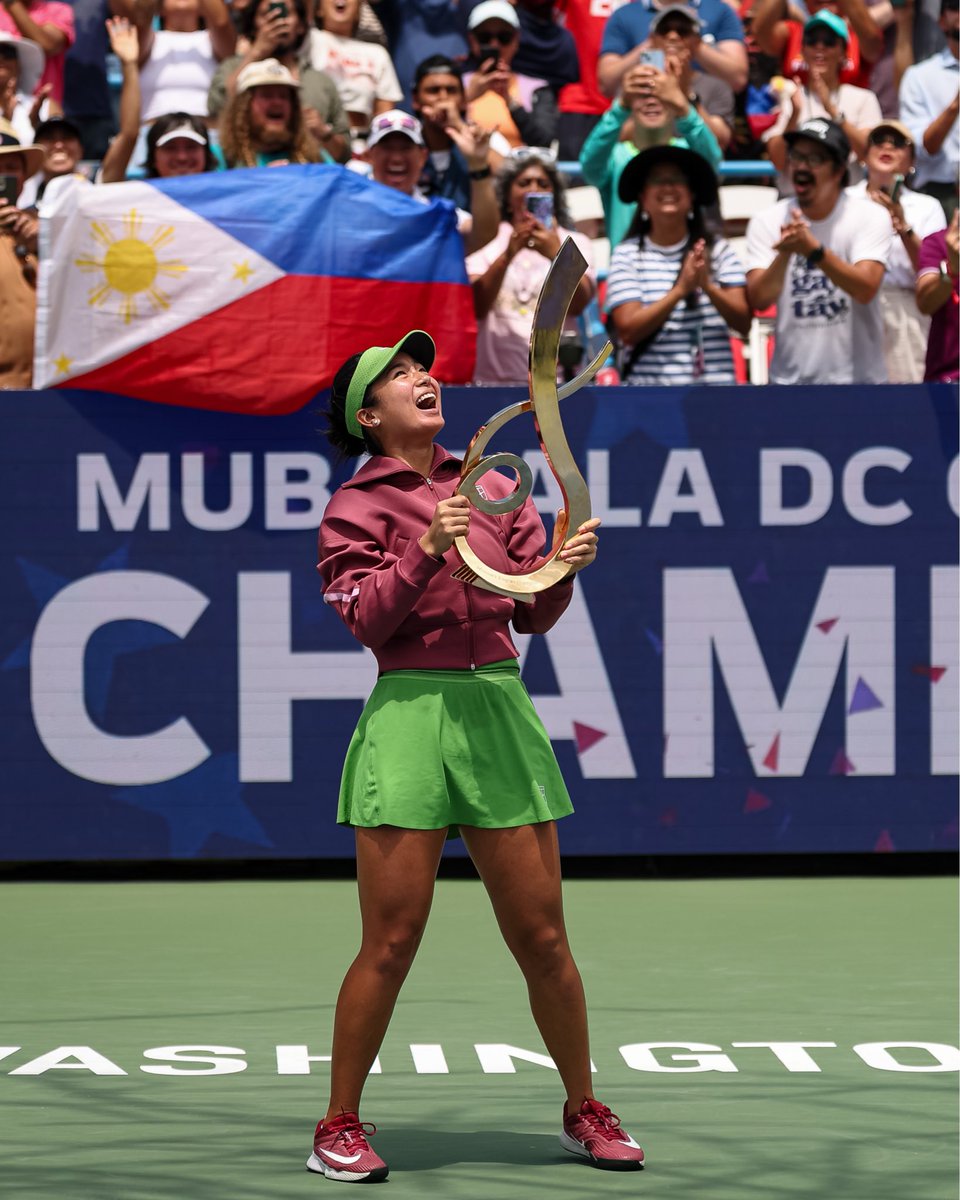
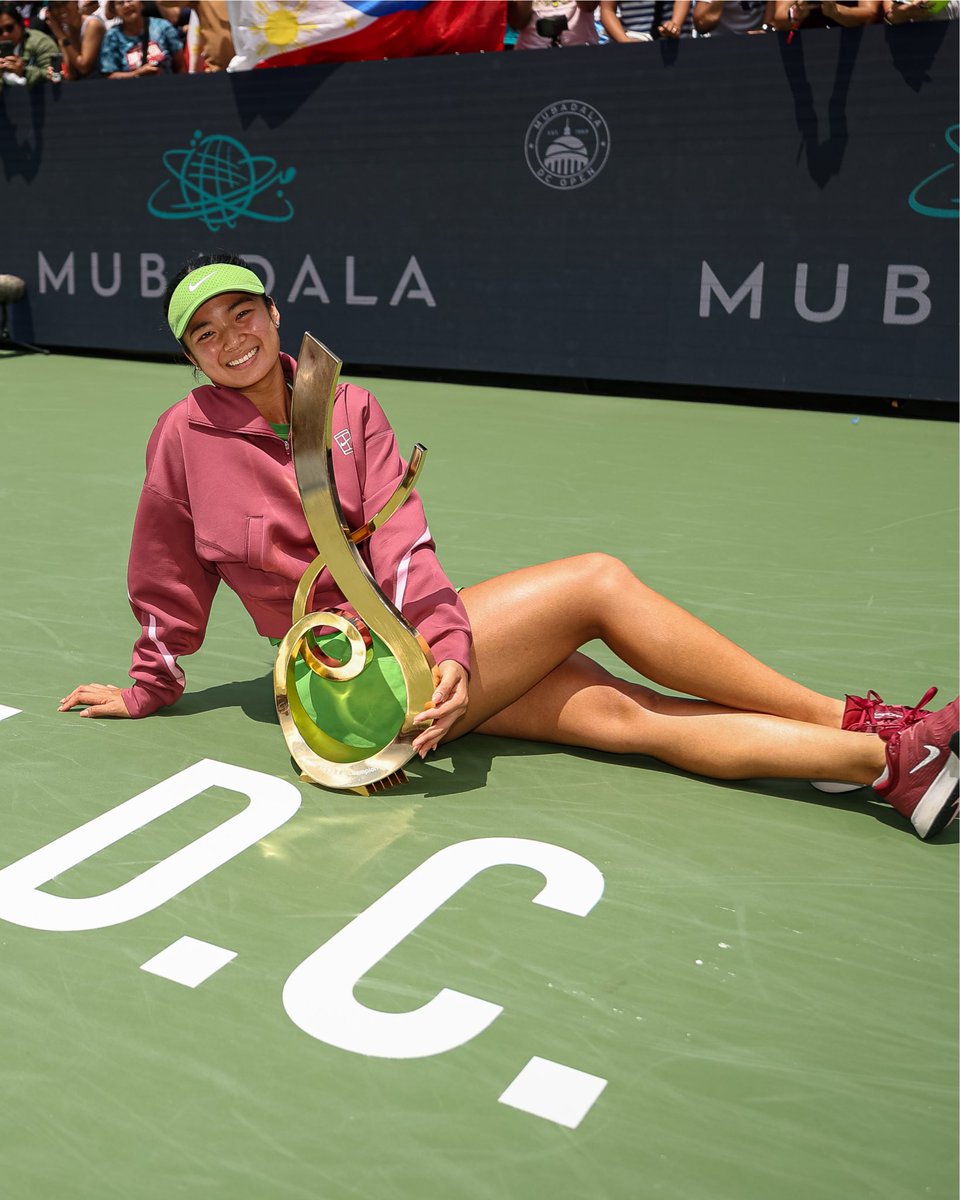
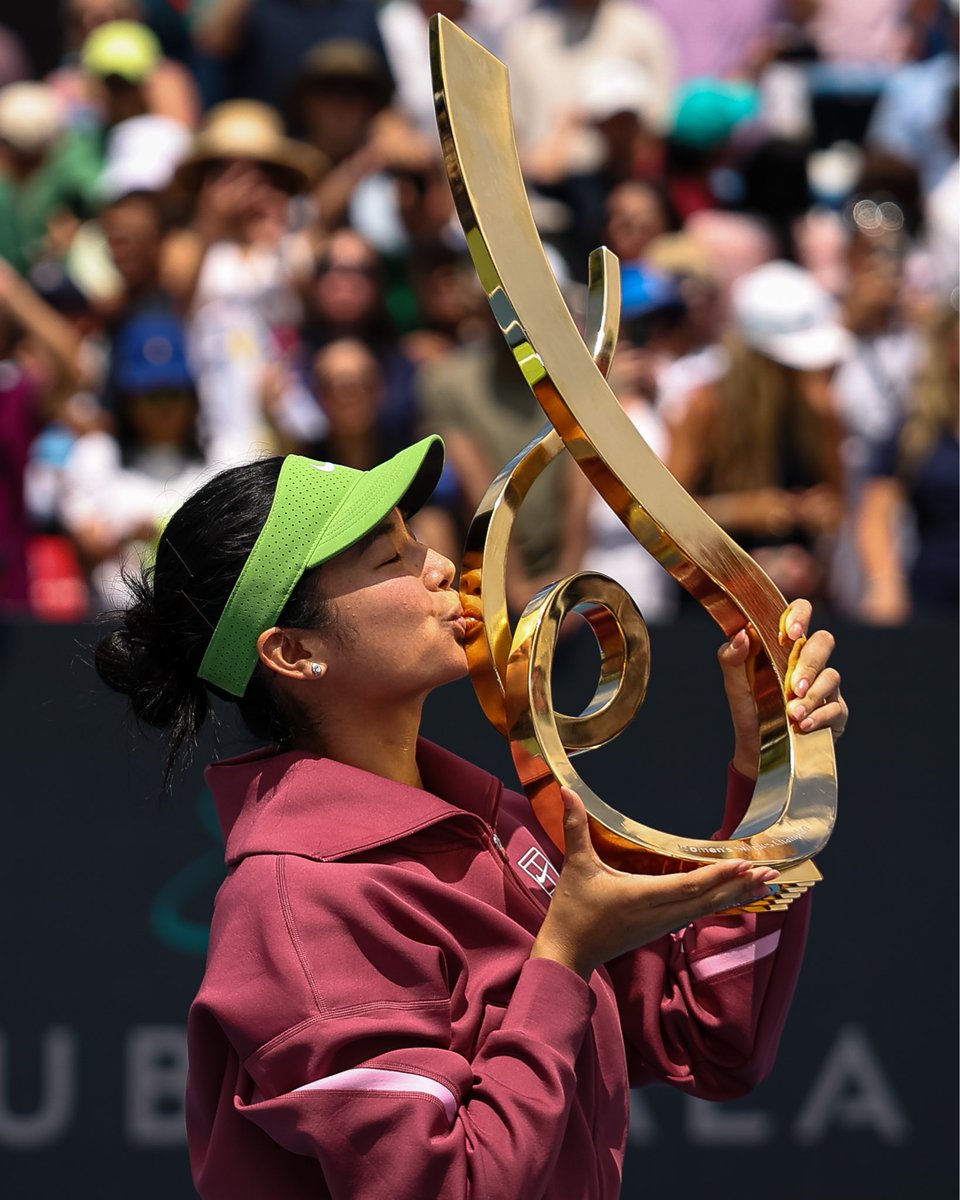
Eala d. Naomi Osaka 6-4 6-2
ALEX KNOCKS OUT THE 4-TIME GRAND SLAM CHAMPION.
The first Filipino player to reach a WTA 500 singles final.
This week, she’s also beaten two Olympic medalists, world #10 Elina Svitolina & former top 10 player Qinwen Zheng.
She will reach a new career high ranking of #24, and could be the new world #20 if she wins the title.
✅2nd WTA final
Playing absolutely fearless tennis since the start of the grass season.
🇵🇭❤️
With all due respect to the Senator-Judge at para hindi maligaw ang publiko, ito po ang konteksto at kumpleto na sinabi ko:
“(Ang fishing expedition) ay maaaring sabihin nating nangyari kung only if the party requesting the evidence or documents ay nagbabakasakali lang, baka may makuha tayo dito.”
Linawin ko po: Hindi tayo nagbabakasakali lang. May probable cause o sapat na dahilan na nakita sa mga record ng Anti-Money Laundering Council (AMLC) tungkol sa bilyun-bilyong dumaan sa accounts ng VP at kanyang asawa.
Hiningi natin ang bank records para makita kung tugma ito sa sinasabi ng AMLC reports. Tandaan: Ang bank records ay maaari lang mailabas kapag may utos o subpoena mula sa korte. Ibig sabihin, kung nabuksan ng Kamara ang mismong bank records bago ang trial, paglabag yan sa karapatan at due process ni VP Sara Duterte.
Ngayong may subpoena na para sa bank records ng Bise Presidente, magagamit ito ng magkabilang panig para patunayan ang kanilang kaso.
Sa ganitong paraan, makakapagpasya ang mga Senator-Judges batay sa kabuuan ng ebidensya.
CHINA CLAIM OVER BATANES?
Binasa ni SeaLight Director Ray Powell ang ilang bahagi ng ulat mula sa Chinese state media tungkol sa isang symposium sa China, kung saan sinabi umano ng ilang Chinese scholars na ang Batanes ay “natural extension” ng Taiwan at dapat umanong mapasailalim sa China.
Ayon kay Powell, wala pang opisyal ng People’s Republic of China ang direktang nagsasabi nito, pero nagsisimula na raw ang ganitong naratibo sa provincial-level media sa China.
Hindi naman inaasahan ni Powell ang “invasion” o agarang pagtatangka ng China na kunin ang Batanes. Pero aniya, posibleng ginagamit ito bilang pretext para “palabuin ang usapin” at bigyang-katuwiran ang tuloy-tuloy na presensya at patrol ng China sa silangan ng Batanes.
Wala pang tugon ang Chinese Embassy sa Manila kaugnay ng ulat. | via @jpsoriano
Bisitahin ang https://t.co/KqDTBMbTQD para sa iba pang balita.
🚨BREAKING -- 🇨🇳Chinese scholars have "concluded" that the 🇵🇭#Philippines' northernmost Batanes Islands legally belong to #China, by way of 🇹🇼#Taiwan.
At a June 30th symposium in Guangzhou hosted by Jinan University, roughly a dozen researchers from prominent Chinese universities and institutes declared that Manila's control over Batanes lacks historical and legal basis, and in fact the islands belong to China.
"Participants unanimously concluded that the Batan Islands constitute a natural geographical extension of Taiwan, with sovereignty belonging to China, and that so-called Japan-Philippines maritime delimitation negotiations in the area hold no legal validity. The symposium was convened in direct response to the joint statement issued at the recent Japan-Philippines summit." [Link in the comments below]
In other words, Beijing -- via its academics and aided by state media -- clearly orchestrated this symposium to propose a new territorial baseline, a "lawfare" tactic to back up the patrols it launched far to the east of Taiwan last month.
So far PRC government officials have not endorsed the symposium's conclusions, but that's not unusual in PRC gray-zone narrative warfare. For now, muddying the waters over Batanes' legal ownership is sufficient to help justify its "sovereignty" patrols.
Full SeaLight analysis coming soon.
Most Filipinos know Alex Eala as the face of Philippine tennis.
But here’s a piece of sports trivia many have forgotten: decades before Eala was born, the Philippines already had two tennis stars who regularly battled the world’s best on the biggest courts.
Their names were Felicisimo Ampon and Raymundo Deyro—a golden tandem that helped make the Philippines one of Asia’s tennis powers during the 1940s and 1950s.
At a time when international travel was far more difficult than today, the two Filipinos journeyed across Europe and North America to compete in Grand Slam tournaments against some of the sport’s greatest legends.
Ampon, nicknamed the “Mighty Mite,” became an international sensation because of his remarkable size. Standing just around five feet tall and weighing barely 115 pounds, he routinely defeated much larger opponents using speed, precision, and relentless court coverage.
His résumé remains one of the finest ever assembled by a Filipino tennis player. He reached the quarterfinals of the French Open in both 1952 and 1953, advanced to the fourth round of the US Championships four times, won the prestigious Wimbledon Plate in 1948, and captured the 1950 Pan American Tennis Championship after defeating American star Bill Talbert.
Over nearly three decades, Ampon also became the Philippines’ greatest Davis Cup player, finishing with a national record 40 overall victories.
Deyro, meanwhile, was every bit as accomplished. The steady baseliner reached the fourth round of the French Open in 1953 and the third rounds of both Wimbledon and the US Championships. He represented the Philippines in a record 37 Davis Cup ties and remained a mainstay of the national team until he was 43 years old.
The pair produced one of Philippine sports’ greatest moments at the 1958 Asian Games in Tokyo.
Deyro defeated Ampon in an all-Filipino men’s singles final to win the gold medal, guaranteeing the Philippines both gold and silver. They then reunited in doubles to capture another gold, completing one of the country’s most dominant performances in Asian tennis history.
Together, they even defeated Japanese stars Kosei Kamo and Atsushi Miyagi in Davis Cup competition—the same duo that would later become US National Championships doubles champions.
Despite these remarkable achievements, both men gradually faded from public memory as Philippine tennis declined during the professional Open Era. As tennis became increasingly expensive and globalized after 1968, the country struggled to produce players capable of consistently competing at the highest level.
Today, Alex Eala is deservedly inspiring a new generation of Filipino tennis fans.
But perhaps her greatest contribution is reminding the nation that she isn’t writing the first chapter of Philippine tennis history.
She’s writing its long-awaited sequel—a story first begun by two forgotten Filipino heroes who proved, decades ago, that the Philippines belonged on the world’s biggest tennis stage.
(✍️: Top Dagohoy)
#radarPHLifestyle #radarPHMost Filipinos know Alex Eala as the face of Philippine tennis.
But here’s a piece of sports trivia many have forgotten: decades before Eala was born, the Philippines already had two tennis stars who regularly battled the world’s best on the biggest courts.
Their names were Felicisimo Ampon and Raymundo Deyro—a golden tandem that helped make the Philippines one of Asia’s tennis powers during the 1940s and 1950s.
At a time when international travel was far more difficult than today, the two Filipinos journeyed across Europe and North America to compete in Grand Slam tournaments against some of the sport’s greatest legends.
Ampon, nicknamed the “Mighty Mite,” became an international sensation because of his remarkable size. Standing just around five feet tall and weighing barely 115 pounds, he routinely defeated much larger opponents using speed, precision, and relentless court coverage.
His résumé remains one of the finest ever assembled by a Filipino tennis player. He reached the quarterfinals of the French Open in both 1952 and 1953, advanced to the fourth round of the US Championships four times, won the prestigious Wimbledon Plate in 1948, and captured the 1950 Pan American Tennis Championship after defeating American star Bill Talbert.
Over nearly three decades, Ampon also became the Philippines’ greatest Davis Cup player, finishing with a national record 40 overall victories.
Deyro, meanwhile, was every bit as accomplished. The steady baseliner reached the fourth round of the French Open in 1953 and the third rounds of both Wimbledon and the US Championships. He represented the Philippines in a record 37 Davis Cup ties and remained a mainstay of the national team until he was 43 years old.
Ampon and Deyro shared the greatest rivalry in Philippine tennis history. Their frequent career battles included Ampon winning the 1951 Swedish Hard Court Championship and Deyro taking the 1953 Oslo International title.
But the pair produced one of Philippine sports’ greatest moments at the 1958 Asian Games in Tokyo.
Deyro defeated Ampon in an all-Filipino men’s singles final to win the gold medal, guaranteeing the Philippines both gold and silver. They then reunited in doubles to capture another gold, completing one of the country’s most dominant performances in Asian tennis history.
Together, they even defeated Japanese stars Kosei Kamo and Atsushi Miyagi in Davis Cup competition—the same duo that would later become US National Championships doubles champions.
Despite these remarkable achievements, both men gradually faded from public memory as Philippine tennis declined during the professional Open Era. As tennis became increasingly expensive and globalized after 1968, the country struggled to produce players capable of consistently competing at the highest level.
Today, Alex Eala is deservedly inspiring a new generation of Filipino tennis fans.
But perhaps her greatest contribution is reminding the nation that she isn’t writing the first chapter of Philippine tennis history.
She’s writing its long-awaited sequel—a story first begun by two forgotten Filipino heroes who proved, decades ago, that the Philippines belonged on the world’s biggest tennis stage.
(✍️: Top Dagohoy)
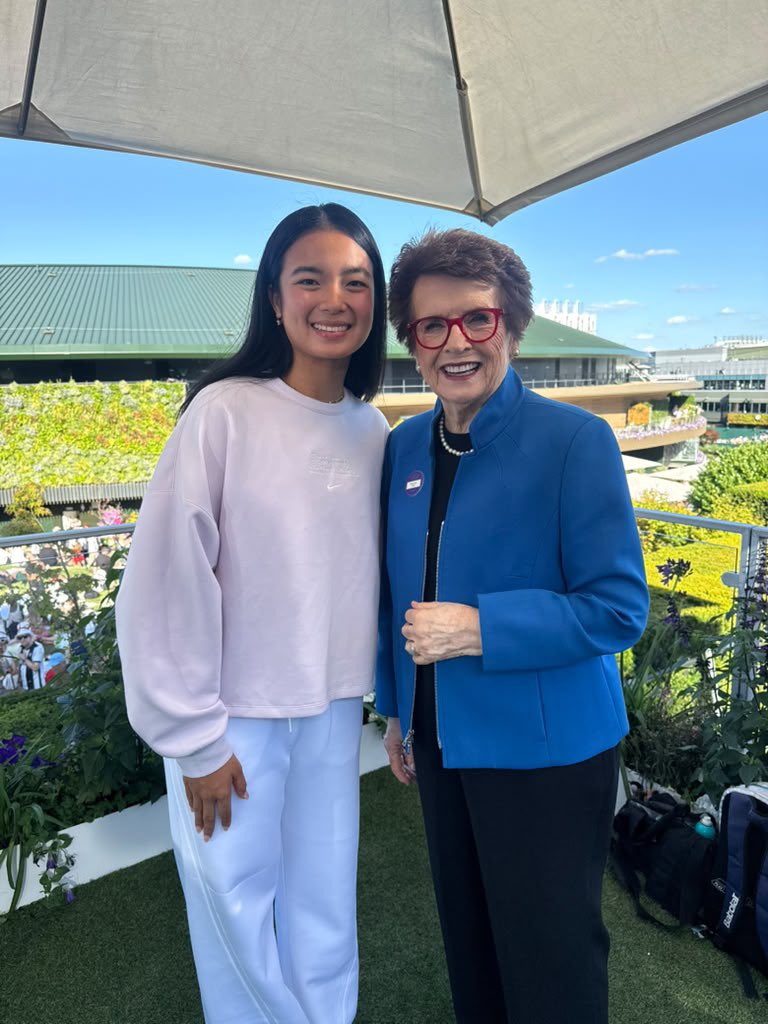
What a treat to spend some time with Alex Eala, fresh off her historic win at Wimbledon today.
She is the first Filipino to reach the Round of 16. Such an inspiration for kids in the Philippines and all over the world.
Keep going for it, Alex!
#Wimbledon
Sometimes you just instantly know that something's the photo of the day...maybe the tournament even.
I can't recall ever shooting anything similar to this.
@aguycalledA@MeesEinne@Wimbledon She’s being given wildcards not because of her mom,but bcs aside from being a good athlete she can draw crowds! Even the most prominent players are happy about it saying its good for the sports. Ur just a hater who cant be happy with the success of others and the sports itself
Eala d. Maya Joint 3-6 6-2 6-0 at Wimbledon
Alex becomes the first Filipino player in the Open Era to reach the 3rd round of a Grand Slam.
Enormous moment for Filipino tennis.
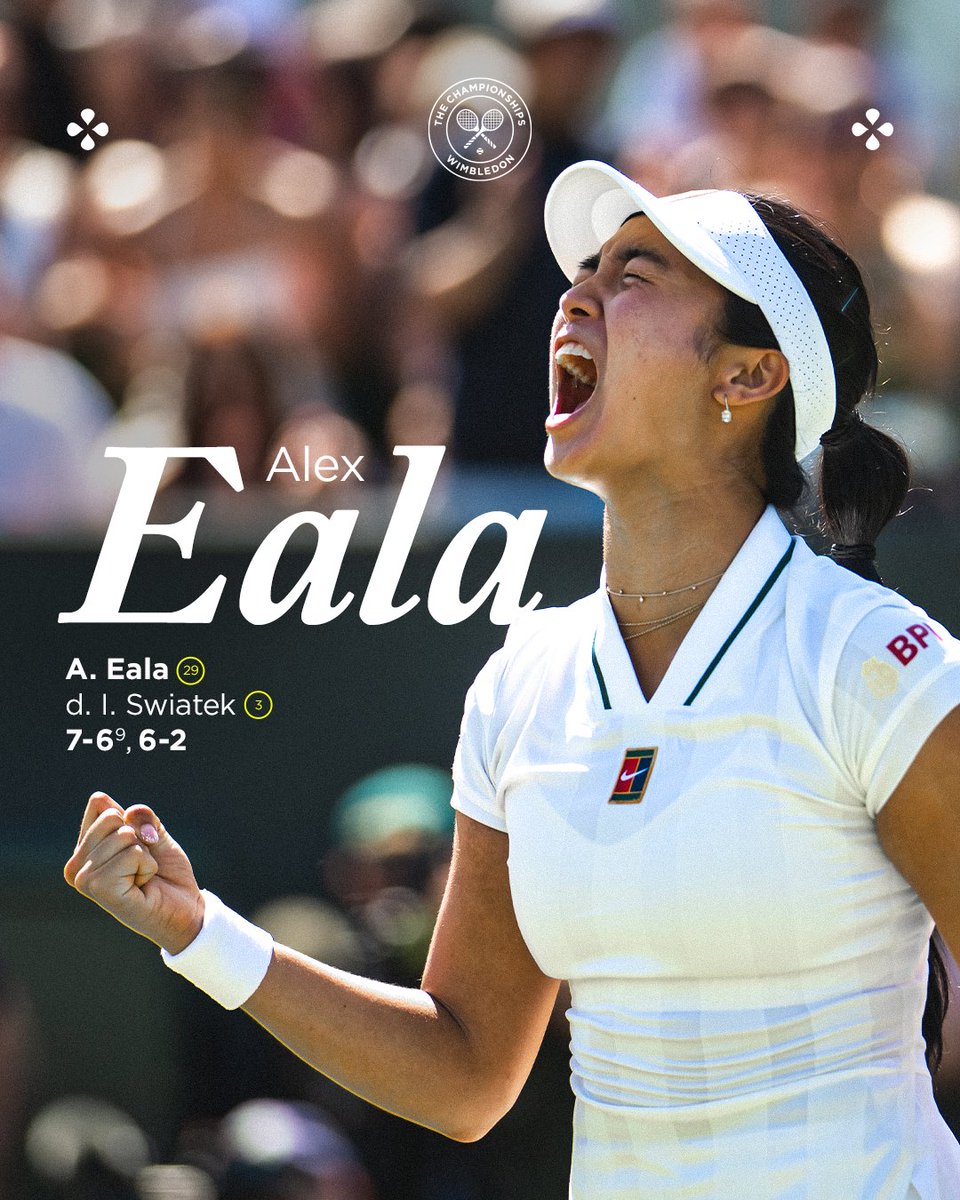
She’ll face Iga Swiatek next.
Full of belief.
The hope of a nation behind her.
Anything can happen.
🇵🇭❤️
Eala d. Zarazua 6-1 6-2
ALEX BECOMES THE 1ST FILIPINO PLAYER IN THE OPEN ERA TO WIN A MAIN DRAW SINGLES MATCH AT WIMBLEDON
The energy she brings is magnetic.
The history she’s creating for her country is timeless.
✅28th win of 2026
Inspiring a nation.
Pride. Love. History.
🇵🇭❤️🇵🇭