@RandPaul OMG, Rand Paul... why are libertarians so economically-intentionally-obtuse???
except for the fact they have no logical ground to stand on without their goofy-ass simplificiations of reality!?
Brennan: The president said Jensen Huang should get his job back. You said the board of directors needs to go to the outside.
Bessent: Well, Jensen is on the outside now.
Brennan: Are you saying that you think it would be a good idea for him to go back and run the company?
Bessent: I think we have to see where the buck stops. You know, what were these malicious actors down at the bottom of the company who were responsible for the noncompliance.
Who is Harvey Jones, the Nvidia chair blocking Jensen Huang's reinstatement?
He co-founded Daisy Systems in 1981.
It went bankrupt in 1990.
Its assets sold for just $14 million.
He co-founded Tensilica in 1997.
Sold to Cadence in 2013 for $380 million.
He joined Tintri's board in 2014.
It went bankrupt in 2018.
Shareholders got nothing.
He has sat on Nvidia's board since 1993.
33 years.
"Even animals, even cats, are suffering." A Palestinian man in Gaza says goodbye to Joulie, the cat his family raised from a kitten, who he says died of a heart attack on November 19, 2026, as Israeli occupation bombing pounded the area around their displacement camp in central Gaza. For four years, Joulie was part of the family, and she lived the genocide alongside them: the hunger, the homelessness, and every forced displacement, from Gaza City to the south, back to Gaza City, and then to central Gaza.
That week, Israeli occupation tanks had pushed into the areas north of Bureij and Nuseirat in the first ground operation the army has officially announced since the ceasefire, with shelling and drone fire around the camps. "A tragic day for me and my family," he says, asking people to pray for patience. In Gaza, even grief over a cat carries the weight of everything else lost, and the fear and terror reach every living thing, people and animals alike. "Pray that God relieves us of this distress."
Source: mohamedysafadi (IG)
The Trump administration in fact jailed multiple noncitizens for political grounds, not any violations of immigration law.
Rumesya Özturk wrote an op-ed the admin didn’t like, leading Marco Rubio to brand her a “threat to foreign policy” and have her jailed.
The Trump administration’s pick for new national cyber director, Kirsten Davies, is deeply connected to Israeli intelligence, having served on the board of three cyber companies founded by top ranking Israeli spies
By @NateB_Panic
https://t.co/aWN1SIIHoe
GenAI is really a "poisoning the well" attack on mankind. Its creators will get people addicted, make them trust the tool, with time theyll be less likely to check it bc they trust it. Then theyll start blocking out parts of history. Theyll delete books from the corpus. 1/6
Elissa Slotkin's entire career was pointing the finger at people to be killed by JSOC. Shoot that one in his bed. Drop a bomb on that one's house. Raze that one's whole village, burn it. Fifteen straight years of nonstop assassinations. From there she went directly into politics.
Calling a genocide a genocide isn’t just about accountability, it’s about prevention. Choosing not to call a genocide a genocide isn’t just an act of cowardice, it’s an act of permission.
https://t.co/8zAKky6mdz
Transhumanists are using innocent people as AI targets to experiment and test their technologies. A group called Targeted Individuals have been vocal online for years and have been met with silence from authorities and persecution. How can this be allowed to happen in 2026?
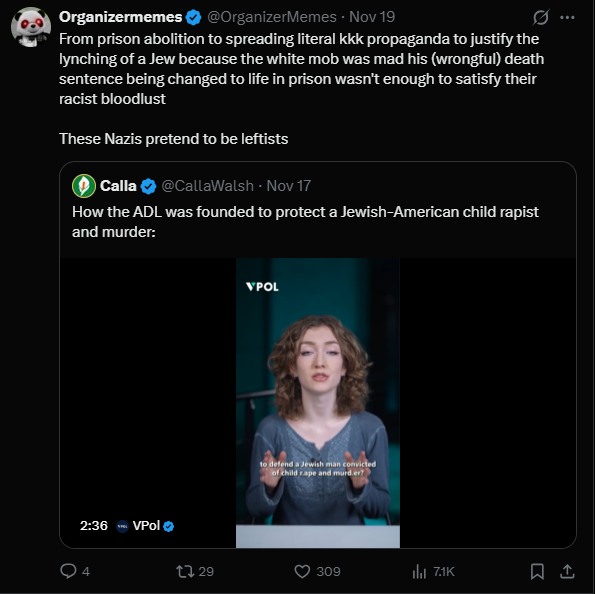
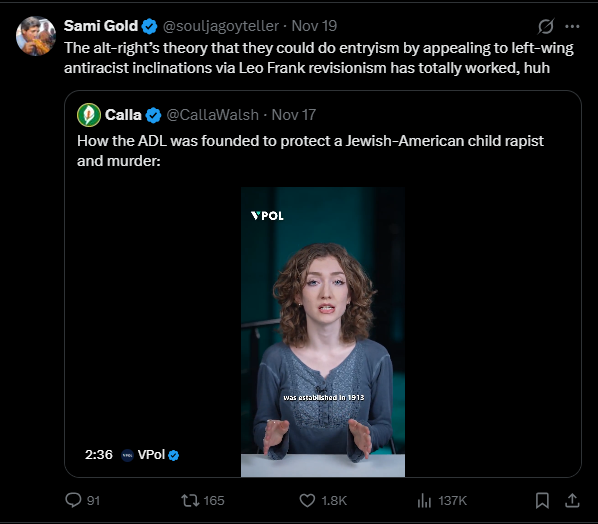
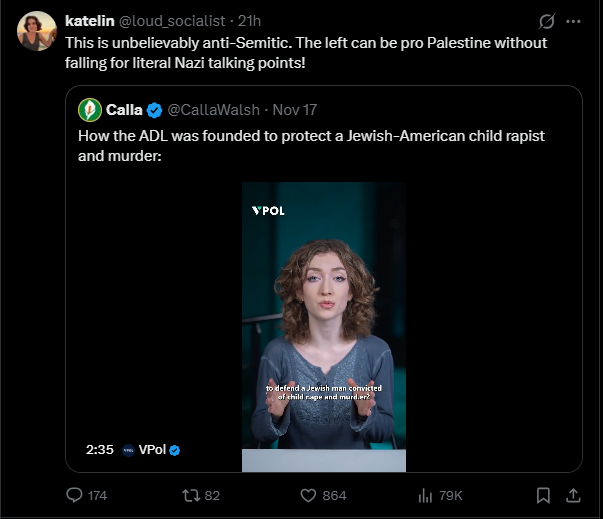
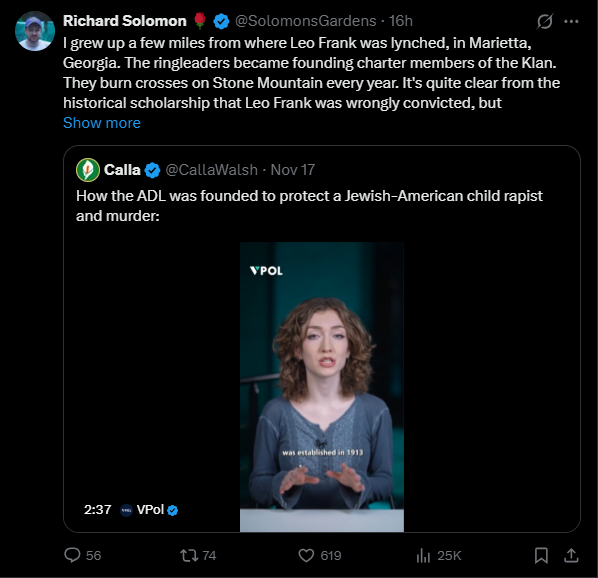
The Knights of Mary Phagan Hoax: How an Unverified Story Became Accepted History as the Founding of the Second Incarnation of the Ku Klux Klan in 1915
The Leo Frank Lynching, the Founding of the Second Ku Klux Klan, and the Citation Laundering of a Historical Claim
By Zack Smith
Introduction: Did Leo Frank's Lynchers Found the Second Ku Klux Klan?
For more than a century, authors have claimed that the men who lynched Leo Frank on Tuesday, August 17, 1915, subsequently founded the second Ku Klux Klan. Many identify the lynchers as the “Knights of Mary Phagan,” an alleged secret organization supposedly responsible for Frank's abduction and the subsequent revival of the Klan.
The trouble all begins with the original evidence when we travel back in time to trace the original sources. The earliest newspaper reference located during this research to the Knights of Mary Phagan appeared in an anonymous New York Times report published on Saturday, June 26, 1915, 52 days prior to Frank's lynching. The report named no organizers or members and identified no documentary evidence establishing the organization's existence.
Contemporary accounts following the actual lynching referred to a Vigilance Committee. The second Klan, organized later in 1915 by William Joseph Simmons, had its own charter proceedings, founding ceremony, and identifiable legal incorporators.
A comparison of the twelve men named in the Klan's 1916 incorporation petition with individuals attributed to the Vigilance Committee reportedly found no matching names. Although this comparison does not exclude every possible connection, it challenges claims treating the two groups as identical.
How did an anonymous newspaper story become accepted historical fact? The answer leads to Charles and Louise Samuels in 1956, Harry Golden in 1965, and Leonard Dinnerstein's academic publications in 1966 and 1968.
February 8, 1915: The Birth of a Nation Helps Inspire the New Klan
The original Ku Klux Klan emerged in Pulaski, Tennessee, in 1865 or 1866 and developed into an organization associated with racial intimidation and political terrorism during Reconstruction. By the 1870s, it had largely disappeared as a coordinated movement.
In 1905, Thomas Dixon Jr. published The Clansman, a novel glorifying the Reconstruction-era Klan. Director D. W. Griffith adapted Dixon's material into The Birth of a Nation, which premiered in Los Angeles on Monday, February 8, 1915.
The film portrayed the Klan as heroic defenders of White civilization while depicting Black Americans through racist stereotypes. Its white robes, pointed hoods, mounted riders, and burning crosses helped establish the imagery subsequently adopted by the second Klan.
William Joseph Simmons, an Atlanta fraternal organizer and former Methodist minister, recognized the film's promotional possibilities. His organization exploited the popularity of The Birth of a Nation during its Atlanta engagement in December 1915.
The relationship between Griffith's film and Simmons's Klan is documented in contemporary publicity. The alleged transformation of Frank's lynchers into the organization's founders is considerably less secure (American Film Institute, 1).
June 21–26, 1915: The Birth of the Knights of Mary Phagan Story
On Monday, June 21, 1915, Governor John M. Slaton commuted Leo Frank's death sentence to life imprisonment. Frank had been convicted on August 25, 1913, of murdering thirteen-year-old Mary Phagan.
Slaton's decision produced demonstrations, threats, and intense public anger.
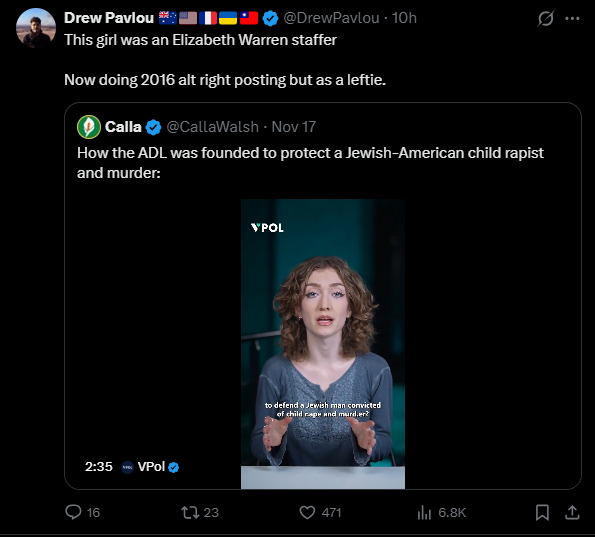
On Friday, June 25, 1915, The Marietta Journal and Courier announced a public unveiling of Mary Phagan's grave monument, scheduled for Friday, July 2, at 9 a.m. The local newspaper identified the organization responsible for the memorial as Marietta Camp No. 763 of the United Confederate Veterans. It did not identify any Knights of Mary Phagan (The Marietta Journal and Courier, 2). The memorial service to honor Mary Phagan was turned into a false accusation of antisemitism. In a few words: An antisemitic hoax. What we all have seen today, Hoaxing antisemitism as part of a century long campaign to rehabilitate former Bnai Brith Atlanta President Leo Max Frank. It's the machinery of antigentilism by those who racketeer antisemitism as a weapon to rehabilitate the image of a child-molester and rapist. Meet the prototype of the Epstein Class.
The following day, Saturday, June 26, The New York Times published “Violence Feared in Atlanta Today,” on page 4. The unsigned dispatch, dated Atlanta, June 25, claimed that secret meetings had occurred following the commutation.
Its most consequential passage stated:
“One hundred and fifty citizens are said to have met at Mary Phagan's grave and formed an oath-bound organization to avenge her death.”
The article continued:
“This body is to be known as the ‘Knights of Mary Phagan’”
The language deserves scrutiny. The gathering was “reported” to have occurred, and its supposed participants “are said to have met.” No exact date or hour was given for the alleged meeting.
The newspaper identified no witnesses, officers, members, charter, headquarters, or original organizational documents. It named none of the supposed 150 participants.
The report proves that the name was circulating in June 1915. It does not independently establish that an organization actually operated under the name. Whether the anonymous correspondent invented the expression or repeated an existing rumor is unknown.
This is where the documented history of the Knights of Mary Phagan claim begins, 52 days ahead of the lynching (The New York Times, 3).
August 16–17, 1915: The Vigilance Committee Lynch Leo Frank
On Monday night, August 16, 1915, an organized party traveled to the Georgia State Prison Farm at Milledgeville. The men overpowered prison personnel, abducted Leo Frank, and transported him toward Marietta.
During the morning of Tuesday, August 17, Frank was lynched near Mary Phagan's hometown.
The operation required advance planning, transportation, armed participants, and coordination. Subsequent accounts generally describe approximately 25 men involved in the abduction, although a complete authenticated roster has not been established.
Contemporary descriptions identified the group with the term Vigilance Committee.
On Thursday, August 26, 1915, nine days after the lynching, Thomas E. Watson wrote in The Jeffersonian of:
“the Vigilance Committee which executed upon Leo Frank”
Watson openly defended the killing, so his characterization must be evaluated as a partisan contemporary account. Nevertheless, his wording documents a designation used immediately following the event (The Jeffersonian, 4).
By contrast, no authenticated contemporary membership list or declaration has been established showing that the abductors formally identified themselves as the Knights of Mary Phagan.
The June newspaper report and the August lynching cannot automatically be joined into one organizational history without identifying the people involved.
On Thursday, September 2, 1915, Watson also suggested that “another Ku Klux Klan may be organized to restore HOME RULE.” This establishes a contemporary political and ideological connection between the Frank controversy and calls for a Klan revival. It does not establish the identity of the organization's subsequent founders.
October–December 1915: Simmons Establishes the Second Klan
William Joseph Simmons organized the revived Ku Klux Klan during the autumn of 1915.
Arnold S. Rice's The Ku Klux Klan in American Politics, published in 1962 with an introduction by Harry Golden, described a charter application associated with October 16, 1915.
On Thanksgiving, Thursday, November 25, 1915, Simmons conducted the founding ceremony at Stone Mountain, approximately 100 days after Frank's lynching.
On Sunday, November 28, The Atlanta Constitution reported the event under the headline:
“KLAN IS ESTABLISHED WITH IMPRESSIVENESS”
The newspaper described fifteen Klansmen participating under Simmons's leadership. It did not identify these men as members of the Vigilance Committee or the supposed Knights of Mary Phagan (The Atlanta Constitution, 5).
On Saturday, December 4, 1915, the revived organization received a Georgia charter. On Monday, December 6, The Birth of a Nation opened in Atlanta, giving Simmons an opportunity to promote the new Klan.
The October organizational activity, November ceremony, December charter, and subsequent incorporation proceedings represent separate events. Combining their participant counts without verifying individual names creates an inaccurate picture of the founding membership.
July 1, 1916: The Twelve Documented Klan Incorporators
Henry P. Fry reproduced a formal Klan incorporation petition in his 1922 book, The Modern Ku Klux Klan. He associated the document with a charter granted by the Fulton County Superior Court on Saturday, July 1, 1916.
The twelve named applicants were William J. Simmons, H. D. Shackleford, E. R. Clarkson, J. B. Frost, W. L. Smith, R. C. W. Ramspeck, G. D. Couch, L. M. Johnson, A. G. Dallas, W. E. Floding, W. C. Bennett, and J. F. V. Saul.
These are identifiable men appearing in a reproduced legal document. Their petition sought incorporation under the name Knights of the Ku Klux Klan.
A reported comparison with men identified as members of the Vigilance Committee found zero matching names among the twelve applicants.
The finding is significant, although its limits must be recognized. The twelve 1916 incorporators do not necessarily represent every participant in Simmons's November 1915 ceremony. Nor has a complete original Vigilance Committee roster been authenticated for this comparison.
The comparison challenges the claim of identical membership among these particular individuals. A conclusive investigation would also require the original 1915 charter documents and the names of everyone who attended Stone Mountain (Fry, 6).
1956: Charles and Louise Samuels Revive the Story
In 1956, 41 years after Frank's lynching, Charles and Louise Samuels published Night Fell on Georgia.
Their account described the alleged gathering of 150 people at Mary Phagan's grave. On pages 212–213, they also associated the lynching party with the Knights of Mary Phagan, stating that the men:
“were believed to have been members of the ‘Knights of Mary Phagan.’”
The operative word is “believed.”
Their identification was qualified rather than demonstrated through a contemporary roster. Their treatment nevertheless helped give the alleged organization the appearance of historical existence.
The Samuelses' account preceded Golden's 1965 book by nine years. Golden therefore cannot accurately be credited with originating the entire Knights of Mary Phagan narrative (Samuels & Samuels, 7).
1965: Harry Golden Gives the Story National Attention
Harry Golden published A Little Girl Is Dead: The True Story of a Great American Crime in 1965, approximately 50 years after the lynching.
Golden's popular history introduced the Leo Frank case to a broad readership. His discussion of the Knights of Mary Phagan and the Klan's revival became influential in later historical writing.
Page 300 is especially important.
In a 1992 historical study, Linda Lumsden attributed to Golden a description of an October 16, 1915, cross-burning atop Stone Mountain, involving a:
“huge cross seen throughout the city”
Lumsden reported that she could not corroborate the alleged October ceremony in The Atlanta Constitution. Simmons's documented Stone Mountain ceremony occurred on November 25, 40 days later.
The claim of an additional October cross-burning therefore requires independent evidence. Golden's original wording should be checked against his first edition, since the quoted phrase here comes through Lumsden's later examination (Golden, 8) (Lumsden, 9).
Golden helped popularize the supposed organizational relationship, but the most consequential development occurred when Leonard Dinnerstein incorporated it into academic history.
January 24, 1966: Golden's Letter Becomes Dinnerstein's Evidence
On Monday, January 24, 1966, exactly 50 years, 5 months, and 7 days after Frank's lynching, Golden wrote to historian Leonard Dinnerstein.
Dinnerstein was researching the Frank case for his Columbia University doctoral dissertation.
In a footnote, Dinnerstein explained that he had questioned Golden about the source of the alleged relationship between Frank's lynchers and the Klan founders.
According to Dinnerstein, Golden said he had heard the story and later confirmed it through interviews with an unnamed lyncher and the man's son.
Dinnerstein wrote:
“I questioned Golden about the source for this information”
He explained that Golden claimed confirmation through an interview with one of the lynchers and his son. The note also mentioned an unpublished essay by A. L. Henson reportedly held in the Anti-Defamation League's New York files.
The critical problem is the missing documentation.
Dinnerstein did not identify the alleged lyncher, name his son, provide interview dates, reproduce a transcript, or establish which founding Klan members the supposed witness had identified.
The original Golden letter and Henson essay may contain additional evidence, but their contents have not been independently verified here.
A recollection recorded more than half a century after the event cannot automatically establish a continuous organizational history (Dinnerstein, 10).
1966–1968: Dinnerstein Turns the Claim Into Academic History
Dinnerstein completed his Columbia University dissertation, The Leo Frank Case, in 1966. Columbia University Press published his book under the same title in 1968.
On page 265 of the dissertation, Dinnerstein described Simmons finding the Knights of Mary Phagan useful as an existing organization. He then asserted that Simmons and:
“thirty-three of the Knights of Mary Phagan”
met on a mountain outside Atlanta and established the new Klan.
The 1968 book repeated the assertion on pages 149–150.
This is the decisive transformation in the historical literature. An anonymous report from June 1915 had described 150 alleged members without naming anyone. The Samuelses in 1956 had qualified their identification of the lynchers with “believed.” Dinnerstein now identified 33 supposed Knights as Klan founders, presenting the organizational connection as historical fact.
Yet his relevant footnote led back to Golden's book, Golden's January 24, 1966, correspondence, and the unpublished Henson essay.
The supposed 33 members were not individually identified in the dissertation passage. The claim also required reconciliation with the contemporary November 28, 1915, newspaper report describing fifteen participants at Stone Mountain.
By 1968, 53 years after Frank's lynching, the assertion had acquired the authority of a Columbia University Press historical monograph.
Golden had helped give the story national popularity. Dinnerstein gave it substantial academic credibility (Dinnerstein, 10) (Dinnerstein, 11).
1994: Nancy MacLean Challenges the Founding Story
In 1994, historian Nancy MacLean published Behind the Mask of Chivalry: The Making of the Second Ku Klux Klan, examining the organization's origins and development.
MacLean addressed the popular claim connecting Frank's lynchers directly with the new Klan's founding membership.
Her conclusion was explicit:
“In fact, no one has ever documented a direct connection between the two.”
MacLean recognized that Frank's lynching and Simmons's organization shared a broader atmosphere of vigilantism. She questioned the assertion of direct membership continuity.
Her conclusion did not establish that no lynching participant ever joined the Klan. It challenged the failure to demonstrate the asserted founding relationship through original records.
The statement appeared 79 years after the lynching and 26 years after Dinnerstein's book (MacLean, 12).
Citation Laundering: How Repetition Created an Appearance of Proof
The development of the Knights of Mary Phagan story illustrates how an uncertain report can acquire authority through repetition.
In 1915, an anonymous newspaper article reported a supposed organization without identifying its members.
In 1956, the Samuelses recounted the organization and described the lynchers as men believed to have belonged to it.
In 1965, Golden brought the narrative to a national readership.
On January 24, 1966, Golden attributed his understanding to interviews with an unnamed lyncher and the man's son.
In 1966 and 1968, Dinnerstein made the additional claim that 33 supposed members helped establish Simmons's Klan.
Later encyclopedias, educational materials, and historical publications repeated the organizational relationship, sometimes without identifying the people supposedly common to both groups.
This is the central problem of citation laundering. A statement repeated through successive publications can appear independently confirmed even when later writers depend on earlier authors whose original evidence remains uncertain.
Stephen J. Whitfield's 2025 discussion of the second Klan shows that the claimed transformation of the Knights of Mary Phagan into the Knights of the Ku Klux Klan continues to circulate more than 110 years after Frank's death.
The survival of the claim demonstrates its influence. It does not establish its factual basis (Whitfield, 13).
The Southern Poverty Law Center and the 2026 Federal Allegations
The Southern Poverty Law Center has published widely cited histories of the Klan. Its publications, like those of Golden, Dinnerstein, and other historians, deserve examination against original records.
On Tuesday, April 21, 2026, the Department of Justice announced an eleven-count federal indictment alleging financial misconduct involving more than $3 million in payments to individuals associated with extremist organizations, including the Ku Klux Klan. Additional allegations concerning approximately $4.1 million in informant payments emerged in June, followed by further charges in August.
The SPLC disputed the accusations and defended its use of paid informants to gather intelligence concerning extremist organizations. These allegations remain subject to criminal proceedings and should not be treated as findings of guilt.
The financial controversy does not determine whether a historical assertion concerning 1915 is accurate. The Knights of Mary Phagan story must be evaluated on its original documentary evidence (U.S. Department of Justice, 14).
Conclusion: A Historical Claim Still Lacking Its Membership Evidence
The chronology establishes several important facts.
The anonymous New York Times report introduced the Knights of Mary Phagan name on June 26, 1915, 52 days ahead of the lynching.
Frank was abducted on August 16 and lynched on August 17. Contemporary supporters described a Vigilance Committee.
William Joseph Simmons organized the new Klan later in 1915, conducting his Stone Mountain ceremony on November 25, 100 days after Frank's death.
The twelve men named in the 1916 incorporation petition provide an identifiable group for comparison. A reported audit found no overlap with the individuals attributed to the Vigilance Committee, although the full founding membership requires further investigation.
Charles and Louise Samuels repeated the Knights story in 1956. Harry Golden popularized it in 1965. Leonard Dinnerstein advanced the claim of 33 Knights becoming Klan founders in his 1966 dissertation and 1968 book.
The most consequential evidence behind Dinnerstein's assertion was a letter Golden wrote more than 50 years after the lynching, describing interviews whose participants and original transcripts were not identified in the published footnote.
The history of this claim demonstrates how repetition through popular books, academic scholarship, and reference publications can give an uncertain assertion the appearance of established fact.
The connection between Frank's lynching and the political climate surrounding the Klan's revival is historically plausible. The assertion that the Vigilance Committee operated as the Knights of Mary Phagan and directly founded Simmons's Ku Klux Klan remains inadequately demonstrated by the membership evidence examined here.
Golden did not originate the name. He helped spread the later narrative. Dinnerstein gave the alleged founding connection influential scholarly standing during the 1960s.
A century of repetition cannot establish which men participated in both organizations. Only original documents identifying those individuals can settle the question.
References
American Film Institute. (n.d.). The Birth of a Nation (1915). AFI Catalog.
https://t.co/r8ArLBOug1
The Marietta Journal and Courier. (Friday, June 25, 1915). Reports concerning Governor Slaton and Mary Phagan's memorial unveiling. Page 1. Georgia Historic Newspapers.
https://t.co/1XJf3uyCpO
The New York Times. (Saturday, June 26, 1915). “Violence Feared in Atlanta Today.” Page 4. Anonymous dispatch dated June 25.
https://t.co/edfNQ3P0Iu
Watson, T. E. (Thursday, August 26, 1915). The Jeffersonian, 12(34). Contemporary identification of the Vigilance Committee.
https://t.co/fAZoXqk3N9
The Atlanta Constitution. (Sunday, November 28, 1915). “Klan Is Established with Impressiveness.” Page 1.
https://t.co/wDEfd6fMKg
Fry, H. P. (1922). The modern Ku Klux Klan. Small, Maynard & Company. Chapter IV, pages 32–35.
https://t.co/8K5erhhgYD
Samuels, C., & Samuels, L. (1956). Night fell on Georgia. See pages 207 and 212–213.
https://t.co/ekHr0QY3Qi
Golden, H. (1965). A little girl is dead: The true story of a great American crime. World Publishing Company. See pages 288 and 300. https://t.co/DdpaD9jb2U
Lumsden, L. (1992). Playing with fire: An historical and legal analysis of cross burning from the Scottish Highlands to St. Paul, Minnesota. See page 130, note 22. ERIC ED349611.
https://t.co/Sf4ubhrlIF
Dinnerstein, L. (1966). The Leo Frank case [Doctoral dissertation, Columbia University]. See pages 265–266 and the January 24, 1966, Golden correspondence.
https://t.co/ifgw6i4aPZ
Dinnerstein, L. (1968). The Leo Frank case. Columbia University Press. See pages 149–150 and 218.
https://t.co/itRSwbDtCC
MacLean, N. (1994). Behind the mask of chivalry: The making of the second Ku Klux Klan. Oxford University Press. See pages 12–13.
https://t.co/UaC3iSXcjE
Whitfield, S. J. (2025). American Jews face the Ku Klux Klan, 1865–2025. See page 158.
https://t.co/HA35uI34Zh
U.S. Department of Justice. (Tuesday, April 21, 2026). Federal grand jury charges Southern Poverty Law Center for wire fraud, false statements, and conspiracy to commit money laundering.
https://t.co/f3shiAnW9f
-Kelly Bovino Umekubo was once named the SOLE beneficiary of one of Jeffrey Epstein’s trusts.
-Ran a children’s shelter called “The Story Project.” and emailed Epstein multiple photos of different children.
-Was subpoenaed in the Maxwell case, refused to appear, never testified, and faced no known legal consequences.
⚠️🚨 THIS WOMAN IS STILL WALKING FREE 🚨⚠️