Business management & Operations Professional| Problem solver| Aspiring Business and Data analyst| Entrepreneur| Lifelong learner| football lover|GGMU❤️
Lao Tzu, the ancient Chinese philosopher, on the overlap between respect and self-alignment:
“When you are content to be simply yourself and don’t compare or compete, everybody will respect you.”
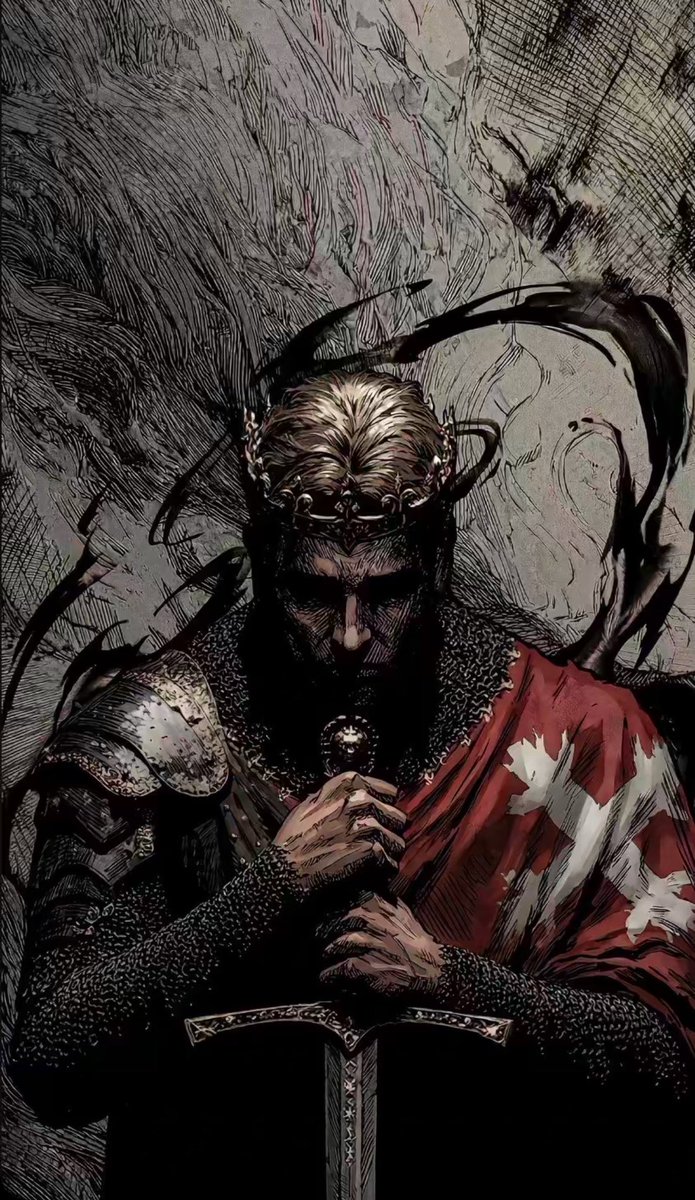
Don’t get bored. Be violent. Create your own enemies. Break your own records. Leave no doubt.
At the end of your life, you’re never gonna want to be the man who gave up early.
If you even slightly entertain the thought of failure, you give your mind a chance to start noticing reasons to fail. But if the only option on your mind is to win, then the world seems to conspire in your favor, because your mind will notice opportunities it wouldn't have before. Become delusionally optimistic, not because it's realistic, but because it's effective. It drastically increases your chances of success.
John Tukey the Fast Fourier Transform (FFT) inventor, who coined both "bit" and "software" died exactly 26 years ago today.
The Fast Fourier Transform (FFT), one of the most important algorithms in signal processing and data analysis, was introduced by Tukey & Cooley in 1965.
In 1805, Gauss - studying the orbits of asteroids Pallas and Juno - came up with a method to interpolate their trajectories from discrete samples. What he came up with was mathematically very close to the modern FFT but Gauss never published that work, and didn’t analyze its computational complexity. It predated even Fourier’s 1822 work on heat diffusion - but without the framing or generalization that Cooley & Tukey would bring 160 years later.
In 1965, Cooley & Tukey published their now-famous algorithm that reduced the cost of computing a Discrete Fourier Transform from 𝑂(𝑛²) to 𝑂(𝑛 log𝑛). This leap made real-time signal processing and digital media compression feasible.
From radio telescopes to JPEGs, from audio codecs to quantum mechanics - the FFT is everywhere. It’s one of the most important (and elegant) algorithms of the 20th century - rooted in the genius of Gauss, but brought to life in the computer age.