@ohoncharuk I think the main advantage of Flagsmith is not limited to .Net but the fact the it is language agnostic and it has much more than just feature toggling. We also have a .Net SDK with an example on how to implement it quickly as a singleton in the App config workflow @GetFlagsmith
Shoutout to @pradumna_saraf, who made it to @ThePracticalDev's featured posts of the week! Pradumna wrote a great how-to guide on canary deployments and testing in production with open-source feature flags!
The #opensource community continues to amaze 🌟
https://t.co/zHrgL69CAv
Step 8 - Use feature flags to implement canary testing
To enable canary testing, wrap each new feature in a feature flag with an allow list that contains test users. The new feature code will only run for the users in the allow list once deployed to an environment.
Feature Flags just saved our day.
We found a huge last-minute bug that could have stopped our dev platform from going GA next week.
What could have been a major clusterfuck of escalations turned into a mild displeasure for not shipping everything until the next cycle.
@bryanofuokwu_ Probably both. The primary goal is controlling releases but it is not uncommon that developers will enable the feature in prod and do some testing or enabling for an entire dev/qa team for the same purpose. Also, gradual rollouts.
With feature flags and A/B tests, you can do things like:
➡ Test a popup modal in different places in your app
➡ Test releasing to different users based on their behaviour
➡ Let Product teams test rolling out to different %'s of users
Let's do some testing in Prod with canary deployments and some open-source feature flags.
{ author: @pradumna_saraf } #DEVCommunity
https://t.co/0JJWFsdqbh
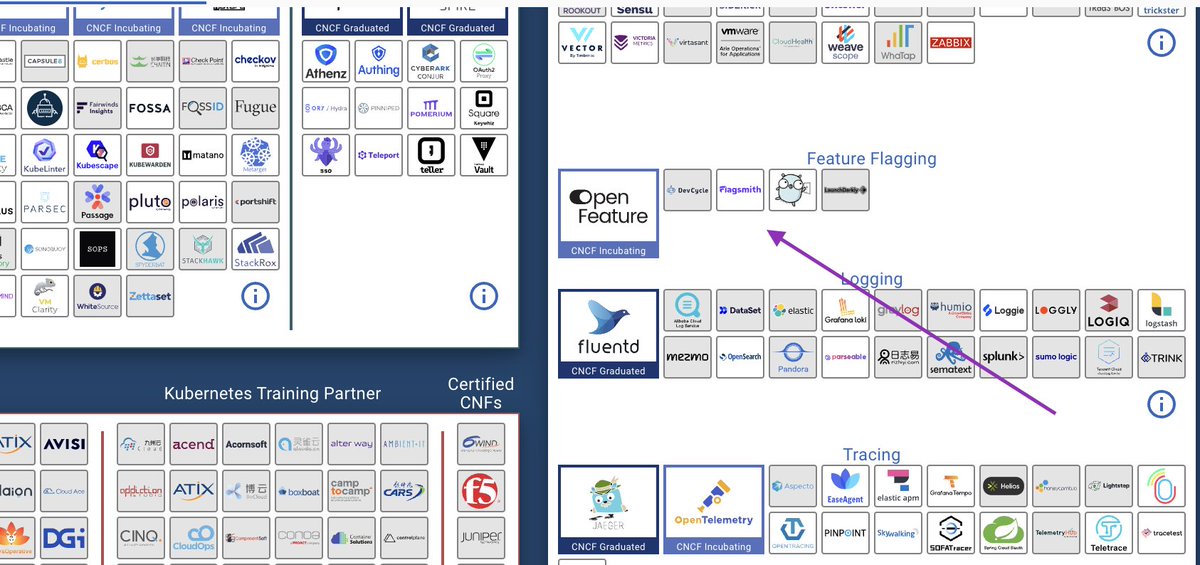
So happy to see feature flagging solutions like Flagsmith and @gofeatureflag listed on the @CloudNativeFdn Cloud Native Interactive Landscape. Right with @OpenFeature.
Plus a new feature flagging section 🚀
https://t.co/9dolx4g6m6
Trunk based: main <- feature
“A mas ambiente de teste e bla bla bla”
Ambiente de teste já é na branch da feature, ta pronto? Joga pra produção limitando com feature flag
tradition that goes back to FORTRAN and C
In FORTRAN we needed to save space, since coding was punched onto 80 column Hollerith cards. (and memory, our IBM 360/65 mainframe had 256K of main memory, shared among all jobs.) K - not 'M' and definitely not 'G'
The letter I was automatically an integer. Same for J to N. INteger. So that was what everyone defaulted to and was immediately understood by everyone.
C continued this convention, not because I to N were automatically integers - they aren't, but because everyone from the era understood the convention.
Example straight from Copilot:
int main() {
int i;
for(i = 0; i < 10; i++) {
printf("The value of i is: %d\n", i);
}
return 0;
}
Better ask these questions now, those of us who have been programming from punch card days aren't going to be around much longer. So why do you do it? That's how Grandpa did it.