Over the past years we studied the cycloisomerization of 1-bromoalkynes under gold(I) catalysis, showing that unactivated C–H bonds at the 5-position can be functionalized without directing groups, via a vinyl cation-type transition state and 5-endo-dig reactivity.
We got to see drug discovery up close inside Associate Professor @Michael_A_Erb's laboratory, where his team combines chemistry and biology to develop proximity-inducing drugs using automated machines to help synthesize and test thousands of compounds at once.
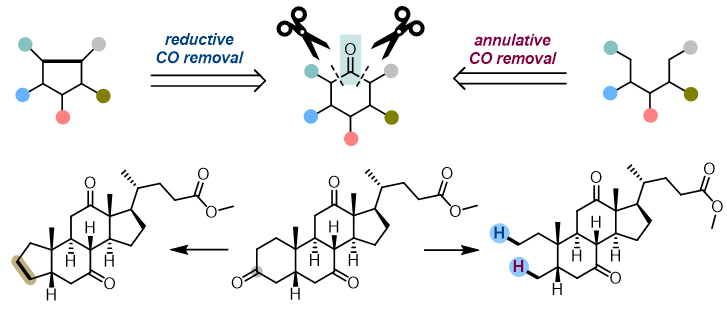
Check out our recent work on @ChemRxiv : using our NAHA reagent, now we are able to remove the carbonyl group from cyclic ketones--through both reductive and annulative pathways!
https://t.co/AW8WSiD8CB
Interested in skeletal editing? Check out this Perspective article we wrote together with @SarpongGroup published @J_A_C_S!
Strategic Applications of Single-Atom Skeletal Editing in Natural Product Synthesis | Journal of the American Chemical Society https://t.co/RVXDSrYOGN
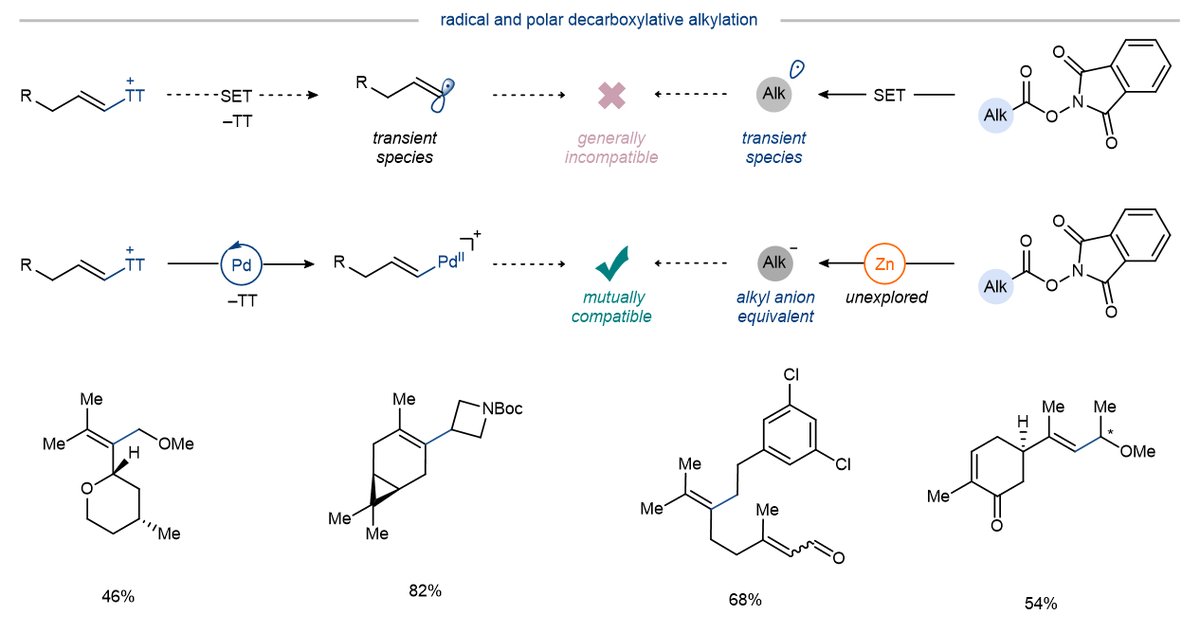
In @Nature, we show that redox-active esters can be transformed into alkyl zinc species useful for transmetalation, providing a solution to rate matching in XEC reactions! First application: alkylation of alkenes via polar decarboxylative cross-coupling!
https://t.co/mOBf4ChHk0
Our enantioselective synthesis of 1,3-BCHs as meta-benzene bioisosteres has been published in @NatureSynthesis! Great asymmetric strategy to construct phenyl mimics with retention of biological activity developed with @Carla__PS, Pablo and @TortosaLab!
https://t.co/jyNHPb8qfQ
Registration for the Enamine Drug Discovery Conference is open for quite some time, with early bird rates available until May 31.
Taking place on September 20–23, 2026, in Riga, Latvia, the conference is organized as part of Enamine’s 35th anniversary.
The event will bring together experts in Organic, Medicinal, and Computational Chemistry, as well as Biology, to discuss current directions and challenges in Drug Discovery.
Register here: https://t.co/oELvsK8EVZ
The list of confirmed speakers continues to grow: https://t.co/adAUkZHBIW
More information: https://t.co/dn5tmMje8x
Our review article is now out in Chemical Communications:
“Nitrogen Editing of Aromatic Rings: From Skeletal Editing to Fragment Editing.”
Congratulations to Hikaru!! Two days in a row!!
https://t.co/hZ0yvg9v8z
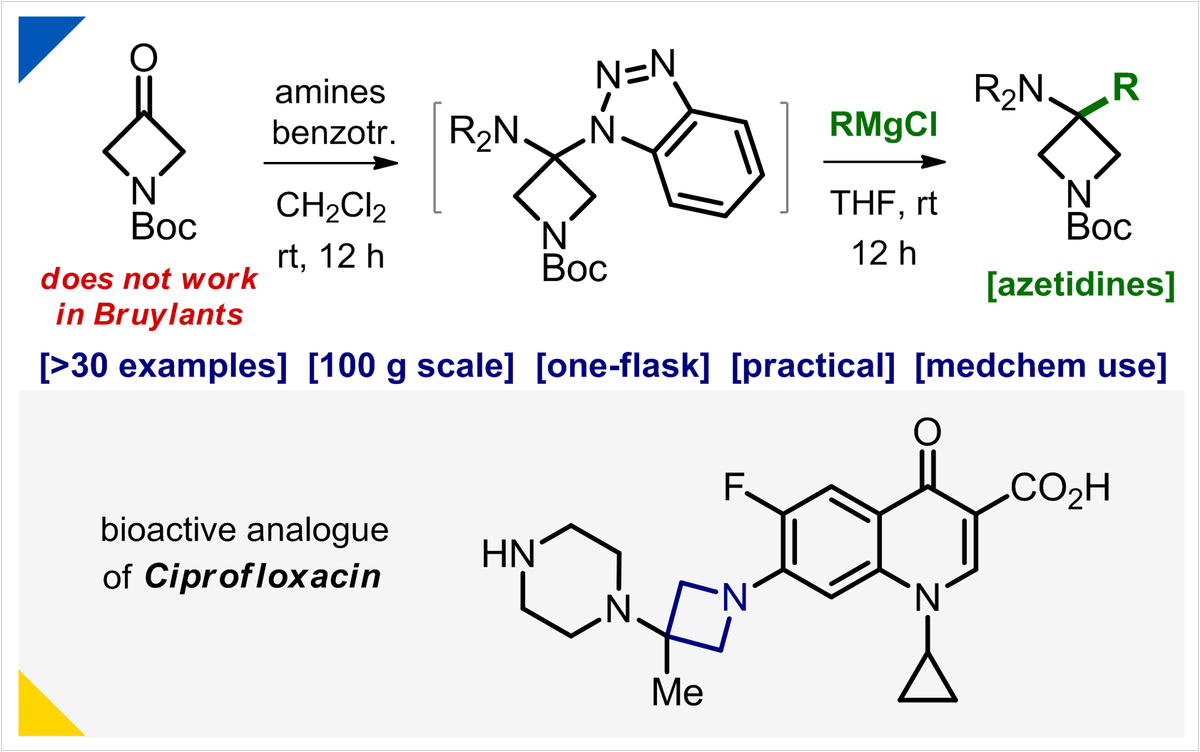
Enamine’s library of cyclobutane diamine compounds has expanded significantly, incorporating numerous spirocyclic structures to enhance the physicochemical properties: https://t.co/3WGzNKU5cE
Try our diamine scaffolds in your research!
#MSCA#postdoc#fellowships are now open. Interested in electrosynthesis and sustainable chemistry? I’d be glad to hear from strong candidates. Send me your CV + a 1-page project idea showing fit and knowledge exchange with electrosynthesis.
#HorizonEurope#RealTimeChem
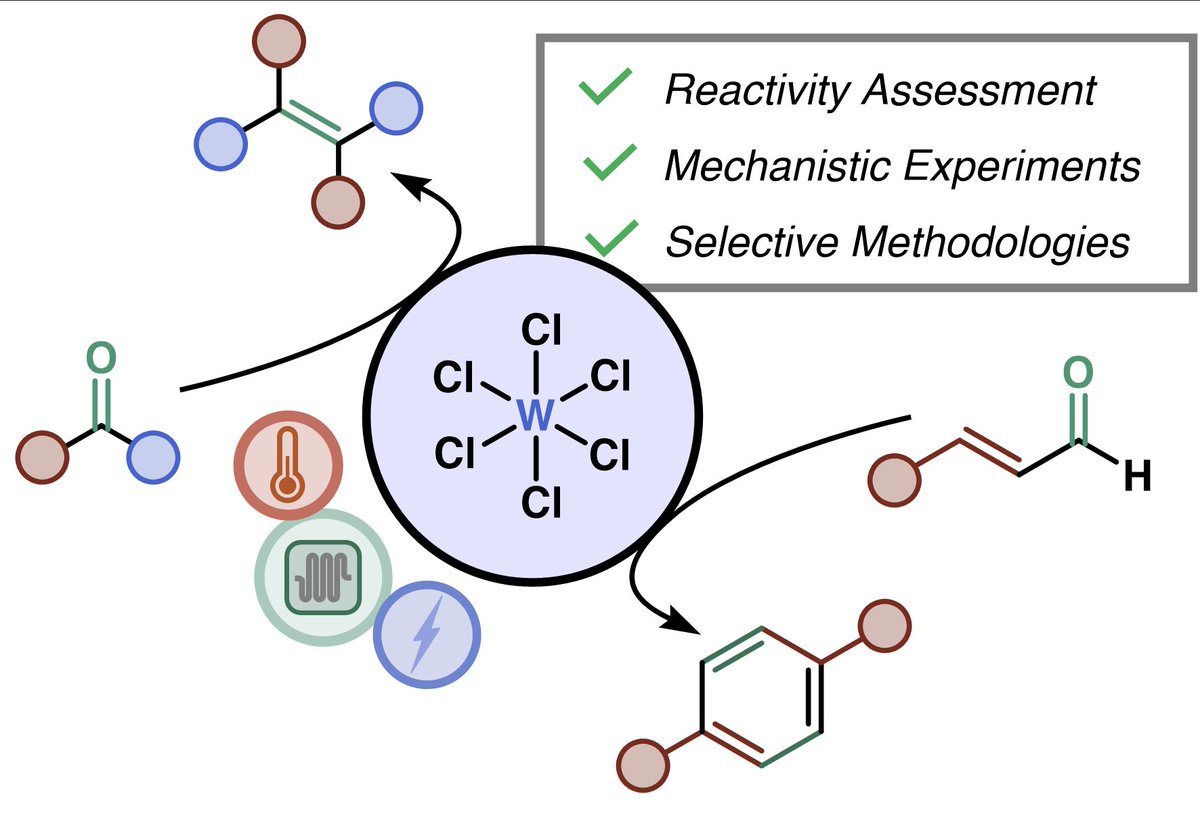
Tungsten Electrochemistry in Organic Synthesis!
In our latest @ChemRxiv, we present an exciting collaboration with @Merck@cecibottecchia and @dan_lehnherr
An 18-month project carried out by (now Dr.) @n_petrovicc
Buckle up, story time! (1/n)
https://t.co/XZ1uUXe8LR
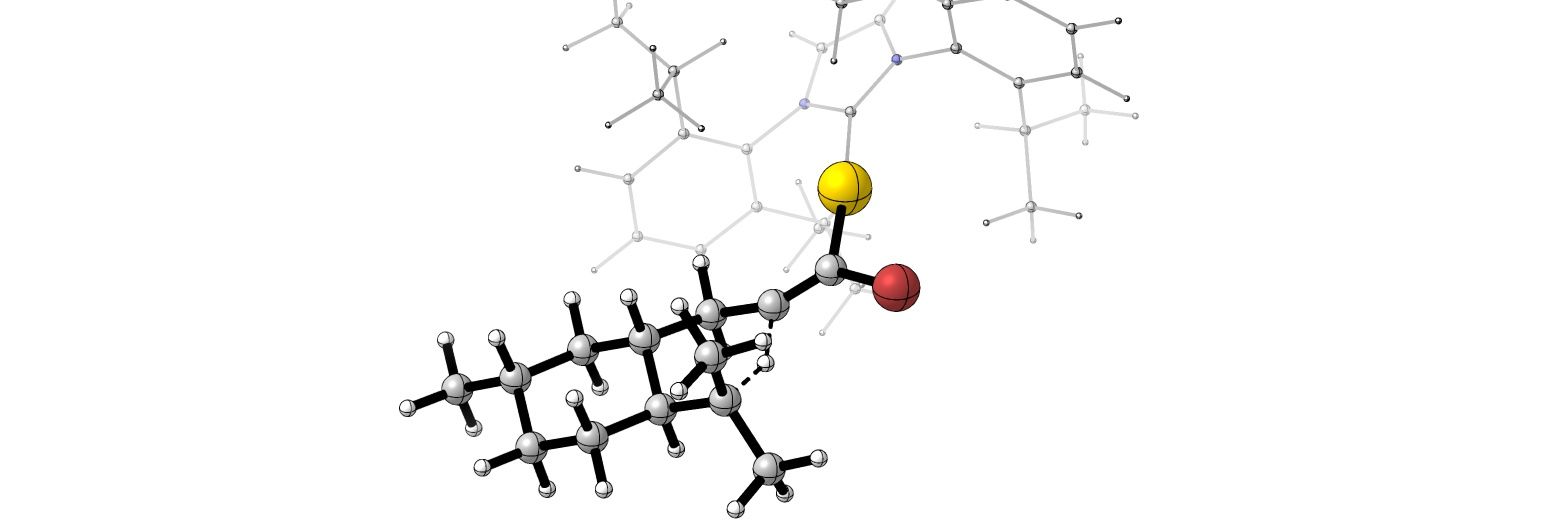
Please check out our new achievement, now online in @J_A_C_S :
Catalytic C-Demethylation of Phenols and Anilines Enabled by a Removable Mono-Directing Group. https://t.co/Y1LwzrpHBg
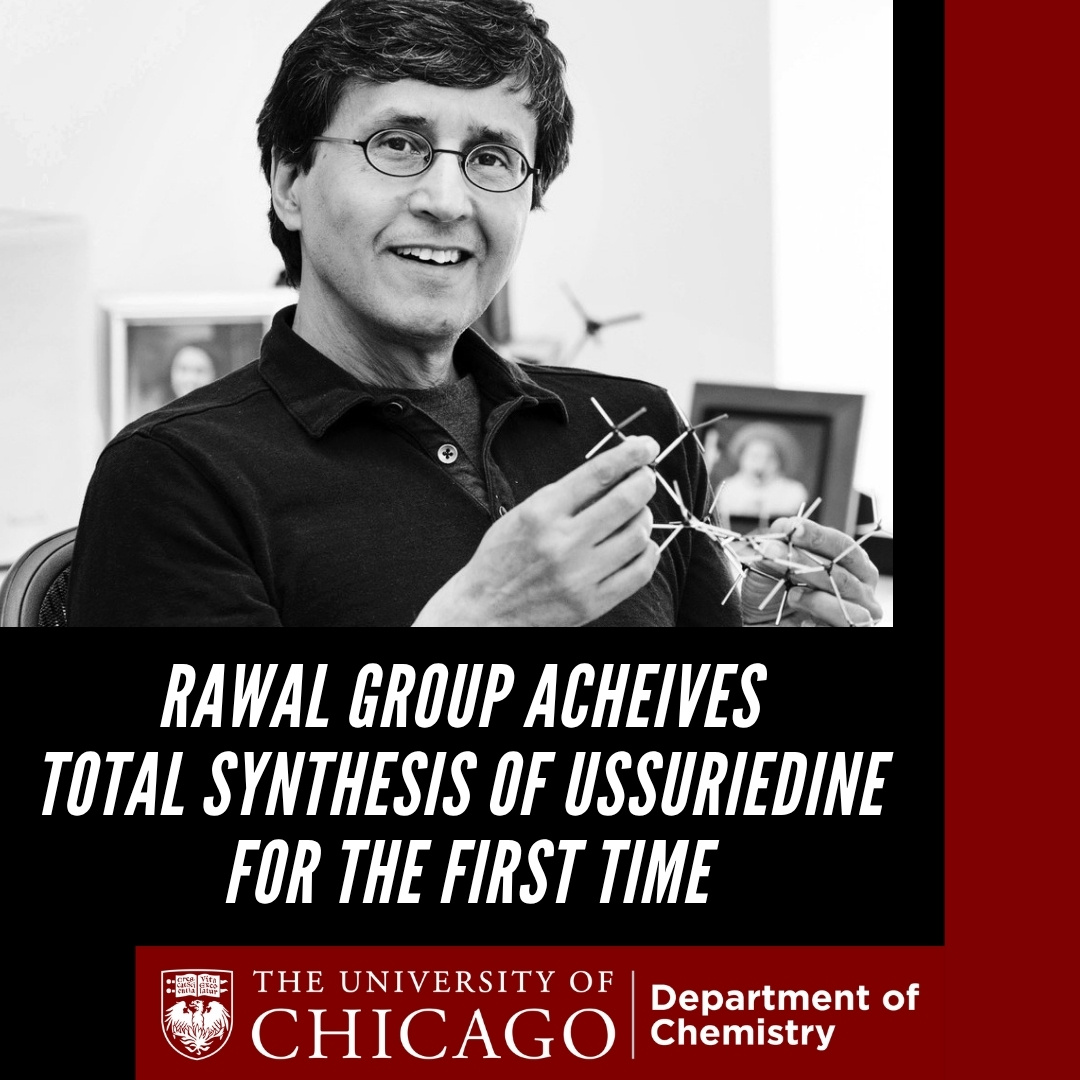
Nature’s most complex skeletons just met their match.
The Viresh Rawal Group has officially achieved the first total synthesis of Ussuriedine, a rare, 7-ring alkaloid from the Veratrum genus. While its chemical "cousins" have predictable shapes, Ussuri dine is a structural outlier defined by a dense, bridged core that resembles a rigid cage rather than a standard steroid.
This "architectural knot" has long stumped the synthetic community because traditional reactions often fail under its immense geometric strain. By deploying a high-stakes Stevens rearrangement—a strategic molecular pivot—at the very end of the process, the team successfully snapped the final rings into place. This breakthrough provides a new blueprint for how these molecules likely form in the wild, proving that laboratory synthesis is a vital tool for decoding the mysteries of the natural world.
See their paper in JACS- https://t.co/XcRFA2AXiu
#TotalSynthesis #RawalGroup #JACS #Uchicago #UChicagochemistry
📢 Kicking off our invited speakers lineup!
Prof. Martín Fañanás-Mastral (@mfananasmastral) from CIQUS (@ciqususc), will join us at the XXX Biennial Meeting of @geqor in Gijón.
🗓 17–19 June 2026
🔗 Register now to enjoy our excellent scientific program: https://t.co/agqeQQkE9F
It's allergy season, so here's one of my favorite drug discovery stories.
Terfenadine was approved in the 1980s as a non-drowsy antihistamine and became one of the best-selling drugs in the world. There was just one problem: it could cause fatal cardiac arrhythmias in patients taking certain other medications or with liver disease.
The mechanism? QT prolongation - a dangerous disruption of the heart's electrical rhythm.
When researchers dug into why, they discovered something remarkable: terfenadine itself wasn't even the active drug. It was being rapidly converted in the body into a metabolite - fexofenadine - and THAT was what was actually treating allergies.
Terfenadine was the prodrug. Fexofenadine was doing all the work. And crucially, fexofenadine carried none of the cardiac risk.
The result: terfenadine was withdrawn from the market in 1998, and fexofenadine was separately approved and marketed as Allegra - now one of the most widely used antihistamines on the planet.
A blockbuster drug was hiding inside a dangerous one the whole time.
This is why we study drug metabolism.
#DrugDiscovery #Pharmacology #MedicinalChemistry