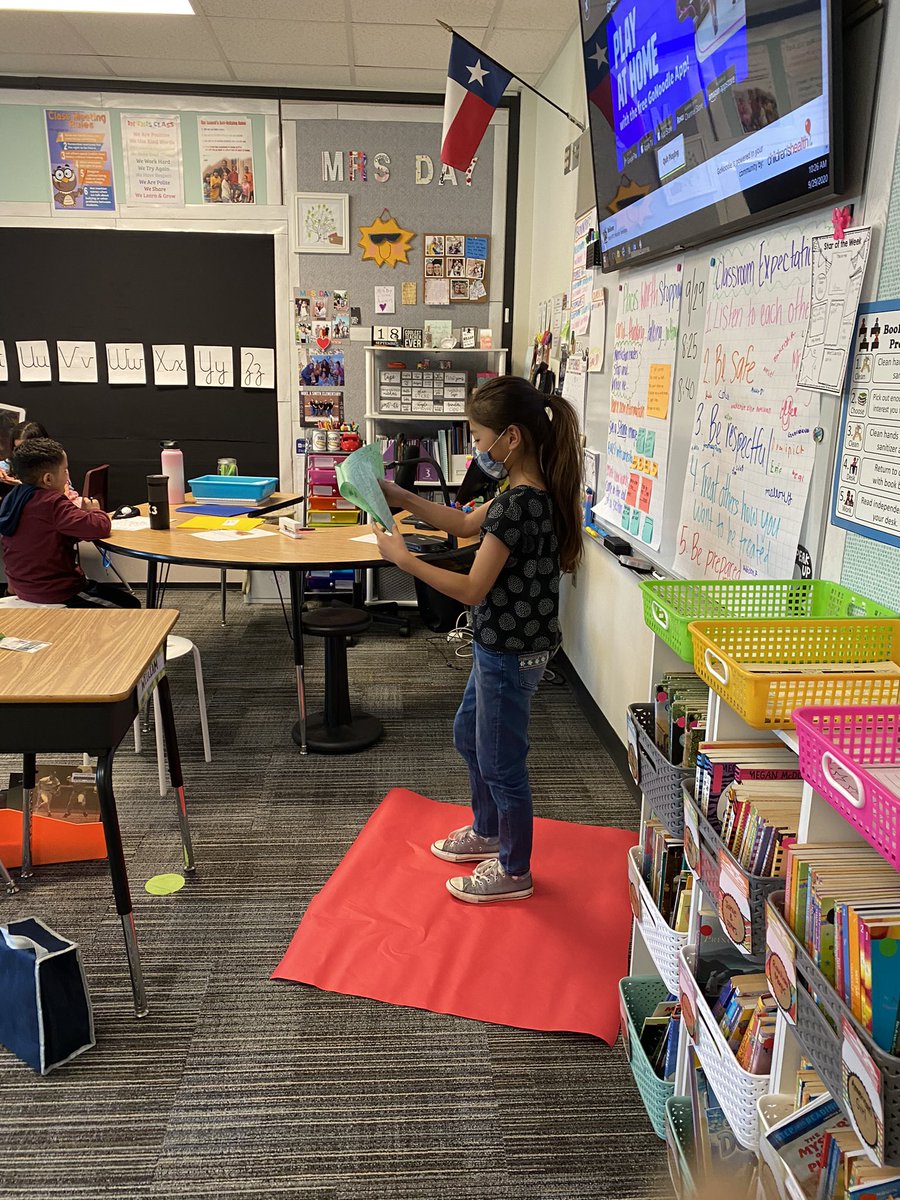
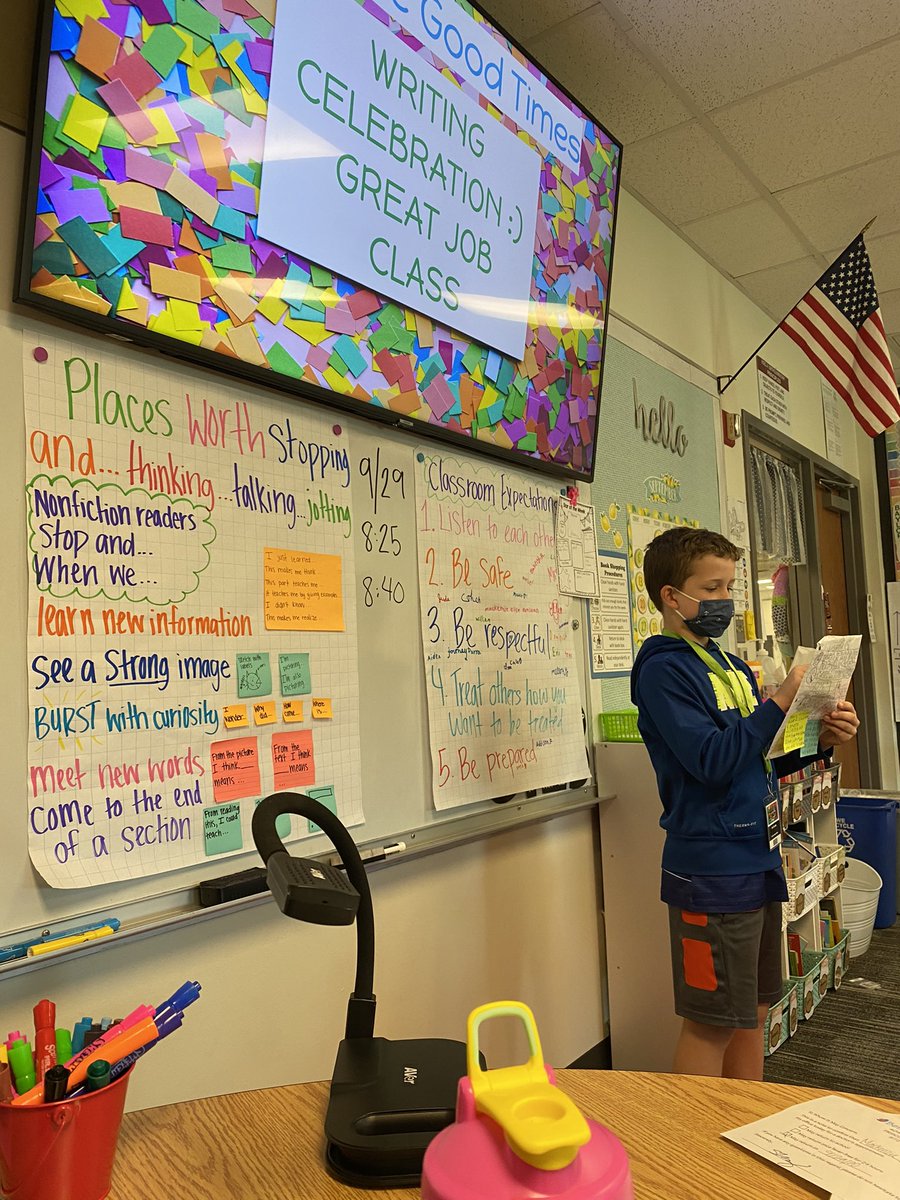
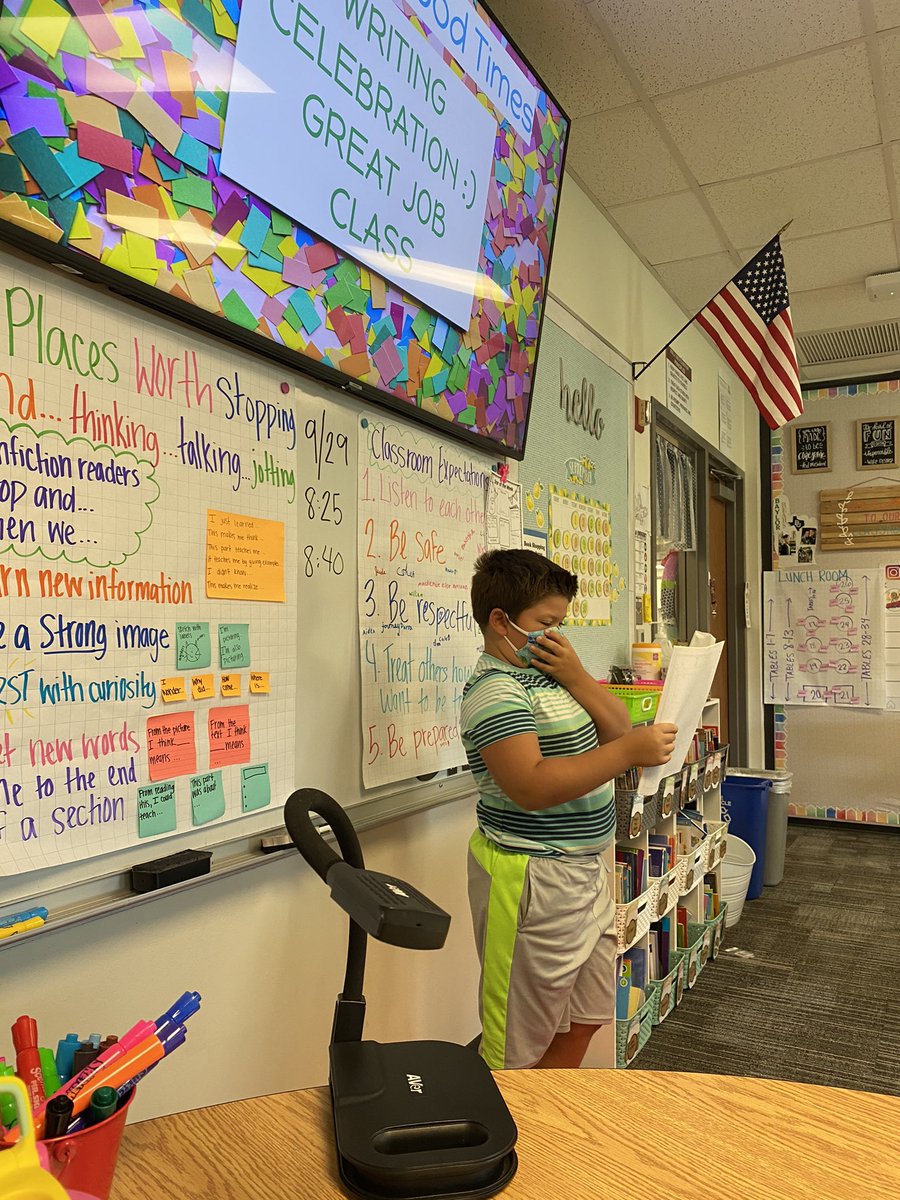
@RachelLeForce and I are doing learning walks today and in a break, she is freeze frame coaching with a T on reading conferring. What a powerful way to partner with your instructional coach! FISD teachers, how can you partner with your IC to grow for your students?@smithelem_Noel
@ci_elem I loved seeing the sticky note trick and how you had them all on one page to easily access them during a lesson. Thank you! #FISDLiteracy#TCRWP
I loved watching Joey’s relationship develop with his teacher. They began to understand each other and worked together to create ways for Joey to feel more successful in class. I can see it working in our school as long as we do it across the building and work as a team.
12. Overall, how did you feel about the resolution of Joey’s challenging behavior? Does it seem realistic? 13. How can you see CPS/Plan B working in our school? What would have to happen for our school to implement this? What obstacles would have to be overcome? #smithlearns
I think that doing plan B for the whole classroom would be a great idea, but expectations definitely have to be set. I also think it is important to establish this type of approach in the beginning of the year. #SmithLearns
On p. 208 Mrs. Woods attempts to use Plan B with her entire class to address a class issue. If you want to use Plan B with a group, what groundwork needs to be in place to make sure it’s successful? What is your reaction to how Plan B plays out with her entire class? #smithlearns
There was empathy on both ends. The teacher continued to ask Joey questions and made it a conversation allowing Joey to also have a say in the plan. I think the teacher did a great job using Plan B with Joey. Collaboration is key. #SmithLearns
10. On pages 92-108 we see some of Plan B taking place. What were the actions and words that you think will contribute to making this a successful plan? What else do you think the staff should have said or done? What concerns do you have about this plan? #SmithLearns
(Cont.) Plan B is definitely more time consuming and will take practice, but this is a much better way to respond to an unsolved problem. Collaboration with the student is key! #SmithLearns
9. What are some of the benefits of using Plan B? How does this plan differ from what you’ve used? What might be some obstacles to doing the three steps involved in Plan B? What are the benefits of the Empathy step? What might make this step hard to implement? #SmithLearns
Plan B allows the student to have a say and allows the teacher to have a better understanding of where the student is coming from. This plan is collaborative between the student and teacher and allows for a problem to be solved in the way that the student agrees to. #smithlearns
9. What are some of the benefits of using Plan B? How does this plan differ from what you’ve used? What might be some obstacles to doing the three steps involved in Plan B? What are the benefits of the Empathy step? What might make this step hard to implement? #SmithLearns
Plan A is teacher driven and gives the teacher the final say. The student does not have any say in this plan and the teacher gets all the power. Switching to Plan B involves the student to make a plan in order to solve a problem and allows the student to be heard. #SmithLearns
8. When teachers’ expectations are unmet, they often respond with Plan A. What exactly is this plan? Even if teachers have been successful with this plan, how is this different from simply communicating an expectation? #smithlearns
When Dr. Greene describes the two culprits of children’s challenging behaviors, he mentions lagging skills which are the skills that the student is unable to do without being taught, the unsolved problem is an instance that may have happened or continually happens. #SmithLearns
Q.7-Dr. Greene describes two culprits of children’s challenging behavior: lagging skills & unsolved problems. What is the difference between them? What does the author believe should be the first step in addressing challenging behavior & how can the ALSUP tool help? #SmithLearns
All students are unique in their own ways and a diagnoses can look very different for different students. A student with ADHD is not going to have all of the same lagging skills as another student with ADHD. It is important to look into each students situation. #SmithLearns
Looking at the list of possible lagging skills. How does this compare to the diagnoses we are used to seeing in kids with challenging behavior (ADHD, bipolar disorder, etc.)? Why does the author prefer not to use these diagnoses? #smithlearns
I think the list Dr. Greene proposes encompasses many of the lagging skills we often see within the classroom. Being aware is huge! It is important to notice that a kid is capable of doing the right thing, but often needs to be taught as he lags that specific skill. #smithlearns
Smith Staff Book Study Q.5: Dr. Greene proposes a long list of life skills that kids with challenging behavior are lacking. What is your response to this list? Which items resonate for you based on your experiences? Would you add any life skills to this list? #SmithLearns
It is important for educators to teach students the necessary skills that they need in order to succeed. If the student has not yet learned the skill then it is going to be difficult for them to perform, therefore they are unable to do well without those skills. #SmithLearns
4. How is Dr. Greene’s philosophy of children (“Kids do well if they can”) different from the prevailing view (“Kids do well if they want to”)? How do these differing views affect the way adults approach behavioral issues? #smithlearns
He talks about how the current system for discipline is not working. We give students rewards for good behavior and consequences for negative behavior. This doesn’t serve our students well because those who have negative behaviors are not learning the skills they lag #SmithLearns
Smith Staff Book Study Q.3--The Disciplinary System: What does the author say about the current state of our discipline system? How does it or doesn't it serve students who behave well? What about students with behavioral challenges? Why or why not? #SmithLearns
The basic premise of the book is that “kids do well if they can”. Dr. Greene talks about how students that exhibit behavioral challenges are lacking the skills needed to be able to do a specific task in which the adult is asking them to perform. #SmithLearns
Smith book study question 2. What is the basic premise of the book – what does Dr. Greene believe to be the main problem facing kids with behavioral challenges? Why are they not behaving themselves according to Dr. Greene? #SmithLearns
Joey was suffering the most, but I think all of those involved suffered. His teacher, classmates, principal, AP, and mom were also affected. I think that the incident escalated quick and could have been handled differently with patience and an explanation of the work #SmithLearns
Smith's Lost at School Book Study Question #1: What was your reaction to the incident involving Joey introduced in the first chapter? Who seems to be suffering in this narrative? Do you think any of the staff members could have reacted differently to Joey? #SmithLearns
Mailed one of these to each kiddo this week 💛 My heart hurts not seeing them each day. A teachers job is unique in the way that we get to daily play a role in each of our students lives and each year our classroom truly becomes a family. I love my #Daydreamers ⭐️