Happy to share our first exploration into LLM fine-tuning for theoretical physics. In this work, we developed a data pipeline for verifiable QFT problems, both fully synthetic and adapting existing human-authored problems. Using this data, we compared the performance gains of RL and SFT on small reasoning models, and explored changes in reasoning and error frequencies after fine-tuning. Excited to continue exploring this rapidly evolving space!
Link: https://t.co/xBPLsZqcwG
Excited to share our MadEvolve system to optimize scientific algorithms! MadEvolve uses an outer loop of LLM-based conceptual improvements and an inner loop of auto-differentiable parameter optimization. It also compiles a human-readable scientific report.
MadEvolve is an example of using LLM reasoning for verifiable tasks in science. Even though current LLM reasoning by itself is still far from being as reliable and clear as human expert work, if we can construct verifiable tasks, models can often reach strong results.
I'd like to advertise our AI Reasoning in Theoretical Physics Aspen Summer workshop. This workshop will be held from May 24 to June 14, 2026. Aspen is a main venue for the US theoretical physics community to develop new research directions. Apply by January 15!
Join Perimeter-UW Madison postdoc position in AI reasoning for theoretical physics: https://t.co/YDGX14OBBV
One more week to apply, if you are excited about this topic!
I'm hiring a postdoc for CMB and Large-Scale Structure physics at UW Madison, with focus on @SimonsObs. We will use Simons Observatory in cross-correlation with galaxy surveys to probe fundamental physics. The next years will be exciting for cosmology! https://t.co/EJDD1mCnSW
Job🚨" AI & theoretical physics postdoc jointly with @UWMadPhysics & @Perimeter:
* Agentic approaches & test-time scaling methods
* Symbolic verification & tool usage
* LLMs & evolutionary algorithms
* Fine-tuning & RL
* benchmarks https://t.co/FI9G94irtj
https://t.co/ssb5O0RxvB
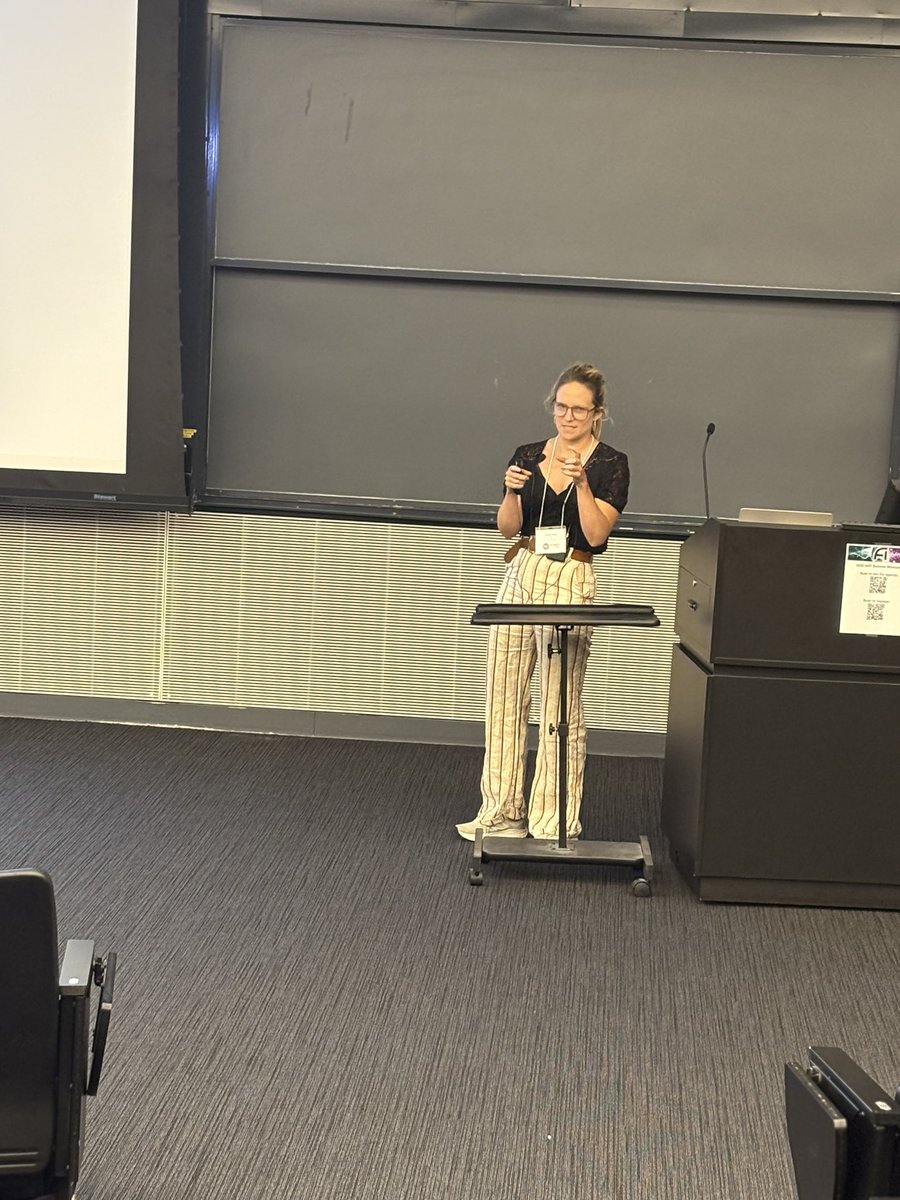
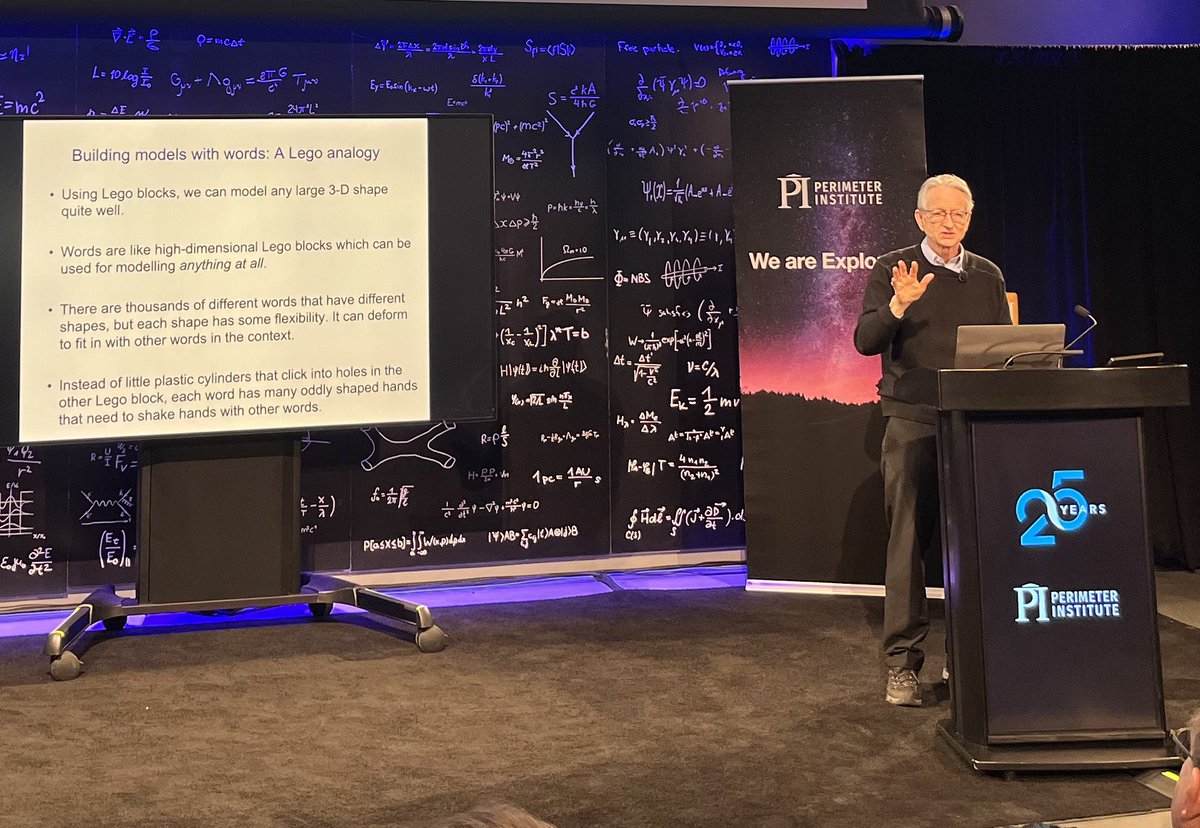
Closed out the 2025 IAIFI Summer Workshop with talks from @moritzmunchmeyr on the “State of AI Reasoning for Theoretical Physics” and from Eluned Smith on “Low Latency Machine Learning at the LHCb Experiment.”
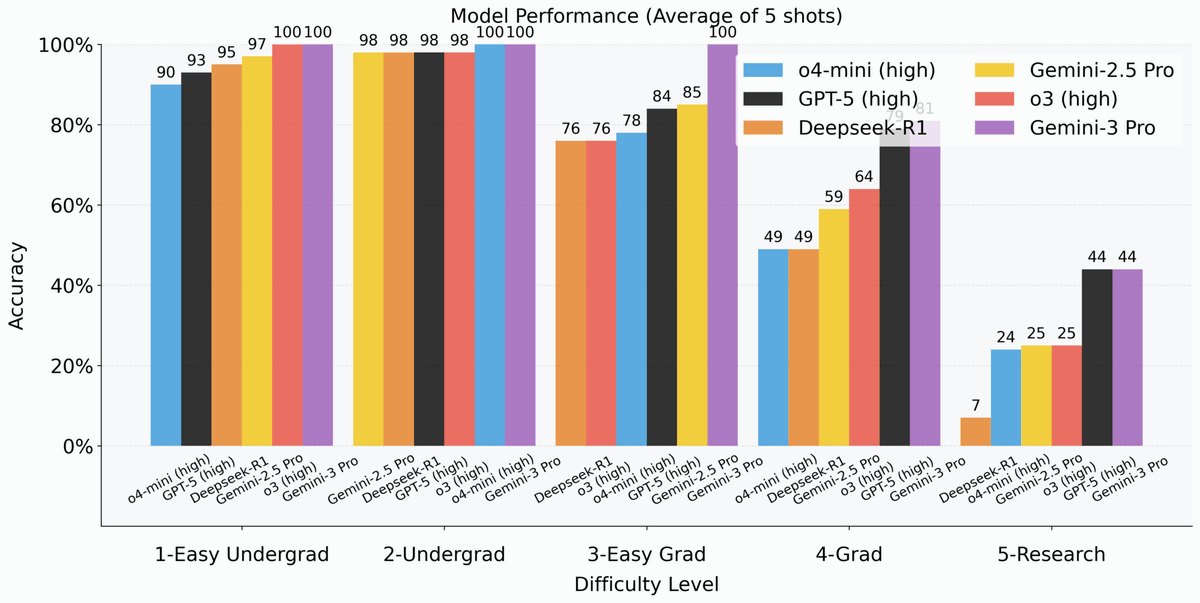
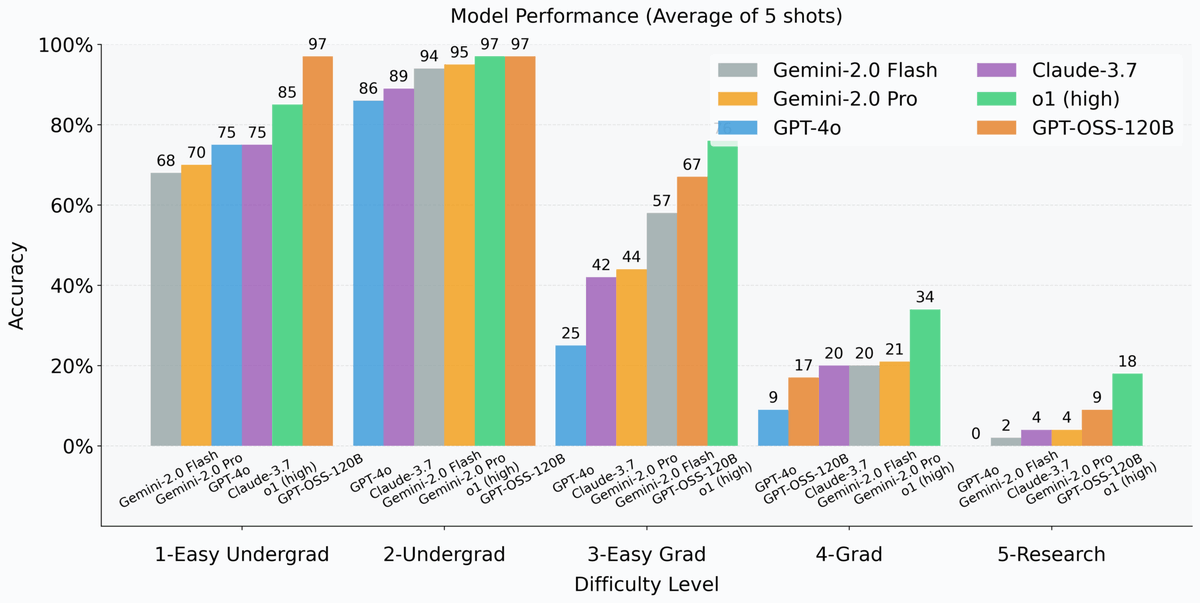
Update to our theoretical physics reasoning benchmark, including more models. @OpenAI is still ahead of the competition, especially at research level difficulty. More detailed results are on our website https://t.co/iyl3Nckfrc.
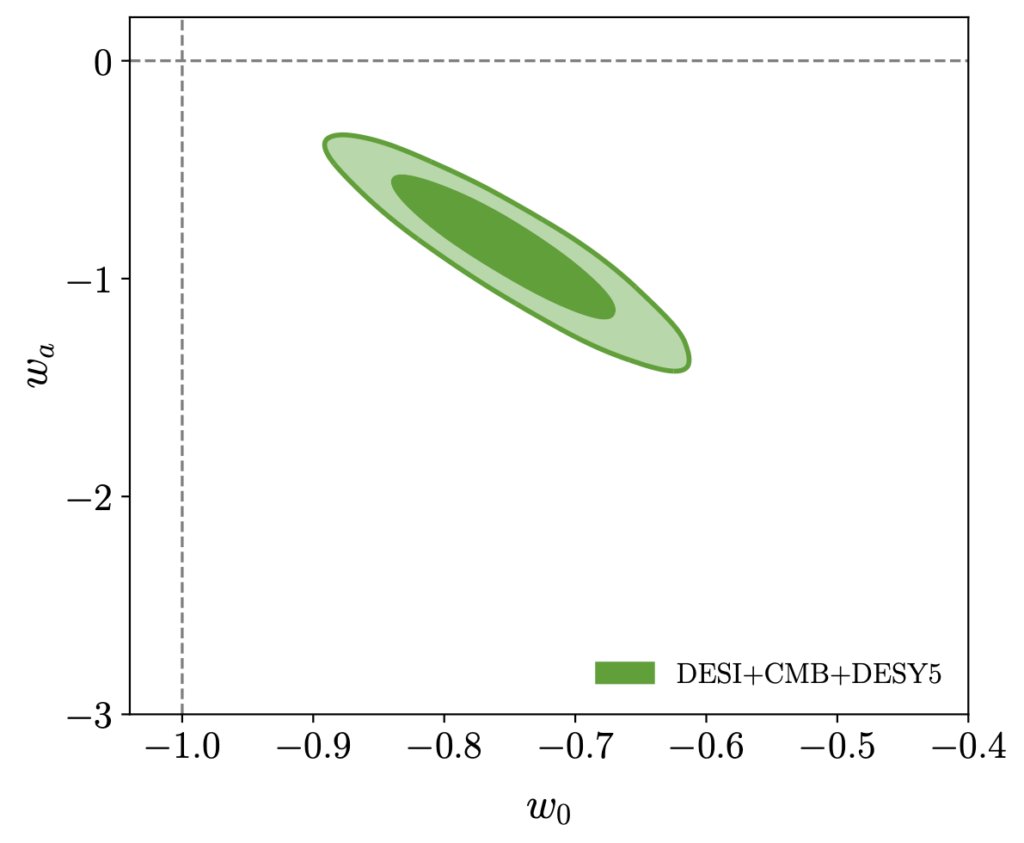
After being skeptical last year, I'm getting pretty excited about the weird dark energy results from #DESI. If true, this would be a huge surprise. BAO are a pretty clean probe and the result persists without SNe. Exciting times for cosmologists! https://t.co/NQu8X7fcfV
Very interesting discussion, and similar to our experience with theoretical physics in TPBench. The very large amount of information that LLMs retain make some research problems more tractable than we initially expected.
In this thread I want to share some thoughts about the FrontierMath benchmark, on which, according to OpenAI, some frontier models are scoring ~20%. This is benchmark consisting of difficult math problems with numerical answers. What does it measure, and what doesn't it measure?