People still running a single Claude Code session in their VS Code terminal are missing out on agent multiplexing.
One pane can't keep up anymore. Run several agents side by side, each on its own task, and you won't go back.
@syncgtm just crossed 3,500 users 🎉
What surprises most customers is that this entire product has been built and maintained by just 2 engineers and me.
I’m super proud of how much our tiny team has shipped. But building my first tech startup this way also taught me some painful lessons.
Here's how I would build differently if I was to rebuild again:
1. Don’t bootstrap a startup that actually requires funding:
Before deciding to bootstrap, estimate what the company will realistically need in engineering, distribution, infrastructure, and time. Some businesses are great to bootstrap, others become unnecessarily hard because you’re under-resourced from day one.
2. Solve one problem extremely well before expanding:
We tried to solve too many adjacent GTM problems too early. Every extra use case added more complexity, more positioning problems, and more things for a tiny team to maintain.
If I started again, I’d narrow the wedge much more aggressively. Become the obvious product for one painful problem first, then expand.
3. Don’t copy a mature product.
One mistake I made was trying to copy Clay and too many of its features instead of fundamentally solving our users’ core problem. That led us toward a much more complex product than we needed. Activating complex product requires a solid GTM system.
We haven’t reached the activation and revenue levels we should have partly because the platform became too hard for new users to understand quickly. Simpler would have been better.
4. Your GTM needs to match the product.
A complex product with a learning curve cannot use the same GTM motion as a simple self-serve SaaS tool. For us, demos, founder-led content, templates, and showing real workflows matter much more than just driving traffic.
5. Learn how to orchestrate with Claude Code 🤖
Almost everything behind the scenes at SyncGTM now uses Claude Code or ChatGPT somewhere in the workflow. Back office ops, lead sourcing, outbound, SEO, website work, and internal tools are heavily AI assisted.
That setup lets a tiny team operate like a much larger company. We now get around 9K to 10K organic visits a month and rank for high-intent keywords with a team that could never have done this two years ago.
Startups can now run parts of engineering, marketing, SEO, and ops with enterprise-level leverage. You just need the right setup.
It has been a tough but exciting journey so far. Most of these lessons came from doing things the wrong way first.
Next, we’re going deeper on one problem: solving outbound for small B2B teams. We’re building an agentic outbound feature that automatically finds, enriches, and reaches out to ready-to-buy ICPs with personalized emails.
Basically we're building an AI agent that finds warm prospects that are ready to buy.
Follow me if you want early access 🚀 I’ll be sharing more as we get closer to launch.
Introducing Sakana Fugu: A full multi-agent orchestration system accessible via a single model API.
Our ‘Fugu Ultra’ model matches the performance of Fable and Mythos, delivering frontier capability without the risk of export controls.
Try it: https://t.co/hhO6qTawgb 🐡
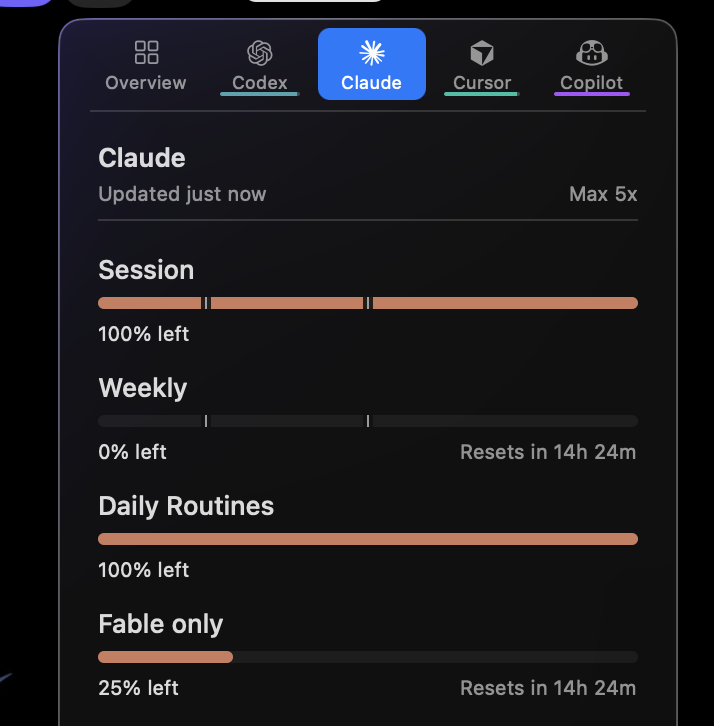
You have Claude Fable for only a few days. Here's how to make the most of it.
Introducing /improve: use your most capable model to audit your codebase and write plans for cheaper models to execute later.
Studies your code, figures out bugs, perf, tech debt, missing tests, what to build and writes plans any agent can run.