Tech obsolescence: What’s hot today (e.g., a specific firewall, model, or API) could be irrelevant in 3 years....there4 Anchor yourself in principles, not tools. #Technology#AI#Future#Jobs
@MemoHossam62020@LinkedInHelp Please tag LinkedIn-help they way I have in a post like this , they will respond to u in ur Dm, otherwise msging them directly is not straight forward
Hello LinkedIn Help. My LinkedIn account has been inaccessible for over a year after I changed devices. I completed the requested ID and face verification, but I still have not regained access.
Thank you.
@LinkedInHelp
Using skills with lots of tool calls or research?
In @code, you can now run skills in a dedicated sub agent so your main chat context stays clean and focused ⚡
Programming languages and what they’re built with
• C → Written in Assembly
• C++ → Written in C
• Java → Written in C++
• Python → Written in C
• JavaScript (V8 engine) → Written in C++
• Go → Written in C (initially), now mostly Go
• Rust → Written in Rust (bootstrapped from OCaml)
• TypeScript → Written in TypeScript
• Kotlin → Written in Kotlin
• Swift → Written in C++
• PHP → Written in C
• Ruby (MRI) → Written in C
• C# → Written in C++
• Dart → Written in C++
• Scala → Written in Scala
• Haskell (GHC) → Written in Haskell
• Elixir → Written in Elixir (runs on Erlang VM)
• Erlang → Written in C
• Zig → Written in Zig
• Bash → Written in C
• Lua → Written in C
• Julia → Written in Julia + C
• R → Written in C + Fortran
• Objective-C → Written in C
RAG vs. CAG, explained visually for AI engineers 🧠
(with must-know design considerations)
RAG changed how we build knowledge-grounded systems, but it still has a weakness.
Every time a query comes in, the model often re-fetches the same context from the vector DB, which can be expensive, redundant, and slow.
Cache-Augmented Generation (CAG) fixes this.
It lets the model "remember" stable information by caching it directly in the model's key-value memory.
And you can take it one step ahead by fusing RAG and CAG.
Here's how it works:
→ In regular RAG setup: Query goes to vector database, retrieves relevant chunks, feeds to LLM
→ In RAG + CAG: You divide knowledge into two layers:
• Static rarely changing data (company policies, reference guides) gets cached in model's KV memory
• Dynamic frequently updated data (recent customer interactions, live documents) continues via retrieval
This way, the model doesn't reprocess the same static information every time.
It uses cache instantly and supplements with new data via retrieval for faster inference.
The key: Be selective about what you cache.
Only include stable, high-value knowledge that doesn't change often.
If you cache everything, you'll hit context limits. Separating "cold" (cacheable) and "hot" (retrievable) data keeps this system reliable.
You can see this in practice - many APIs like OpenAI and Anthropic already support prompt caching.
👉 Over to you: Have you ever used CAG?
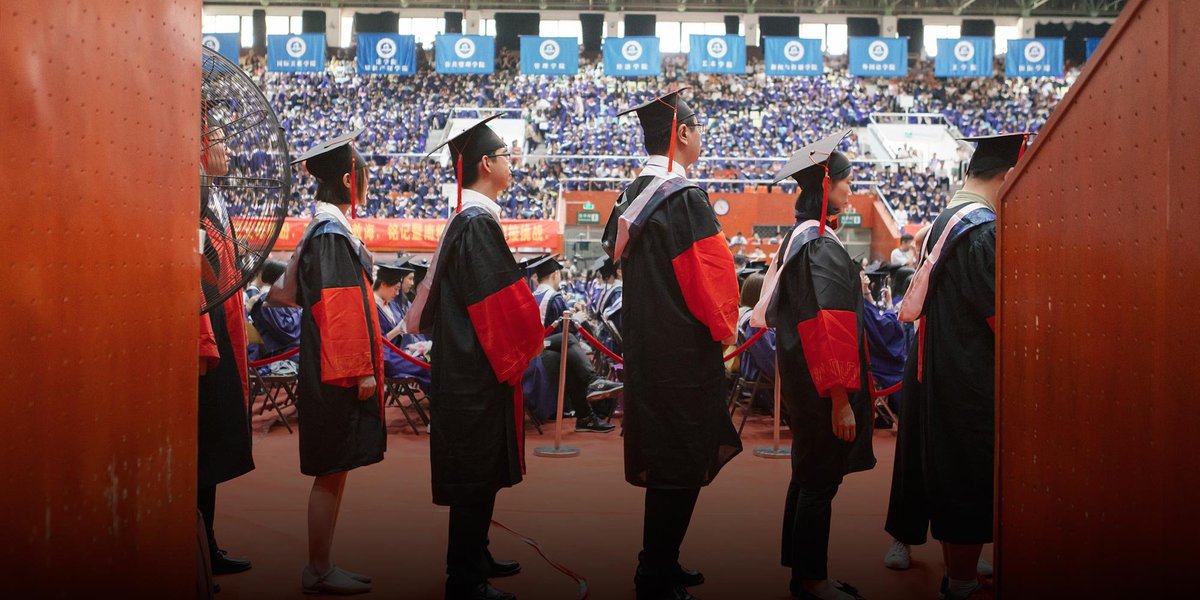
You can now earn a PhD in China by creating a product instead of writing a 100-page dissertation!
China has grown tired of PhD students writing research papers that no one reads and is now demanding that they build real products instead.
This radical shift in the philosophy of higher education in China represents a formal transition from "textual academia" to "utilitarian academia," where the traditional doctoral dissertation is replaced by the creation of a tangible product. The brilliance of this idea lies in its direct approach to the scourge of "dead research" that consumes years of researchers' efforts only to remain locked away in drawers, thus transforming the university from an intellectual silo into a productive engine that feeds the market and fosters innovation immediately.
Bioinformatics with Python Cookbook: Solve advanced computational biology problems and build production pipelines with Python and AI tools https://t.co/oo6quYwyXl
How to Create Home surveillance system using Python
In this video we will show you how to create a small home surveillance camera application using Python, this project can be divided into following sections 1) face detection using open cv 2) saving images of trespasser at time of sighting 3) creating s video from images using argparse python
https://t.co/fFTmsD5Isd