They get excellent exam results
A lot is justified in the name of exam results. It’s okay to control every moment of a child’s day, if the school can show they get excellent exam results. It’s okay to have behaviour policies which put many children in isolation, if the school gets excellent exam results. It’s okay for parents to be complaining, and children to be protesting, if the school can show improving exam results.
Our education system has decided that only one outcome really matters in the lives of our young people. Excellent exam results. When people talk of evidence based education, they usually mean, what the research shows gets better exam results.
There’s a problem with this, because it’s not possible for everyone to get excellent exam results. Excellence is defined in contrast to everyone else. ‘Good results’ really means ‘better than the others’. An ‘excellent school’ means one that does better than the others, often in exam results. If everyone does very well, it just becomes the norm. They’d have to shift the goal posts.
Half of our young people will always get below average exam results. Not because they don’t try hard, but because an average means ‘the middle’ (and yes I know it doesn’t literally mean that and that there are different ways to calculate an average).
The quest for ever better exam results has a cost. Because it seems fairly clear to me that an effective way to get better exam results from more teenagers is to focus myopically on the test. To drill them in what they will need to do, and only that. To make them self quiz themselves for homework, and to do not just a mock exam, but a mock-mock too. To make school hours longer and to stop off-topic discussions. To punish them if they step out of line and to tell them that their lives will be over if they don’t do well. To coach them in how to take exams, so they become experts in that. To terrify them about the consequences if they don’t spend hours each night on their homework.
All this ‘works’. Some of them will get better exam results than they would have done otherwise.
But there’s a cost. There’s a cost for those who fall by the wayside and stop being able to attend school. There’s a cost for those who get through their exams and then breakdown and can’t go on. There’s a cost for those who submit to all the rules and then still don’t do well, and who spend their lives feeling like failures. There’s a cost to those who develop anxiety, eating disorders and depression. There’s a cost to those who burnout before they are sixteen.
The question we need to reckon with is this. If focusing on excellent exam results inevitably has a cost to the wellbeing of young people, is that cost one we are willing to bear? Are we prepared to write off some young people as collateral damage, whilst lauding those who get the top grades?
Instead what happens is that there is collective denial of the costs. Governments pretend that schools can focus on high stakes test results AND wellbeing, and that there isn’t a trade off there. Schools claim that children are happy to have every moment of their lives controlled, because it makes for a quiet classroom, and that those who say otherwise are the troublemakers.
What if we accepted that an education which prioritises exam results come at a cost, and asked whether this is one we are willing for our young people to pay? What then?
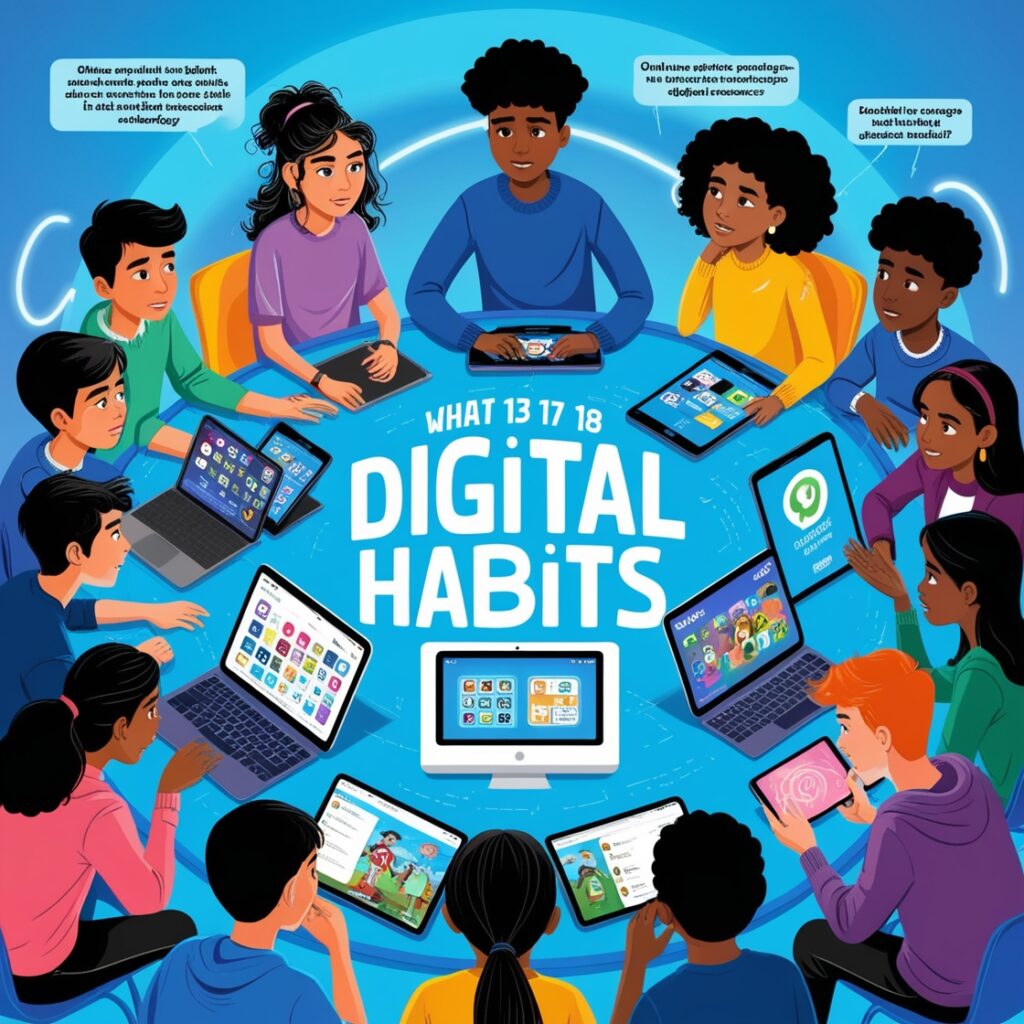
Parlem! Un joc de 54 cartes en català per fomentar debats sobre els hàbits digitals per a adolescents. El podeu descarregar i imprimir de https://t.co/DW7Ic8tZah Inclou proposta didàctica #ABJ#culturadigital#digitalització
Muy buenas!!
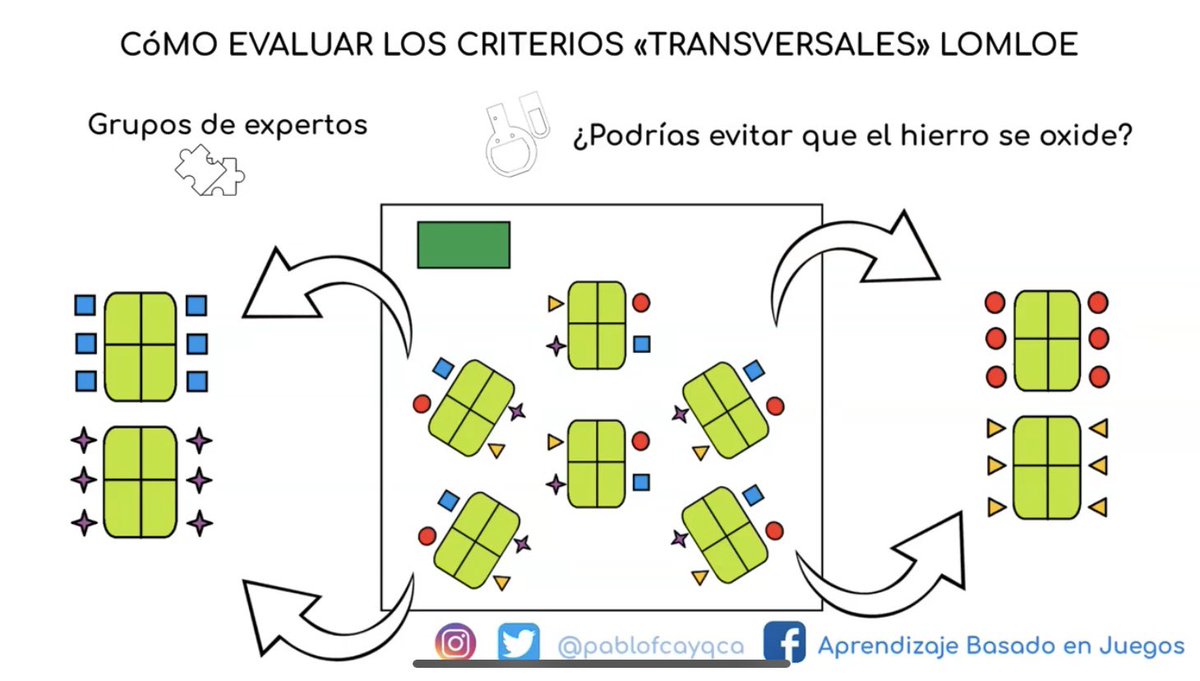
Dejo por aquí un vídeo que he preparado para tratar de ilustrar una propuesta con la que tratar y evaluar esos otros criterios más “transversales” como la búsqueda de información o el trabajo cooperativo.
Espero que os pueda resultar de utilidad 👇🏼
https://t.co/C2TcH4tw7h
Nit historica d’aurores boreals a Catalunya 🌌
Petit recull fins ara d’algunes espectacular imatges ✨ des de la Cerdanya @GPigui, el Cap de Creus @DavidRiusSerra, el Pedraforca @sergi_boixader, i des de Prades @parcastroprades
La tempesta electromagnètica ha arribat al nivell màxim - G5
🔝 Em sembla imprescindible, per a famílies i docents, llegir el que diu la Societat Catalana de Pediatria‼️ 👏🏻 🔝
Orientacions clares i concretes, sense imposar res, però aconsellant amb molt criteri.
https://t.co/5Pg97X7B6L
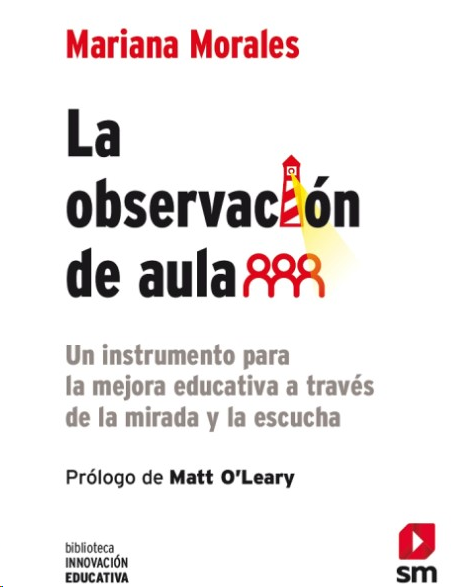
Para celebrar que estamos ya superando un trimestre más💪, voy a sortear un ejemplar de mi nuevo libro con dedicatoria.
Para participar, dale a Me gusta y haz RT antes del sábado 16/12 a las 23:59. Me comprometo a enviarlo para Papá Noel🎅
¡Suerte!
https://t.co/7mPADHcN1A
@alfredo24404099 !! Muchas gracias!! Hemos juntado S4 con B1 en grupos de 3 y les ha encantado. Una manera distinta de trabajar en grupo resolviendo retos. Y aprovechando para tejer puentes entre las dos etapas.
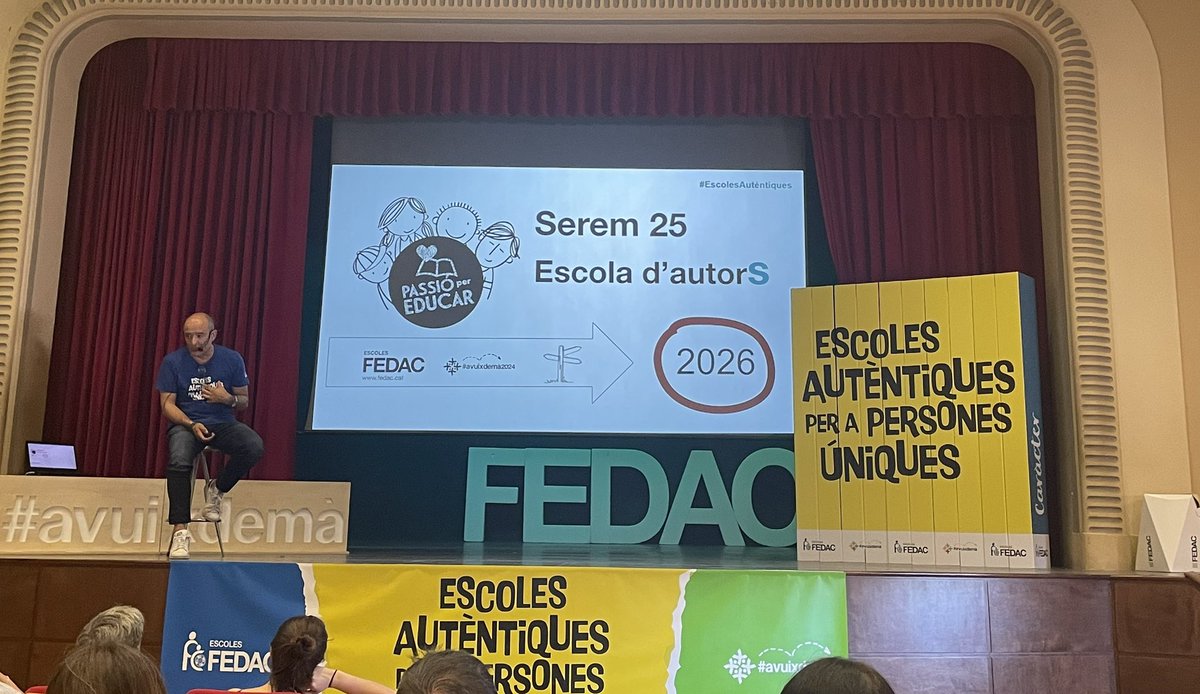
La #intel·ligènciaartificial de #ChatGPT: un avenç o una amenaça per a l'educació? El TN de @tv3cat se n'ha fet avui ressò amb l'experiència de @marccamacho92, cap d'estudis de secundària i estudis postobligatoris de @FEDACSantNarcis. https://t.co/9hjuTQKoW0