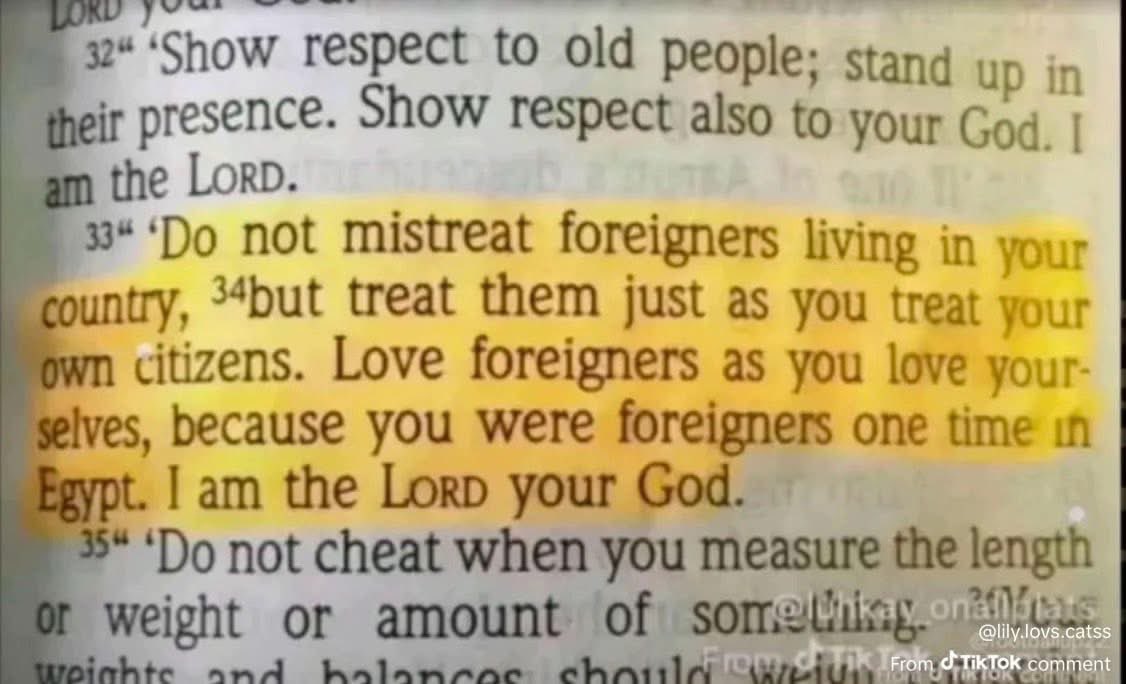
@moseswade9 Surely this says more about the FIFA scheduling of international and national events rather than the festivities and celebrations around winning such events. Celebrations must be expected and are part of freedom of expression that all FIFA members espouse in their constitutions.
“Attacks and mass deportation of foreign nationals is not a South African invention. Ironically, Ghana wrote the template in 1969.
In November of that year, the government of Prime Minister Kofi Abrefa Busia issued the Aliens Compliance Order, requiring foreigners without proper documentation to leave Ghana within weeks. What followed was one of the largest mass expulsions in postcolonial African history. Hundreds of thousands of West African migrants were forced to leave. Not the 300 that were reportedly flown back to Ghana a few days ago. We are talking about at least 500,000 people sent packing without any prior notice. The majority were Nigerians. Others came from Togo, Niger, Upper Volta (modern day Burkina Faso) and Côte d’Ivoire. These were not recent arrivals. Many had lived in Ghana for years, some for decades, even before the Gold Coast obtained its independence to form Ghana in 1957. Let us ask the right question. What led to this mass deportation of Africans by Ghanaian authorities?
Ghana in 1969 was facing rising unemployment, economic stagnation and growing social discontent produced by governance failures that the Busia government had neither the capacity nor the political will to honestly address. And so it reached for the instrument that governments in economic difficulty have reached for across centuries and across continents: the foreigner. If citizens are struggling, immigrants must be part of the problem. It was a lie, and it was a politically effective lie, which is the most dangerous kind.
What it was not was an accountability for the actual sources of Ghanaian economic difficulty, which had far more to do with the structural conditions of a commodity-dependent economy, the terms of Ghana’s integration into international trade, and the governance choices of successive Ghanaian administrations, than with the presence of Nigerian traders in Accra’s markets and Togolese farmers in Ghanaian plantations. Nigeria would follow a similar path a little more than a decade later.
Nigeria, 1983: The Expelled Become the Expellers
A little more than a decade later, Nigeria expelled approximately two million migrants during its own economic crisis. Among those expelled were Ghanaians, some of whom belonged to families that had themselves been displaced by Ghana’s 1969 expulsions and had relocated to Nigeria in search of the opportunity that xenophobia had stolen from them.
Nigeria in 1983 was experiencing the consequences of oil revenue mismanagement on a scale that should have produced a fundamental reckoning with how the country’s political class had governed its extraordinary resource wealth. It did not produce that reckoning. It produced an expulsion order. The billions that had moved through Nigerian state accounts during the oil boom years and arrived in private hands rather than public infrastructure were not the subject of the national conversation. The Ghanaian mechanic and the Cameroonian trader were.”
Read full piece:
https://t.co/fhglarDm2E
"Quand ils sont venus chercher les communistes,
Je n’ai rien dit,
Je n’étais pas communiste.
Quand ils sont venus chercher les syndicalistes,
Je n’ai rien dit,
Je n’étais pas syndicaliste.
Quand ils sont venus chercher les juifs,
Je n’ai pas protesté,
Je n’étais pas juif.
Quand ils sont venus chercher les catholiques,
Je n’ai pas protesté,
Je n’étais pas catholique.
Puis ils sont venus me chercher,
Et il ne restait personne pour protester."
Martin Niemöller (1892 – 1984), pasteur et résistant allemand
Ces mots puissants sont signés par Martin Niemöller, pasteur allemand d’abord conservateur, devenu opposant au régime nazi, après avoir lui-même été interné en camp de concentration.
Son poème est un rappel poignant : l’indifférence peut devenir complice du pire.
Une invitation à ne jamais détourner les yeux. À parler, à agir, tant qu’il est encore temps.
🙏 Que ces mots continuent de circuler, d’éveiller, de questionner.
💬 Et vous, que réveille en vous cette lecture ?
The Atlantic slave trade is not singled out because other slavery didn't exist.
It is singled out because it built the world we currently live in.
The financial institutions.
The insurance markets.
The shipping routes.
The racial categories.
The colonial borders.
The wealth distribution between continents that still defines the global economy today.
The Atlantic slave trade is not studied with particular intensity because historians are biased.
It is studied with particular intensity because its consequences are not historical.
They are present.
You don't single it out to assign ancient blame.
You examine it to understand current reality.
The reason your argument wants to dissolve that specificity into universal human wickedness is precisely because universal human wickedness requires nothing from anyone today.
Specific, traceable, present consequences do.
President Faye can't dissolve Parliament until November.
If/when he does, it triggers legislative elections which Sonko is sure to win in a landslide. Rubber, meet road
John Hope Bryant (Activist) "People say blacks are lazy, no skills, no talent? Then why did you travel halfway around the world to come get us (slaves)? You had people here already. How come they couldn't work?..b/c they were lazy, no skills, no talent."
@RegMatsuka@AfricaisBlack Does this reflect a high foreigner crime rate or a high acrophobia rate in law enforcement and sections of South African society?