Patrick Collison tells people in their 20s to not move to San Francisco.
William largely agrees with him. He thinks SF has a consensus problem and has removed the risk from becoming a founder:
"I'm a product of Silicon Valley. I started Plaid back in 2012. I've been there since I was 21, and it's very easy to stay in Silicon Valley.
But you can start to get isolated and get very consensus focused. San Francisco is probably the most consensus place I've ever been to. That is both a huge crutch for us, but it's also probably the most valuable asset.
As a founder, if you're building in something that SF believes is very consensus, but the world does not believe yet, that's actually a great operating environment. That's why Silicon Valley and SF are so dynamic and we're so in front of the curve. But we also have completely lost touch with how the rest of the world operates. Even how the everyday American operates.
So I think it's very important to go to places that don't have that same bias. If you think about emerging markets specifically – the founders who build there, they're the everyday people, they live in this constrained society.
They're constrained in a way that San Francisco and New York isn't. And that breeds a different type of creativity, it breeds a different type of innovation that you really can't get anywhere else. If you go to talk to people in London or Vienna or San Francisco, people are living in a world of abundance. And that causes a very specific creation cycle.
SF and Silicon Valley are probably more akin to Wall Street in the 1990s than they are like a research lab in Cambridge in like the 1950s. Maybe that was Silicon Valley in the 90s, but it's not anymore.
You talk to a 23-year-old and assuming you're like moderately competent and went to the right high school and college, you're going to get a $3 million seed round. And worst case scenario, you can go work at like a great company as an engineer and you'll have "founder" on your resume. There is no risk in that proposition.
If you go back to pre-2008, you're on the edge of the knife, and I think that creates just so much intensity in creativity and fear that is such a critical part of the founder journey.
Starting companies is just too f**king safe, and it's caused a lot of companies to be super safe companies -- like we're going to pivot to AI and wrap OpenAI/Anthropic. That's not bold, that's not ambitious.
And it's because we are attracting founders that actually want to be employees. They don't think and say "if I don't pull this off, I'm going to become bankrupt. My life is over." I think that's pretty healthy. That's when you bring out the rawness of humanity. And I don't see that very much anymore."
Amazing to see @emilmichael joining the DOD in a most important role as UnderSec Research & Engineering, in addition to @skupor as Director of OPM and @sriramk overseeing Policy for AI — at a pivotal moment for tech globally.
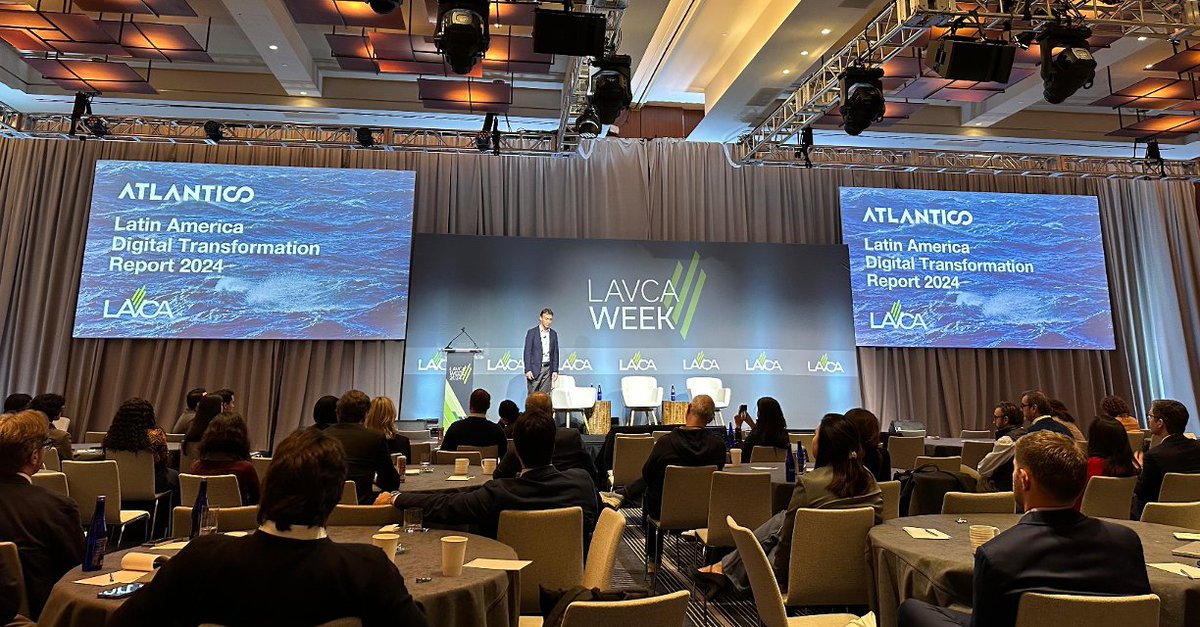
"The Case for LatAm" was the theme of my presentation today at @lavca_org 's annual conference. For any of those that still doubt Latin America can produce some of the world's best tech companies, check out the data and analysis we shared today 👇
Founder equity is a sensitive subject but I wanted to share a couple thoughts I have on the subject that I think align everyone’s interests better and are just generally more fair than the current status quo:
1. I think founder vesting ought to be longer than 4 years. It’s just not really enough time from day zero, there is too much work to do ahead at day 1,460. This might sound “founder unfriendly” but when you think about it a bit longer it’s really not. A startup is almost never done in less than 4 years, and if it is everyone will get vested anyway. So really this is friendly to the founders who stay longer and do the work between days 1,460 and 5,000+. There are a lot of scenarios where a founder leaves after 3 or 4 or 5 years, with 20% of the company, and the remaining founder now has a huge amount of work left to do with a big hole on the cap table that no one sizing up the situation would really consider fair.
2. After the initial vesting period, I think founder refreshers tend to be way smaller than they ought to be. VCs will go through humongous contortions to tell founders why they don’t deserve the same refresh grant that it would cost to hire a replacement for their role. And at the end of the day all the arguments for paying the founders less eventually seem to boil down to “because we can get away with it”, which is not really a great way to do business. Same goes for any other exec here imo.
So that’s where I think things ought to be — longer initial vesting periods, larger refresh grants — but unfortunately there are a lot of incentives making it tough to make changes on either.
FJ Labs’ B2B Marketplace Thesis
For consumers, the Internet has made everything cheaper, better, and faster. We have extraordinary user experiences and infinite convenience. Digital penetration is above 20% in many categories. We can order almost anything online on Amazon and get it within a day or two. We can order food on Doordash and get it in 30 minutes. We can get a car on Uber to take us anywhere within minutes. We can book delightful stays on Airbnb and Booking.
Such a revolution has not yet happened in the B2B world. In most industries we have digital penetration below 5%, and it’s often below 1%. In most categories, there is no online catalog. There is no online pricing. There is no connectivity to the factories to understand manufacturing capacity and availability. There is no online ordering. There is no online payment, no order tracking. Insurance and financing cannot be ordered online. Whether it’s at large enterprises or small businesses, much is still done via pen and paper.
The opportunity is large. B2B accounts for a large percentage of GDP. Many categories have trillions of dollars of annual GMV potential. Given the low penetration, it will take decades to digitize B2B supply chains, so this trend has a long runway ahead of it with the potential for hundreds of startups covering every vertical and geography.
https://t.co/2F6Jj0S94S
Em 2 anos a Buser reduziu o custo da passagem RJ-SP em 49%. Já o trajeto BH-SP ficou 61% mais barato 🚌
Enquanto a política atrapalha, Tech segue melhorando a vida do Brasileiro 🇧🇷
The 2021 edition of Atlantico's LatAm Digital Report is here! 200 slides of fresh data that tell a robust story of LatAm's booming tech scene. This year we focus on the 2nd- and 3rd-order effects of the region's rapid digitalization. Thread👇