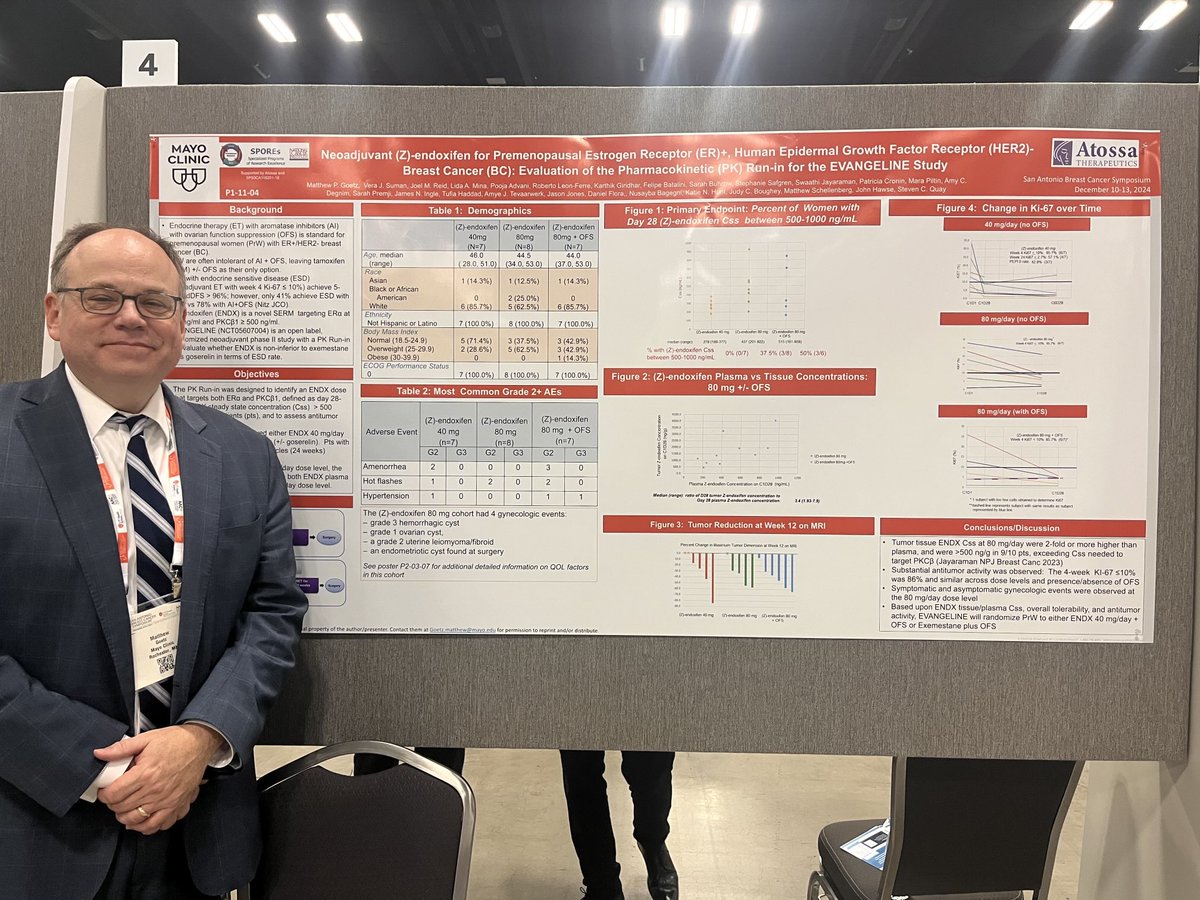
The ki-67 response rate (4 week Ki<=10%) was 86% in 22 patients. We are now ready to move this to the randomized portion comparing endoxifen with AI+ OFS
What is the impact of endocrine therapy omission in ER low (IHC 1-10%) breast cancer? Dr. Grace Choong presents data at ASCO 2024 regarding the detrimental impact of ET omission in this group of pts with tumors traditionally characterized as biologically similar to TNBC
📣What is the role of immune activation on the prognosis of early #TNBC if chemo is not given? We evaluated ~ 2,000 pts w eTNBC from 13 institutions around the globe to answer this. See our results published today in @JAMA_current
https://t.co/N0fMyRWjP3
In premenopausal women with ER+/HER2- breast cancer, the neoadjuvant EVANGELINE trial is testing the hypothesis that dual targeting of ER and PKC beta will result in substantial anti tumor activity without the need for ovarian function suppression https://t.co/ljrKlYlqxg
Endoxifen is known to be a more potent inhibitor of ER alpha compared to tamoxifen. Based on an unbiased proteomic screen, we identify protein kinase beta as a new endoxifen drug target, resulting in suppression of AKT signaling and apoptosis
https://t.co/AUP5TWQnat
Jack Cuzick shows the benefit of anastrozole in IBIS -II according to baseline estradiol levels at the SABCS McGuire lecture. Potentially practice changing.
It was a pleasure to present these data. Critically important, as any biomarker needs to be fully validated before being used to select patients. In this case, these biomarkers are prognostic but clearly not predictive of abemacicib benefit.