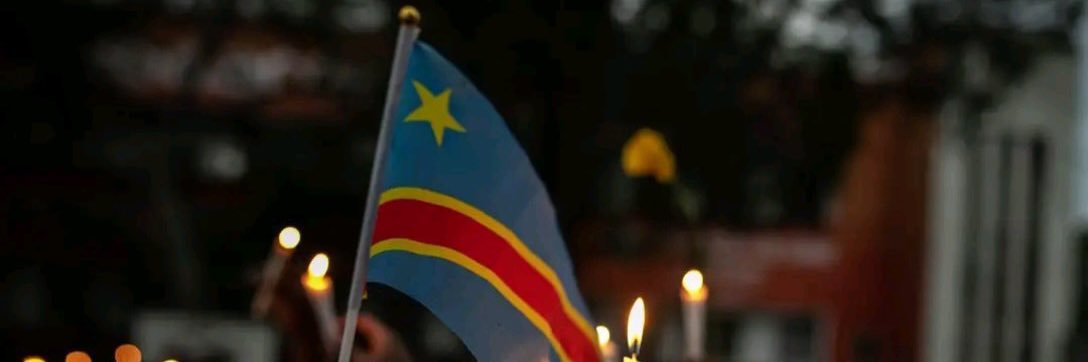
@YNdjoli@afc Vous êtes immonde. Pour un simple RDC–Angleterre, des personnes ont été arrêtées après avoir célébré le but de la RDC, y compris des tenanciers de restaurants. Et vous trouvez normal qu’une rébellion impose recrutements forcés, enlèvements, intimidations,…
Learn stupida ! August 2, 1998 marks the beginning of the Second Congo War.
This date is not merely the starting point of an armed conflict. It symbolizes absolute horror and opens the way to a long series of massacres of civilians that bloodied the east of the Democratic Republic of the Congo for years.
Among these massacres is that of Kasika, which occurred on August 24, 1998 and the following days.
In the villages of Kasika, Kilungutwe, Kalama, and Zokwe, in the territory of Mwenga (South Kivu), more than 1,000 civilians—mainly Nyindu—were killed.
Forces of the Congolese Rally for Democracy (RCD) and the Rwandan Patriotic Army (APR) of Paul Kagame attacked a church during Mass, then the surrounding villages.
Priests, nuns, women (often raped and mutilated before being murdered), children, and babies (some thrown into latrines) were exterminated.
The Mwami (traditional chief) François Mubeza III (Naluindi Francis), chief of the Lwindi chiefdom, was tied up and then killed with a machete, his heart ripped out and his head severed.
His wife, pregnant with twins, was disemboweled.
💀 On the way to Kilungutwe (about 60 km), massacres multiplied.
At Zokwe, dozens of people were killed and burned, and at Kalama dozens of people were burned alive in their homes.
💀 At Kilungutwe, on a market day, the soldiers fired on the crowd gathered in the square, then forced groups of civilians (up to 50 people per hut) to gather in huts where they were massacred.
Some were stripped, bound with their own clothes, and killed.
The houses were looted and set on fire.
What army can do that????!!!!
This crime was documented by the United Nations.
These massacres have remained unpunished, in the same way as the genocide of the 100,000 to 200,000 educated Hutu in Burundi in 1972.
The latter was a state genocide, carried out by the army and the Jeunesses révolutionnaires Rwagasore (a kind of Interahamwe before their time) under the regime of Michel Micombero.
As in Kasika and in so many other places in eastern Congo, the perpetrators and those who ordered the crimes have almost never had to answer for them.
Impunity has been virtually total.
It is precisely this reality that Geno-Cost seeks to have recognized: a genocide for economic gain, a process of massive destruction of Congolese populations motivated by control of the mineral and strategic wealth of the east of the country.
Geno-Cost rightly refuses to reduce these crimes to simple “ethnic” or “tribal conflicts.”
It insists on the economic dimension and on the responsibility of the powers and armed forces that orchestrated or supported these killings.
August 2, 1998 is therefore not an ordinary date.
It is the beginning of a cycle of horrors whose Congolese victims are still waiting for recognition, justice, and reparation.
Geno-Cost is a call to finally break this silence and this unbearable impunity.
@GraceKutino En quoi changer la Constitution va-t-il créer des emplois, ramener la paix à l’Est, combattre l’incompétence et les injustices sociales ? Si la solution à tous nos problèmes se résume à « changeons la Constitution », c’est la politique en mode raccourci.Viens expliquer ça à Fizi
@GraceKutino Et puisque les arguments sérieux semblent te faire défaut, tu nous montres qu’un recrutement est terminé et, par un prodigieux raccourci intellectuel, tu arrives à la conclusion qu’il faut changer la Constitution. Quelle démonstration de logique !
@ADanckaers@TemuniP Il n’y a pas de « couple » à réduire ici ; 🇨🇩 n’est pas une simple relation de forces.
Ce pays dépasse les ambitions personnelles et pernicieuses.
Sa grandeur et sa complexité transcendent les querelles et les comparaisons aux Balkans.
@TemuniP Les fragilités internes du Congo affaiblissent l’État, mais elles n’expliquent pas tout.
Le Rwanda intervient directement, soutenant des groupes armés et exacerbant la violence.
Congo interne et ingérence rwandaise sont deux réalités distinctes qui alimentent ensemble le chaos.
@TLowete@ImperiumDan Oui personne n’a été forcée,
🚨#GOMA👇
BA ANR BAKO NA CIRCULER JUBA ANGALIE BACURUZI BENYE BAKO NATUMIKA SAÏ,BA MOYA BANA BAKULA BITU YABO UKU MOSQUÉ/KATINDO😁