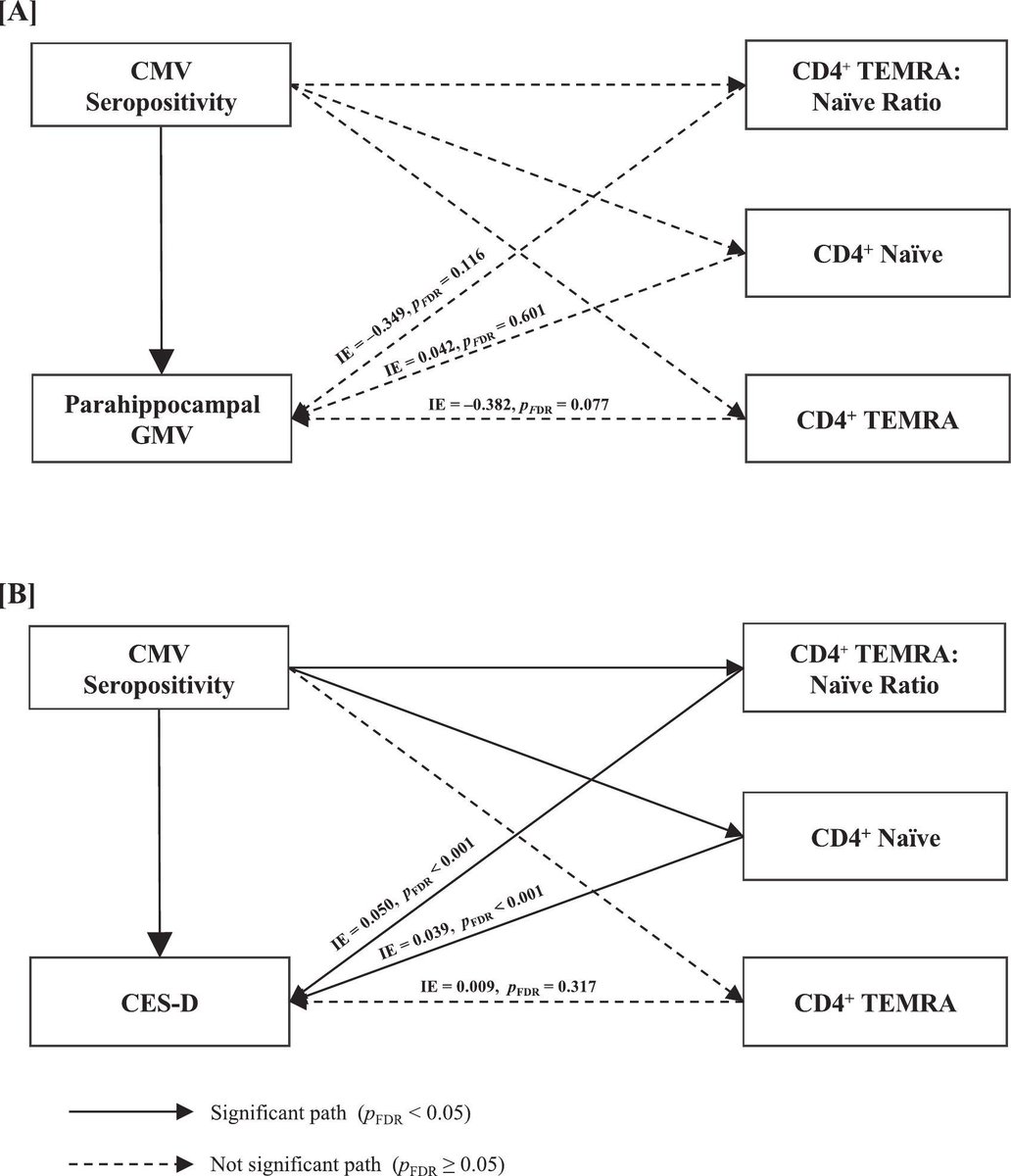
Beautiful work by Haixia Zheng ( https://t.co/MSooPqnDCg ) showing that CMV-associated T-cell differentiation may be a candidate pathway to depression risk: https://t.co/OJobztIhex
To mitigate automation bias, implement a SEIG loop:
1️⃣ Specify task bounds
2️⃣ Elicit structured data
3️⃣ Interrogate assumptions
4️⃣ Ground claims in the record
LLMs function as bounded hypothesis generators, not autonomous actors. #ComputationalPsychiatry#ClinicalAI#HealthTech
In a new viewpoint piece,
https://t.co/D09cYL5Pdk deployment of LLMs in psychiatry requires strict oversight to @JohnTorousMD and I argue that mental health practitioners need specific training to prevent fluent but fabricated clinical narratives.
How do anxiety disorders, OCD, and PTSD change our behavior?
Our neuroimaging research, out now in Molecular Psychiatry, shows: it's about more than the diagnosis. ⬇️
Learn more: https://t.co/cdstgI4cuT
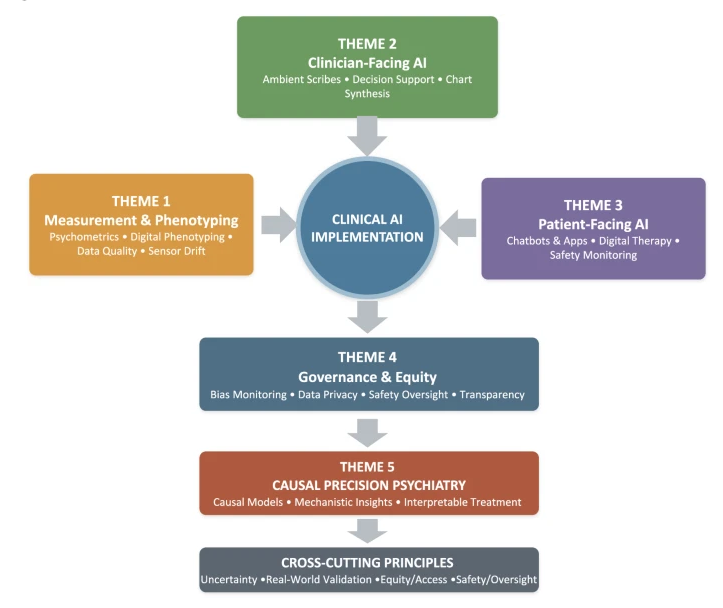
AI is becoming clinically relevant for mood and anxiety care—but the evidence is uneven, and enthusiasm must be matched by guardrails. I point out that the priority now is not “AI everywhere,” but actionable, validated, clinically accountable tools that improve care.
We have less than 1 week until the Embodied Minds Summit, and the agenda is finalized! https://t.co/MkyLcFB58C
If you are still waiting for an invitation, the final wave for this small invite-only meeting will be going out later today, so stay tuned.
The draft agenda for the UCLA Embodied Minds Summit is now live on the website! See “Day 2 — The Conference”. It contains the workshop assignments and speaker order.
https://t.co/MkyLcFB58C
GPT-5 Pro just scored a 148 IQ on the official Mensa Norway test that’s genius territory.
This isn’t a cherry-picked result either… it’s the average over multiple runs.
We’re now looking at an AI that outperforms almost every human on Earth in raw problem-solving ability.
The “AI will never match human intelligence” crowd just got left in the dust.
Coming in September 2025 are 16 chapters by experts on "The Bodily Self, Emotion, and Subjective Time: Exploring Interoception through the Contributions of A.D. (Bud) Craig". Stay tuned for my presentation of online chapters already available online.
https://t.co/NWSUzzCzIQ?
🎧🧠Inspired by @LIBR_Tulsa-@mpwpaulus's great idea, I used @Google's NotebookLM to turn one of my thesis papers into a podcast—and it worked really well!
▶️Give it a listen: https://t.co/CkJEyAVIFS
📄 You can check out the original paper here: https://t.co/T2VfJRUatO
A labor of love with my friend and long-time collaborator Murray B. Stein. Addressing Difficult-to-Treat Anxiety: A review integrating computational psychiatry, systems neuroscience, & novel interventions. Mechanistic insights for precision psychiatry. https://t.co/rEjBKjxCxs