You can't let the slop and cringe deny you the wonder of AI. This is the most exciting thing we've made computers do since we connected them to the internet. If you spent 2025 being pessimistic or skeptical on AI, why not give the start of 2026 a try with optimism and curiosity?
Anatomía del Evento de Log Perfecto
Un evento de log bien construido es mucho más que una línea de texto. Es una pieza de evidencia que permite reconstruir lo que ocurrió sin ambigüedades. Para que un registro sea realmente útil en análisis, monitoreo o forense, debe responder claramente a cuatro preguntas clave que definen el contexto completo de una acción.
El cuándo establece el momento exacto del evento. Fecha, hora y un identificador de correlación permiten unir múltiples acciones relacionadas y entender la secuencia real de lo ocurrido. Sin una marca temporal precisa, cualquier investigación pierde sentido y se vuelve especulación.
El dónde aporta el contexto técnico. Identificar la aplicación, su versión, el servidor, el servicio o incluso la ubicación del código permite saber en qué punto del sistema ocurrió la acción. Esto es esencial para diferenciar fallos de infraestructura de problemas de lógica o abuso interno.
El quién define al actor. Ya sea un usuario autenticado, una identidad técnica o una IP de origen, este dato permite atribuir acciones y detectar comportamientos sospechosos como intentos repetidos, accesos anómalos o movimientos laterales. Sin identidad, no hay trazabilidad.
El qué describe el evento en sí. Tipo, severidad, resultado y motivo explican qué pasó realmente y por qué. Aquí es donde se entiende si fue un fallo de autenticación, un acceso denegado o una acción legítima. Este detalle convierte al log en información accionable y no solo en ruido.
Cuando un evento responde correctamente a estas cuatro dimensiones, deja de ser un simple registro y se transforma en una herramienta poderosa para detección, análisis y respuesta. Así es como se construyen logs que realmente sirven en seguridad y pentesting.
We need indexes to make databases fast. BUT there are some important time/space and read/write optimization tradeoffs to consider!
Latest YT → fun overview of this aspect of databases.
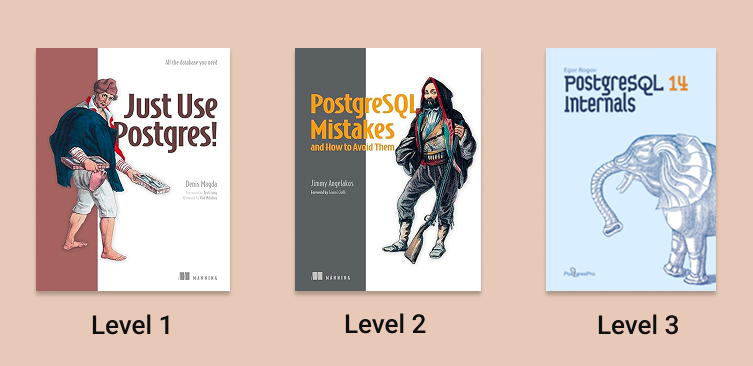
As the year comes to an end, many of us start setting New Year’s resolutions. If learning and mastering Postgres is one of your goals for the year ahead, here’s a list of books that can help you level up, depending on what interests you most or your current level of expertise.
Level 1, “Just Use Postgres!” - (re)discover the breadth and depth of modern Postgres capabilities. You’ll learn how to use the database not only for traditional transactional applications, but also how it can efficiently handle full-text search, time-series, geospatial, generative AI, and other workloads.
https://t.co/41DnIUz4EZ
Level 2, “PostgreSQL Mistakes and How to Avoid Them” - learn how to design, build, and maintain Postgres-based solutions by following common best practices while avoiding typical pitfalls. From bad SQL and improper data type usage to performance and security best practices, this book helps you prepare for production and avoid many surprises along the way.
https://t.co/TM7dEJC3uO
Level 3, “Postgres Internals” - understand how the database is designed and how it functions internally. After reading this book, you’ll stop treating Postgres as a mysterious black box. You’ll learn the implementation details of its MVCC, buffer cache, write-ahead log, locking system, and other components of the database engine. You’ll also see how the database decides on query execution strategies and how various table and index access methods work in practice.
https://t.co/jApVa4OxaD
Happy New Year, and never stop learning!
Ruby/Rails is ending the year like it’s launching a new era 🚀
• https://t.co/2NK1vX8bQQ got open-sourced 🐇✅
• https://t.co/NM4kGkFGNS got open-sourced (by @dhh) ✅
• O’Saasy: a modern SaaS license (by @jasonfried) ✅
• Rails masterclass from @37signals ✅
• Ruby turns 30! ✅
• Ruby 4 on the horizon ✅
• Ruby-lang launched a new site ✅
• Omarchy Linux (opinionated Arch @dhh) ✅
We’re so back. What a time to build.
Drop your 2025 Ruby/Rails/Gem wins (big or small) 👇
#Ruby #RubyOnRails #Rails #OpenSource #SaaS #DevTool #BuildInPublic #rubyrelease30th
A Staff Engineer isn’t an “extra strong Senior.” It’s a fundamentally different job.
At the Staff level, your primary output is decision quality, not code velocity. If the company only needed more throughput, they’d scale headcount or buy tools. They bring in Staff Engineers when the cost of a bad decision exceeds the cost of an extra hire.
On paper, a team with multiple Staff Engineers looks inefficient. In practice, that leverage is what prevents the organization from collapsing under its own complexity. As systems grow, the biggest risk is no longer “can we build this?” but “are we building the right thing, the right way, at the right time?”
A Staff Engineer’s real work starts when things are unclear:
– Requirements are fuzzy
– Trade-offs are uncomfortable
– Deadlines conflict with correctness
– Short-term wins threaten long-term health
Your job is to slow the team down just enough to ask the questions others don’t have time—or permission—to ask.
Where many new Staff Engineers go wrong is mistaking authority for impact. Complaining about legacy systems, proposing rewrites, or benchmarking against famous companies is easy. It feels productive. But without deep context, it’s just noise. Most legacy exists because it once solved a real problem under real constraints.
A good Staff Engineer does the opposite: They learn why the system is the way it is. They understand the business pressures shaping technical decisions. They identify which constraints are real—and which ones can be challenged.
The most valuable thing you do is not writing elegant code. It’s preventing irreversible mistakes:
– Choosing the wrong abstraction too early
– Over-engineering before scale exists
– Under-engineering systems that must scale
– Creating coupling that blocks future product moves
You guide product and engineering leadership through trade-offs they don’t have the technical depth to fully see. You translate long-term technical risk into business language. You help the team avoid decisions that feel good this quarter but cripple the roadmap next year.
Senior Engineers ship features. Staff Engineers protect the system and the business that depends on it.
If you measure your impact by commits or tickets closed, you’ll miss the point. If nothing explodes on your watch, that’s usually success.
Meet Android Use - an open source library that gives AI agents hands to control native Android apps.
It bypasses expensive vision models to run on cheap hardware, automating field ops in places laptops can't go.
Watch Android Use in action: