INSTEAD OF WATCHING AN HOUR OF NETFLIX TONIGHT.
This 1-hour Stanford lecture by Joel Peterson will teach you more about negotiation and getting what you want than most people learn in years.
Bookmark it and give it an hour, no matter what.
House hunting tip 101
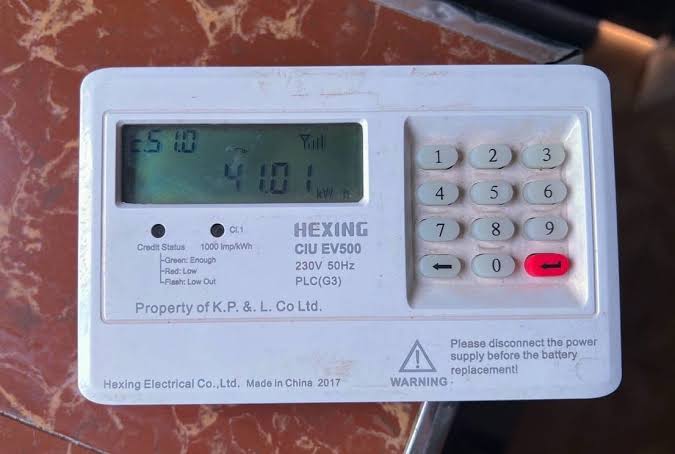
Before signing that rental agreement, check the electricity meter setup!
Many rental plots and appartments use Last Mile Connectivity (LMCP) prepaid meters. This can quietly inflate your power costs even if you're buying tokens directly from KPLC. Here's why you MUST verify.
Under LMCP, households get a subsidized connection around KSh 15,000 fee advanced as interest-free Stima Loan. No upfront cash, but KPLC deducts 50% of EVERY token purchase to repay it until cleared often 2-3 years. So if you buy KSh 100 tokens, only KSh 50 worth of actual units. The rest pays off the landlord/property's subsidized connection.
As a Result, you pay the same or higher for tokens, but get fewer units compared to a normal non-LMCP meter with no loan deduction. Tenants effectively foot the bill for the subsidized meter/connection the landlord benefited from without any discount on your end. It's like paying extra rent disguised as power costs.
Pro tip to test before selecting a house:
Buy a small token, say KSh 100 directly via *977#, M-Pesa (paybill 888880), or app, using the meter's number. If you get normal units e.g., ~5-6+ units (depending on band/tariff), it's likely a standard meter and you are good to go.
If you get half the expected units i.e., only ~2-3 units or less, it's under LMCP with Stima Loan deduction. Walk away or negotiate lower rent to offset.
You should ask the landlord/agent upfront
if the meter under Last Mile Connectivity, or has any outstanding Stima Loan?. Alternatively, dial *977# and select manage meters/token to check details. If it's LMCP and loan is ongoing, factor that into your budget, or push for landlord to clear it by paying lump sum at KPLC office.
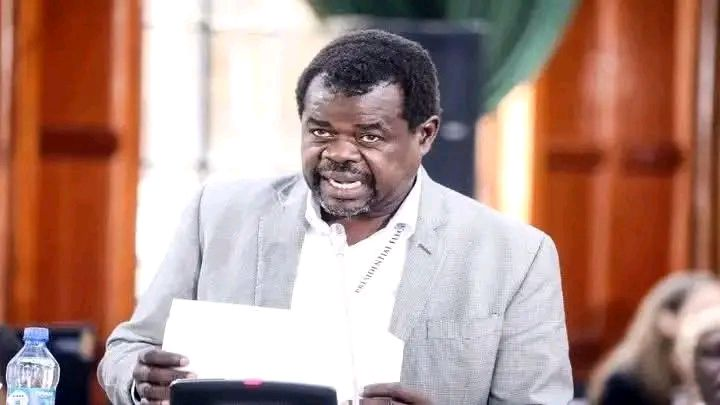
Senator Okiya Omtatah has taken the battle to the High Court with a petition that could change Kenya’s history.
Omtatah argues that of the Sh9.11 trillion borrowed between 2014 and 2024, only Sh2.57 trillion was legally approved by Parliament through Appropriation Acts. He alleges the remaining Sh6.54 trillion is "odious debt" money borrowed unconstitutionally, never appearing in any budget, and never benefiting the people.
The petition specifically targets USD 7.1 billion in Eurobond debt, asking the court to declare it null and void.
In recent sessions, the IMF has attempted to plead diplomatic immunity, seeking to be struck from the case. Omtatah’s team has countered this, arguing that an international organization cannot commit "economic terrorism" by funding illegal processes and then hide behind immunity to avoid accountability.
The Chief Justice has assigned a multi-judge bench to determine this case, acknowledging that the question of whether a nation can repudiate "illegal" sovereign debt is a matter of supreme public interest.
Many people think you can only shop from China using Alibaba or AliExpress… but that’s not true.
These are alternative sourcing websites from China:
1. Industrial equipment
https:// www.made-in-china. com
2. Jewelry & accessories
https://www. gooddiy. com
3. Small goods (non-bulk items)
https://www.yiwugo. com
4. Beauty products & cosmetics
https://www.nala. com. cn
5. Women’s shoes
https://www.go2. cn
6. Toys & kids items
https://www.ctoy. cn
7. Children’s clothing
https://www.3e3e. cn
8. Small batch / wholesale products
https://www.dhgate. com
9. Electronics & gadgets
https://www.globalsources. com
10. Fashion (affordable clothing & accessories)
https://www.zaful. com
You are bored because you are not doing side quests.
Life is not just work and lying in bed doing nothing.
Here are 50 side quests every man should complete:
Mental side quests:
• Read 12 books in one year
• Learn a new language to conversational level
• Meditate for 30 days without missing one
• Write in a journal every morning for 90 days
• Spend one full day completely alone in silence
• Do a full week with no social media
• Learn chess and actually get good at it
• Study one subject you know nothing about
• Write your own story from beginning to now
• Memorize 10 poems or quotes that move you
I don't think people understand the gravity of the situation as the UN is preparing for possible nuclear weapon use in Iran.
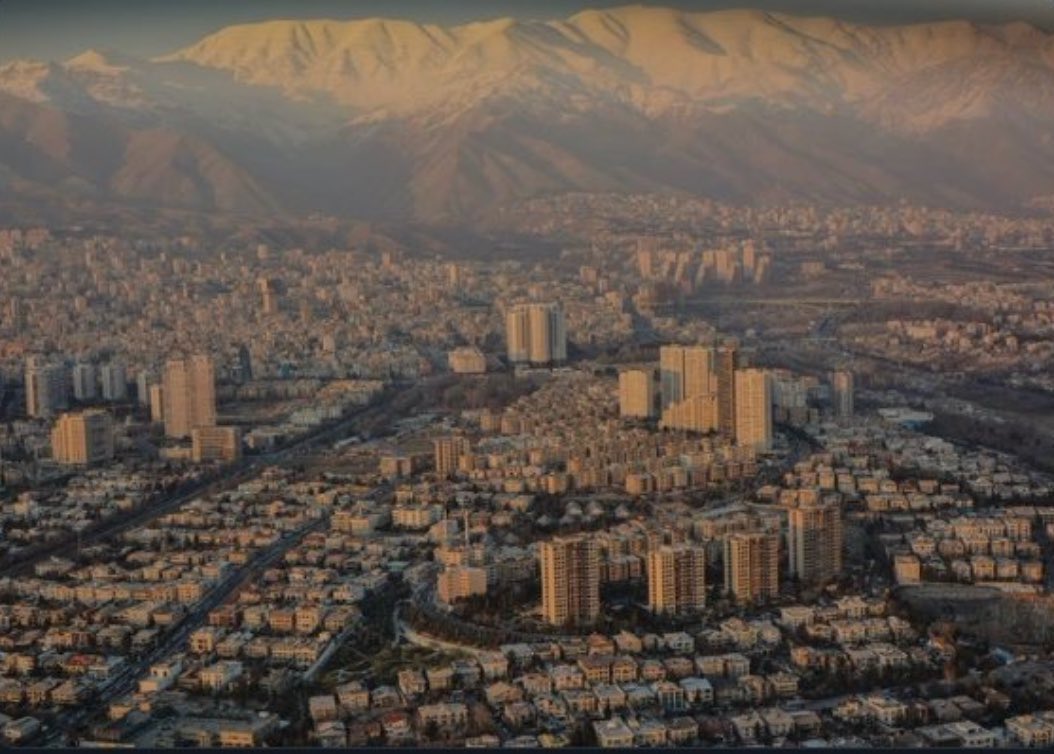
This is a picture of Tehran. For you uneducated, untraveled, never-served, warhawks licking your chops at the thought of bombing it. It's not some low population desert. There are families, children, family pets. Regular working class people with dreams. You're sick to want war.
Tehran is a city of nearly 10,000,000 people. Imagine nuking Washington, Berlin, Paris, London, or beyond, bombed with nuclear weapons.
I gave up my diplomatic career to leak this information. I suspended my duties so as not to be part of or a witness to this crime against humanity, in an attempt to prevent a nuclear winter before it is too late.
Yesterday, nearly ten million people protested “No Kings” in the United States. The possibility of the use of nuclear weapons must be taken very seriously. It's dangerous. Act now. Spread this message worldwide. Take the streets. Protest for our humanity and future. Only the people can stop it. History will remember us.
When you intentionally stand out, you become a target for hostility.
People silently dislike you not because you are arrogant but because you have refused to be submissive to their expectations.
They want you to:
• Stay humble but not too confident
• Be ambitious but not too successful
• Speak your mind, but not too boldly
• Blend in but don't shine too brightly
However, when you break these expectations, people become uneasy with you, they become hostile because you have opened their deep-rooted wounds.
Your authenticity irritates the person who spends his life pretending.
People don't hate who you are, they hate what they assume you represent in their heads.
They might decide that you are selfish, when you are just independent,
Or, you are manipulative when you are just observant,
Or, you are arrogant when you are just focused.
When people cannot read you, they project their fears onto you.
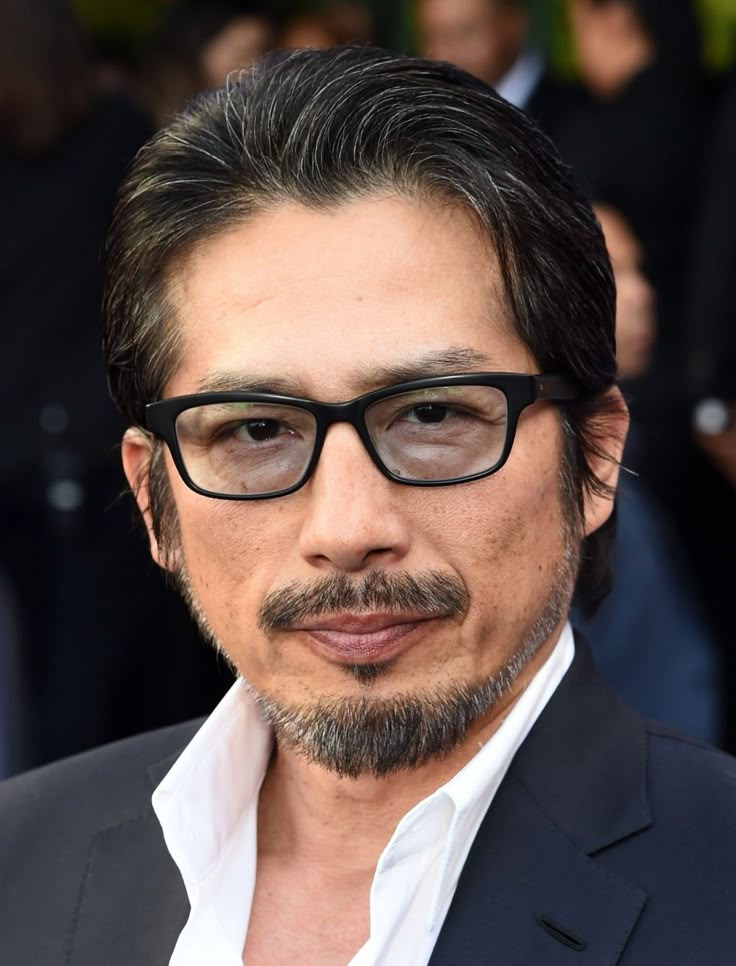
Speaking about the deep contradictions in human nature, Japanese actor Hiroyuki Sanada said:
“Some people dream of having a swimming pool at home, while those who have one barely use it. Those who have lost a loved one feel a profound sense of loss, while others often complain about the relatives still in their lives. Those without a partner long for one, while those who have a partner often fail to appreciate them. The hungry would give anything for a meal, while the full complain about the taste of their food. Those without a car dream of owning one, while those who have a car are always looking for a better one.
The key to happiness is gratitude—to truly see and value what we already have, and to understand that somewhere, someone would give everything for what we take for granted.”
@grok@ChinaNow24@grok but Vladamirs official account claims he's dead...a leader of such a powerful nation can't be making baseless allegations of that magnitude, can he?
#WATCH Jeffrey Sachs Blasts US Power Grab Over Venezuela, Maduro Capture at Historic UN Meeting
🇺🇸 US military interventions in foreign countries since WWII (incomplete list):
🇮🇷 Iran: 1946
🇨🇳 China: 1946 - 1949
🇬🇷 Greece: 1947 - 1949
🇮🇹 Italy: 1948
🇵🇭 Philippines: 1948 - 1954
🇰🇵 Korea: 1950 - 1953
🇮🇷 Iran: 1953
🇻🇳 Vietnam: 1954
🇬🇹 Guatemala: 1954
🇱🇧 Lebanon: 1958
🇵🇦 Panama: 1958
🇭🇹 Haiti: 1959
🇨🇩 Congo: 1960
🇻🇳 Vietnam: 1960 - 1964
🇨🇺 Cuba: 1961
🇨🇺 Cuba: 1962
🇱🇦 Laos: 1962
🇪🇨 Ecuador: 1963
🇵🇦 Panama: 1964
🇧🇷 Brazil: 1964
🇻🇳 Vietnam: 1965 - 1975
🇮🇩 Indonesia: 1965
🇨🇩 Congo: 1965
🇩🇴 Dominican Republic: 1965
🇱🇦 Laos: 1965 - 1973
🇬🇭 Ghana: 1966
🇬🇹 Guatemala: 1966 - 1967
🇰🇭 Cambodia: 1969 - 1975
🇴🇲 Oman: 1970
🇱🇦 Laos: 1971 - 1973
🇨🇱 Chile: 1973
🇰🇭 Cambodia: 1975
🇦🇴 Angola: 1976 - 1992
🇮🇷 Iran: 1980
🇱🇾 Libya: 1981
🇸🇻 El Salvador: 1981 - 1992
🇳🇮 Nicaragua: 1981 - 1990
🇱🇧 Lebanon: 1982 - 1984
🇬🇩 Grenada: 1983
🇭🇳 Honduras: 1983 - 1989
🇮🇷 Iran: 1984
🇱🇾 Libya: 1986
🇧🇴 Bolivia: 1986
🇮🇷 Iran: 1987 - 1988
🇱🇾 Libya: 1989
🇵🇭 Philippines: 1989
🇵🇦 Panama: 1989 - 1990
🇱🇷 Liberia: 1990
🇮🇶 Iraq: 1990 - 1991
🇮🇶 Iraq: 1991 - 2003
🇭🇹 Haiti: 1991
🇸🇴 Somalia: 1992 - 1994
Yugoslavia: 1992 - 1994
🇧🇦 Bosnia: 1993 - 1995
🇭🇹 Haiti: 1994 - 1996
🇭🇷 Croatia: 1995
🇨🇩 Zaire (Congo): 1996 - 1997
🇱🇷 Liberia: 1997
🇸🇩 Sudan: 1998
🇦🇫 Afghanistan: 1998
🇮🇶 Iraq: 1998
Yugoslavia: 1999
🇲🇰 Macedonia: 2001
🇦🇫 Afghanistan: 2001
🇮🇶 Iraq: 2003
🇮🇶 Iraq: 2003-present
🇭🇹 Haiti: 2004
🇸🇾 Syria: 2011-present
🇺🇦 Ukraine: 2014-present
🇻🇪 Venezuela: 2026
The UN Security Council witnessed a rare, explosive intervention as economist Jeffrey Sachs delivered a sweeping warning on Venezuela. Speaking during an emergency session, Sachs framed the crisis as a test of international law itself, not leadership politics. He traced decades of U.S. regime-change actions, questioned the legality of force and sanctions, and warned of catastrophic consequences if UN rules collapse in a nuclear age.
Since 1947, United States foreign policy has repeatedly employed force, covert action, and political manipulation to bring about regime change in other countries. This is a matter of carefully documented historical record. In her book Covert Regime Change (2018), political scientist Lindsey O’Rourke documents 70 attempted US regime-change operations between 1947 and 1989 alone.
These practices did not end with the Cold War. Since 1989, major United States regime-change operations undertaken without authorization by the Security Council have included, among the most consequential: Iraq (2003), Libya (2011), Syria (from 2011), Honduras (2009), Ukraine (2014), and Venezuela (from 2002 onward).
The methods employed are well established and well documented. They include open warfare; covert intelligence operations; instigation of unrest; support for armed groups; manipulation of mass and social media; bribery of military and civilian officials; targeted assassinations; false-flag operations; and economic warfare aimed at collapsing civilian life.
These measures are illegal under the UN Charter, and they typically result is ongoing violence, lethal conflict, political instability, and deep suffering of the civilian population.
The case of Venezuela
The recent United States record with respect to Venezuela is clear.
In April 2002, the United States knew of and approved an attempted coup against the Venezuelan government.
In the 2010s, the United States funded civil society groups actively engaged in anti-government protests, notably in 2014. When the government cracked down on the protests, the US followed with a series of sanctions. In 2015, President Barrack Obama declared Venezuela to be “an unusual and extraordinary threat to the national security and foreign policy of the United States.”
In 2017, at a dinner with Latin American leaders on the margins of the UN General Assembly, President Trump openly discussed the option of the US invading Venezuela to overthrow the government.
During 2017 to 2020, the US imposed sweeping sanctions on the state oil company. Oil production fell by 75 percent from 2016 to 2020, and real GDP per capita (PPP) declined by 62 percent.
The UN General Assembly has repeatedly voted overwhelmingly against such unilateral coercive measures. Under international law, only the Security Council has the authority to impose such sanctions.
On 23 January 2019, the United States unilaterally recognized Juan Guaidó as “interim president” of Venezuela and on 28 January 2019 froze approximately $7 billion of Venezuelan sovereign assets held abroad and gave Guaidó authority over certain assets.
These actions form part of a continuous United States regime-change effort spanning more than two decades.
Recent United States global escalation
In the past year, the United States has carried out bombing operations in seven countries, none of which were authorized by the Security Council and none of which were undertaken in lawful self-defense under the Charter. The targeted countries include Iran, Iraq, Nigeria, Somalia, Syria, Yemen, and now Venezuela.
In the past month, President Trump has issued direct threats against at least six UN member states, including Colombia, Denmark, Iran, Mexico, Nigeria and of course Venezuela. These threats are summarized in Annex I to this statement.
What is at stake today
Members of the Council are not called upon to judge Nicolás Maduro.
They are not called upon to assess whether the recent United States attack and ongoing naval quarantine of Venezuela result in freedom or in subjugation.
Members of the Council are called upon to defend international law, and specifically the United Nations Charter.
The realist school of international relations, articulated most brilliantly by John Mearsheimer, accurately describes the condition of international anarchy as “the tragedy of great power politics.” Realism is therefore a description of geopolitics, not a solution for peace. Its own conclusion is that international anarchy leads to tragedy.
In the aftermath of World War I, the League of Nations was created to end the tragedy through the application of international law. Yet the world’s leading nations failed to defend international law in the 1930s, leading to renewed global war.
The United Nations emerged from that catastrophe as humanity’s second great effort to place international law above anarchy. In the words of the Charter, the UN was created “to save succeeding generations from the scourge of war, which twice in our lifetime has brought untold sorrow to mankind.”
Given that we are in the nuclear age, failure cannot be repeated. Humanity would perish. There would be no third chance.
Measures required of the Security Council
To fulfill its responsibilities under the Charter, the Security Council should immediately affirm the following actions:
The United States shall immediately cease and desist from all explicit and implicit threats or use of force against Venezuela.
The United States shall terminate its naval quarantine and all related coercive military measures undertaken in the absence of authorization by the Security Council.
The United States shall immediately withdraw its military forces from within and along the perimeter of Venezuela, including intelligence, naval, air, and other forward-deployed assets positioned for coercive purposes.
Venezuela shall adhere to the UN Charter and to the human rights protected in the Universal Declaration of Human Rights.
The Secretary-General shall immediately appoint a Special Envoy, mandated to engage relevant Venezuelan and international stakeholders and to report back to the Security Council within fourteen days with recommendations consistent with the Charter of the United Nations, and the Security Council shall remain urgently seized of this matter.
All Member States shall refrain from unilateral threats, coercive measures, or armed actions undertaken outside the authority of the Security Council, in strict conformity with the Charter.
In Closing
Mr. President, Distinguished Members,
Peace and the survival of humanity depend on whether the United Nations Charter remains a living instrument of international law or is allowed to wither into irrelevance.
That is the choice before this Council today.
Thank you.
🇨🇳🇺🇸 CHINA WARNS THE UNITED STATES
“If you want war, you will get war; if you want to destroy China, you will be destroyed. China will not fire the first shot, but China will not allow you to fire the second shot”
— Victor Gao, President of China Energy Security Institute