Nigeria needs a ruthless dictator who would cling to power for the next 20 years for a complete overhaul of the nation. Build it brick by brick, reengineer even human beings and their thinking. There’s just too much work to do.
Algorithms Are Colonising African Youths
Nigerian historian Iyo Obietonbara argues that social media algorithms are a tool of colonialism, influencing what African youths consider valuable. Instead of building organisations to struggle for liberation, many of our young people are making videos about trivial matters.
Do you agree? Disagree? Drop us a comment.
For more like this, follow The Spearhead.
Algorithmic Manipulation and Distortion for Neocolonialism.
The digital age promised the democratization of knowledge for humanity but Western engineered social media algorithms have instead birthed a subtle form of intellectual neocolonialism.
By aggressively boosting hyper viral and anti intellectual content in developing nations, big tech platforms actively reward buffoonery while burying educational and developmental discourse.
This algorithmic manipulation keeps Global South populations distracted, economically dependent, and culturally degraded.
In developing nations like Nigeria, so called content creators, who go to the markets to shout and act mad or those who show the world their morning poop or drink bleach/detergent or masturbate on live stream have amassed millions of followers and unprecedented financial fortunes by leaning heavily into chaotic and unrefined personas.
While often framed as harmless entertainment or organic grassroots success, their explosive reach is heavily amplified by artificial intelligence engagement loops.
Algorithms built by corporations in the Global North systematically prioritize outrage, erratic antics, and shock value over substance to maximize platform retention time.
This systemic push creates a toxic ecosystem with severe socio political consequences.
Young minds are systematically incentivized to chase viral triviality rather than pursue engineering, science, or local industrial innovation.
High visibility buffoonery reshapes the global perception of developing nations, reinforcing reductive, primitive stereotypes.
Silicon Valley retains absolute control over data and ad revenue architectures, exporting attention deficit economics while extracting local digital wealth.
Ultimately, the most dangerous weapon of neocolonialism is the neutralization of critical thought.
Developing nations face immense structural challenges, from economic inflation and political corruption to infrastructure deficits.
Addressing these issues requires an organized, intellectually awake, and politically conscious youth demographic.
By saturating the digital public space with engineered absurdity, social media algorithms act as a digital opium.
They keep the most energetic segment of the population locked in cycles of internet drama and superficial entertainment.
As long as the collective attention of the Global South is successfully anchored to the latest viral antics of manufactured celebrities, the deeper economic structures keeping these nations dependent on foreign powers remain completely unchallenged.
"Nigeria is not failing. Nigeria is functioning exactly the way it was designed to. We pride ourselves in our resilience, but in all honesty, this is a low vibration state of existence. It places people in a permanent state of survival mode." - Nigerian youth says
"Nigeria is not failing. Nigeria is functioning exactly the way it was designed to. We pride ourselves in our resilience, but in all honesty, this is a low vibration state of existence. It places people in a permanent state of survival mode." - Nigerian youth says
Nigeria has unveiled a $750 million renewable electrification initiative targeting 1,350 solar mini-grids nationwide, including 250 that will connect to the national grid.
The programme is expected to mobilize $1.1 billion in private-sector funding and improve access to power for underserved communities.
Large-scale solar projects under the Energizing Education Programme are providing electricity to universities and teaching hospitals.
Government agencies and public institutions are also benefiting from the National Public Sector Solarization Initiative, which reduces reliance on costly generators.
Nigeria needs energy literacy.
Data should inform citizens, not just analysts.
People don’t really understand what these numbers mean for industry, power generation and economic planning.
NNPC Ltd. has released its Monthly Report Summary for January 2026.
This edition highlights a robust month‑on‑month increase in production, with crude oil and condensate reaching 1.64 mmbopd and natural gas output climbing to 7.283 mmscf/d, representing increases of approximately 5.81% and 5.34%, respectively, when compared with the December 2025 report.
We also highlight key milestones, including scheduled progress on the OB3 River Niger Crossing, reinforcing our commitment to infrastructure development. The report covers key figures such as revenue, profit after tax, strategic initiatives during the period, and more.
For the full summary, click the link below to download:
https://t.co/kdvObmD0jn
#OpenNNPC
#EnergyForToday
#EnergyForTomorrow
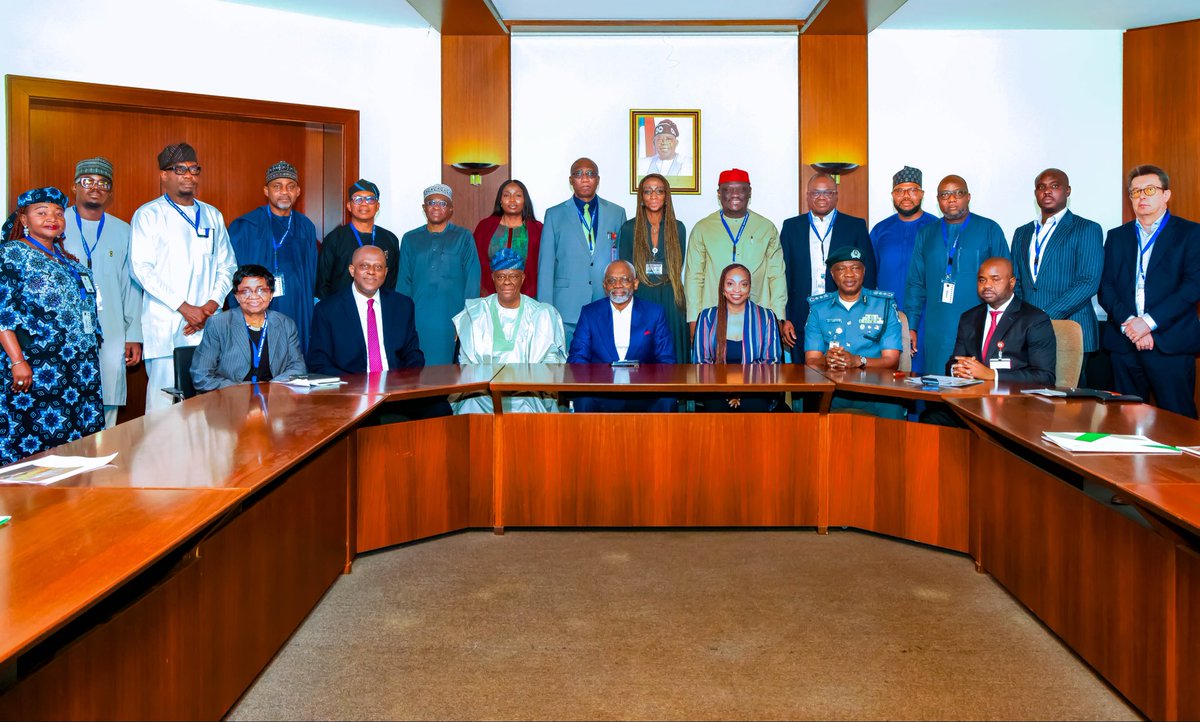
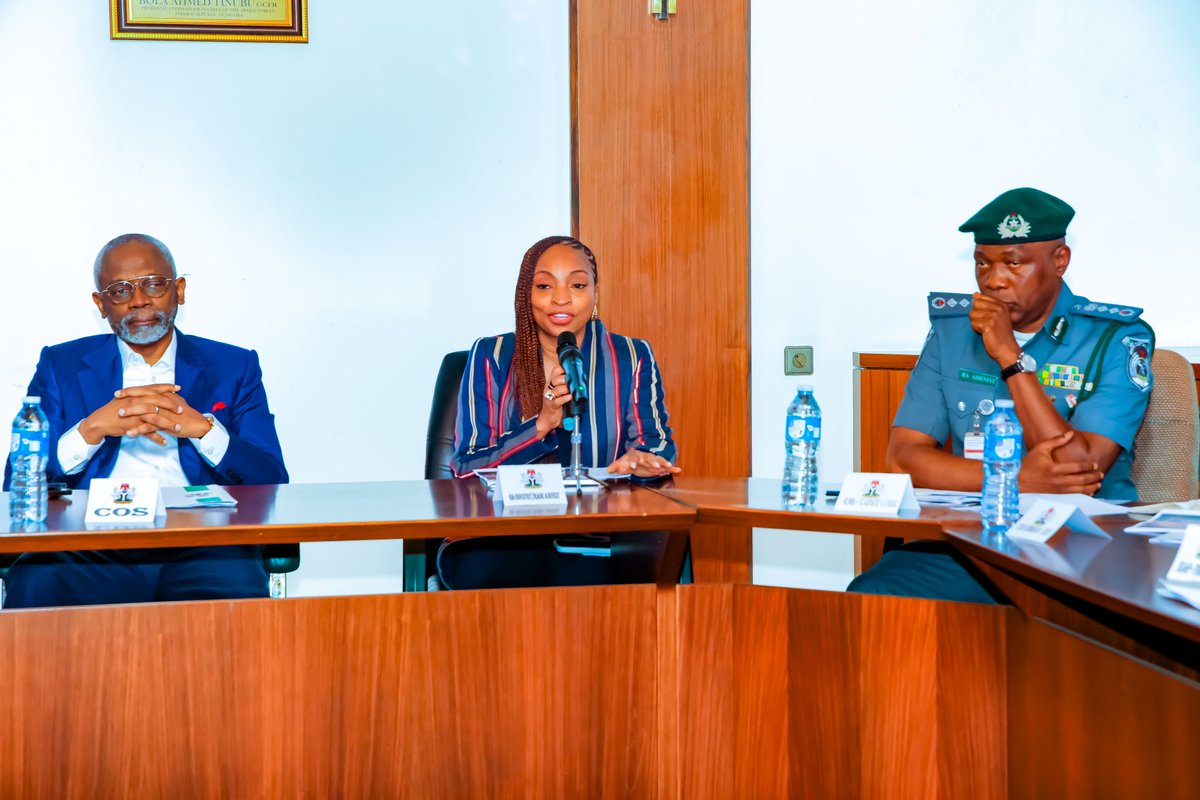
In a strategic push to accelerate Nigeria’s economic growth, the official launch of Phase One of the National Single Window (NSW) is set for March 27 - a unified digital platform designed to simplify and coordinate trade across relevant government agencies.
Following the Stakeholders Pre-Launch Meeting on March 4th at the State House, I have been delegated by the Presidency to coordinate the final implementation phase, ensuring the National Single Window (NSW) is fully prepared for its official go-live.
This is a monumental step in achieving a more efficient, cost-effective trade environment for Nigeria.
#WeMove🇳🇬🇳🇬🇳🇬🎯 #NationalSingleWindow #FMITI #HMIndustryTradeInvestment
The Central Bank of Nigeria has received responsibly sourced gold refined to London Bullion Market Association (LBMA) Good Delivery standards into Nigeria’s foreign reserves.
This milestone brings the Bank’s total gold holdings to $3.5 billion, marking a significant step in Nigeria’s reserve diversification strategy.
@oluwadamisi This. And the deeper point people miss is that the refinery proves that Africans can build infrastructure at a scale that changes the geopolitical reality of an entire country.
Criticise the man, fine. But don’t let the criticism blind you to what the project represents.