Meet Nicholas Perkins, this visionary HBCU grad who acquired all 92 Fuddruckers restaurants for $18.5 MILLION! 👏🏾
Nicholas Perkins (Howard University & Fayetteville State University) made history as the new owner of the iconic “World’s Greatest Hamburgers” brand — spanning the U.S., Canada, Panama, and Mexico.
From successful franchisee to full owner of a national chain!! This is what Black wealth building, vision, and HBCU excellence look like in action!
Proud of Nicholas Perkins for showing the world what’s possible when ambition meets opportunity. The future of Black business is bright!👏🏾👏🏾
🚨 AI Just Created a Material Humans Never Imagined!
Scientists have developed a revolutionary new material that is stronger than steel, lighter than foam, and up to 5 times stronger than titanium.
The most surprising part? It was designed by artificial intelligence, not human engineers.
Using AI, researchers created entirely new microscopic structures that were later 3D-printed and tested. The results could lead to lighter airplanes, stronger buildings, and more efficient vehicles.
This breakthrough shows that AI is no longer just helping scientists—it’s starting to invent alongside them.
What could the world look like when AI designs the materials of the future?
Source: University of Toronto. AI-designed nanomaterials achieve exceptional strength and lightness. University of Toronto Engineering News.
🚨 THE COMPUTER CHIP THAT RUNS ON LIGHT
What if the future of computers isn't powered by electricity at all?
Scientists have developed a new chip that uses light instead of electrons to process information. This breakthrough could make computers much faster, more powerful, and far more energy-efficient.
Even more intriguing, it may help unlock the next generation of AI and supercomputers.
The age of light-powered computing may be closer than we think.
Source: Nature Photonics. (n.d.). Research on photonic computing and integrated photonic circuits. Nature Photonics.
🚨 SCIENTISTS JUST BUILT THE MISSING PIECE FOR KILOWATT-CLASS 2-MICRON FIBER LASERS.
For years, the 2-micron wavelength range has been incredibly promising for medicine, agriculture, and advanced manufacturing but reliable high-power sources were missing.
Now, researchers at Laser Zentrum
Hannover have developed novel fiber optic components based on triple-clad fibers that finally make it possible.
Using a patented CO₂ laser processing technique, they created lateral pump couplers that achieve 90% coupling efficiency at 475 watts with clear potential to reach the full 1 kW class.
They also built cladding mode strippers that efficiently remove unused pump light.
Why this matters:
• 2-micron lasers are ideal for precise medical procedures, plastic welding, and agricultural applications where other wavelengths fall short
• Until now, commercial sources struggled with power, beam quality, and reliability in quasi-continuous-wave operation
• These new components solve the pump delivery problem and enable higher integration and power scaling
The deeper implication is huge:
We are finally unlocking practical, high-power lasers in a wavelength range that was previously too difficult to scale.
This could open the door to new generations of medical devices, more efficient industrial processes, and entirely new applications that weren’t feasible before.
What do you think which field will benefit most from accessible 2-micron kilowatt lasers: medicine, manufacturing, or something else entirely?
Follow for more frontier photonics and future technology.
⚡ The Copper Breakthrough That Could Cool the Internet
A new discovery from the University of Illinois Urbana-Champaign may change how the world’s data centers stay cool.
Scientists have 3D printed pure copper cold plates with tiny internal channels that let liquid flow directly through the metal.
This pulls heat away from computer chips much faster than traditional air-conditioning systems.
The result? Cooling energy use could drop by up to 98%, a huge shift as AI, cloud computing, and streaming continue to push global electricity demand higher.
Instead of cooling entire rooms, this system cools the chips directly—faster, smarter, and far more efficient. Researchers say this could help make future digital infrastructure much more sustainable.
Source: University of Illinois Urbana-Champaign. 3D-printed copper cold plate cooling technology for high-performance computing systems.
🚨 SCIENTISTS JUST CREATED A 5D GLASS DISC THAT CAN STORE 360 TERABYTES AND LAST FOR BILLIONS OF YEARS.
Researchers have developed a revolutionary data storage technology: a tiny glass disc that can hold 360 terabytes of information (roughly 100,000 times the capacity of a standard DVD) and survive extreme conditions for billions of years.
The disc uses ultrafast lasers to etch five-dimensional nanoscale structures inside fused silica glass. These five dimensions include three spatial coordinates plus two additional dimensions based on light polarization and intensity allowing incredibly dense and stable data encoding.
Why this matters:
• The disc has been tested at temperatures up to 1,000°C and under intense radiation with zero data degradation
• It could preserve humanity’s most important knowledge (libraries, archives, scientific records) for future civilizations
• Unlike magnetic or optical discs that degrade in decades, this technology offers true “forever” storage
• Potential applications include long-term climate data, astronomical archives, and cultural heritage preservation
The deeper implication is enormous:
We are moving from fragile, short-lived digital storage to something that could literally outlast human civilization itself.
For the first time, we have a practical way to create permanent archives of our species’ knowledge that could survive the rise and fall of empires.
What would you choose to preserve on one of these discs for the next 10,000 years?
Follow for more frontier materials science and future technology.
🚨 JAPAN JUST HIT A MAJOR 6G MILESTONE WITH A CHIP 90× SMALLER THAN ANYTHING BEFORE.
Researchers have built a miniaturized microcomb-driven terahertz wireless system that delivers record-breaking speeds topping 100 Gbps at ultrahigh frequencies.
The entire system is 90 times smaller than conventional terahertz chips making it finally practical for real-world use.
Why this matters:
• This is one of the biggest technical hurdles for true 6G: generating and controlling terahertz waves efficiently in tiny devices
• 100+ Gbps at these frequencies could enable holographic video calls, massive real-time AI, and instant global connectivity
• The photonic microcomb approach turns light into the engine for future wireless networks far more efficient than traditional electronics
The deeper implication is enormous:
We may be watching the birth of photonic 6G.
Instead of struggling with bulky electronics at extreme frequencies, future networks could run on light itself inside chips small enough to fit in your phone or even a satellite.
What happens when every device on Earth can communicate at speeds we currently only dream of?
Follow for more frontier physics and future technology.
🚨 SCIENTISTS MAY HAVE FOUND A CHEAPER PATH TO QUANTUM COMPUTERS AND IT LOOKS LIKE A HONEYCOMB.
Researchers in Japan created tiny cobalt honeycomb structures that show the exact magnetic behavior scientists have been chasing for next-generation quantum materials.
Why this matters:
Today’s most promising quantum materials rely on rare and expensive elements like iridium and ruthenium.
This new approach uses cobalt —l one of the most common metals on Earth.
The result:
• Strong quantum magnetic interactions
• Potential spin-liquid states
• Dramatically lower cost
• Easier manufacturing at scale
The deeper implication is fascinating:
Nature keeps reusing the same geometry.
Honeycombs appear in beehives, in graphene… and now they may help build the quantum computers of the future.
Sometimes the next technological revolution isn’t hidden in a new rare element it’s hidden in a smarter pattern.
Could the future of quantum computing be built from one of Earth’s most common metals?
Follow for more frontier physics.
🇨🇳 China’s doing a 2-layer setup: solar panels on the surface for electricity, and fish, shrimp, and crabs farmed underneath.
Called Fishery-photovoltaic complementary" (FPC), integrates floating photovoltaic (FPV) solar panels with aquaculture.
In 1761, a French ship wrecked and abandoned 60 slaves on Tromelin Island, a tiny sandbank with no trees. Forgotten by the world, they kept a fire burning and built a coral micro-society for 15 years, until only 7 women and a baby were finally rescued...
(Full story below)...
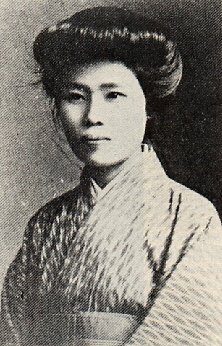
In January 25, 1911, Tokyo - dawn breaks cold over Ichigaya Prison. In a cell, a 29-year-old woman sits writing her final thoughts, her hand steady despite what awaits her at the gallows.
Her name is Kanno Suga (1881-1911) and she's about to become the only woman in Japanese history executed for treason. But the path that brought her here began fifteen years earlier, when an act of horrific violence would set her on a collision course with the Emperor himself.
At fourteen, Suga was raped. The trauma didn't break her. It radicalized her. She threw herself into writing, becoming one of Japan's first female journalists, wielding her pen name Sugako like a weapon against injustice. She championed women's rights in a society that barely acknowledged women had any. She devoured the story of Sophia Perovskaya, the Russian revolutionary who helped assassinate a Tsar, and found her blueprint.
The plot to kill the Emperor was real. Suga admitted it freely, as did her handful of actual co-conspirators. But then the government did something that ignited her final fury. They rounded up 24 anarchists, most of them innocent, and sentenced them all to death. A political purge masquerading as justice.
In her prison diary, Suga's words burn with defiant clarity. She wasn't afraid of dying. Her anguish was for the others, the innocent ones swept up in the dragnet. "My only concern day and night was to see as many of my fellow defendants saved as possible," she wrote. She believed her sacrifice would mean something, that it would "bear fruit in the future."
Then came news that stunned her. Twelve of the condemned would be spared. Her final diary entry radiates an almost heartbreaking relief. "I am very happy that some of the defendants have been saved. They must be the people who I was certain were innocent. After hearing the news I felt that half the burden on my shoulders had been lifted."
She walked to the scaffold that morning convinced of three things: that she could maintain her self-respect until the end, that she would die without fear, and that her death served a purpose larger than herself. History would prove her right on all counts.
Kanno Suga's writing extended far beyond political manifestos. She was a gifted fiction writer and essayist who used literature as a vehicle for social criticism. Her work appeared in radical publications that constantly faced government censorship, yet she never softened her message. She wrote about sexuality, poverty, and the oppression of women with a frankness that scandalized conservative Japanese society.
The conspiracy, known as the High Treason Incident, became one of the most controversial trials in modern Japanese history. Historians now believe the government deliberately exaggerated the plot's scope to justify crushing the anarchist movement entirely. Of the 24 initially sentenced to death, only 12 were executed, including Suga. The trial destroyed Japan's nascent anarchist movement for decades.
Suga had a romantic relationship with Kotoku Shusui, one of Japan's most prominent anarchist thinkers and another executed conspirator. Their love letters, smuggled between prison cells, reveal two people who chose ideological commitment over personal safety. She also kept silkworms in her cell before execution, finding solace in caring for living things during her final days.
#drthehistories
⚡ Electricity Hidden in the Air Around Us
Scientists are developing tiny devices that can generate electricity from moisture in the air. These systems use advanced nanomaterials that react with water molecules in humidity to produce small electrical charges.
The energy output is still very low, but it may one day power small devices like sensors, wearables, and emergency electronics—day or night, as long as there is moisture in the air.
Right now, the technology is still in early testing and cannot replace large power sources, but researchers see strong potential for future clean energy use.
Source:
Nano Energy; Advanced Materials. Research on atmospheric moisture energy harvesting and nanomaterial-based electricity generation.
High-silica fabric contains around 96%+ silica (SiO₂), allowing it to withstand direct flame without burning, melting, or producing smoke.
The glowing red areas are simply the fibres becoming extremely hot, not the material catching fire. These fabrics are commonly used in welding blankets, fire curtains, and industrial heat shields because they can tolerate temperatures approaching 1000°C continuously and much higher for short periods of time
🇨🇳 China unlocks major rare earth breakthrough to cement dominance
Scientists from China have discovered a new type of rare earth deposit in Heilongjiang and Jilin that could make extraction cheaper, cleaner, and far easier than traditional mining methods, writes SCMP.
🔸 Unlike southern clay deposits, the new reserves are found in loose sand and gravel shaped by natural freeze-thaw cycles
🔸 The new structure could reduce reliance on costly chemical leaching processes
🔸 Researchers say the find may overturn China’s old “heavy in the south, light in the north” rare earth map
China already controls nearly 90% of global rare earth processing used in EVs, missiles, magnets, chips, and green tech.
As the US and its allies race to break dependence on Chinese supply chains, China keeps expanding control over the minerals powering the 21st Century.