@AlanLevinovitz I think it follows a lot of very sick people online that are suffering and hurting and get riled up because they are stuck in that world, and, they see it as advocacy. But, it sucks and is negative.
Those researchers at UCSF won’t tell you but they don’t like it either.
@AlanLevinovitz I had to get out of the LC community (still have migraines most days to this day after COVID and have been in 2 clinical trials and a research trial by the top researchers at UCSF) for the hundreds of horrible replies and threats I got to suggesting Bernie was ok not masking.
@J__Doh@diannahaze But I take rescue meds when they are painful or particularly nausea producing. I’ve learned to know the symptoms, certain pains around my eyes.
But, I only can recognize these because of my heavy routine of preventatives that make me stable. When I wasn’t stable, it was a mess.
@J__Doh@diannahaze Migraines are weird, when chronic they basically take over all the time. So, you may have 15 “headache days” a month but you have symptoms all the time - this is chronic. At that point, you need a combination of preventive therapies to reduce central sensitization.
@rainbowjanelane@diannahaze The same therapy you do for concussions. Eye movement, saccades, etc. You cause yourself symptoms and stop, and keep increasing. Even the astronauts do it when they get back from space!
@mecfsskeptic have no hard proof, but it seems like going down the route of trialing anti depressants, anti seizure meds, migraine meds, and maybe even dopamine meds might help LC and ME/CFS patients like they do chronic migraine and concussion patients, in a very individualized manner.
@mecfsskeptic But, I understood how migraines and long attacks affect people for weeks and can cause feeling sick, exhausted, etc. I’ve had concussions too. It’s hell. recognized that in what I was experiencing. And when I hear a lot of ME/CFS experience I still think that sound similar.
@mecfsskeptic So if ME/CFS and even long COVID are in the brain, we are probably looking at similar acting diseases. Different by how they were kicked off, which part of the brain is most affected, maybe even what treatments work but still an overactive or injured brain.
@mecfsskeptic When I first got long covid/chronic migraines, I was already aware of ME/CFS from some people knew with it. My family also has polymylgia, fibromyalgia, rheumatoid diseases and migraines in it. So, it wasn’t a new thing to me.
@mecfsskeptic Yeah. My chronic migraine journey started post covid 4 years ago. I had some POTS in the beginning and my neurologist put me on propranolol knowing how it was used for both. But, I honestly have had a problem with the med the whole time, it’s a messy drug.
I could say more :)
I’ve confirmed that Context .ai was “audited” by Delve for SOC2
Redirects now deleted but https://t.co/o3dRukNdBn used to redirect to Delve themselves
You cannot make this up…
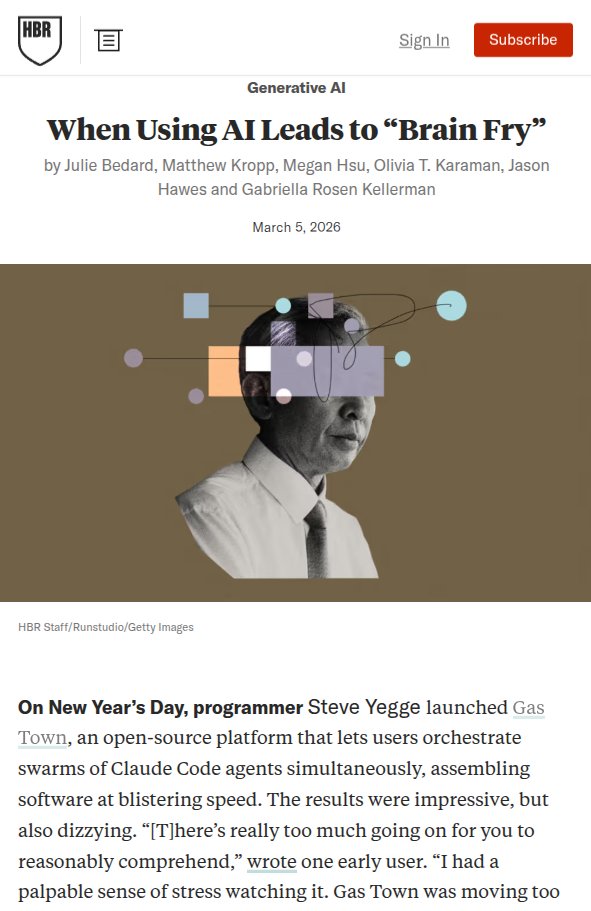
New Harvard Business Review research reveals that excessive interaction with AI is causing a specific type of mental exhaustion ( or AI brain fry), which is particularly hitting high performers who use the tech to push past their normal limits.
A survey of 1,500 workers reveals that AI is intensifying workloads rather than reducing them, leading to a new form of mental fog.
While AI is generally supposed to lighten the load, it often forces users into constant task-switching and intense oversight that actually clutters the mind.
This mental static happens because you aren't just doing your job anymore; you are managing multiple digital agents and double-checking their work, which creates a massive cognitive burden.
The study found that 14% of full-time workers already feel this fog, with the highest impact seen in technical fields like software development, IT, and finance.
High oversight is the biggest culprit, as supervising multiple AI outputs leads to a 12% increase in mental fatigue and a 33% jump in decision fatigue.
This isn't just a personal health issue; it directly impacts companies because exhausted employees are 10% more likely to quit.
For massive firms worth many B, this decision paralysis can lead to millions of dollars in lost value due to poor choices or total inaction.
Essentially, we are working harder to manage our tools than we are to solve the actual problems they were meant to fix.
---
hbr .org/2026/03/when-using-ai-leads-to-brain-fry