Father to an opinionated 16-year-old son. Lifelong nerd and devoted Trekkie. Disabled for 13+ years now. Budding Pythonista when my condition allows.#IUBB#IUFB
No. The Founders created a secular constitutional republic. The Constitution mentions neither God nor Christianity, bars religious tests for office, and the 1797 Treaty of Tripoli (ratified under Adams) states the US government "is not, in any sense, founded on the Christian religion."
JUST IN: Workers have begun removing Donald Trump’s name from the Kennedy Center.
Earlier today, a judge denied the Kennedy Center board’s request to pause a ruling that requires Trump’s name to be removed from the building.
An advertising executive in 1939 wrote a 48-page book explaining exactly how ideas are made. It's 5 steps. Almost everyone skips the one that actually does the work.
His name was James Webb Young, and he spent his career at one of the biggest ad agencies in America watching people wait around for inspiration to strike.
He thought that was insane. He believed producing an idea was a process you could learn, repeat, and control, the same way a factory produces cars. So he wrote down the exact method.
The whole thing rests on one claim that sounds too simple to be true.
An idea is nothing more than a new combination of old elements.
That's it.
You don't invent ideas out of nothing. You take things that already exist and connect them in a way nobody connected before. Which means the entire skill of being creative is just the skill of seeing relationships between things.
The more raw material you've stuffed into your head, the more combinations become possible.
He compared the mind to a kaleidoscope. Every turn shifts the same colored pieces into a new pattern. The more pieces inside, the more striking the patterns it can make.
You are not making new glass. You are rearranging what's already there.
Then he laid out the five steps.
Step one is gathering raw material.
Two kinds. Specific material about the exact problem in front of you, and general material about everything else under the sun. He said most people fail right here, because gathering is boring and they'd rather sit and hope inspiration shows up. He called it a chore people are constantly trying to dodge.
Step two is chewing on it.
You take the facts and turn them over in your mind, look at them from every angle, try to force pieces together. Partial ideas start showing up. So does exhaustion. You hit a wall where nothing fits and your brain feels completely used up. Most people read that wall as failure and quit.
It isn't failure. It's the signal for step three.
Step three is the one everyone rushes past.
You drop the problem completely. You walk away. You go do something that has nothing to do with the work, something that excites you. A movie, a walk, music, sleep. Young was dead serious about this. You make no direct effort at all. You hand the whole thing over to your unconscious mind and you leave it alone.
This feels like procrastination. It is the opposite. Your conscious mind has done all it can. Now a deeper part of your brain takes the pieces you fed it and keeps shuffling them while you are busy not thinking about it.
Step four is when the idea comes back.
Not while you're straining at your desk. It arrives in the shower, on a walk, the second you stop trying. That flash of insight only fires after you've released the pressure. Young watched it happen to himself again and again, and so has anyone who's ever solved a problem the moment they gave up on it.
James Clear built half his work on this idea. Brian Eno reaches for the same principle every time he gets stuck. The break is not a break from the work. The break is the work.
Step five is the part the dreamers abandon. You take the fragile new idea out into the real world and let it get criticized. You shape it, fix it, adapt it to actual conditions. Young said good ideas have a self-expanding quality. Show one to the right people and they instantly tell you how to make it better. Most idea people are too precious to listen. They lose the idea in the final stage because they won't let anyone touch it.
So the full loop is gather, chew, drop it, catch it, ship it.
The brutal part is how simple it sounds. Young warned that the formula is so easy to state that nobody believes it works, and so hard to follow that almost nobody actually does it. The believing is easy. The doing is the whole game.
Everyone wants the flash of insight in step four. Nobody wants to do the boring gathering in step one, and nobody trusts the empty waiting in step three.
But the idea was never going to come from staring harder.
It was going to come the moment you finally looked away.
Google just revealed Omni, personalized cross-device intelligence, and Spark agents at I/O 2025.
I sat down with CEO Sundar Pichai to figure out what comes next:
1:46 Omni: "Nano Banana for video"
4:59 The future of YouTube
7:04 Advice for AI skeptics
9:33 Why your mom should switch to Gemini
11:13 Google's vision for personalized intelligence
13:02 What AI looks like in 3 years
16:08 What tasks AI agents won't replace
17:58 Sundar's advice for an 18-year-old
19:33 Would Sundar still go to college today?
NIKOLA TESLA SAID "3-6-9 IS THE KEY TO THE UNIVERSE."
I tested it for 90 days on 500 people.
What happened will reshape how you manifest forever.
Here's the REAL 369 method nobody's teaching:
Yale University students pay a premium to learn from Professor Ben Polak.
One of his most valuable lectures is sitting on YouTube for free.
It explains the hidden logic behind negotiations, pricing, salaries, and decision-making.
Topics like:
• game theory
• strategic thinking
• incentives and tradeoffs
• Nash equilibrium
• backward reasoning
Most people walk into negotiations relying on instinct.
The people who understand these ideas walk in with a framework.
That difference quietly shapes careers, income, and outcomes over time.
Spend an hour with this lecture and you’ll start seeing decisions through a completely different lens.
Free to watch.
Save it before it disappears into your feed.
A man spends 50 years teaching at MIT.
He knows his time is running out.
So he records one last lecture — everything he knows, distilled into a single hour.
He died 5 months later.
This is that lecture.
The most important hour you'll watch this week. 👇
Bookmark it for later
Two Anthropic engineers spent 24 minutes exposing every Claude Code feature you didn't know existed.
Most people will scroll past this. Don't be most people.
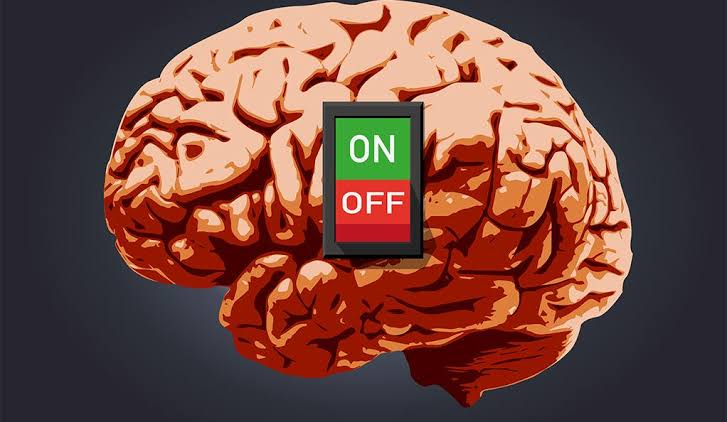
A Stanford neuroscientist Discovered that the human Body has a built in anxiety off Switch.
It works in 30 seconds.
It requires no medication, no app and no prior training.
Almost Nobody knows it exists.
STOP USING YOUR iPHONE LIKE A BASIC DEVICE.
You are only using 10% of what iOS can actually do.
Your default settings are secretly tracking your physical movements, mapping your daily routine, and building an advertising profile from your habits.
Copy these 18 hidden settings to upgrade your daily workflow