@mrmabatim & I are delighted to have our article 'When disconnected institutions serve connected publics: subnational legislatures and digital public engagement in Nigeria', published in The Journal of Legislative Studies, @tandfonline ed @LordNortonLouth 1/9
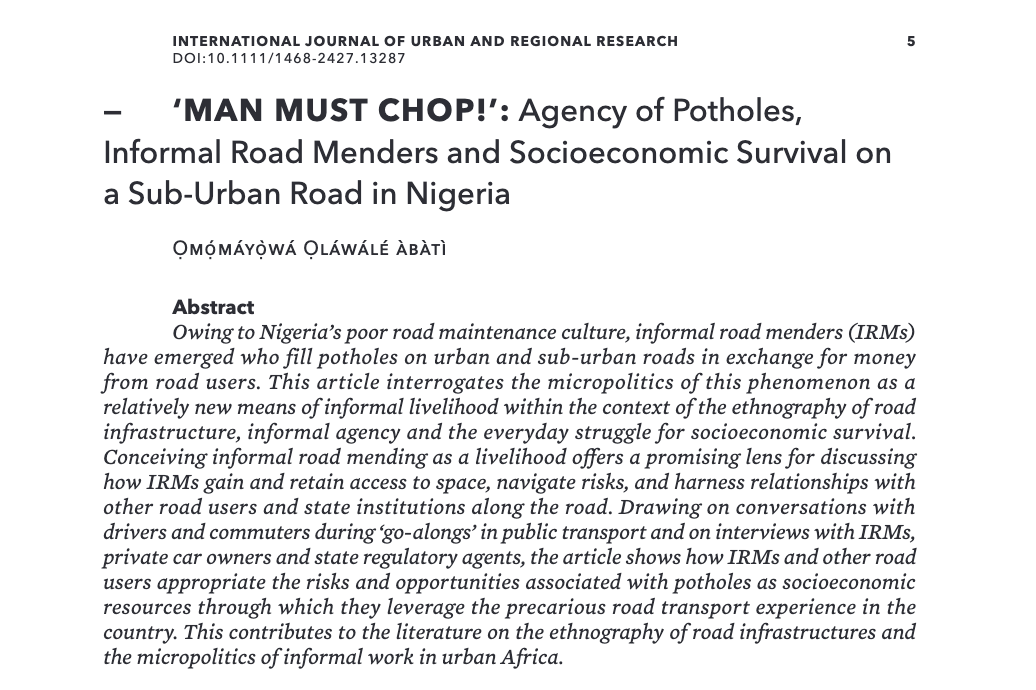
.@mrmabatimn explores state neglect of transport provisioning on the Ife-Ede Road & Informal Road Mending as an instance of residents developing coping strategies for precarious transport, highlighting complex ways potholes mediate urban experiences https://t.co/9vFqMdM8rH
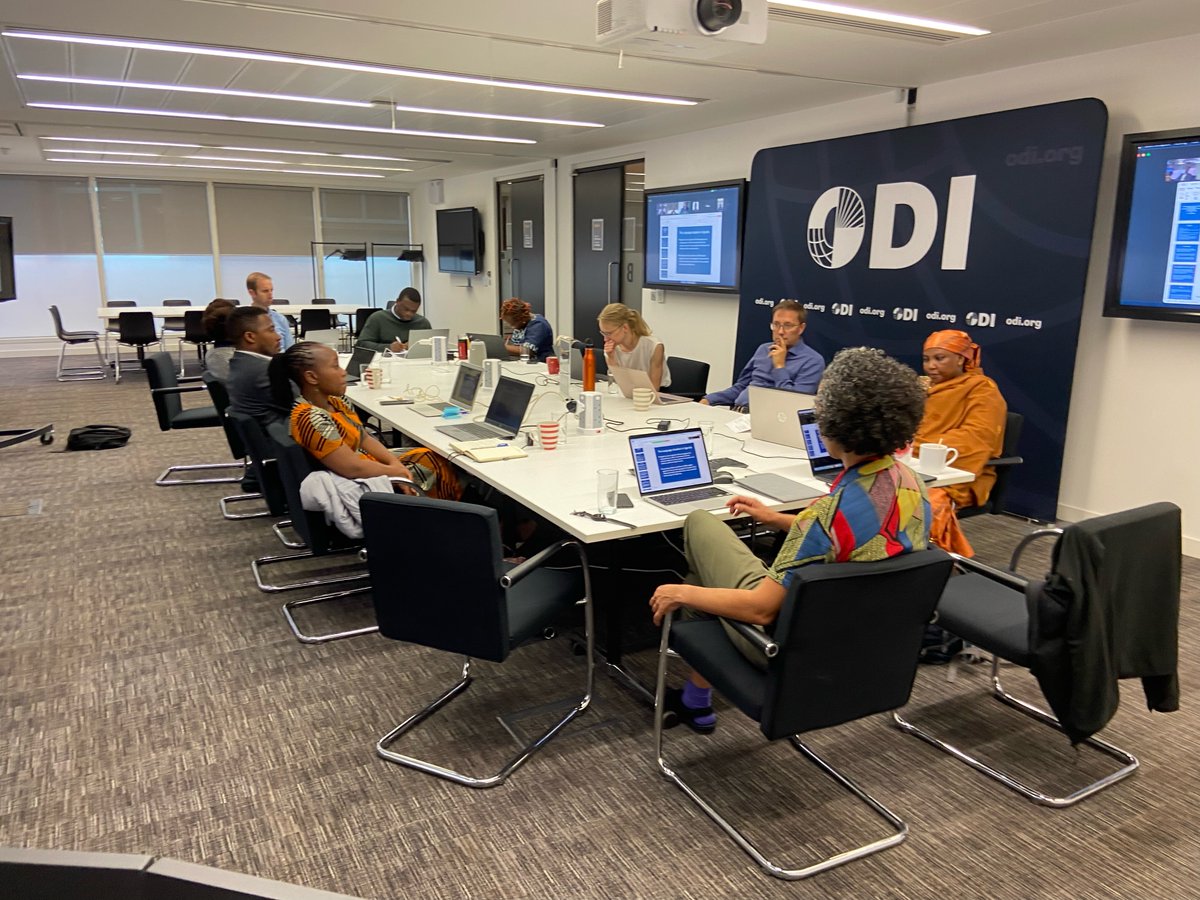
Great to be @ODI_Global to have our year 1 workshop of @MCCRA_Essex generously funded by @ESRC. Discussing all things multilingualism & conflict in Africa (+elsewhere). Excited that three of our African coinvestigators are here -- sad that two others got their UK visa denied.
I love watching MPs swearing in following an election. It’s an easy way to learn new names and faces and gives a great insight into the religious, national and political identities of members.
Here’s a thread of some of the more interesting moments from the last couple of days🧵
An idea I can't stop thinking about...
Solomon's Paradox (and how to escape it):
In the Old Testament, King Solomon was known for his incredible wisdom. He was considered one of the wisest men who ever lived.
But King Solomon's life was quite a mess:
• Hundreds of wives and partners
• Obsession with money and wealth
• Absent relationship with son and children
In short, King Solomon was great at giving advice, but terrible at taking that same advice into account in his own life.
This story gave a name to a common psychological phenomenon:
When we provide clear, rational perspectives and advice to others, but are unable to provide those same quality perspectives to ourselves, we are falling victim to Solomon's Paradox.
We've all been stuck in Solomon's Paradox at one point or another.
Why? Well, it's quite simple, really:
When you're considering someone else's problems, you are objective, rational, and balanced.
When you're considering your own problems, you are emotional, irrational, and volatile.
It's not your fault—you're human, after all!
Two core strategies to escape:
Strategy 1: Create Space
Viktor Frankl, the Austrian philosopher and Holocaust survivor renowned for his contributions to existential psychology, has a brilliant framing for the power of space:
"Between stimulus and response, there is a space. In that space is our power to choose our response."
Pause: Our immediate reactions are almost always emotional, and we make bad decisions in the heat of emotion. Force a pause (whether it's seconds, minutes, hours, or days) before reacting.
Reset: Allow yourself to feel the emotional response, but remind yourself that you are in control of what comes next. Give yourself that power.
Engage: With a more balanced perspective, engage with the situation.
Strategy 2: Zoom Out
A rule for life: When in doubt, zoom out.
You live your entire life zoomed in. This can create challenges, as struggle feels bigger than it really is and growth feels smaller than it really is.
Forced zoom outs provide perspective, on the true nature of your struggles and the impressive nature of your growth.
Mental Time Travel is a useful tool for zooming out:
Imagine yourself in the past and consider yourself in the present.
Imagine yourself in the future and consider yourself in the present.
This zoom out forces perspective that breathes new life into a situation.
***
To fight back against Solomon's Paradox:
Create space and force new perspective.
The right questions (and answers) will come to you.
Above all, you can always ask for help. Someone might save you.
Lastly, please do well to Retweet this for others. You might just save some other person the hassle.
You could also follow me let's learn together and inspire one another.
#ExcelRecourses#DataAnalytics
Public engagement in parliamentary work on climate change
Monday 29 January 15.00 CET
This #IPU#IPEN webinar explores two approaches that demonstrate how #parliaments can effectively involve the public in their initiatives on #climatechange
https://t.co/mt0a65zRUh
Theirs is worse cos their telecoms and other infrastructures are not built with loadsheding eventualities. So a lot of amenities stop working when their loadsheding informing the massive loss of income at both micro and macro levels. It's a big mess.
South Africans are complaining bitterly about load shedding. Which is the same thing as NEPA taking light.
This documentary talks about how much South Africa is losing in productivity.
Imagine the loss Nigeria is incurring every day. I was born in the 80s, and power has never been stable. Some local governments have not seen power for a decade.
Until we fix power, we will never reach our potential.
What is the plan?🥹
Two years into marriage my wife & I said the D-WORD often.
Seven years later & my wife said recently it’s BETTER THAN THE HONEYMOON!
Here’s a few BIG changes that helped our marriage, friendship & passion thrive again!
🚨🚨🚨BREAKING: A bipartisan bill was introduced that would block members of Congress from getting paid if the U.S. enters debt default or if the government shuts down.
The No Pay for Congress During Default or Shutdown Act, introduced by Reps. Abigail Spanberger (D-VA) and Brian Fitzpatrick (R-PA), would withhold lawmakers' pay for the duration of a debt limit breach or lapse in federal funding, an attempt to motivate legislators to prevent either situation.
The bill comes amid growing fears that Republicans will not agree to meet the June 1 deadline set by the Treasury Department to raise the debt limit and risk a catastrophic default on U.S. obligations.
“Lawmakers should not be rewarded with our salaries until we do our jobs," Spanberger said.
What are your thoughts? Should it pass?