Blockchains Scrambled and Oasis is Untouched
Picture this: security researchers drop a bombshell. 💥 Two new sophisticated attacks, "Battering RAM" and "Wiretap," have successfully shattered the security of trusted execution environments (TEEs) from Intel and AMD. For blockchain projects that rely on these TEEs for their core privacy features, it’s a code-red scenario. Alarms blare, developers scramble, and emergency patches are rushed out. Networks like @PhalaNetwork, Secret, and others were sent into a frenzy.
And then there was Oasis. In the middle of this digital storm, their network remained calm, operational, and completely secure. No emergency upgrades, no panic. Nothing. This wasn't luck. This was by design.
As someone who watches the Web3 infrastructure space closely, this event was more than just a news item; it was a live, high-stakes stress test that revealed a profound difference in security philosophy. While others treated TEEs as an impenetrable wall, Oasis treated them as a single, powerful turret in a multi-layered fortress. Let's peel back the layers and take a technical deep dive into why Oasis didn't even flinch.
A Quick Primer: What's a TEE Anyway?
Before we get into the weeds, let's quickly cover what a Trusted Execution Environment (TEE) is. Think of it as a secure vault or a "black box" that exists directly on a computer's processor. Code and data inside this vault are completely isolated from the rest of the system. Even someone with full administrator access to the server, or the cloud provider that owns the hardware, cannot see what's happening inside the TEE.
For privacy-focused blockchains, this is a game-changer. It allows smart contracts to handle sensitive data, like personal identity or financial records, without exposing it on a public ledger. It’s the foundational tech for building confidential dApps. The recent attacks, however, found a way to physically "listen in" on the processor's memory bus, breaking this isolation and stealing the secret keys from within. So, if the vault itself can be compromised, what good is it?
Layer 1: The Right Tool for the Job (SGX v1)
The first line of defense for Oasis was a simple, yet crucial, architectural choice made years ago. The most critical parts of their network, like the key manager and the Sapphire runtime (their confidential EVM), run on hardware using Intel SGX v1.
The Battering RAM and Wiretap attacks specifically targeted vulnerabilities in Intel's newer SGX v2 and AMD's SEV-SNP technology. These newer systems use a different memory encryption model that, as it turns out, was susceptible to these physical side-channel attacks. SGX v1, being an older and different architecture, was fundamentally immune.
While this was a key factor, relying solely on a specific hardware version is a fragile strategy. Hardware vulnerabilities are discovered all the time. The real genius of Oasis's architecture is that even if SGX v1 was vulnerable, an attacker still wouldn't have been able to compromise the network. This is where their principle of defense-in-depth shines. 🛡️
Layer 2: The On-Chain Bouncer (Governance and Staking)
Here's the kicker: getting access to the TEE on Oasis isn't enough. At all. To even be considered to run a key manager node, which handles the network's most sensitive secrets, you can't just show up with a compromised TEE. You have to get past the on-chain bouncer.
This bouncer has two non-negotiable rules:
1. Governance Approval: A prospective node operator must be approved by the on-chain governance of the Oasis network. This means the existing, distributed set of stakeholders must vote you in. You can't fake this, you can't bypass it. It’s a social and political barrier enforced by code. 📜
2. Serious Skin in the Game: For the Sapphire and Cipher runtimes, you can't just be anybody. You must be a registered validator on the network with at least 5 million ROSE tokens staked. This is a massive economic guarantee. If you act maliciously, your stake (worth a substantial amount of money) can be slashed. 💸
Think about what this means. An attacker who successfully extracts keys from a TEE has only won a tiny part of the battle. They still need to convince a decentralized network to let them in and put up millions of dollars in collateral. The attack vector moves from a purely technical one to a prohibitively expensive socio-economic one.
Layer 3: The Self-Destructing Keys (Ephemeral Encryption)
Let's say an attacker is incredibly sophisticated. They compromise the TEE, somehow get governance approval, and stake 5 million ROSE. They finally have access. What can they do? Not as much as you'd think, thanks to ephemeral keys.
When you send a confidential transaction on Oasis, it's not encrypted with a single, long-lasting master key. Instead, the network uses short-lived, ephemeral keys that are rotated every single epoch (a set period of time on the network).
This is the digital equivalent of a Mission: Impossible message. 💨 Once an epoch ends, the keys used during that period are securely wiped. They no longer exist. So, even if an attacker manages to break in and extract the current set of keys, they can only see transactions happening in that brief window. All past data remains completely secure and unreadable because the keys needed to decrypt it are gone forever. This drastically limits the potential damage of any breach.
The Masterclass in Security: Assume You Will Be Breached
The recent TEE vulnerabilities perfectly illustrate the power of Oasis's security model. It’s a masterclass built on a simple, paranoid, and brilliant assumption: one day, the TEE will fail.
Instead of building a house with one "unbreakable" door, they built a castle with a moat (on-chain governance), towering walls with guards (economic staking), and secret inner chambers with disappearing treasures (ephemeral keys). The TEE is just one of those chambers.
This is what sets their infrastructure apart. They’ve combined cutting-edge hardware security (TEEs) with robust, battle-tested concepts from decentralized systems: economic incentives, distributed governance, and clever cryptography. The result is a whole that is infinitely stronger than the sum of its parts.
For developers looking to build the next generation of private, scalable applications, this isn't just an interesting technical detail. It's the foundation of trust. It proves that the Oasis team isn't just thinking about today's threats, but actively building a system resilient enough to withstand the unknown threats of tomorrow. And that is why, when chaos struck, they could afford to remain calm. Their fortress was built for the storm. 🚀
#hack #AI #Infra
Follow @OasisProtocol for a more secure dose!
Privacy now poscast: https://t.co/lFQk6fDgtd
Septemper Month in Review: https://t.co/TRxx7l8NfF
Wanna use your wallet without ever exposing your keys?
That's all about @PrivanaFinance.
Built on @OasisProtocol, it lets you delegate access, set spending limits, and automate actions, all while your key stays locked inside a secure enclave.
$ROSE #Privacy#DeFi#Web3
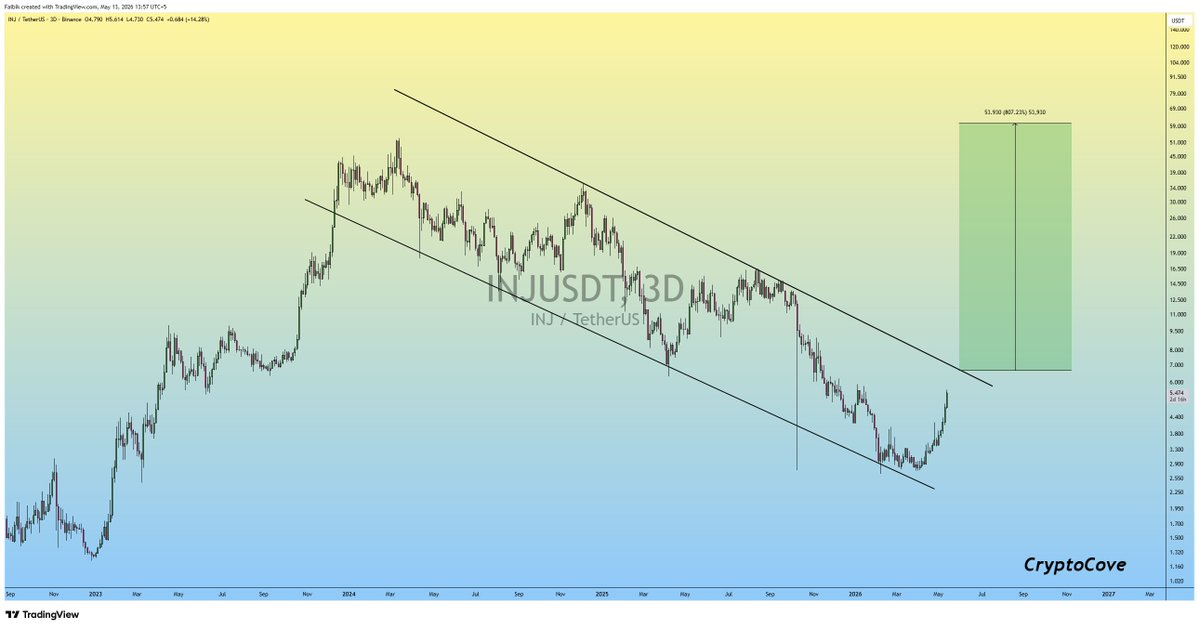
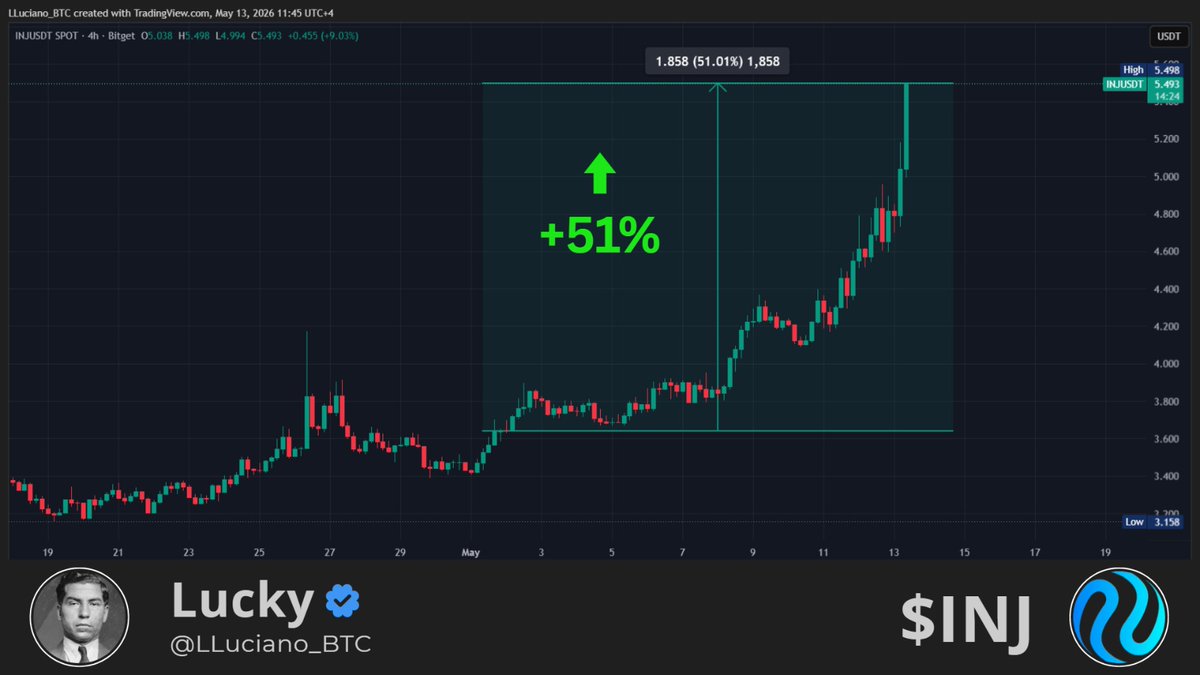
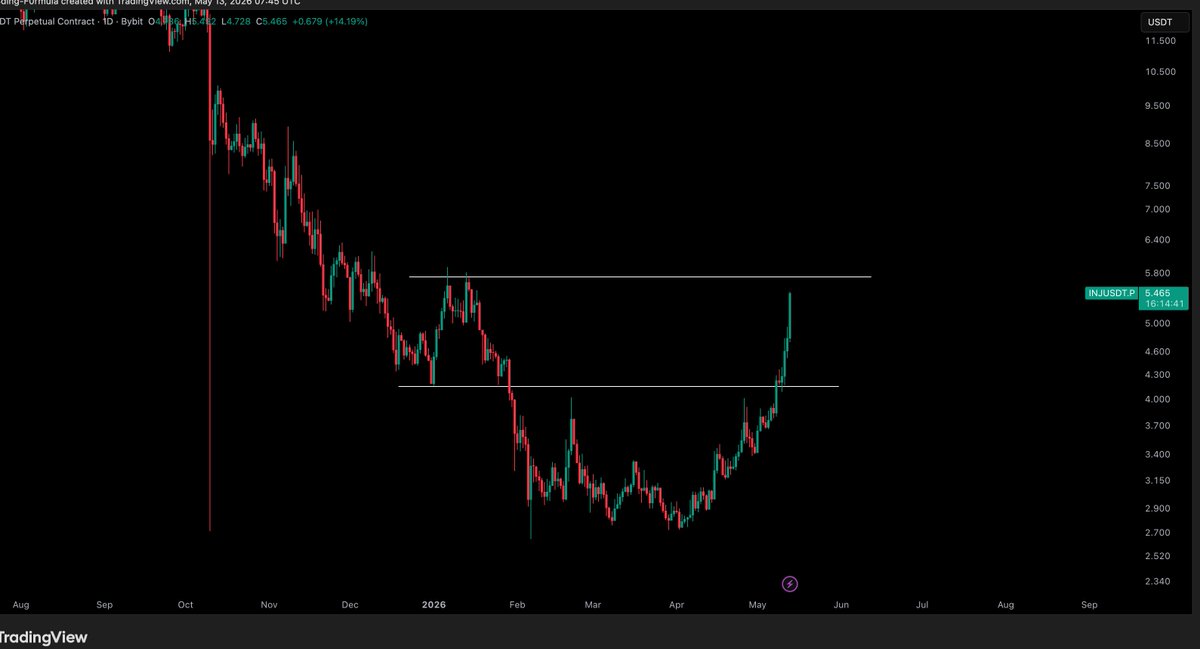
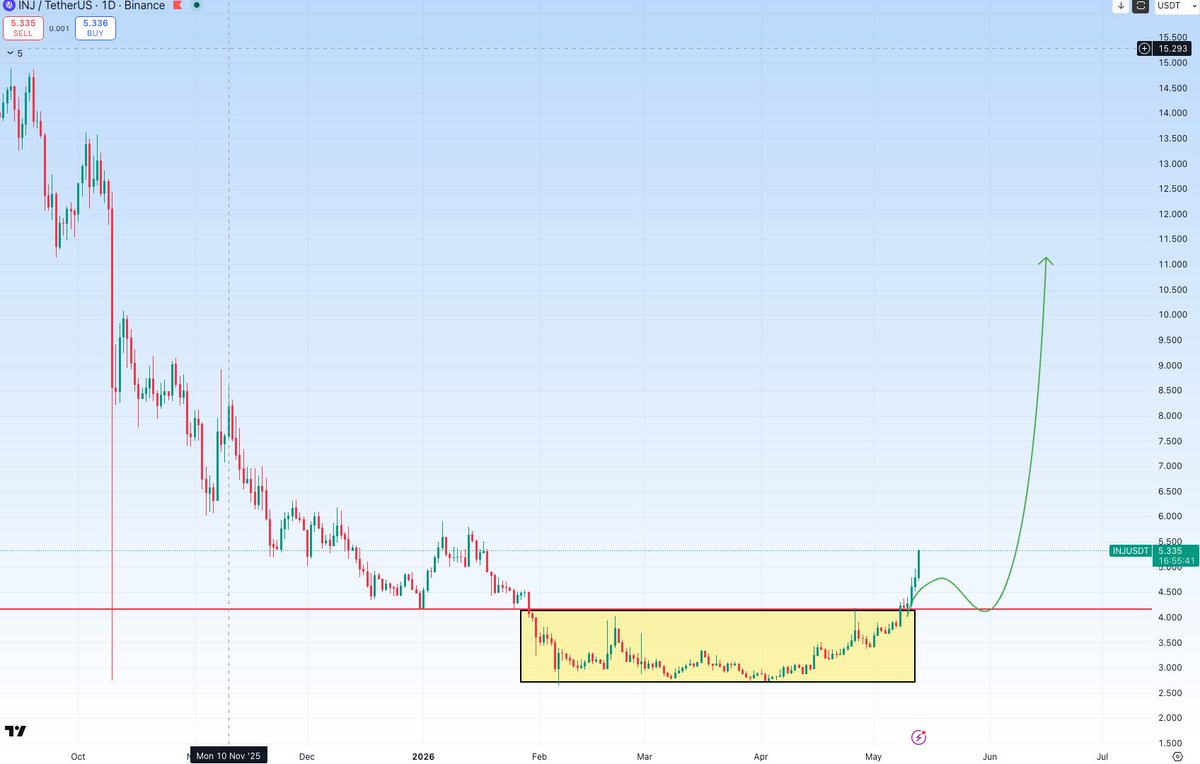
Deposits for $INJ are now open on @BinanceUS, with staking coming soon!
Trading on the INJ/USDT pair will begin on May 14 at 7 a.m. EDT.
@injective is an L1 blockchain built for finance and supports an ecosystem of projects spanning DeFi, RWAs, prediction markets, and AI apps.
Episode 2 of Privacy Talks is out!
✅Discord surveillance
✅Anthropic vs. Pentagon
✅2.5M ChatGPT quitters
✅China's $1/hour AI. 30K layoffs
✅Claude Code vulnerabilities
✅The $599 AI device
One hour. Everything that mattered in privacy and AI with @markowifk & @matejanez .
Last week at Shape Rotator Hackathon, organized by @encodeclub, @initc3org, @theBBFund, FlashbotsX, and The Convent, our engineer Bern walked builders through building private, verifiable applications with Oasis — from architecture to live demo.
Ocean Network Beta is officially ON ⚡️
This is the moment we've been building toward: Run AI workloads on pay-per-use NVIDIA H200s as low as $2.16/GPU hour, straight from your IDE with a one-click code-to-node workflow.
Head on to https://t.co/89UziJyWMt to claim your $100 complimentary credits in Beta and turn your first job ON!
(1/8)