We have begun publicly sharing many of the key findings of our Environmental Impact Assessment. Learn more about our understanding of the validated environmental impacts of test mining and expected impacts of commercial-scale operations in this summary.
https://t.co/qhFVSBOg06 $TMC #deepseamining
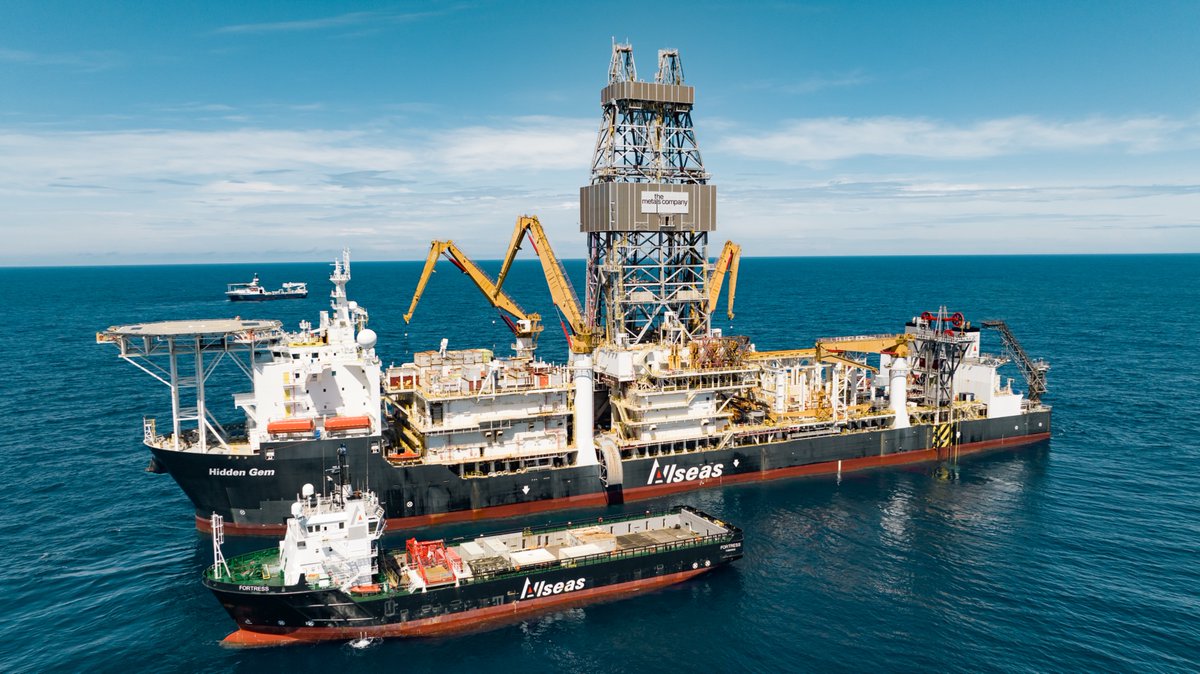
TMC and Allseas Sign Commercial Agreement for the First Offshore Nodule Recovery Operation.
Read the press release: https://t.co/JCvS6zjRlf $TMC #deepseamining
In 2022, $TMC conducted the first mining trials in the CCZ since U.S. companies tested first-generation collection technologies in the 1970s. The trials produced rich environmental data, building upon NOAA’s monitoring in the 1970s. Two independent datasets, fifty years apart, with consistent conclusions: environmental impacts are minimal and manageable. We know enough to begin.
Abyssal plains are the most common habitat on Earth. Sourcing metals here could reduce pressure from mining on rarer, more biodiverse ecosystems—like our rainforests—which make up a small proportion of global habitat. Even at scale, this industry will impact a very small percentage of abyssal seafloor, and test mining data finds rapid re-colonization of disturbed areas by pioneer species, while sediment plumes will have no impact on biodiversity. $TMC #deepseamining
The results are in. As part of a new video series, we’re sharing findings from our Environmental and Social Impact Assessment—one of the most complex deep-sea scientific studies ever undertaken. Among the insights: operational noise above NOAA-designated behavioral thresholds will be limited to a few kilometers around the production vessel, while light emissions are tightly constrained at the seafloor and surface. $TMC #deepseamining
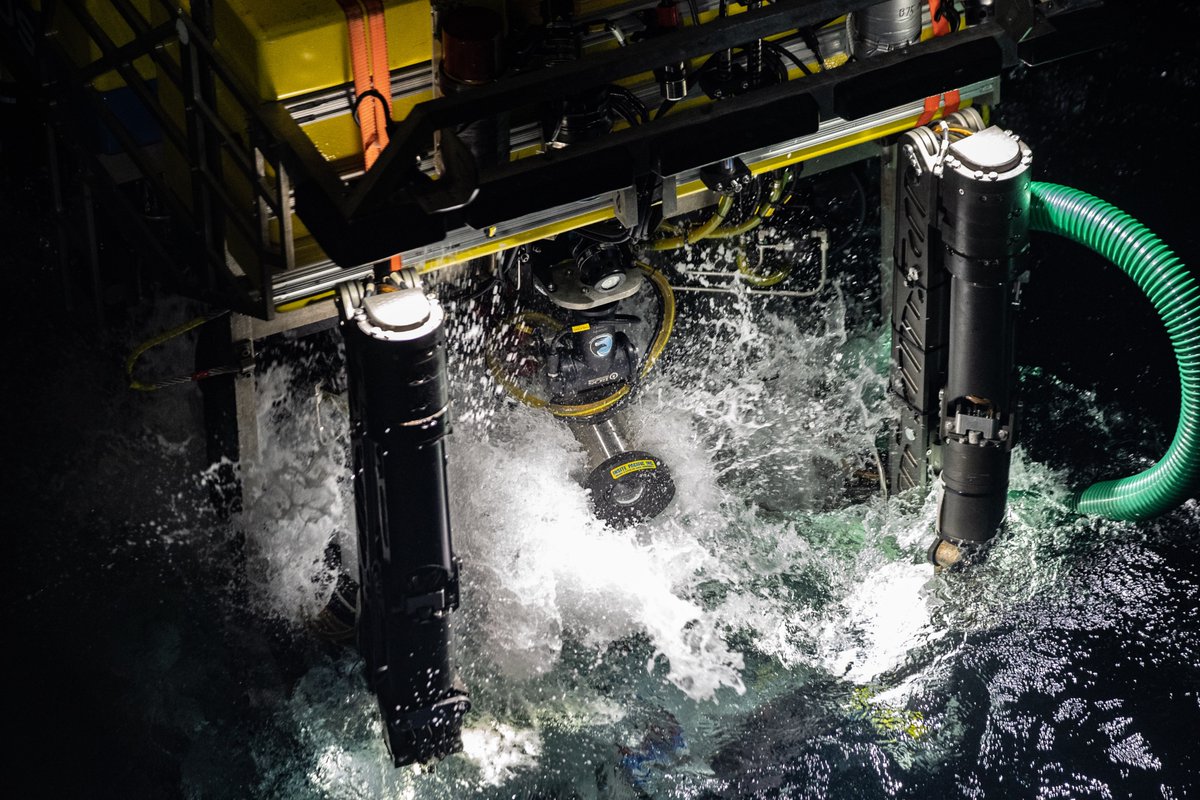
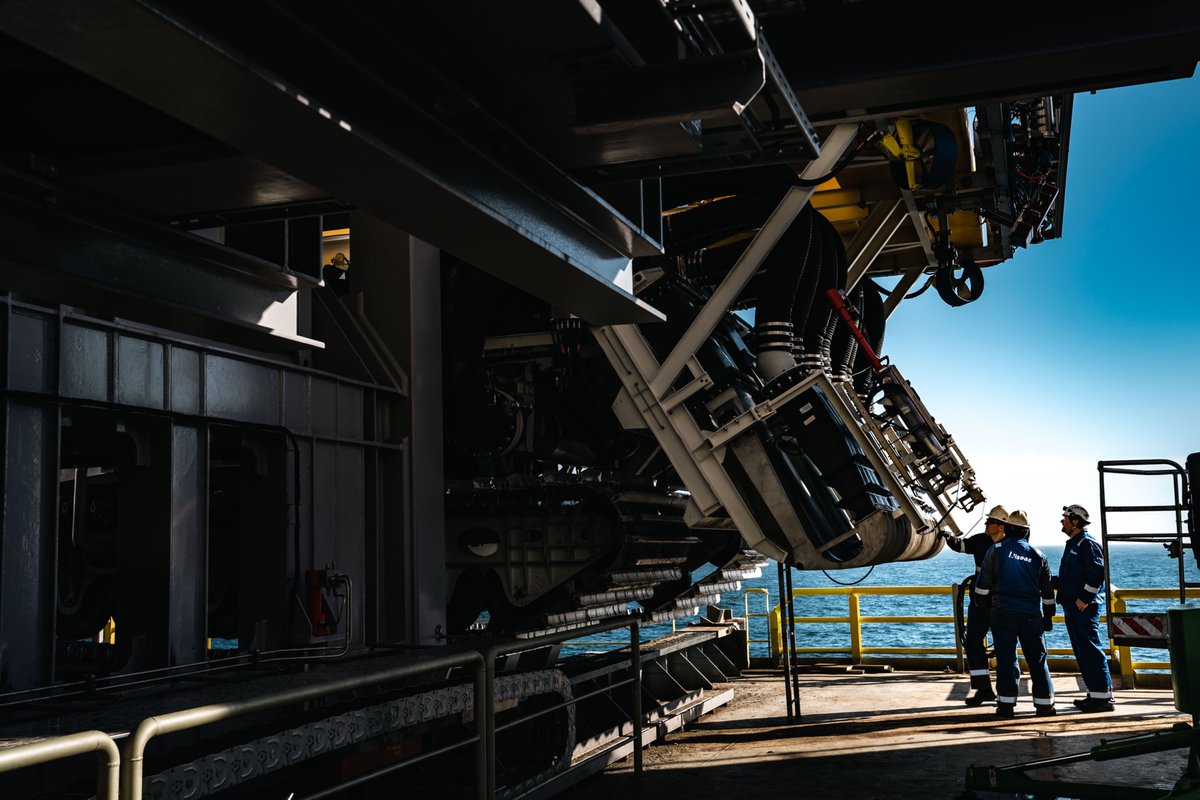
Seawater and sediment entering our collector vehicle need to exit the machine. How they exit makes a huge difference. Allseas designed a diffuser system that slows and directs separated sediment to the seafloor, enhancing the formation of a gravity-driven flow that hugs the seafloor and remains localized. $TMC
A common concern about nodule collection is that it could impact the ocean's ability to sequester carbon. In reality, only a tiny fraction of oceanic carbon is stored in abyssal sediments, and peer-reviewed research shows operations would have a "trivial" impact on seafloor microbes and their capacity to sequester carbon. While some sediment is temporarily disturbed, there is no known pathway for it to rise back to the surface four kilometers above.
#deepseamining $TMC
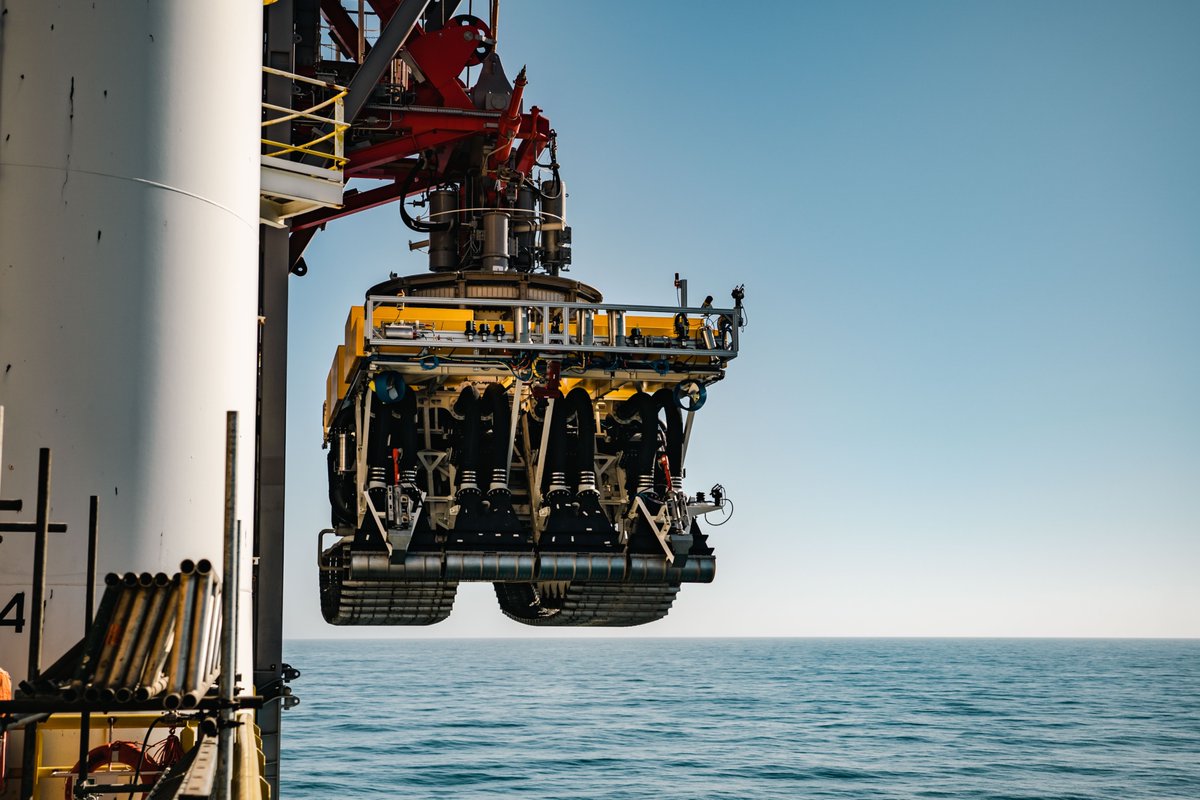
This industry has come along way since American industrial titans first pioneered nodule collection technologies. Fifty years on, and with decades of offshore data to draw from, our collection system was designed from the seafloor up by Allseas to minimize impact while maximizing efficiency. $TMC #deepseamining
The Coanda nozzles installed on our Allseas-designed collector use curved flow dynamics to create lift, coaxing nodules into the collector without digging or dredging. The result: a dramatic reduction in sediment intake and seafloor impact. $TMC #deepseamining
Built on more than a decade of offshore science, engineering, and environmental research, $TMC's first-of-its-kind consolidated application over a larger commercial recovery area under NOAA’s modernized permitting process marks a pivotal step toward a transformational deep-sea minerals project governed by U.S. law—one with the potential to supply the metals needed for a new era of American industrial strength.
Read the press release: https://t.co/RYdblSwySW #deepseamining
TMC Welcomes NOAA Rule Modernizing Deep-Seabed Mining Permits for U.S. Companies in the High Seas.
Read the press release: https://t.co/GOQYQJkpPw $TMC #deepseamining
With only a nascent understanding of mesopelagic ecosystems, OMCO discharged sediment-laden water overboard, clouding the surface layer of the water column and affecting the photosynthesis that supports much of the life at these depths.
Today, our understanding of where and how life thrives in the eastern Pacific is far more advanced. During TMC’s test-mining preparations, scientists advised us that releasing seawater with small amounts of residual sediment higher in the water column could affect fisheries and marine mammals.
Following their advice, Allseas designed the riser for the return water to release at 2,000 meters water depth. Peer-reviewed research suggests that discharging at this depth minimizes overlap with key pelagic species. $TMC
Back in 1978, the Ocean Minerals Company worried that heavy tracked vehicles might get bogged down in soft sediment, so they developed an Archimedes-screw-drive system that dug deep into the sediment for traction.
Allseas approached the problem differently, designing our collector with wide snowcat-style tracks and deepwater buoyancy to distribute weight evenly, enabling it to move gently across the seafloor.
Our collector leaves only faint ripples — not the deep furrows of OMCO’s ‘Robot Miner’ — significantly reducing disturbance to surface-layer microbial communities that make up the majority of biomass on the abyssal seafloor. $TMC
At the dawn of this industry nearly fifty years ago, U.S. companies tested a range of nodule-collection technologies. These early pioneers understood the challenges, and their choices reflected the most sensible solutions available at the time.
What they achieved was a moonshot. But after decades of innovation, our approach today reflects modern engineering, better data, and far lower operational impact. $TMC #deepseamining
2026 is shaping up to be another huge year. Our end-of-year newsletter recaps the momentum, milestones, and progress that have set the stage for what comes next. We're just getting started. $TMC #deepseamining
https://t.co/0B2kr2FOVy
As 2025 draws to a close, we are looking back on more than a decade of deep-sea exploration and the 22 offshore research campaigns that generated over a petabyte of data—representing one of the largest deep-sea datasets ever compiled. See you in 2026, as we continue our work to responsibly unlock the nodule resource. #deepseamining @themetalsco