And why are food volunteers detained and their families threatened, while militia walk around Delhi freely, accosting youth, recording their violent threats proudly on tape?
Read this article by Aryama Sundaram, Senior Advocate in the Supreme Court of India, hailing the “swing against authoritarianism spearheaded by the youth”:
Amol Palekar’s searing, heartfelt letter to students remains The Wire’s most read article…
“History has taught this lesson repeatedly. From Tsarist Russia to the student revolt of Paris in 1968, from the youth-led struggle against apartheid in South Africa, Tiananmen Square, to the Navnirman Andolan of 1974 in Gujarat attempts to suppress young voices have never extinguished the desire for freedom. Authority may command obedience for a while; it cannot indefinitely command the conscience of a generation.
“The images of the brutality inflicted upon you have filled us with anguish and anger. A society learns to question itself in its universities. To question those who hold power over your future is not a privilege you seek; it is a democratic responsibility you fulfil. When questions are answered with batons instead of reason, it is not the students who stand diminished. It is the State.”
A few communication lessons for the Government, BJP and everyone in public life:
1. India’s biggest communication problem is TV news and MSM.
At least, that’s how a large section of people now sees it. They believe it has destroyed trust and poisoned public conversation.
You may not realise it now, but India’s biggest enemy is Indian TV news. It has now become your enemy too.
The more you use it, the more damage it is likely to cause.
After graduating from the @IIMC_India , my first job was at @IndiaToday because, like every journalism student then, I wanted to become like the great journalists I saw there.
Today, if a child wants to become a journalist, can any parent or teacher name three TV journalists as role models? Why not?
An aspiring cricketer has Rohit Sharma, Virat Kohli or Yashasvi Jaiswal. Who does an aspiring TV journalist have?
In fact, many young people are told, “become anything, but don’t become a TV journalist”.
2. If you don’t want another protest that you neither understand nor know how to handle, rethink TV news.
Right now, it’s working against you, not for you.
Why should hardworking salaried reporters get all the hate for decisions taken by editors and owners?
Next time there’s a protest, ask the owners to stand in front. That alone could transform the TV news business model.
Seriously, why are the owners in hiding? Shouldn’t they also be accountable for damaging India’s socio-political fabric?
3. Don’t make the mistake of believing this happened because of Instagram.
And don’t make the bigger mistake of thinking Instagram can be fixed to defeat the Gen Z narrative.
It will backfire.
No matter what you do, you can’t manufacture authenticity.
4. Everyone even remotely in power should switch to silent mode for a while.
Ask the shouting spokespersons and television regulars to disappear for a while.
On the environment, send environmental experts. On the economy, send economists. On education, send educationists. On healthcare, send doctors and public health experts.
Stop relying on political performers who turn every debate, whether it’s about pollution, jobs, education or healthcare, into communal or factional politics.
Replace them with genuine subject experts.
5. We don’t want India to become Western.
But we must make India modern.
Stop celebrating regressive ideas.
Talk more about science, philosophy, art, poetry, creativity, innovation and the dignity of every citizen.
6. Fix our crumbling cities.
Clean our air.
7. Listen more. Let your work speak.
I hope this moment becomes an opportunity to rethink how we communicate with a new generation.
Looking forward to a developed, happy and innovative India.
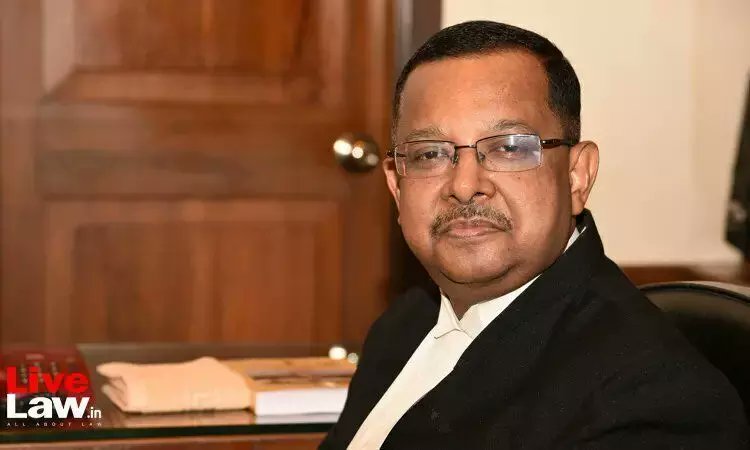
Justice Ujjal Bhuyan of #SupremeCourt criticises the Bombay HC judgment refusing permission to hold march in support of Gaza,Palestine.
"I found it very amusing that when in Bombay, Shivaji Park, when a group of people wanted to demonstrate in solidarity with the people of Gaza, the permission was not granted by the government. So, they moved a writ in the Bombay High Court; the learned judge said 'don't you have any issues in India, why do you have to go that far to agitate?.
India has recognised Palestine; we have a Palestinian Embassy in India. Traditionally, India has always recognised Palestine. The recent incidents in Gaza, it is South Africa that moved the International Court of Justice against what is happening there, saying that make a declaration that it is Genocide. Justice Muralidhar, former judge of the Orissa High Court, UN appointed him to go into the violence in Gaza. He has published a report, which is accepted by the UN and is now in the public domain, about the violence meted out by the State on such children, women and elderly.
I am not saying that only these issues should be debated. These are the issues which should agitate the mind of a young mind of a student, of a research scholar. You must read, you must question. That is the place of a university.