☀️ Just accepted ☀️ in @JaereAere:
"(Mis)allocation of Renewable Energy Sources" by Stefan Lamp (@EnergyEcoLab) and @msamano6.
Read it here: https://t.co/ohQUMejCxl
Mainstream physicists are blind when it comes to quantum mechanics. They're so attached to Newtonian physics and entrenched with the Bohr model that they are incapable of seeing that GPS satellites and MRI machines work.
Last, we estimate the impact of the batteries output on wholesale eqm prices by using an IV strategy and find that batteries output reduce prices by 0.8% in 2018-2019.
As the share of storage output increases over time, these effects will become even more relevant.
In a new WP with Stefan Lamp
https://t.co/5kwbztyGKh
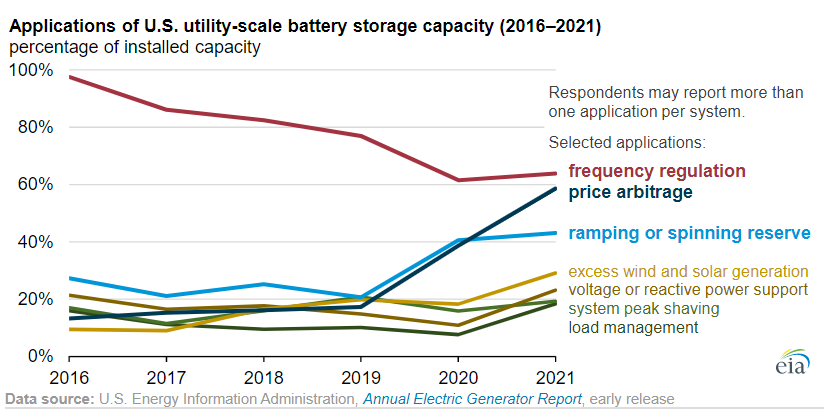
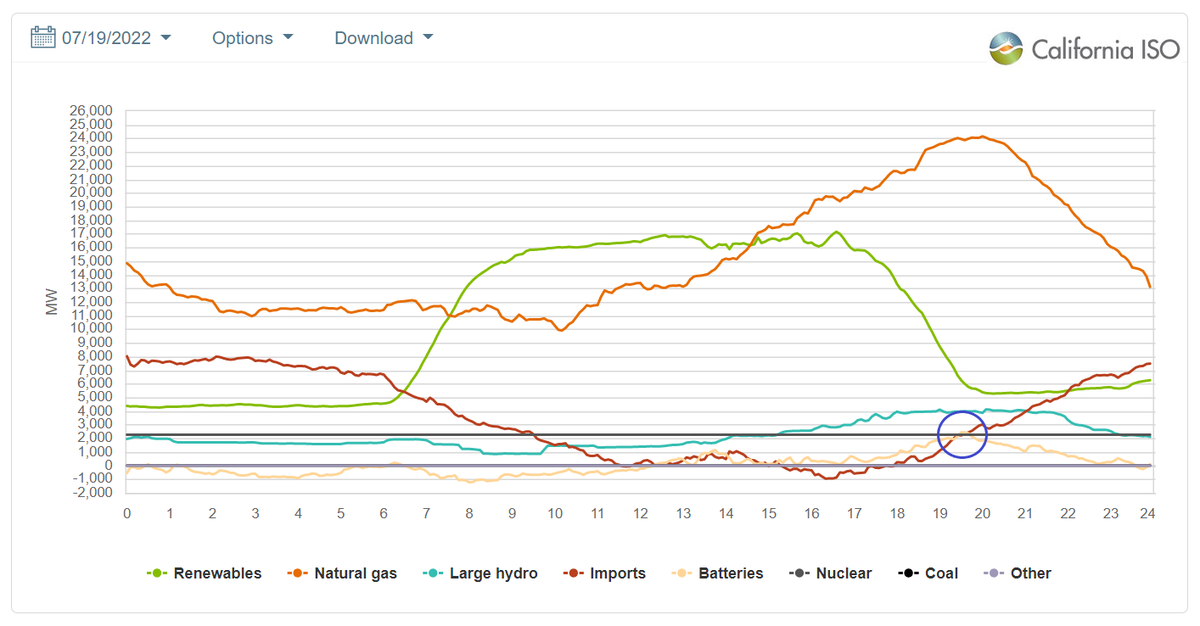
we take a look at the aggregate output of lithium-ion batteries in California. The correlations of output and wholesale electricity prices suggest arbitrage behavior:
1/n
Then using a simple optimization model for a median-sized battery installation that maximizes profits taken wholesale prices as given, the optimal output follows a very similar pattern as with the observed data:
2/n
(Bonus result: the more diversified a firm gets following the transfer, the higher the price increase. s/o @DrDaronAcemoglu, A. Kakhbod and A. Ozdaglar (2019) for coming up with the theoretical version of this result) (7/n)
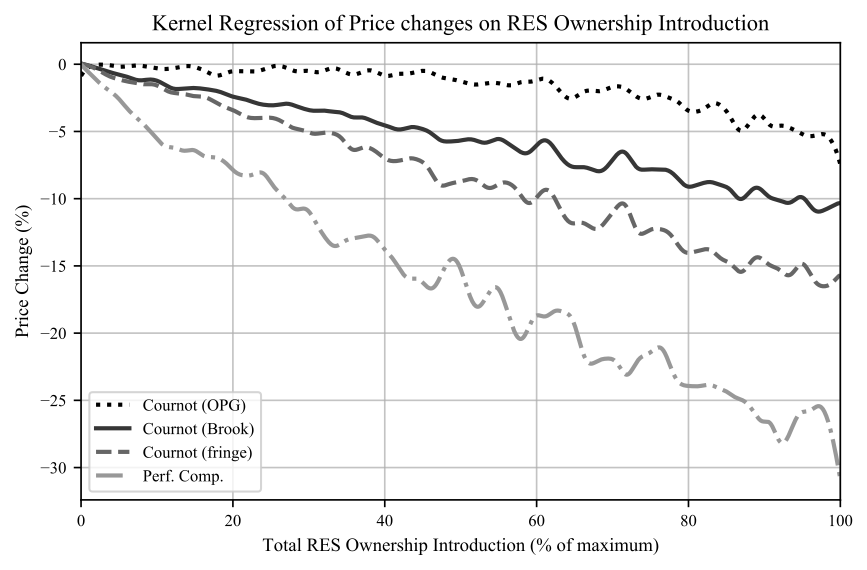
Using Ontario data, new paper shows that merit order effect (lowest price producers bid first, pushing price down) is mitigated by market power, leading to smaller price drops. Especially important after capacity increase, reshuffling of assets.
https://t.co/6QfC5egmPF
My new forthcoming paper at the JEDC studies the set of long run market configurations that can be obtained using the Ericson-Pakes model of dynamic quality ladder with and without product compatibility externalities.