Grad student in Economics at @BostonCollege. Interested in Industrial Organization, Energy and Environmental Economics. Alumnus of @HEC_Montreal. | He/him
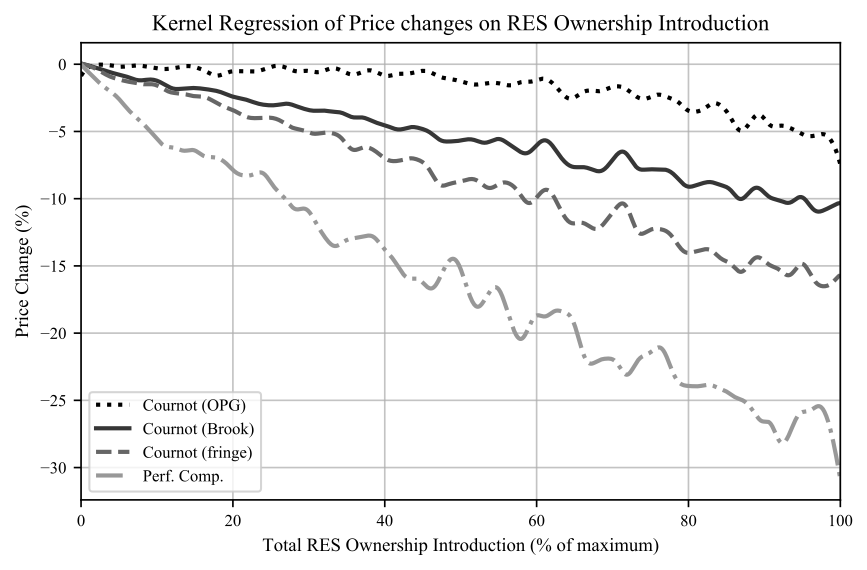
Using Ontario data, new paper shows that merit order effect (lowest price producers bid first, pushing price down) is mitigated by market power, leading to smaller price drops. Especially important after capacity increase, reshuffling of assets.
https://t.co/6QfC5egmPF
Men be like “I am completely shocked at this behavior” that we literally documented and had AEA sessions on in 2017. While standing in office and conference hallways telling jokes and comments about appearances, and jabbing about affirmative action and posting on EJMR
So grateful for the opportunity to present (egg timer) at the NBER summer institute (enviro & energy) to kick off my job market year 🙏🏽 @nberpubs. What a surreal experience
And, to be back in Boston after so many years!
A great student of mine on the market with focus on market design, decision theory, behavioral economics
Manshu Khanna https://t.co/zqnD0ttsoI
@manshukhanna
Let me know if you have questions.
Another great student in the market this year from Boston College is Andrew Copland
https://t.co/IuItkOkMT5
A decision theorist at heart but all general microeconomist with an additional nice market design paper as well. I am his secondary advisor.
Using Ontario data, new paper shows that merit order effect (lowest price producers bid first, pushing price down) is mitigated by market power, leading to smaller price drops. Especially important after capacity increase, reshuffling of assets.
https://t.co/6QfC5egmPF
@fegotre@msamano6@IA4EE@USA4EE@BostonCollege@HEC_Montreal Actual prices are right in between both so we use both models and interpret the difference between the simulated outcomes as a result of market power. It is closer in spirit to Bushnell, Mansur and Saravia (2008)
@fegotre@msamano6@IA4EE@USA4EE@BostonCollege@HEC_Montreal Right, it's been a while since I read that paper but I think that their research question is about identifying the presence of market power. In comparison, we kinda take it as a given, and model both a Cournot competition and a perfect competition models.
@fegotre@msamano6@IA4EE@USA4EE@BostonCollege@HEC_Montreal We don't measure per se, there are 3 firms that produce ~92% of electricity demanded on avg., two of which have a significant amount of capacity that isn't bound by contracts = these are the two firms with market power that we study. The rest of producers we define as the fringe.