Welcome to the official Twitter page of Project EARNEST!!!
EARNEST = Examining the Agroforestry Landscape Resilience in INdia to inform Social-Ecological Sustainability in the Tropics!
Follow us for exciting project updates!
#MSCAEARNEST#H2020#MSCA
📢 #DiverseK Workshop Alert!!! 📢
What: Challenges and opportunities for Paleo-informed ecosystem conservation in Asia
When: 13-15th May 2023
Where: Beijing, China
To find more and register:
https://t.co/actkIFqMGI
@PAGES_IPO@PAGES_ECN
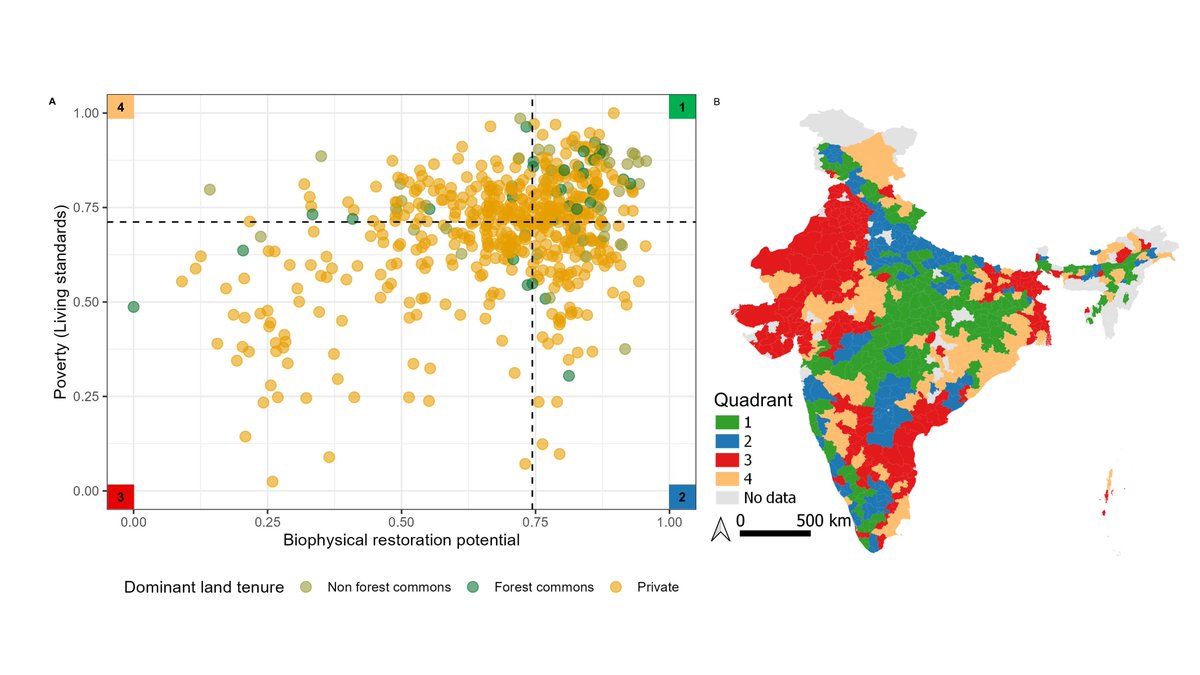
This paper is a small step towards addressing the question of how to make restoration work for people at large scales. Comment/ DM to share your thoughts/for more info on the paper!
Link to the paper again: https://t.co/k9JJ5TXWyz @npjbiodiversity
Local consultations and needs assessments for restoration projects are irreplaceable. Such a study using existing socio-economic data can be used to preliminarily filter different restoration strategies for different socio-environmental conditions.
Facilitating restoration efforts among individual land holders with clear land titles might be easier but restoring degraded common lands could provide broader benefits, especially for those who don’t own land.
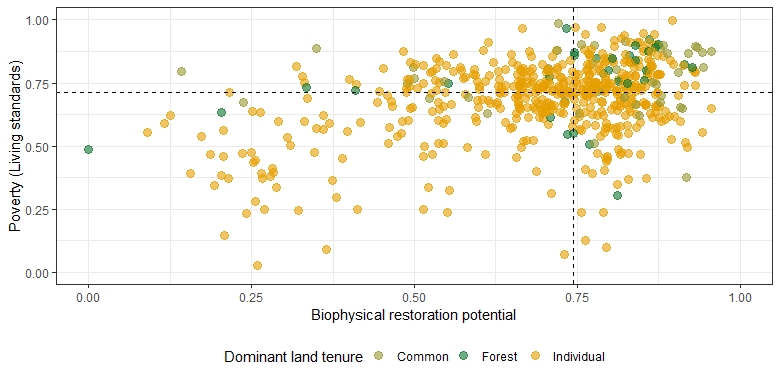
While private land accounts for the largest tenure overall, the poorest districts with highest biophysical restoration potential have a dominant tenure (>50%) of non-forest and forest commons.
Overwhelmingly, we’ve recently focused on carbon-centric and forest-based projects taking away attention from efforts to reduce emissions of other GHGs like methane, for which private land is ideal.
Private land accounts for the largest tenure available for restoration, indicating large #climate mitigation potential from alternative agricultural systems like #agroforestry and trees outside forests.
India has a large Bonn Challenge commitment and large potential for #carbon sequestration and #biodiversity#conservation. As we plan restoration, efforts need to integrate socio-economic and cultural needs of local stakeholders for enduring and just outcomes.
Are you a #researcher or a #policymaker?
Want to learn how to better integrate knowledge and science in policy design?⬇️
Our new self-reflection tool can help you map your competences & plan personal development👉https://t.co/uaK1MTy6Fr
#Science4Policy#CareerGuidance
Our synthesis paper on the direct drivers of recent global anthropogenic #biodiversity loss is finally out in this week’s issue of @ScienceAdvances
👉 https://t.co/yH8ij1vyWM
Plants not only respond differently to fire, they spread it differently. In this new paper lead by @PJaureguiberry, we combine both aspects in an generalizable model, applicable worldwide. Read the blog here: https://t.co/446ZViZlw8
@IMBIVCONICETUNC@CONICETDialoga@IAI_news
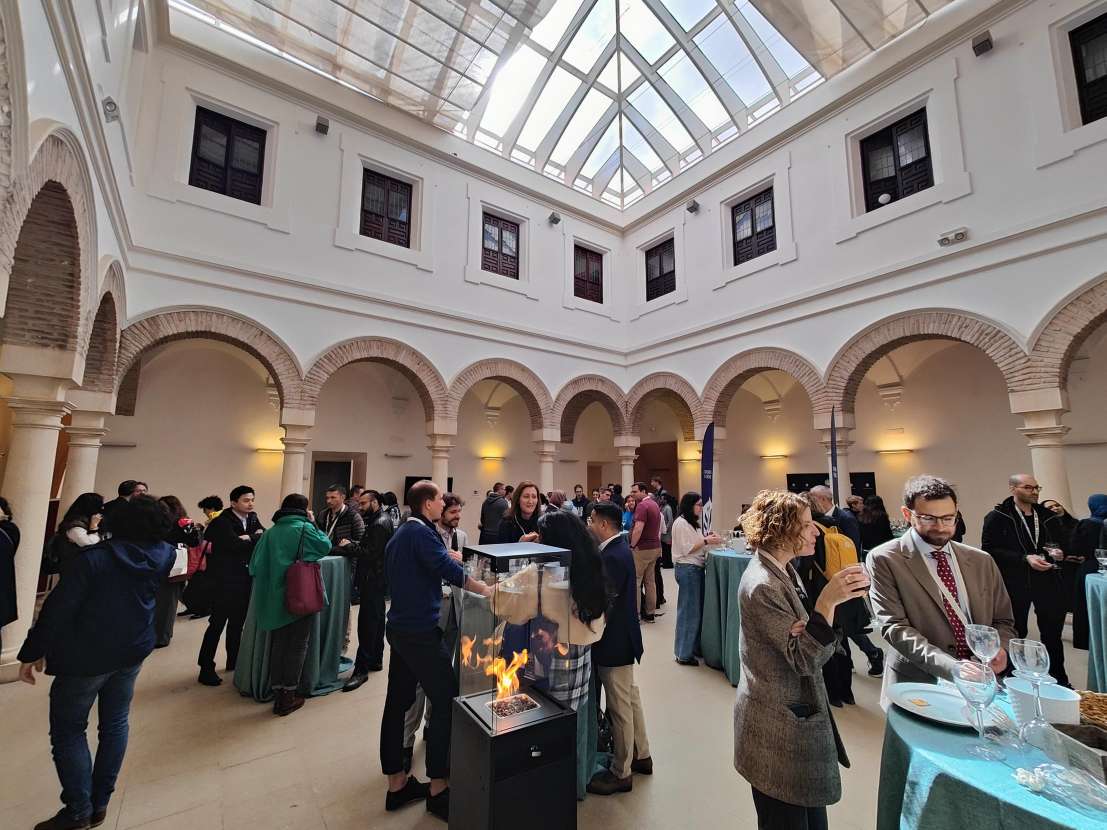
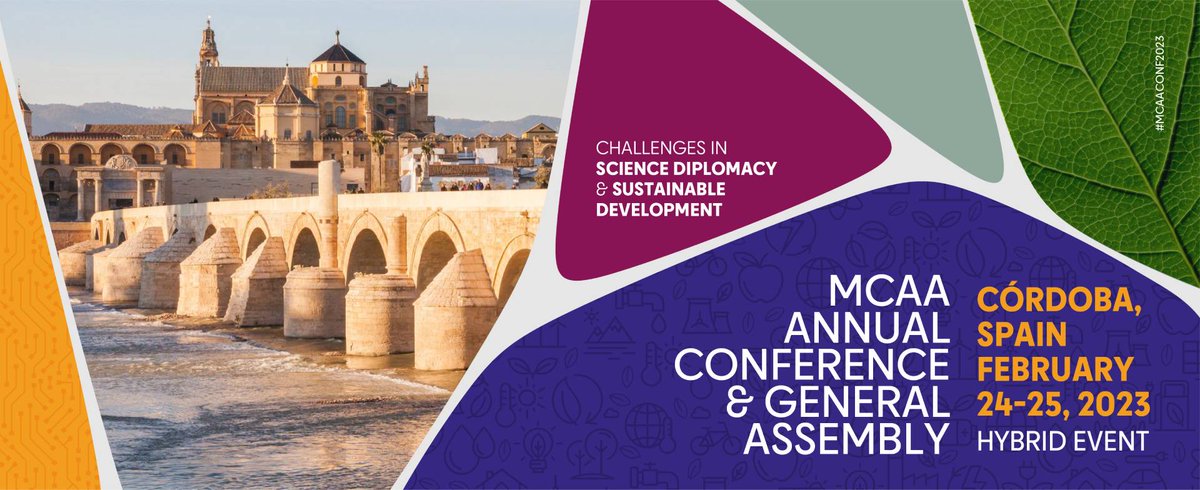
The MCAA Annual Conference is back!
Join us at the 2023 MCAA Annual Conference, on “Challenges in Science Diplomacy and Sustainable Development,” which will take place in Cordoba, Spain, on 24th and 25th February 2023.
Reigster here: https://t.co/03wxvFTUXa
Looking for candidates to join my team (https://t.co/lSO4yN6XaU) with a #BeatriuDePinos postdoctoral fellowship at #Barcelona@CREAF_ecologia
in the framework of an ERC-StG. If you're interested in elements, traits and ecosystem functioning, contact me! Please, RT!
@FAO analysis identified that between 2000 and 2020 the share of global #ClimateFinance in the agriculture & land use sector decreased.
From 4⃣5⃣ % of total flows in 2000 to 2⃣2⃣ % in 2020
Download the full report : https://t.co/Ij0OuJiFrZ
via @FAOclimate
Fires in Amazonia have made headlines around the world over the last several years, but there’s more to the story. Analysis by @ConservationOrg is revealing where the fires are and why that matters. https://t.co/jBcdOunPdL