Work at Tax Assistant, Customs, CGST & Central Excise, (JZ), Jaipur, Writer, Bachelor of Arts, Master of Arts (Hindi), Bachelor of Education, Son of Farmer,
Her name is Payal Jangid.
She was eleven years old when she was told it was her turn to be married off. A child, handed to a stranger, her school and her childhood ended in a single day.
She looked at that future and said no. Then she made sure no other girl in her village would have to fight it after her.
She was born in Hinsla, a small village in Rajasthan, where marrying off young girls was normal, even celebrated. Girls were seen as a burden to be passed on as quickly as possible.
Educating them was considered a waste.
When Payal was eleven, her own marriage was being arranged. She refused. In a place where a child arguing with elders was unthinkable, she stood her ground, and with the help of a local children's group she stopped it.
Then she did something even harder. She stopped her own sister's child marriage too.
She did not stop there. She became the leader of the village children's parliament, a group of children fighting for their own rights.
She went from house to house. She held rallies. She painted messages on walls. She sat in front of angry elders who told her not to fill their children's heads with such ideas, and she kept going anyway.
Slowly, the village changed. Girls began staying in school. The child marriages stopped. In time, Hinsla became a village with no child marriage and no child labour at all.
In 2019, a girl from a village most people had never heard of stood on a stage in New York and became the first Indian ever to win the Changemaker Award from the Gates Foundation. She was seventeen.
The girl they tried to marry off at eleven had refused to disappear, and in doing so, she set a whole village free.
Next in who after the Ramanujan series?
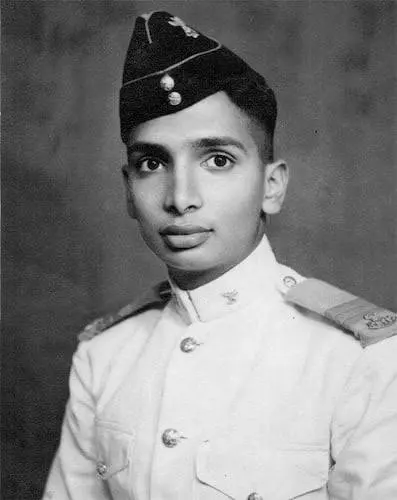
At a tender age of 16, a brilliant but completely unguided boy from Tamil Nadu joined the National Defence Academy & was commissioned into the Indian Navy's electrical branch . He did not have the luxury of a quiet university setting; he was trained in practical skills to maintain weapons systems on warships.
But Arogyaswami Paulraj possessed an insatiable, self-taught obsession with the advanced mathematics of signal processing, control theory & information theory. He studied advanced matrices & random variables by lamplight on naval ships.
By the late 1970s, India faced a serious strategic challenge. After the 1971 Indo-Pak War exposed weaknesses in imported sonars, the Navy needed an advanced anti-submarine warfare system but was blocked by international export restrictions. The Navy turned to Paulraj, then a rising officer with a PhD from IIT Delhi (earned while still in service). He was tasked with leading a major indigenous project to develop a world-class hull-mounted panoramic sonar from scratch.
Operating under intense resource scarcity, Paulraj’s mathematical genius took over. He designed complex signal-processing algos that could filter the chaotic, deafening acoustic noise of the ocean to pinpoint enemy submarines. The resulting system, APSOH (Advanced Panoramic Sonar Hull), inducted in 1983, completely stunned global military observers. It did not just work, it outperformed contemporary Western systems.
After setting up major defense labs in India, Paulraj retired from active naval service & arrived at Stanford University in 1991 as a research associate. This is where the story shifts from military history to modern legend. While working on signal separation experiments for airborne military reconnaissance, Paulraj noticed a strange, fleeting physical phenomenon.
When a radio signal is transmitted in a crowded area (like a city with buildings), it bounces off walls & scatters into 1000s of chaotic, distorted paths. Engineers treated this scattering as a nightmare, multipath interference that corrupted data.
Paulraj had a paradigm-shifting realization rooted in multi-variable calculus & spatial matrices: What if the scattering was not a bug, but a feature?
He realized that if we used multiple antennas at the transmitter & multiple antennas at the receiver, we could use advanced matrix mathematics to isolate those scattered paths & stream parallel, independent channels of data over the exact same frequency, at the exact same time.
He called it MIMO (Multiple Input, Multiple Output).
When he 1st proposed it, the academic world mocked him. Prominent profs & industry skeptics told him it violated the laws of physics & information theory. They claimed it was mathematically impossible to multiply data speeds w/o expanding bandwidth.
Paulraj did no back down. He built his own prototype, founded a startup & proved the mathematics in real-world silicon. He designed the microscopic architecture, the microchip algos that allowed small devices to execute these hyper-complex spatial matrix calculations in fractions of a microsecond.
If we look at the device we are using to read this right now, look at the top corners of our screen. We cannot see them, but embedded inside the frame of our phone are multiple microscopic antennas operating on Paulraj’s exact MIMO-OFDMA mathematics.
Every single modern 4G network, 5G network & high-speed Wi-Fi router on Earth is built entirely on the mathematical foundation invented by the self-taught Indian Navy officer who packed his bags for Stanford. He did not just solve a math problem; he built the invisible highway that carries nearly 100% of the world's mobile data traffic today.
श्री जगमोहन मीना IPS एक ईमानदार और कर्तव्यनिष्ठ अधिकारी का इस्तीफा देना बेहद चिंता जनक है वे IIT से पास आउट है पुलिस सेवा में रहना अहम भूमिका हो सकती है इस्तीफा में राजनीतिक दबाव नही होना चाहिए।।मूल रूप से राजस्थान के अलवर जिले की रैणी तहसील के प्रागपुरा गांव के रहने वाले हैं।
श्री जगमोहन मीना IPS एक ईमानदार और कर्तव्य���िष्ठ अधिकारी का इस्तीफा देना बेहद चिंता जनक है वे IIT से पास आउट है पुलिस सेवा में रहना अहम भूमिका हो सकती है इस्तीफा में राजनीतिक दबाव नही होना चाहिए।।मूल रूप से राजस्थान के अलवर जिले की रैणी तहसील के प्रागपुरा गांव के रहने वाले हैं।
ओडिशा कैडर के 2013 बैच के आईपीएस अधिकारी और भुवनेश्वर के DCP जगमोहन मीणा ने भी निजी कारणों से इस्तीफा दिया है। देश की सबसे प्रतिष्ठित प्रशासनिक सेवा से हर साल काबिल अफसर नौकरी छोड़ रहे है। एक आँकड़े के अनुसार देश भर में IAS के 1,300 से ज्यादा और IPS के 500 से ज्यादा पद खाली हैं।
मेघ मल्हार, टिटहरी की पुकार, पपीहे की हुंकार, मोर का गुंजन, कोयल की कूक, गौरैया की चहचहाहट, मंद बयार की सरसराहट को अपने दामन मे थामे निखरी उजली सुबह पर सुप्रभात एवम हार्दिक करबद्ध विनयपूर्वक अभिवादन 🙏🙏
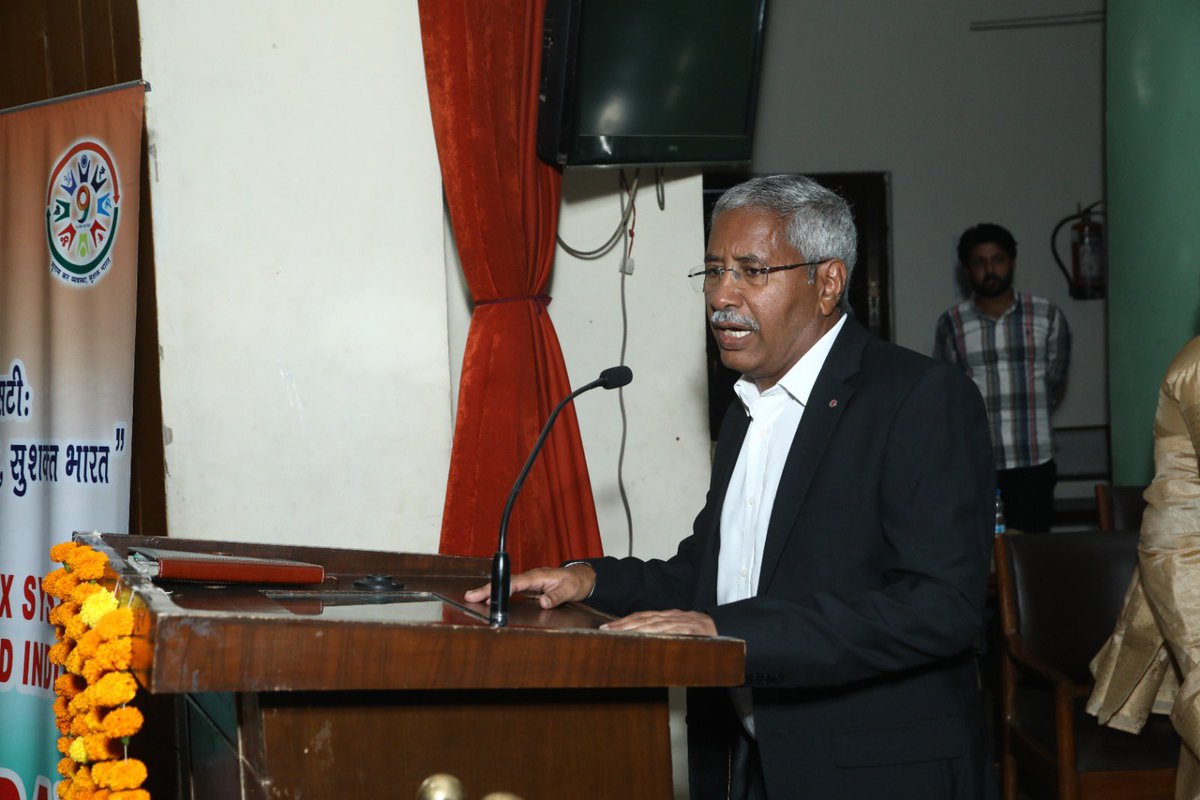
As GST completes 9 years, we celebrate a transformative journey towards a simpler, more transparent, and technology-driven tax system. GST has enhanced taxpayer services, improved compliance, and strengthened the ease of doing business.
“Easy Tax System, Empowered India”.
His name was Ramaswamy Parameswaran.
He was a Major in the Mahar Regiment of the Indian Army. His men called him Parry. For years he led counter insurgency operations in the northeast and earned a reputation for staying calm under fire.
In 1987, he was sent to Sri Lanka as part of the Indian Peace Keeping Force, into one of the hardest campaigns Indian soldiers had ever fought outside the country.
On the night of November 25, his column was returning from a search operation when it walked straight into an ambush. Militants opened fire from close range in the darkness.
Instead of pulling back, Parameswaran outflanked the attackers and charged at them from the rear.
In the hand to hand fighting that followed, a militant shot him in the chest.
Even then, he did not stop.
Gravely wounded, he wrested the rifle from the militant, shot him with his own weapon, and continued leading his men, giving orders until the ambush had been broken and the attackers driven away.
He died that night.
For his extraordinary courage, he was awarded the Param Vir Chakra, India’s highest gallantry award. He remains the only soldier of the Sri Lanka campaign to receive it.
For years, the war in which he died remained politically uncomfortable, and many felt his sacrifice never received the public recognition it deserved.
Decades later, his own course mates pooled their money to build a statue in his honour, determined that the man they had served with would never be forgotten.
Follow for stories India deserves to remember.
कभी अपनी तुलना किसी ओर से मत करना क्योंकि सूरज जब निकलता है तो चांद से मुकाबला नही करता। वो बस अपनी रोशनी फैलाता है। तुम भी अपनी मेहनत पर भरोसा रखो। तुम्हारा समय भी आयेगा।
कभी अपनी तुलना किसी ओर से मत करना क्योंकि सूरज जब निकलता है तो चांद से मुकाबला नही करता। वो बस अपनी रोशनी फैलात�� है। तुम भी अपनी मेहनत पर भरोसा रखो। तुम्हारा समय भी आयेगा।
Her name is Ambika.
She grew up in a village in Tamil Nadu.
She was married when she was only fourteen years old to a man who worked as a police constable.
By the age of eighteen, she was the mother of two daughters, and her own education had ended long before.
One day, she accompanied her husband to a Republic Day parade.
She watched him salute a row of senior officers and asked him who they were.
He told her they were IPS officers, and that reaching that rank required clearing the Civil Services Examination, one of the toughest exams in the country.
That moment changed her life.
She told her husband that one day she wanted to become one of those officers.
The dream seemed impossible.
She had not even completed school.
So she began again from the beginning.
She finished Class 10, then Class 12, and later earned a college degree.
She moved to Chennai to prepare for the Civil Services Examination, while her husband stayed behind and looked after their two daughters.
Success did not come quickly.
She failed once.
Then she failed again.
Then a third time.
Her husband gently suggested that she return home.
She asked him for one last chance.
In 2008, on her fourth attempt, Ambika cleared the Civil Services Examination and became an IPS officer.
The girl who had been married at fourteen grew up to wear the same uniform her husband had once stood and saluted.
Follow for stories India deserves to remember.
VIDEO | Delhi: Ganga Ram Hospital dietician Aakanksha Arya explains the nutritional impact of replacing eggs with paneer and soybeans in mid-day meals.
She says, "Eggs cannot truly be replaced by any other single food. They are an excellent source of high-quality protein and also provide vitamin B12, vitamin D, essential amino acids, and healthy fats... If schools currently serve eggs once or twice a week, replacing them would require providing an equivalent amount of protein from other foods, which many children may not be be able to consume in sufficient quantities. There is also an economic concern, as many families may not be able to afford eggs at home if they are removed from school meals. Eggs play a vital role in a child's growth and development, so they should not be replaced."
(Full video available on PTI Videos - https://t.co/bIyFWTfmBd)
Winning against the Chinese. In China.
At the Asian Relay Championships.
Srabani, Sudeshna, Sneha & Tamanna in the 4x100 relay.
Power. Speed. Grace. Commitment.
But above all, teamwork.
This clip has it all.
I’m watching it on loop.
More of this please. 🇮🇳
ये आरोप किसी राजनैतिक व्यक्ति के नही बल्कि वो शिक्षक परिवार लगा रहा था जिनके मुखिया तत��कालीन शिक्षामंत्री गोविंदसिह डोटासरा जी हुआ करते थे मगर उससे भी अचरज की बात ये है कि ऐसे गंभीर आरोप सार्वजनिक तौर पर लगने के बावजूद जादूगर मुखिया जी के मुंह से सिर्फ 2 ही शब्द बाहर निकल पाते है "कमाल है"