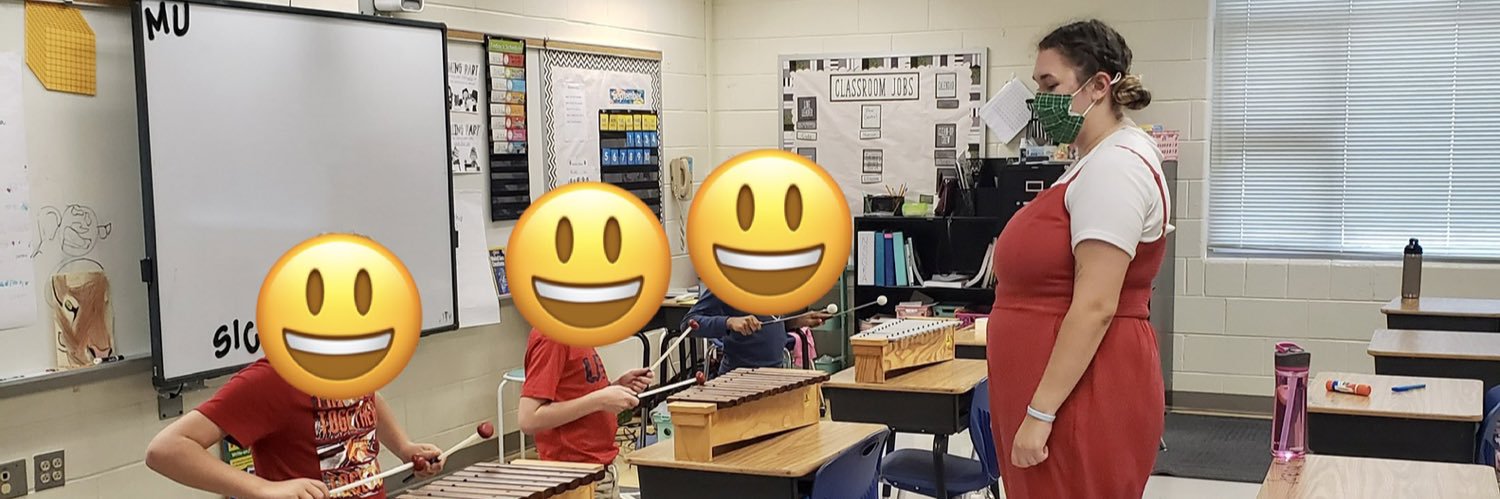
Today in fifth grade we learned the lines and spaces of the treble clef. Check out the acronyms these students used to remember the order of notes! @WinterpockES@HamlinMyranda
I’ve been so impressed with 5th graders’ questions this week!
“What would the music sound like if the notes started on the top of the staff?” is one of my favorites so far. 💛
I love that I get to switch gears with these curious musicians!
Three separate classes today wrote down our song lyrics so that they could remember the songs later because they liked them so much! I love that they love the music we sing together 💛
@Emma62879303@DrFautley I think it depends mostly on three factors:
1. What do the students show interest in? What are they curious about?
2. What do they already know?
3. What do you want to teach them? What are you required to focus on/cover?
@SchaecherClaire I tend to start with state and national standards. The @NAfME website has great examples of standards and assessments for these standards. However, it’s important to wind-forward or wind-back your instruction based on the needs of your students.
@J_Wallace_13 I really enjoy music classrooms that take away the pressure of a good vs. bad judgement. For example, a beginning music ensemble may just be really into making music together. These students may not want the added pressure of needing to be performance ready on every piece
@katieviolakatie Large ensembles, for example, don’t benefit and cater to every student, which can be a factor in low-involvement at schools where these are the only options for music students
@katieviolakatie While it may seem like many methods of music education are “tried and true,” it’s important to take into account who these methods are benefitting. As educators, we need to think about students we aren’t currently serving and how we can find methods that better incorporate them
@katieviolakatie It depends on what you mean by “effective.” Pop music in the classroom (when chosen intentionally) can give students a connection from the music classroom to their real-life music experiences. Among other benefits.
@DanTubbs3 The possibilities with this are endless! As a part of MuEd 372, I drafted a course proposal for “Music as a Means of Social Justice.” Additionally, songwriting and music production courses are great opportunities for getting these students involved in our music classrooms.
@Erinne_Marie In addition, technology such as makey-makeys can be used to create adaptive instruments for students with physical hardships! #JMUMustech (2/2)
@Erinne_Marie Hi Erinne! Technology can be used in so many ways to help these students! Notation software such as finale and musescore can be used to create simplified or wound-forward notation (1/2)
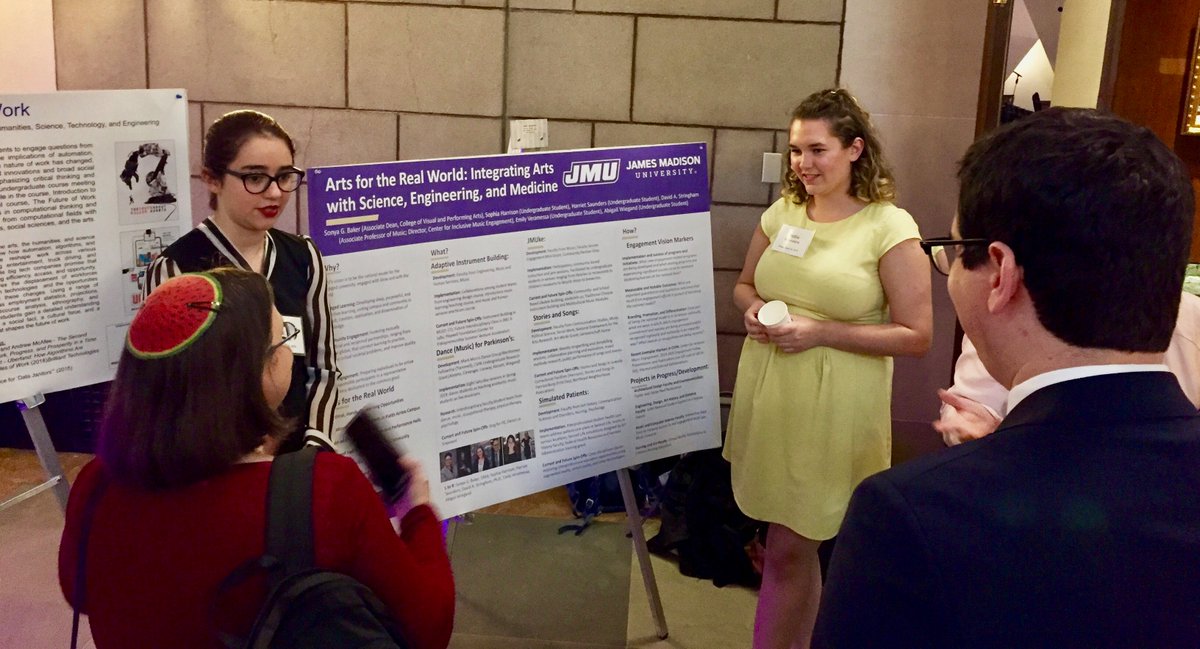
CVPA associate dean Sonya Baker, music faculty member @davidstringham and @JMU undergraduate music majors @soapybubbles99, @hattieacademic, @emilyveramessa & @abbywineguard presented @ Friday's National Convening of Arts, Humanities, and STEMM in Higher Education in D.C.!
Innovation leader @soapybubbles99, director @davidstringham, @JMUMusicEd students @abbywineguard, @hattieacademic, & @emilyveramessa, & @JMUArts Assoc. Dean Dr. Sonya Baker represented @JMU at Friday's Nat'l Convening on Integration of Arts, Humanities, and STEMM in Higher Ed:
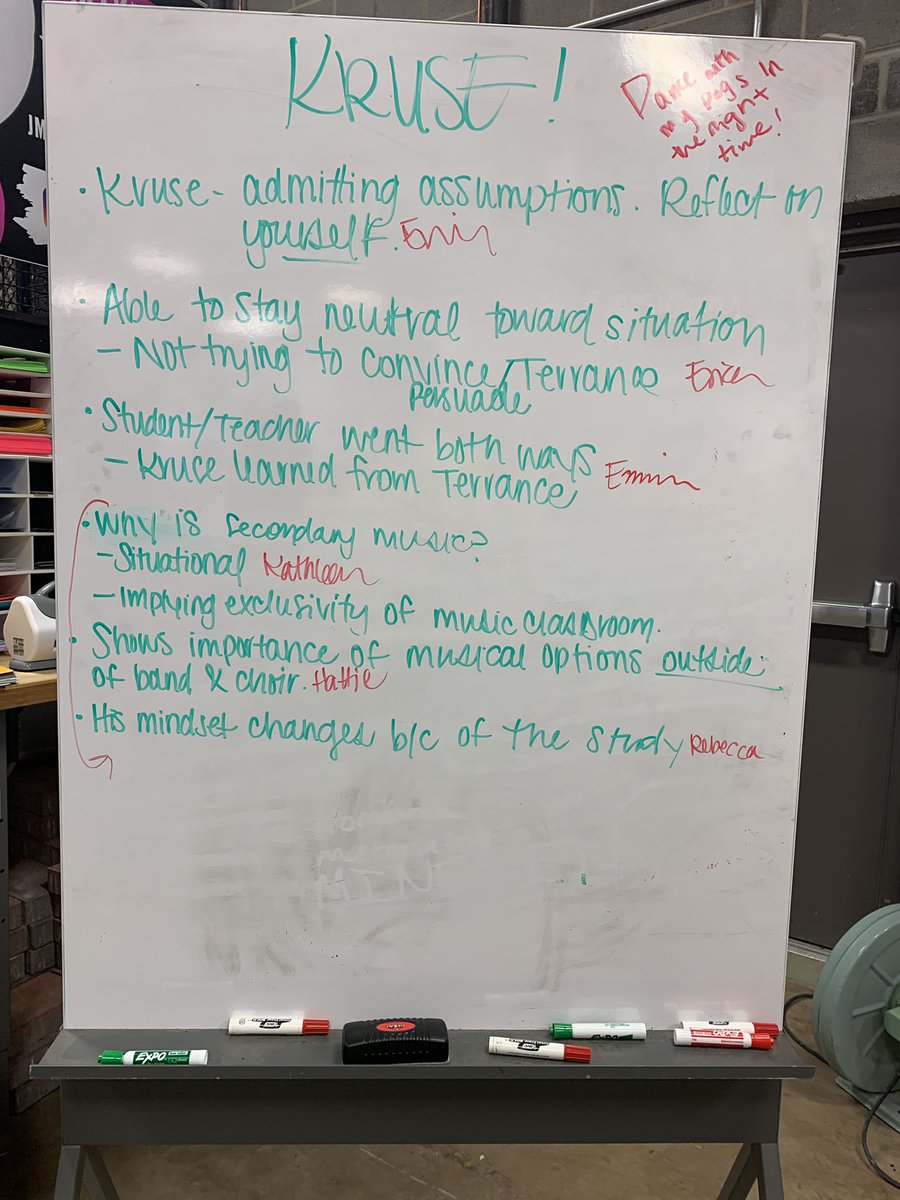
This week, I read “They Wasn’t Makin’ My Kinda Music.” My biggest questions for author @AdamJKruse is “how did the research in this article alter your teaching practices? How could one take this research and create a follow-up study?” #JMUGenMus#JMUMuEd