Alibaba Cloud Model Studio is now available in Germany, bringing faster and more accessible AI services to users across Europe. Now available:
• Qwen3.5-Flash
• Qwen3-Coder-Next
• Qwen3 Series
Click and learn more!
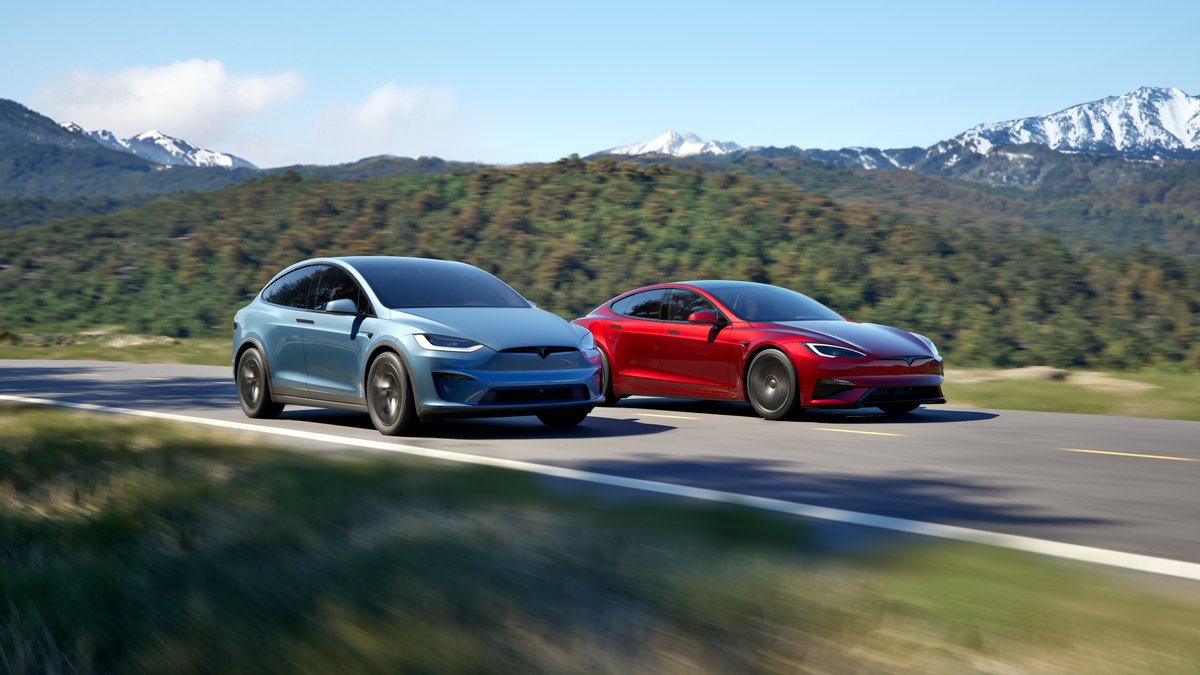
As we shift to an autonomous future, Model S & X production will wind down next quarter.
If you’d like to own one of them, now’s a good time to place your order.
Tesla wouldn’t be what it is today without Model S & X and their (early) owners – thank you for your support over the last decade
• Türk Kamuoyuna Duyuru
• Çalışmalarımıza gösterdiğiniz ilgi ve övgü dolu mesajlarınız için teşekkür ederim.
• Söz konusu çalışmada elde ettiğimiz bilimsel gelişmeler, temel bilim açısından elbette memnuniyet ve umut vericidir.
• Ancak son günlerde duyduğunuz bu güzel haberde yer alan deneysel başarılarımızın şu aşamada yalnızca fareler üzerinde elde edildiğini özellikle belirtmek isterim.
• Bu bulguların insanlar için güvenli ve etkili bir tedaviye dönüşebilmesi, kapsamlı klinik çalışmalar gerektirmekte olup bunun için en az iki yıl daha zamana ihtiyacımız vardır.
• Anlayışınız ve her zamanki desteğiniz için çok teşekkür ederim.
• Selam ve saygılarımla
🎥🚨 2009 yılında Kolombiyalı gazeteci Vicky Davila, Venezüella lideri Hugo Chávez'in ABD ve onun oluşturduğu tehdit konusunda “paranoyak” olup olmadığını sormuştu.
Hugo Chávez'in basiret dolu konuşması bugün yaşanan olayların arkasındaki gerçekleri ortaya seriyor.
Today, effective AI prompts should be short.
To get the best results, go step by step.
Don’t copy the long “perfect prompts” you see on X—learn the ideas behind them and apply them gradually.
As AI evolves, longer prompts will finally shine.
The 85-inch Hisense Class QD6 Series QLED 4K TV is on sale at Amazon for $769.99, down from the list price of $1,099.99. That's a 30% discount. https://t.co/5qucUGaDBp
John Collison: We only had 50 users two years after founding Stripe
“We started working on Stripe in the Fall of 2009, and we launched Stripe in September 2011,” John Collison reflects. “I remember right at the beginning when we were starting it I said to Patrick [Collison], ‘Yeah let’s do it. How hard can it be?’ Which gives you a sense of our mindset. And the answer was: two years of difficulty. We had not predicted that.”
John remembers feeling dejected when Stripe only had 50 users two years later:
“When you spend two years getting 50 users, it doesn’t feel like a whole lot of progress. It feels like things are going pretty slow.”
But this is one of the challenges of startups, he argues:
“If you’re working on a startup that’s a bad idea, it’s going to feel like slow-going. But if you’re working on a startup that’s a good idea, it may feel like slow-going too.”
Yet slow growth has a silver lining:
“I think the thing that allowed us to take off in the subsequent years was the fact that since we were spending so much time on each one of those users; since we were hyper-focused on building a great product; and since we weren’t dealing with problems of scale yet, that allowed us to build the product that we wanted. Part of the culture that set in really early on was taking abnormally good care of those early users.”
The Stripe founders would get an email or phone call anytime a user ran into a bug. When they sent the customer an email moments later alerting them that the bug was now fixed, people’s minds were blown.
They set up a Campfire room that any customer could join and use to message John and Patrick at any hour of the day or night. And if a user was based in the Bay Area, the founders would invite them to come by the office and help integrate Stripe for them.
In the Stripe dashboard they would prompt their customers for feedback and feature requests. Then the Stripe founders would reply to that feedback within 10 minutes.
“What this meant was that even though the user growth was happening quite slowly in the early days,” John explains, “it actually had a pretty surprising viral effect where people had a good experience, they told their friends about it, and we were able to spread entirely through word-of-mouth even to this day.”
Video source: @ECorner (2015)
Jensen Huang: “The best career advice I got was from a gardener”
“Very few people know this but I don’t wear a watch,” Nvidia founder Jensen Huang begins. “And the reason I don’t wear a watch is because now is the most important time. Just dedicate yourself to now.”
Jensen explains by telling a story:
“The best career advice I got was from a gardener. I was on a family trip in Kyoto, and we went to the temple that had the largest moss collection in the world . . . All of the moss is perfect, and every species of the world’s moss is there. It was a hot summer day — anybody who’s been to Kyoto knows how incredibly hot it is during the summer — and my family walked by this old man who was squatted down working on the moss with a bamboo tweezer. His bamboo basket was nearly empty with only two or three small pieces of dead moss.”
“What are you doing?” Jensen asked the old man.
“I am taking care of my garden,” the old man replied.
The old man told Jensen that he has been working on the garden for almost 30 years.
“But this garden is so big and your tweezer and basket are so small. How can you take care of the whole garden?” Jensen asked.
“I have plenty of time,” said the old man.
Jensen reflects:
“That’s the best career advice I can give you. Most of the time I wait for things to come to me. I’m rarely chasing things. I don’t have a watch. I’m focused on now. I’m enjoying my job. I’m the longest-running tech CEO in the world . . . Dedicate yourself to learning all the time, doing the best possible work you can, and leave everything on the field. By the time I go to bed I’m exhausted, and I’m happy about my day because I did everything I could . . . You’ll be surprised. I’m not at all ambitious. I don’t aspire to do more. I aspire to do better at what I’m currently doing. I’m not reaching for more. I wait for the world to come to me.“
He continues:
“People who know me also know that Nvidia doesn’t have a long-term strategy. We have no long-term plan. Our definition of a long-term plan is, ‘What are we doing today?’ . . . You have plenty of time. Enjoy your work. Do the best you possibly can. Just keep learning every day, and good things will come to you.”
Telegram founder Pavel Durov on what separates A Players from B Players
“I can recall a few instances in my career where firing an engineer actually resulted in an increase in productivity,” Telegram founder Pavel Durov begins.
He gives an example of two Android engineers building an app that are having a hard time hitting deadlines:
“You think, ‘I probably have to hire a third engineer.’ But then you notice that one of [the engineers] is really weird — falling behind schedule, complaining, not assuming responsibility — and you ask, ‘What if I just fired this person?’ Then you fire this person, and in a few weeks you realize you never needed a third engineer. The problem was this guy who created more issues and problems than he solved. It’s so counterintuitive because in developing tech projects, you tend to think that you just throw more people into something and things get solved miraculously.”
Pavel continues:
“The other thing that people don’t realize is how demotivating working with a B Player is. Everyone can tell if the other engineer they’re working with is really competent. If the person is asking the wrong questions and they keep lagging behind, at a certain point if you’re an A Player, you get get this dissatisfaction and feeling that you are not able to realize your full potential and accomplish what you’re really meant to accomplish because of this person working next to you (or pretending to work next to you).”
Pavel reflects on what it is exactly that separates these B Players from A Players:
“In some cases it’s not because the person is lazy . . . It’s not about experience. More often it’s about natural ability and persistence. In 90% of cases, it’s just the inability to focus on one task for an extended period of time. Not everybody has this ability. So for people who do have this ability, it’s an insult to work alongside someone who is distracted and cannot go deep in the projects that they’re responsible for.”
Video source: @lexfridman (2025)
Which blockchains actually held up during the Oct 10th selloff?
Some chains performed. Others didn’t.
Here’s the read-through:
1. Failed transactions = real capital loss. Infrastructure is zero-sum during a crisis.
2. Retail may shrug it off. Institutions won’t. They will directly correlate failure rate with systemic risk.
3. Last Friday was a free stress test. The market just revealed which chains are ready for real money. Not a paltry $4T of crypto, global capital flows.
4. The next capital wave won’t pick the loudest ecosystems and slickest UI. It’ll optimize for resilience.
There’s a reason I build on @avax, and it has nothing to do with marketing.
If you’re making long-term infra bets, go pull the actual data before you double down.
There's no hiding on the blockchain.