Today the European Parliament voted 418-218 to pass the strictest migration law in EU history.
When the result was announced, MEPs started chanting.
"Send them back."
Inside the parliament chamber. On the floor. In 2026.
Here's what the law actually does:
— Deportation orders now apply across all EU member states. You can't evade removal by crossing a border.
— Detention before deportation extended from 6 months to 30 months. Unlimited for security threats.
— "Return hubs" in third countries. Migrants can be transferred outside the EU while awaiting deportation — including families with children.
— Automatic deportation stays while appeals are pending? Gone. Courts decide case by case.
— Entry bans double from 5 to 10 years. Lifetime bans for security risks.
Currently only about 20% of people ordered deported from the EU actually leave.
For years European leaders told voters that open borders and mass migration were non-negotiable — that wanting enforcement meant you were a fascist.
418 Members of the European Parliament just disagreed.
Trump proved his immigration policies were popular enough to win elections.
After a wave of right-wing electoral gains across the continent, Europe is following in his footsteps.
And the Overton Window is getting kicked off its hinges.
This is one of the most reliable sell signals in history.
Just look at TIME's latest issue.
I've been doing this since 1981, and when I see a cover like that, I don't get excited.
Because history has a brutal sense of humor about moments exactly like this one:
In 1979, BusinessWeek ran the most infamous cover in the history of financial journalism: "The Death of Equities."
The argument was that inflation had broken the stock market for good and that stocks were finished as a serious place to put your money, perhaps permanently.
The country agreed and everybody gave up.
But what came next was the single GREATEST bull market in American history.
Stocks returned roughly 18% a year for the next two decades. Off the 1982 low, with dividends reinvested, the S&P went on to gain nearly 7,000%. The cover that buried equities turned out to be the starting gun.
Now look at the second cover.
In 2019. Bloomberg Businessweek puts a dead, deflated dinosaur on the front and asks "Is Inflation Dead?" The consensus was unanimous - inflation was extinct, a relic, never coming back.
3 years later we printed the WORST inflation in four decades, with prices peaking at 9.1% in June of 2022. That was the exact opposite of what the cover declared, and it happened all over again.
This is the oldest pattern there is.
By the time a story is so obvious, so universally accepted, so completely understood that the editors of a mainstream magazine slap it on the cover, every single person who was ever going to believe it already does.
So the trade is crowded, the buyers are exhausted, and there is nobody left to come in behind you and push the price higher.
The cover doesn't predict the future the editors think they're describing - it marks the exact moment a belief became unanimous. And unanimous belief is the textbook definition of a top.
But here's what makes the AI cover even MORE dangerous than the two that came before it:
"Death of Equities" and "Is Inflation Dead" were business magazines, read by people already in the markets. TIME is a general-interest newsweekly read by over 100 million people who don't trade stocks for a living.
When the AI build-out has saturated the public mind so thoroughly that it becomes the cover of TIME, the message is that there's almost nobody left who hasn't already heard the story and bought in.
And the fundamentals are screaming the same thing the cover is whispering:
The largest tech companies are set to spend north of $600 billion on AI infrastructure in 2026, up from roughly $388 billion just last year. Tech investment is now running near 4.4% of GDP, approaching the peak of the dot-com bubble.
These founders are literally saying that they'd rather go bankrupt than lose this race. Hundreds of billions of dollars and mountains of debt are all resting on a single untested premise - that the profits eventually show up to justify the spending. But so far they haven't.
Now let me be honest with you, because that's the only way I know how to do this.
I'm not telling you AI is worthless or that the whole thing collapses tomorrow. The 1979 cover was about three years early, and the real bottom didn't arrive until 1982. The 2019 cover took two years to be proven right.
Covers mark the mood, not the exact day, so I'm not calling the top to the week.
What I am telling you is that the EASY money has already been made, the consensus is now total, and the risk and the reward have flipped upside down. When everyone you know already owns the story, the story stops being an opportunity and becomes a liability.
Mr. Market hands out a scorecard every single day, and that scorecard doesn't care what TIME magazine believes. It only cares about valuation.
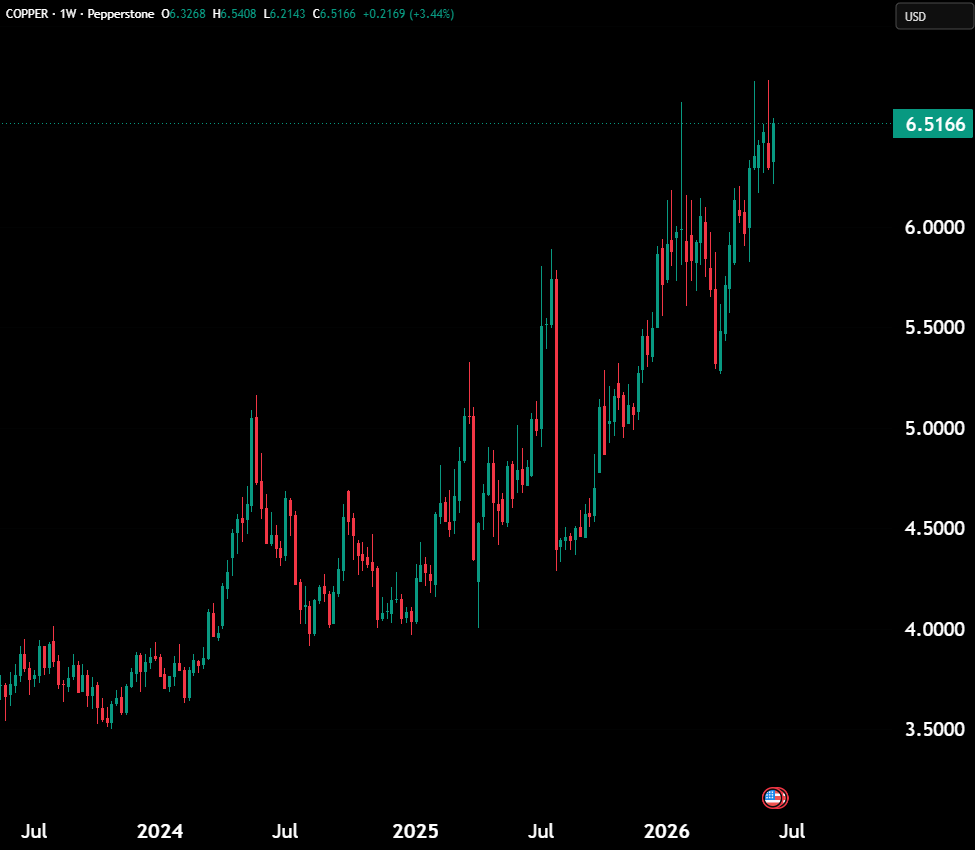
And right now the things nobody would ever put on a cover - gold, silver, energy, real assets, the unloved corners of this market - are exactly where the next decade of returns is hiding.
"AI is likely to produce neither a job apocalypse nor productivity utopia, but something harder to measure: a quiet degradation of the quality of the jobs that remain," per Bloomberg
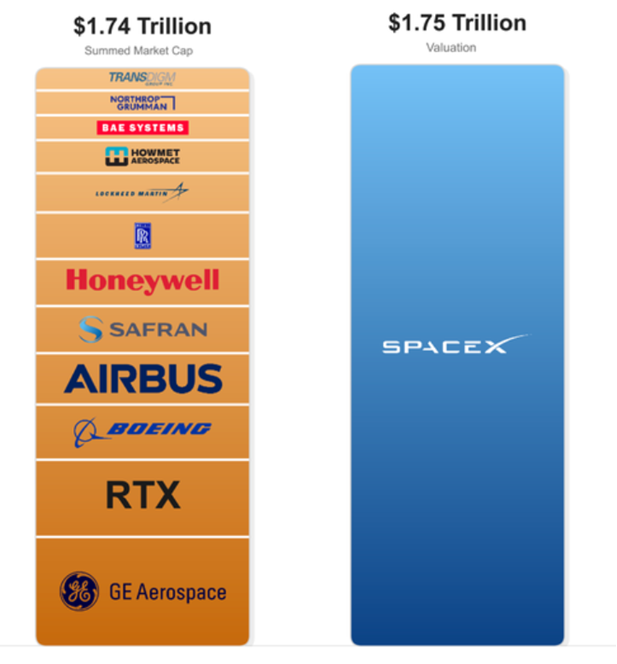
SpaceX trades at 94x sales. Nearly 4x the next most expensive company on earth, and 27x more than Amazon.
Every other trillion-dollar tech giant earns a fat profit. SpaceX is the only one that loses money.
The market is asking you to pay the highest price in the room for the one company in it that earns nothing.
The U.S. government ran a budget deficit in May of $293 billion, well above estimates and up 32% from a year earlier. The government also paid a record $133 billion in interest, a 44% YoY jump. Annualized, that's $1.6 trillion in interest, 30% of tax receipts! Disaster awaits!
⚠️Corporate willingness to pay for AI is starting to CRACK:
The LLM Token Expenditure Index, which tracks how much companies are willing to pay per million tokens across AI models, has fallen to ~$1.80 per million tokens.
Tokens are the units of text processed by AI models, with higher usage translating into higher cost.
Put simply, the index reflects marginal willingness to pay for AI output over time.
This comes as corporate AI costs face increasing scrutiny, with OpenAI CEO Sam Altman acknowledging that expenses have become a “huge issue” for customers, and reportedly considering sharp price cuts to compete with Anthropic.
A potential price war between OpenAI and Anthropic could COMPRESS MARGINS and slow the path to profitability for both firms, while also raising questions about the durability of current AI valuations.
Businesses are increasingly sensitive to AI spending, as early enthusiasm gives way to tighter budget controls and more selective model usage.
When AI pricing starts to commoditize, the bull case for sustained premium valuations becomes harder to defend.
Is the AI bubble at risk of bursting?
THE DEGREE PREMIUM FOR YOUNG MEN IS GONE
US men 22-27 with a college degree are now unemployed at the same rate as men who never went.
Both now sit at 7%