You’ll often hear people say someone has good “work ethic” if they’re putting in long hours.
But 60, 70, 80 hours a week doesn’t equal work ethic. 60, 70, 80+ hours a week simply equals 60, 70, 80+ hours a week.
Work ethic is about showing up, being on time, being reliable, doing what you say you’re going to do, being trustworthy, putting in a fair day’s work, respecting the work, respecting the customer, respecting the organization, respecting co-workers, not wasting time, not making work hard for other people, not creating unnecessary work for other people, not being a bottleneck, not faking work. Work ethic is about being a fundamentally good person that others can count on and enjoy working with.
Works a lot ≠ has good work ethic.
1/ “AI Will Create More Developers, Not Less” - Kevin Xu
In this thought-provoking article, Kevin Xu discusses the debate on whether code generation AI products will create more developers or destroy their jobs.
3/ AI-assisted programming only enables more people to fill that void. Despite the zero-sum nature of Wall Street, if you view the world from this proposed lens, it’s quite obvious that AI is an accelerator, not a detractor, of unabated global developer growth.
4/4: If you're interested in learning more about how generative AI can benefit your organization, check out this informative paper by @ErikBryn, Danielle Li, and Lindsey R. Raymond. #AI#productivity#workforce https://t.co/MHGnXKqhPe
1/4: Are you curious about the impact of generative AI on the workforce? A recent study found that introducing generative AI-based conversational assistants in the workplace can increase productivity by 14% on average, with the greatest impact on novice and low-skilled workers.
3/4: The study suggests that generative AI can benefit individual workers by improving productivity and retention. It may also improve customer satisfaction and reduce turnover, particularly for newer workers.
The Turing Test was inspired by a parlor game 70 years ago.
Here's a modern version:
https://t.co/CdiKBAUB8g
What questions would you ask to tell the difference between a human vs a machine in just 2 minutes?
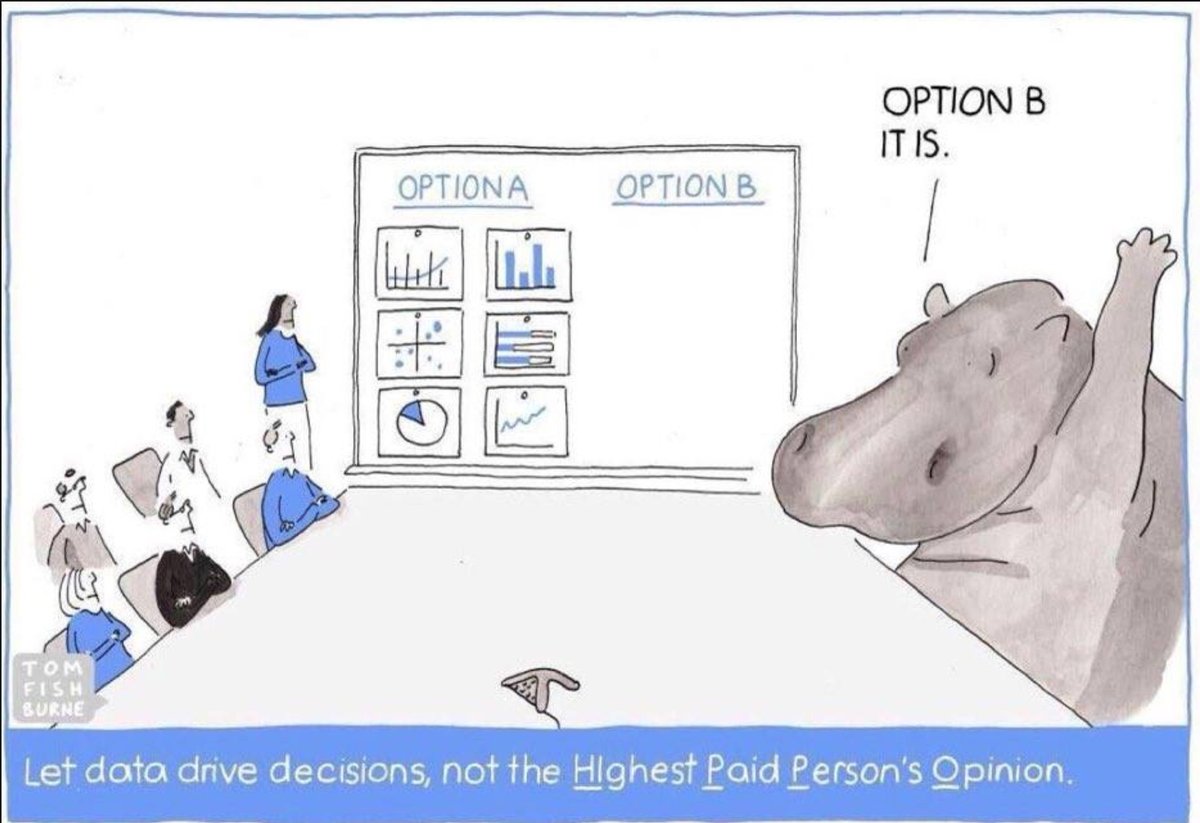
"Don't argue with the boss" is not a demand for respect. It's a sign of a fragile ego.
Insecure leaders silence dissent to shield their self-esteem and save face. Secure leaders welcome critiques to improve their judgment.
Being open to challenges is a prerequisite for growth.
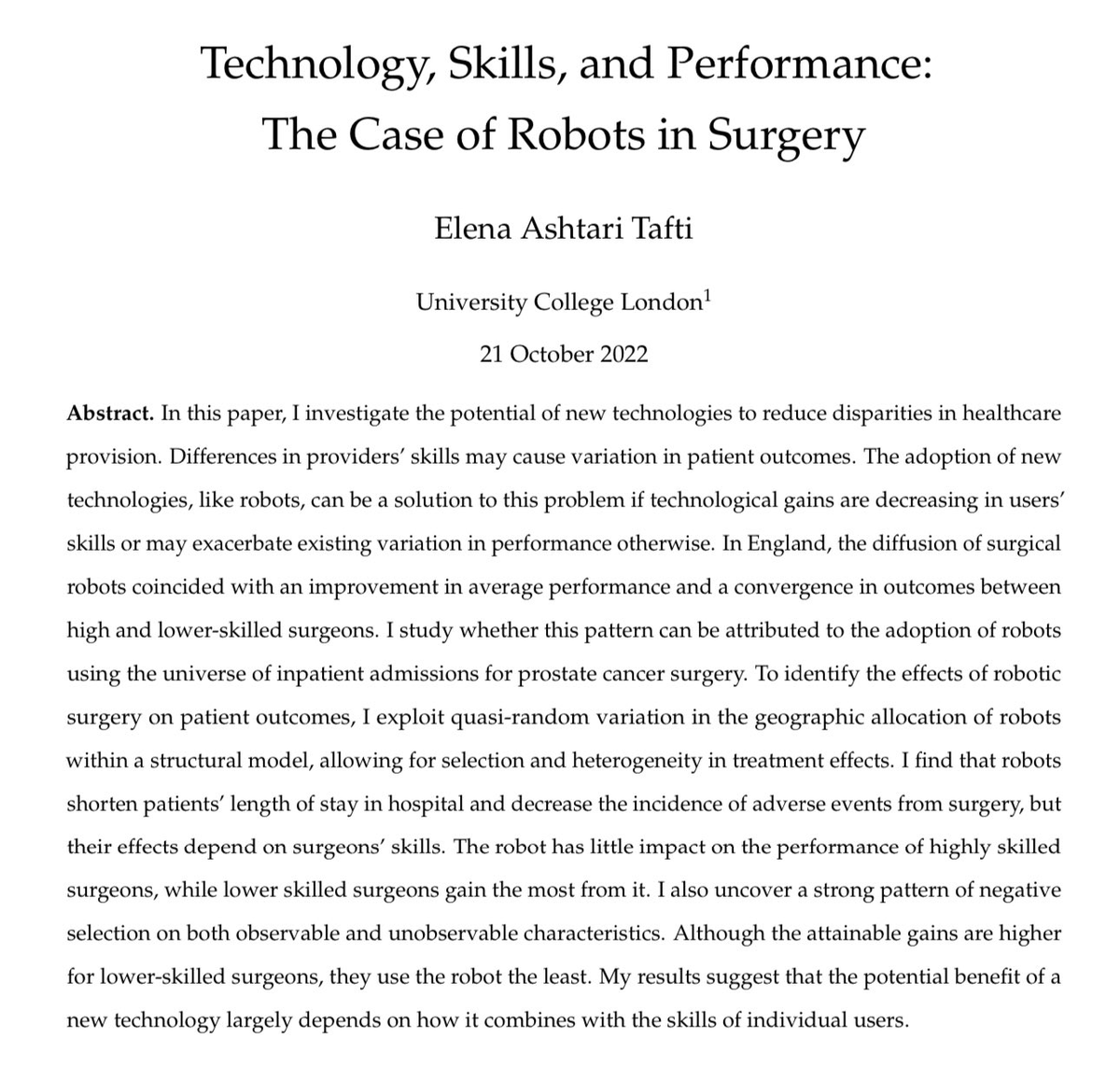
One of the biggest questions with AI is how it interacts with skills.
For example, adding robots to surgeries doesn't do much for the best surgeons, but benefits bad ones. Low-skill surgeons are much worse than good ones, but robots close the gap by 50%! https://t.co/QmHuINOgwT
You can't brute force the unsolvable - Interesting reading about addressing wicked problems with experimentation by Ethan Mollick. #innovation https://t.co/V7HlmU5XEI
@BexelInitiative@schmafia@laserlikemike I'm a massive fan of tools like @rgmcgrath's DiscoveryDrivenPlanning and @Pretotyping, which are effectively the scientific method applied to new ventures.
Theory & Intuition drive hypotheses.
(I've spent decades watching brilliant scientists make suicidal business decisions)
Join Steven Miller and I for a @mitsmr webinar where we talk about our new book and how to succeed with #AI augmentation. 9/22 at 11AM ET. Even if you can't attend in-person, still register to get recording. https://t.co/JO9crYJ9DB