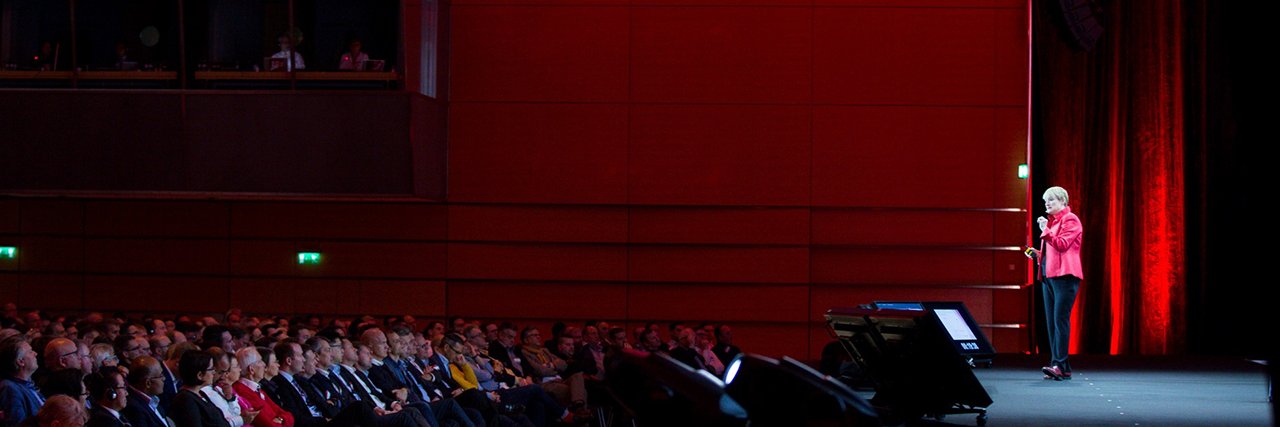
Allow me to formally introduce myself.🤝 My name is Rita McGrath, and I am proud to have authored ideas that the late Clayton Christensen said are "some of the most important in management - ever".👇
✨With over three decades of experience, I specialize in helping organizations navigate #inflectionpoints and see around corners.
💡I provide guidance for people to develop an entrepreneurial mindset to empower leaders to face an uncertain future with confidence and courage.
📚As a best-selling author, @columbia_biz professor, and business consultant, my mission is to help you turn
ideas into real opportunities.
🚀In the corporate sphere, there's always room to think differently and reach new heights.
👉Learn more at https://t.co/3yheDCaEZR.
#ritamcgrathgroup #businesstips #entrepreneur #seeingaroundcorners #ceomindset #innovation #inflectionpoints #inflection #business #strategy
You know @scottdwitt, you would think after 30+ years we would have figured out that making the same mistakes over and over without learning from them is not a good use of time or money!
re: "CEOs are quietly realizing..."
We should ask:
"Should a reasonable leader have considered this possibility *before* charging into the situation?"
Maybe test their assumptions w/ fast & cheap experiments, before treating them as facts.
@RGMcGrath suggested this in 1995!
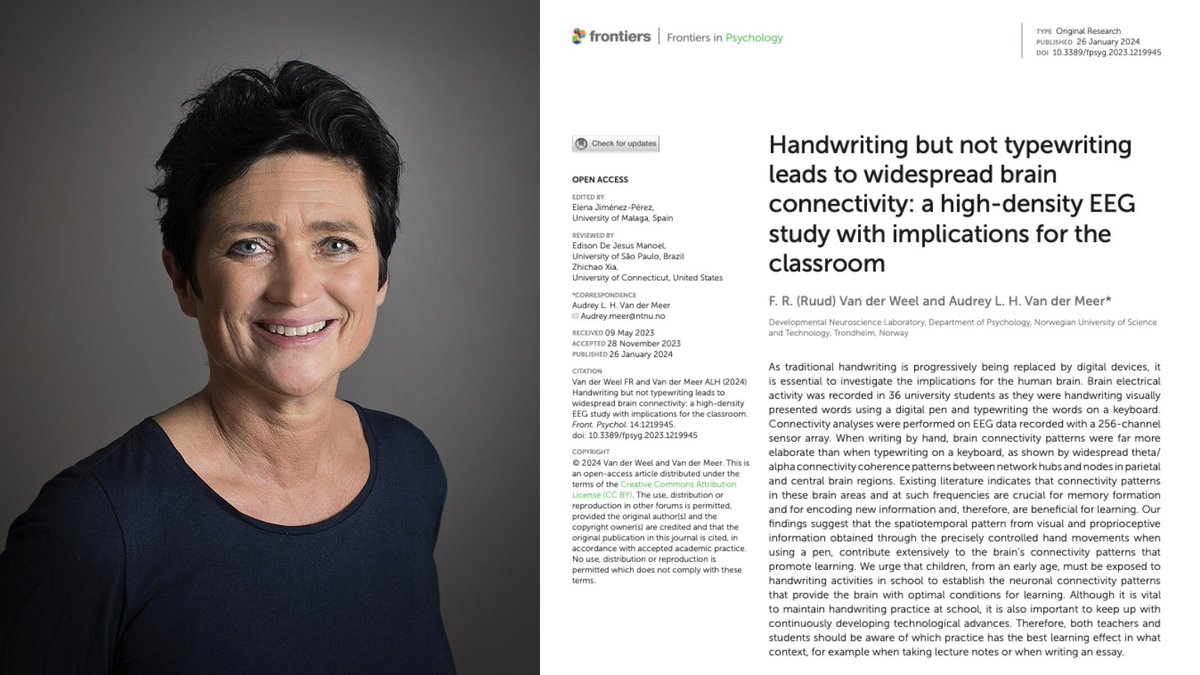
A Norwegian neuroscientist spent 20 years proving that the act of writing by hand changes the human brain in ways typing physically cannot, and almost nobody outside her field has read the paper.
Her name is Audrey van der Meer.
She runs a brain research lab in Trondheim, and the paper that closed the argument was published in 2024 in a journal called Frontiers in Psychology. The finding is brutal enough that it should have changed every classroom on Earth.
The experiment was simple. She recruited 36 university students and put each one in a cap with 256 sensors pressed against their scalp to record brain activity. Words flashed on a screen one at a time.
Sometimes the students wrote the word by hand on a touchscreen using a digital pen, and sometimes they typed the same word on a keyboard. Every neural response was recorded for the full five seconds the word stayed on screen.
Then her team looked at the part of the data most researchers had ignored for years, which is how different parts of the brain were communicating with each other during the task.
When the students wrote by hand, the brain lit up everywhere at once.
The regions responsible for memory, sensory integration, and the encoding of new information were all firing together in a coordinated pattern that spread across the entire cortex. The whole network was awake and connected.
When the same students typed the same word, that pattern collapsed almost completely.
Most of the brain went quiet, and the connections between regions that had been alive seconds earlier were nowhere to be found on the EEG.
Same word, same brain, same person, and two completely different neurological events.
The reason turned out to be something nobody had really paid attention to before her work. Writing by hand is not one motion but a sequence of thousands of tiny micro-movements coordinated with your eyes in real time, where each letter is a different shape that requires the brain to solve a slightly different spatial problem.
Your fingers, wrist, vision, and the parts of your brain that track position in space are all working together to produce one letter, then the next, then the next.
Typing throws all of that away. Every key on a keyboard requires the exact same finger motion regardless of which letter you are pressing, which means the brain has almost nothing to integrate and almost no problem to solve.
Van der Meer said it plainly in her interviews.
Pressing the same key with the same finger over and over does not stimulate the brain in any meaningful way, and she pointed out something that should scare every parent who handed their kid an iPad.
Children who learn to read and write on tablets often cannot tell letters like b and d apart, because they have never physically felt with their bodies what it takes to actually produce those letters on a page.
A decade before her, two researchers at Princeton ran the same fight using a completely different method and ended up at the same answer. Pam Mueller and Daniel Oppenheimer tested 327 students across three experiments, where half took notes on laptops with the internet disabled and half took notes by hand, before testing everyone on what they actually understood from the lectures they had watched.
The handwriting group won by a wide margin on every question that required real understanding rather than surface recall.
The reason was hiding in the transcripts of what the two groups had actually written down.
The laptop students typed almost word for word, capturing more total content but processing almost none of it as they went, while the handwriting students physically could not write fast enough to transcribe a lecture in real time, which forced them to listen carefully, decide what actually mattered, and put it in their own words on the page.
That single act of choosing what to keep was the learning itself, and the keyboard had quietly skipped the choosing and skipped the learning along with it.
Two studies. Two countries. Same answer.
Handwriting makes the brain work. Typing lets it coast.
Every note you have ever typed instead of written went into your brain through a thinner pipe. Every meeting, every book highlight, every idea you captured on your phone instead of on paper was processed at half depth.
You did not forget those things because your memory is bad. You forgot them because typing never woke the part of the brain that would have made them stick.
The fix is the thing your grandmother already knew.
Pick up a pen. Write the thing down. The slower road is the faster one.
Don't miss out on pre-ordering the new book "Leading For Tomorrow" edited by @sbkaufman and @cshipley - a collaboration between @thinkers50 and @SiliconGuild https://t.co/WdKKrEXmLN
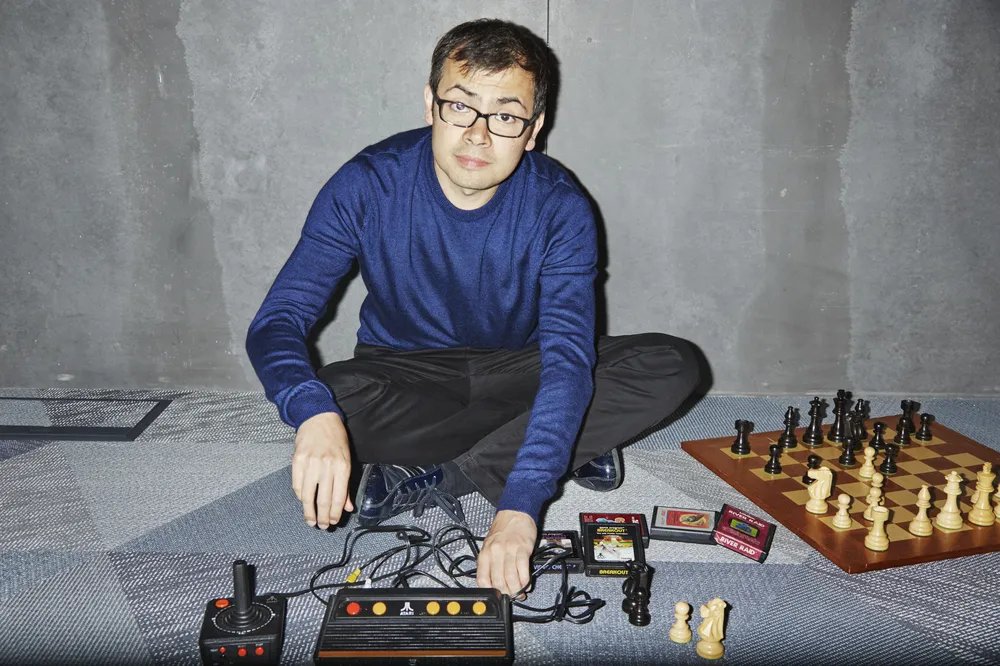
A British kid became a chess master at 13, then a bestselling video game designer at 17, then a PhD neuroscientist at 33, then the CEO of the AI lab that won the 2024 Nobel Prize in Chemistry.
People called him unfocused for twenty years. He was running the most deliberate career plan in modern science.
His name is Demis Hassabis, and the thing almost nobody understood while he was doing it was that every single step was feeding the same underlying obsession.
Here is the thread that connects the whole career, and why it matters for how anyone should think about building toward a hard goal.
The chess came first. He was born in London in 1976 and started playing at age four. By eight, he was the London champion for his age group. By thirteen, he had an international master rating that put him in the top fifty players in the world under his age bracket. He was on a track that would have made him a professional player for the rest of his life.
He walked away.
The reason he gave later, in interview after interview, is the part most people miss. He said chess forced him to think constantly about thinking itself. Every move required him to simulate what his opponent was simulating about him. He became fascinated not with winning the game, but with the process the human brain was running in order to play it. He decided chess was too small a container for the real question he wanted to answer, which was how intelligence actually works.
The video games came next. He used the money he won from chess tournaments to buy a ZX Spectrum. He taught himself to code. By seventeen, he was a lead programmer on a game called Theme Park that sold millions of copies. He could have stayed in that industry and built a career as one of the top game designers in Britain.
He walked away from that too.
He went to Cambridge, did a double first in computer science, and then made the move that looked like the strangest pivot of his life. He enrolled in a PhD in cognitive neuroscience at University College London. He was thirty. His peers from Cambridge were already running companies. He went back to graduate school to study how the human hippocampus builds memories and imagines future scenarios.
His 2007 paper on the link between memory and imagination was named one of the top ten scientific breakthroughs of the year by Science magazine. But the paper was never the point. The point was that he had spent three decades quietly building the exact combination of skills nobody else in the world had put together.
Deep intuition for how intelligent agents behave in complex systems, from a lifetime of chess. Hands-on engineering fluency, from years of shipping commercial software. And a rigorous scientific understanding of how biological brains actually produce cognition, from a PhD in neuroscience.
In 2010, he used that combination to co-found DeepMind with Shane Legg and Mustafa Suleyman. The mission statement he wrote was two sentences long and sounded absurd to most people who heard it. Solve intelligence. Then use it to solve everything else.
For the first six years, DeepMind worked almost entirely on games. Atari. StarCraft. Go. People outside the field could not understand why a lab that claimed to be building artificial general intelligence was spending hundreds of millions of dollars teaching computers to play Pong.
Hassabis kept explaining the reason in interviews and almost nobody was listening. Games were not the goal. Games were a controlled environment where you could iterate on general-purpose learning algorithms fast, measure their progress precisely, and prove to yourself that you had built something that could transfer between domains.
In 2016, AlphaGo beat Lee Sedol, the world champion at Go, in a match that had been considered decades away. And the day after that match ended, Hassabis sat down with his team lead David Silver and asked what they should do next.
The answer was the thing he had been working toward his entire life.
They turned the same deep reinforcement learning approach at a problem biology had been stuck on for fifty years. Protein folding. Given an amino acid sequence, predict the three-dimensional shape the protein would fold into. Every drug discovery effort in the world depended on it. The best computational methods could only solve a small fraction of proteins. Experimental methods took years per structure and millions of dollars per protein.
AlphaFold2 was released in 2020. Within a year, it had predicted the structure of almost every protein known to science. Two hundred million structures. Made freely available to the entire research community. More than two million researchers from a hundred and ninety countries have used it since.
In October 2024, Demis Hassabis and John Jumper were awarded the Nobel Prize in Chemistry for that work.
The line almost nobody quotes from his speeches is the one that explains the whole career. He has said, many times, that he did not build AlphaFold to solve protein folding. He built AlphaFold to prove that the approach he had been developing for thirty years could actually work on a real scientific problem. Protein folding was the demonstration. AGI was always the goal.
The chess taught him how to think about adversarial systems. The games taught him how to ship software. The neuroscience taught him how the only existing example of general intelligence actually worked. DeepMind used all three to build a method that could transfer between domains the way the human brain does. And the moment the method was ready, he pointed it at the single most important unsolved problem he could find in a domain where a breakthrough would save millions of lives.
Most people looking at his career from the outside, at any point before 2016, would have called it scattered. A chess prodigy who gave up chess. A video game designer who walked away from a gaming career. A computer scientist who detoured through neuroscience. A startup founder who burned six years on board games.
From the inside, it was the most focused career in modern science. Every step was quietly answering the same question. How does intelligence actually work, and what would it take to build one that could solve problems humans have not been able to solve alone.
The people who change a field are almost never the ones who looked focused along the way.
They are the ones who were obsessed with a single question so deep and so long that the path they took to answer it looked like chaos from the outside and like a straight line from the inside.
And they almost never get credit for the plan until decades later, when the Nobel Committee calls.
Lead with Purpose is live.
Long-form, unedited video conversations with leaders about purpose, transformation, and the hard calls.
Peer-level, not interview-style.
First guest: @rgmcgrath, Columbia Business School and Valize. One of the sharpest strategic minds working today.
Watch, subscribe, share: https://t.co/dIWynk61mI
Some of the most innovative and creative storytelling you'll find anywhere - awards program Sunday the 26th Registration link here: https://t.co/mv91X0LazF
Super excited that Monica Nassif, founder of Mrs. Meyer's Clean Day products and author of the new book "I Bottled My Mother" is going to be in the lineup at my @ColumbiaExecEd program "Leading Strategic Growth and Change" - June 16 NYC, can't wait!
Super excited that Monica Nassif, founder of Mrs. Meyer's Clean Day products and author of the new book "I Bottled My Mother" is going to be in the lineup at my @ColumbiaExecEd program "Leading Strategic Growth and Change" - June 16 NYC, can't wait!
Super excited that Monica Nassif, founder of Mrs. Meyer's Clean Day products and author of the new book "I Bottled My Mother" is going to be in the lineup at my @ColumbiaExecEd program "Leading Strategic Growth and Change" - June 16 NYC, can't wait!
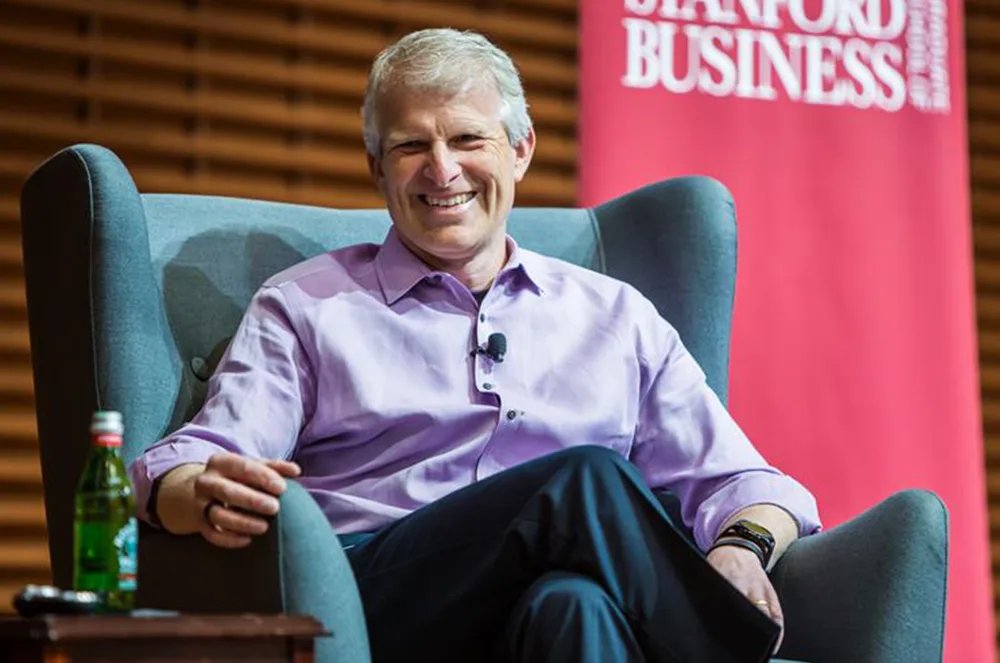
A Stanford professor spent years watching brilliant MBA students freeze when a professor called on them without warning.
His name is Matt Abrahams, and he teaches communication at Stanford's Graduate School of Business. The methodology he built to solve that problem is now the first thing every Stanford MBA encounters in their program. Within three weeks of arriving, every student goes through it.
The framework is called Think Faster, Talk Smarter, and the insight underneath it is one most people never consider.
Most communication happens in the moment. Not in prepared presentations or planned pitches. In the question you didn't expect. The feedback someone asks for in a hallway. The introduction you have to make cold. The toast someone hands you the microphone for without warning. These are the moments that reveal who you actually are as a communicator, and almost nobody trains for them.
Here is the six-step system he has spent his career refining.
The first step is managing anxiety, and he starts here because everything else collapses if you skip it. Research shows upwards of 85 percent of people feel nervous in high-stakes communication situations. His observation is that the other 15 percent are lying.
The mechanism matters. When your body perceives speaking as a threat, it triggers fight-or-flight. Heart rate spikes. Mouth dries out. Brain freezes. These are not character flaws. They are your nervous system doing exactly what it was designed to do.
His fix is physiological first. A deep belly breath where the exhale is twice as long as the inhale measurably reduces heart rate and slows the rapid breathing that makes you speak faster. Holding something cold before you walk into a room helps regulate body temperature, which is why blood rises to the face and causes blushing. Warm water or a lozenge reactivates the salivary glands before you speak.
But managing symptoms is only half of it. The source of most anxiety is not the room. It is a potential negative future outcome, the job not offered, the question not answered well, the pitch that falls flat. The fix is to become radically present. Talk to people before you walk in. Count backwards from 100 by 17s. Say a tongue twister. You cannot think about what might go wrong in the future if your full attention is locked onto something happening right now.
The second step is what he calls maximizing mediocrity, and it is the one that sounds wrong until you understand it.
When you are speaking and simultaneously judging everything you are about to say before you say it, you are running two cognitive processes at once on limited bandwidth. The evaluation consumes the resources you need for the actual communication. The result is that the harder you try to say the right thing, the worse you perform.
His instruction to Stanford MBAs is to turn the volume down on the internal critic while speaking, not eliminate it, but reduce it enough to stay present. The full sentence he gives them is: maximize mediocrity so you can achieve greatness. Give yourself permission to just answer the question. That permission is what makes a good answer possible.
The third step is reframing the situation itself.
Most people experience unexpected questions and cold feedback requests as threats. That perception makes them retreat. Answers become short and defensive. Tone becomes guarded. He teaches four tools to flip this in the moment.
Not yet, borrowed from Carol Dweck's research on growth mindset here at Stanford, which turns a failure into an incomplete rather than a verdict. Yes and, from improvisation, which trains you to find the area of connection before the area of disagreement. Next play, from basketball coach Mike Krzyzewski, which moves you forward immediately rather than letting a misstep compound inside a live conversation. And missed takes instead of mistakes, which reframes every unsuccessful attempt as a director calling for another take, not a final judgment.
The fourth step is listening, and it is the one most people skip entirely.
He defines poor listening precisely. Most people listen just enough to get the gist of what someone is saying, then start rehearsing their response. The gap between what was actually said and what gets responded to is where conversations fall apart.
His framework for listening is three words: pace, space, grace. Slow the intake down. Move to a position where you can actually hear and be mentally present. And give yourself permission to notice not just what is being said but how, including your own intuition about what the person actually needs in the moment.
The tool that follows from good listening is paraphrasing. Distill what you heard to its core and reflect it back. Then ask a question. This serves two purposes simultaneously. It shows the speaker they were heard, which research consistently shows changes how they receive everything that comes next. And it buys you the cognitive space to think about what you actually want to say, because paraphrasing is a lower-order task that does not consume the bandwidth a full response requires.
The fifth step is structure, which is where mindset turns into messaging.
When people are put on the spot, most ramble. They give the audience a tour of their own discovery process in real time, thinking out loud rather than communicating. Structure is the antidote.
His preferred framework is three questions: what, so what, now what. What is your idea or position. So what is why it matters to the person you are speaking to. Now what is what comes next. He applies it to feedback, to small talk, to updates, to pitches. It works in any context because it is a logic container, not a script.
The sixth step is focus, and he calls it the f-word of communication.
His mother's formulation is the one he uses: tell me the time, don't build me the clock. Most people over-explain because they are still figuring out what they want to say while saying it, or because they want the audience to see how much work went into the answer. Neither serves the listener.
His discipline is to know three things before any communication begins, planned or spontaneous: what you want the audience to know, how you want them to feel, and what you want them to do. That clarity does not require preparation time. It requires a habit of mind that develops with repetition.
He has been teaching this for over two decades. The podcast he hosts on it has been downloaded millions of times. The book has reached people far outside Stanford.
His closing point is the one that makes all the frameworks matter.
The only way to get better at speaking in the moment is three things: repetition, reflection, and feedback. You have to practice. You have to think about what worked and what did not. And you have to seek input from people who will tell you the truth.
Most people wait to be confident before they practice.
He teaches Stanford students to practice until confidence arrives on its own.
#ConversandoConMosquera | "Necesitamos crecimiento digital, verde e inclusivo".
Nuestra Dir. @memosquera, conversará con @CarlotaPrzPerez, académica y experta en tecnología y desarrollo, sobre el futuro de Venezuela y América latina.
📆Reposición, miércoles 15 de abril | ⌚️8:30 pm
📺🌐#VALETV y https://t.co/tDWkYfY5H9
Nice to remember that from my book on Technological Revolutions and Financial Capital. Job losses can always be replaced by job gains. Both the new (green) lifestyles and a new world of services are a promise ahead, but inequality must diminish
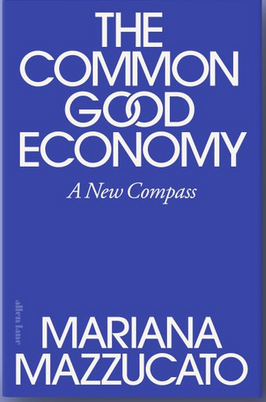
I have posted two messages about @MazzucatoM's new book, on The Common Good Economy and they both ended up in Replies, where nobody really sees them. I never look at people's replies. Do you? I wonder why that happens. Any ideas?