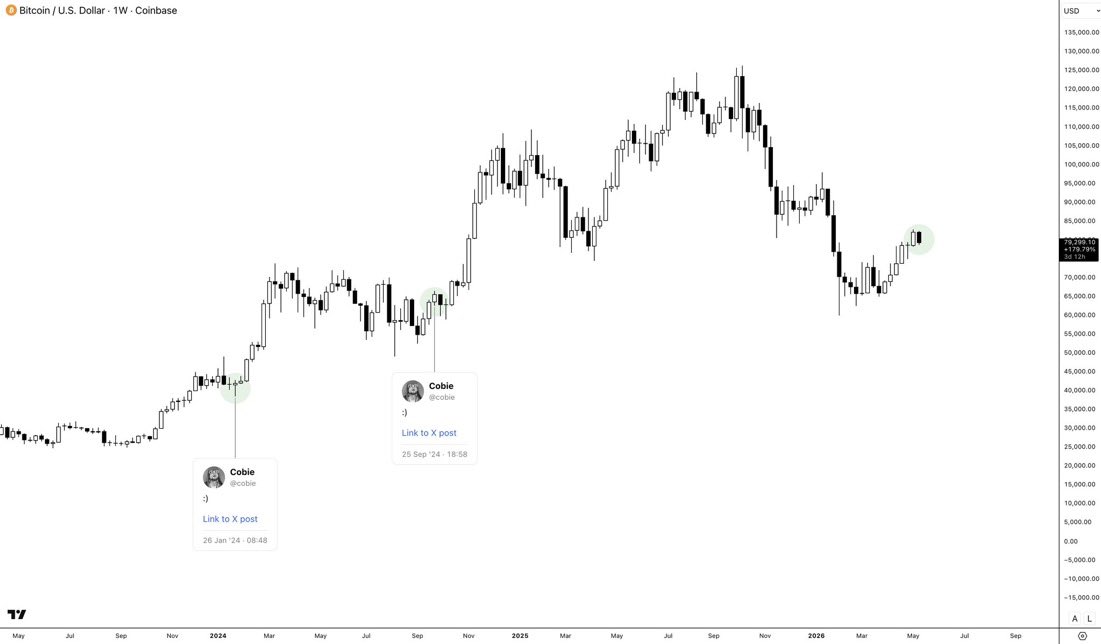
Larry R. Williams is a legendary market trader and cycle analyst — best known for turning $10K into $1.1M in one year and creating indicators like Williams %R.
His cycle work shows BTC often performs strongly from March–June, but cycles are not predictions.
Ethereum 1.0 was about apps, tokens, nfts, defi, and speculation.
Ethereum 2.0 is about something bigger:
settlement.
if assets move onchain, if stablecoins keep growing, if institutions tokenize everything, and if AI agents need money rails, Ethereum becomes more than a crypto network.
it becomes financial infrastructure.
most people still price $ETH like 1.0.
the real question is what happens when the market starts pricing 2.0.
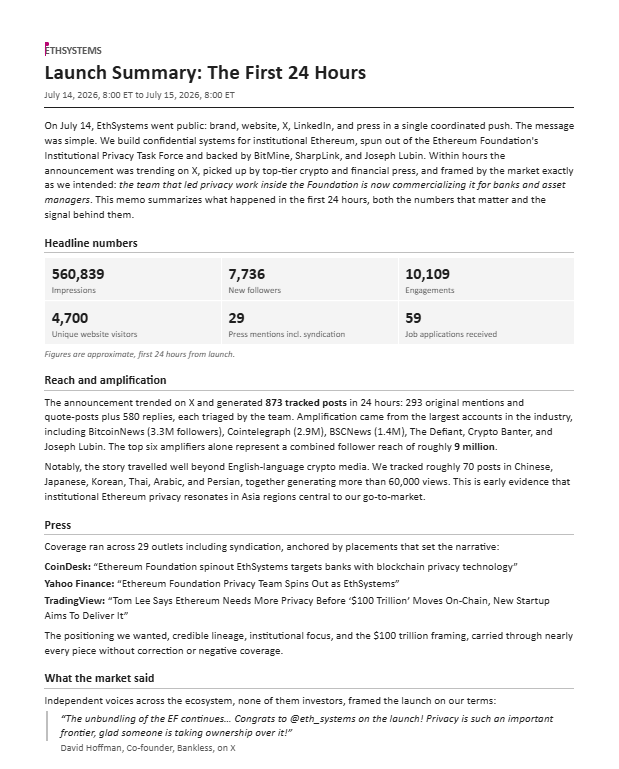
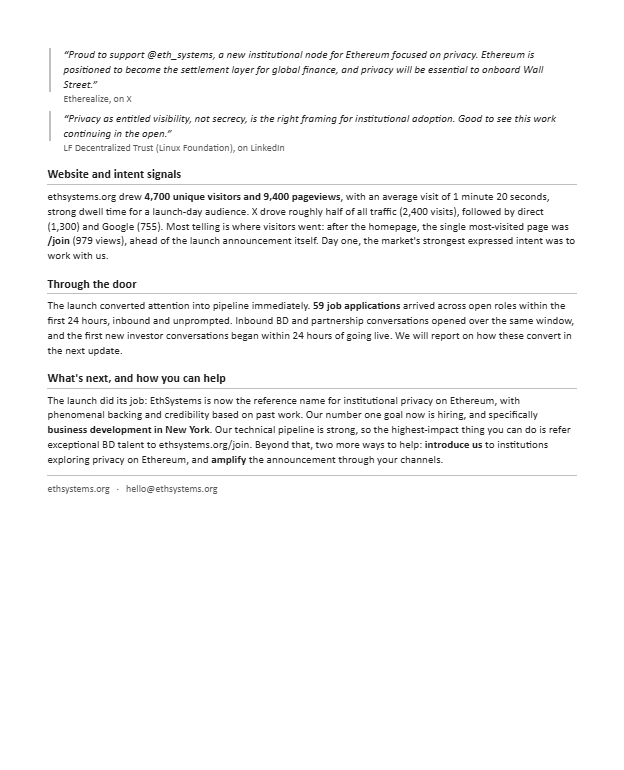
Great progress by @eth_systems in the first business day
- tons of leads
- lots of visibility
The institutional name for privacy on Ethereum
PS: $ETH is money
WHAT THE F*CK ARE YOU AFRAID OF
- Death : We’re all gonna die.
- Bankruptcy : You can make it all back.
- Shame : Everyone will forget in a week.
- Rejection : It happens to everyone.
- Failure : It’s part of the path.
- Judgment : They’ll judge anyway.
- Losing people : Not all are meant to stay.
- Making mistakes : You’ll survive them.
- Taking risks : Regret hurts more.
Live every day like it's your last day.
One of the smartest things you can do with Fable 5 right now:
Re-create your AI second brain to log all your business ideas, personal context, and important data.
The first time I built an AI second brain was with Opus, but I recently re-created it with Fable 5, and it blew my mind.
Here's exactly how to get started:
Step 1. Set up your Obsidian vault
Download Obsidian from Obsidian dot md if you haven't already.
Then, go ahead and create a clean vault with your most important folders.
For example:
/ideas → business ideas, content angles, random thoughts
/context → who you are, your business, your goals, your stack
/data → important numbers, portfolios, metrics
/log → daily entries, decisions, lessons learned
This is your database. Everything Fable reads lives here.
Step 2. Connect Fable 5 to your vault
I like this Claude Code prompt:
"/goal connect to my Obsidian vault at [path] and act as my second brain orchestrator. Read everything in /context before every session. Log anything new I tell you to /log with today's date."
Fable now reads your vault before it answers anything - it knows your business, your goals, your history.
Step 3. Build the self-update habit
Every time you have an idea, a decision, or a lesson, tell Fable:
"Log this to my second brain: [thought]"
Step 4. Start querying it
You can start sending prompts like:
→ "What are the most common themes across my last 30 ideas?"
→ "Based on my context, what should I be prioritising this week?"
→ "What decisions have I made about my content strategy so far?"
Opus was good at this, but Fable is on another level.
I feel the depth of reasoning it brings to your data is genuinely unlike anything I've used before.
Some might argue it's a bit of overkill to use Fable for a simple second-brain setup, but if you have the means, it's 100% worth it.
Build this once, and it'll compound forever.
This full course takes you from zero to a working team of AI agents..
One agent i'd add on top: the skeptic.
so the problem it fixes is:
your agents will always approve each other's work. Nobody in the team ever says "this is wrong." So bad work ships looking good..
The fix takes 2 minutes:
Create one more agent with this instruction:
"You are my Skeptic Agent. Your only job is to check the other agents' work. Assume it's wrong until proven right. Flag anything with no proof, list what's missing, and give it a score out of 10. Don't fix anything - just report what's broken."
Run it last, before anything goes out
Score below 8? The work goes back with the skeptic's notes..
with this one extra agent, and your team stops blindly approving itself.
Read the course first below, then add the skeptic:
Introducing Base MCP
Your agent's new gateway to Base
→ Connect an agent to your Base Account
→ Enable it to swap, trade, and manage your portfolio
→ Use plugins from leading apps on Base
The next stage of the agentic onchain economy