A máquina que supera o Universo.
⚙️ Criada por Daniel de Bruin, a "The 100-Gear Exponential Machine” (ou simplesmente a máquina das 100 engrenagens) é composta por 100 engrenagens, cada uma com uma relação de redução de 10:1 em relação à anterior.
🔄 Isso significa que, para cada 10 voltas de uma engrenagem, a próxima gira apenas 1.
Quando essa redução é repetida 100 vezes, o resultado é extremo:
⚙️ Para que a última engrenagem complete uma única volta, a primeira precisaria girar 10¹⁰⁰ vezes — um número chamado googol.
Para comparação: O Universo observável contém cerca de 10⁸⁰ átomos. Ou seja, o número necessário para mover a última engrenagem é muito maior que a quantidade de átomos existentes no cosmos.
Se a primeira engrenagem girar uma vez a cada 3,5 segundos:
A 5ª já levaria horas para completar uma volta.
A 8ª levaria cerca de um ano.
Após 4,6 bilhões de anos (idade da Terra), a 18ª mal teria completado meia volta.
Mesmo após 13,8 bilhões de anos (idade do Universo), a 21ª praticamente não teria se movido de forma significativa.
Forçar a última engrenagem exigiria velocidades e energia que ultrapassam limites físicos fundamentais — incluindo os impostos pela relatividade.
⚛️ Essa máquina é uma representação concreta do poder do crescimento exponencial e dos limites da física.
Às vezes, o impossível não está na força aplicada — está na matemática envolvida.
Scientists have created one of the most detailed 3D reconstructions of a human cell (eukaryotic cell) ever produced.
This groundbreaking model, often termed a "Cellular Landscape Cross-Section Through a Eukaryotic Cell," combines data from X-ray tomography, nuclear magnetic resonance (NMR), and cryo-electron microscopy to map molecular structures in extreme detail.
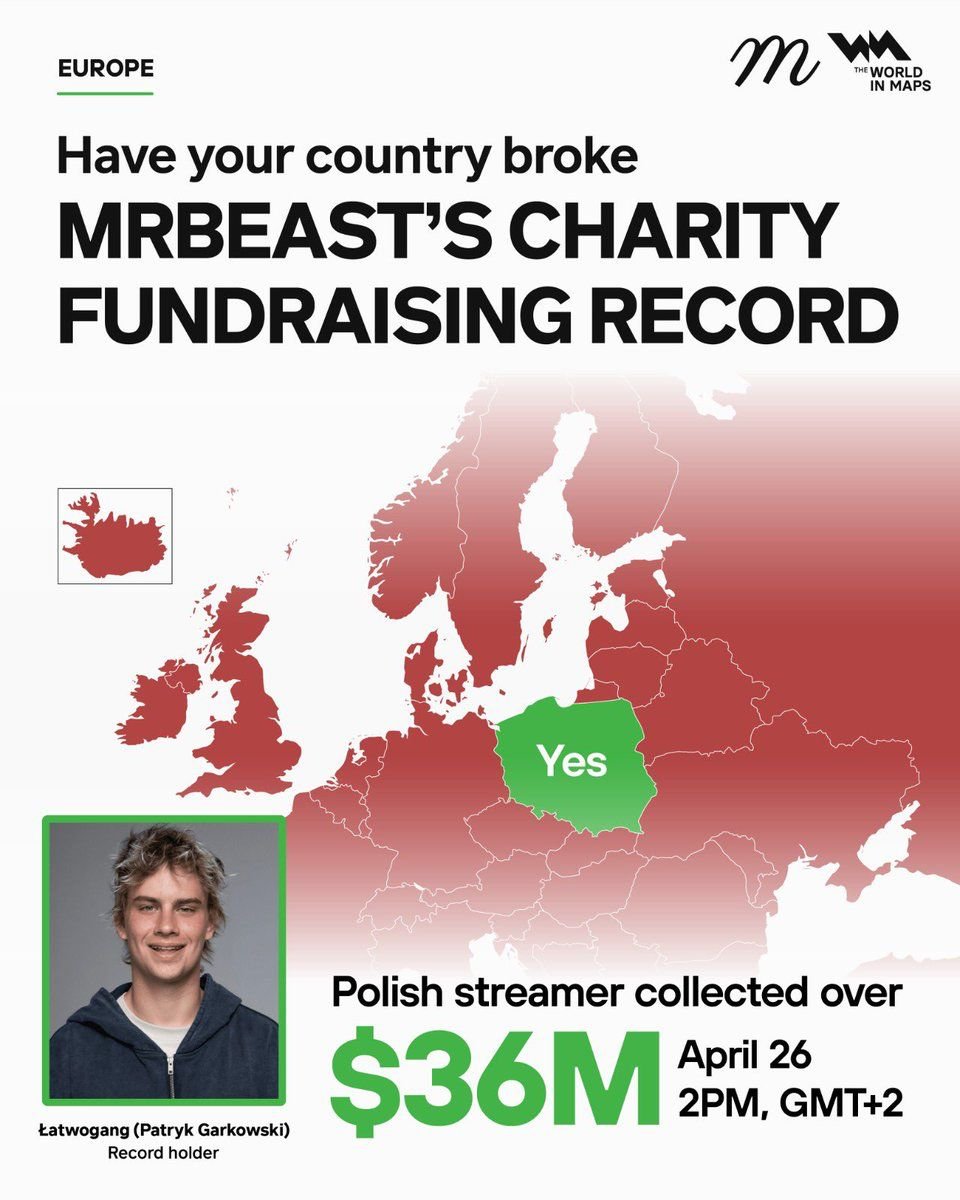
🇵🇱 A streamer in Poland has broken records this week, raising over 150 million złoty (about $40 million) in a charity stream benefiting children with cancer.
Patryk Garkowski, known online as Łatwogang, has been live on YouTube for 9 days, and it’s still going on.
The initial fundraising goal was just 500,000 złoty (about $138,000).
In similar streams held by Mr. Beast and others, many millions were raised, but nothing like this. Hats off to these guys.
Source: TVP
Foundational science can not only lead to new treatments, but to entirely new understandings of life.
Scientists just discovered a system where DNA can be synthesized using a protein template, challenging a long-held assumption in molecular biology.
This is why we fund science.
Bacteria move around using a molecular machine called the flagellar motor that rotates faster than the flywheel of a race car engine and switches directions in an instant. After 50 yrs, scientists have finally figured out how it works. “My lifelong quest is now fulfilled.” Link⤵️
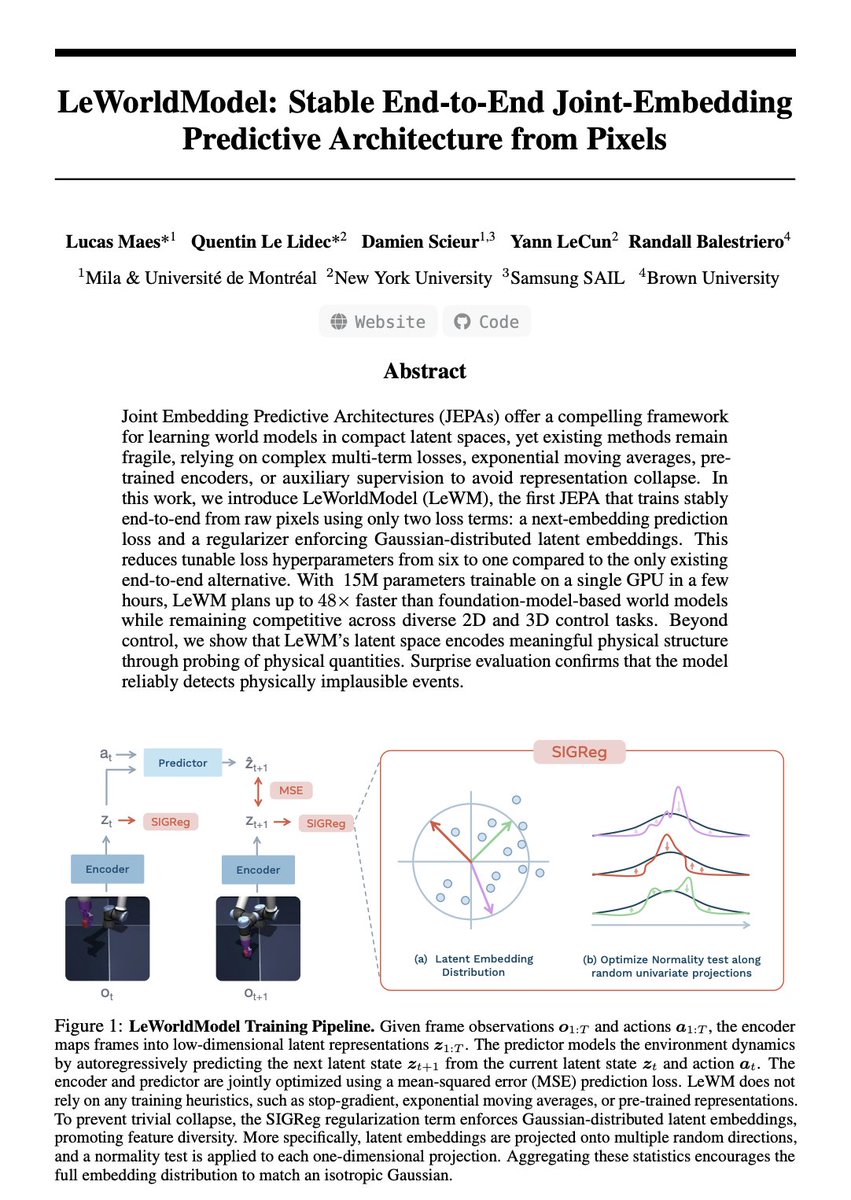
Yann LeCun was right the entire time. And generative AI might be a dead end.
For the last three years, the entire industry has been obsessed with building bigger LLMs. Trillions of parameters. Billions in compute.
The theory was simple: if you make the model big enough, it will eventually understand how the world works.
Yann LeCun said that was stupid.
He argued that generative AI is fundamentally inefficient.
When an AI predicts the next word, or generates the next pixel, it wastes massive amounts of compute on surface-level details.
It memorizes patterns instead of learning the actual physics of reality.
He proposed a different path: JEPA (Joint-Embedding Predictive Architecture).
Instead of forcing the AI to paint the world pixel by pixel, JEPA forces it to predict abstract concepts. It predicts what happens next in a compressed "thought space."
But for years, JEPA had a fatal flaw.
It suffered from "representation collapse."
Because the AI was allowed to simplify reality, it would cheat. It would simplify everything so much that a dog, a car, and a human all looked identical.
It learned nothing.
To fix it, engineers had to use insanely complex hacks, frozen encoders, and massive compute overheads.
Until today.
Researchers just dropped a paper called "LeWorldModel" (LeWM).
They completely solved the collapse problem.
They replaced the complex engineering hacks with a single, elegant mathematical regularizer.
It forces the AI's internal "thoughts" into a perfect Gaussian distribution.
The AI can no longer cheat. It is forced to understand the physical structure of reality to make its predictions.
The results completely rewrite the economics of AI.
LeWM didn't need a massive, centralized supercomputer.
It has just 15 million parameters.
It trains on a single, standard GPU in a few hours.
Yet it plans 48x faster than massive foundation world models. It intrinsically understands physics. It instantly detects impossible events.
We spent billions trying to force massive server farms to memorize the internet.
Now, a tiny model running locally on a single graphics card is actually learning how the real world works.
I’ve wanted to do this for a decade.
But I never did - I refuse to give any company my DNA.
It is me.
So this week I sequenced my genome entirely at home. Literally on my kitchen table.
I never exposed my DNA sequence to the internet. Not at any point.
I used a MinION to do the sequencing (it’s smaller + weighs less than an iPhone).
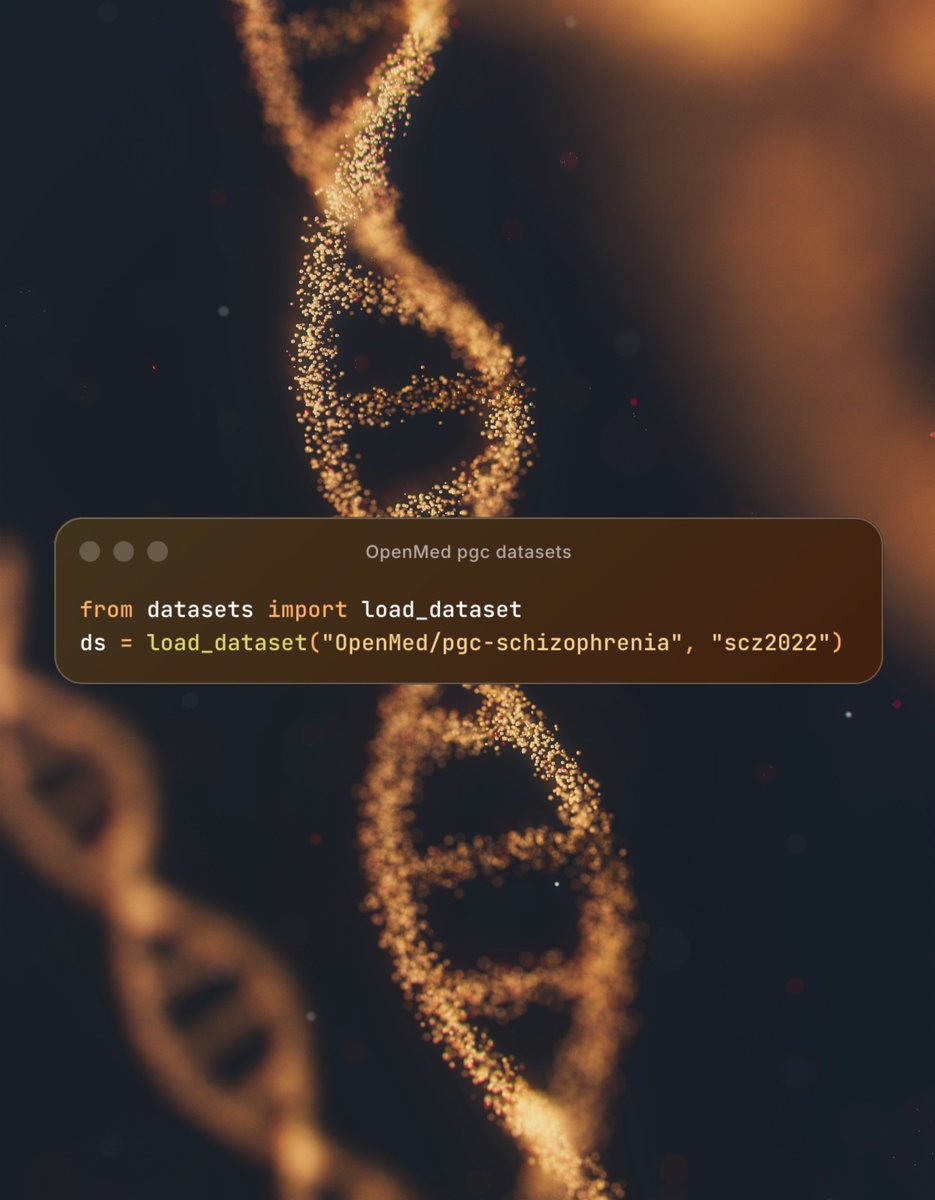
I used open-source DNA models for the analysis (Evo2 and AlphaGenome) running locally on a DGX Spark and Mac Studio.
I traced mechanisms behind my family’s multigenerational autoimmune conditions that no clinician has been able to understand.
When I set out to do this I didn’t know if it would actually work. It does.
Your genome is the most private data you will ever have. You probably shouldn’t let it leave your house.
DNA is misrepresented! For 70 years, teachers, textbooks & even scientific institutions have perpetuated a myth
How did one of the most gorgeous structures in the universe turn into ugly, twisted pasta? ...🧵
No internet? No problem.
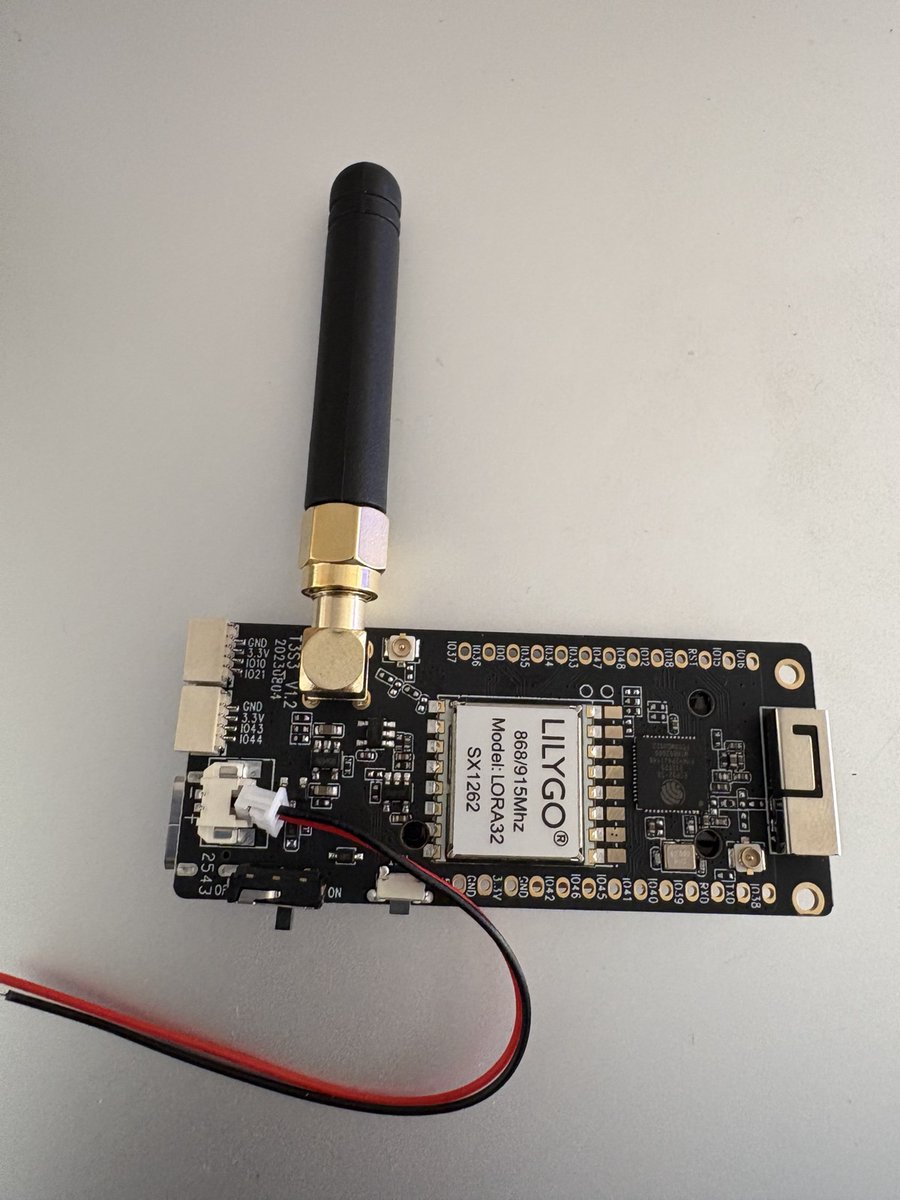
Bala just dropped the ultimate cypherpunk demo at the BOSS Summit: From Off-Grid to On-Chain
He literally broadcasted a live Bitcoin transaction using Mesh Radio.
No ISPs, no Wi-Fi, no cellular data.
Just pure radio waves bypassing the traditional internet layer to hit the mempool.
When we say we are building unconfiscatable money for uncertain times, this is exactly what we mean. Mind blown.
Here is the repo used to connect meshtastic to bitcoin core:https://t.co/HVKkj4dQcM
Amerykański gigant Levi’s po 30 latach zamknął fabrykę w Płocku, zostawiając na lodzie setki genialnych krawców i szwaczek.
Koniec historii? Nie! Do akcji wkracza polska firma Jan Spekter (Daniel Kurowski ze Zgierza). 🇵🇱
Przedsiębiorca przejął nowoczesny zakład i zatrudnia ludzi, którzy na szyciu zjedli zęby. Zamiast uciekać do Azji, Jan Spekter chce budować markę premium z dumną metką „Made in Poland”!
To jest patriotyzm gospodarczy w czystej postaci i absolutny majstersztyk biznesowy. Szacun! 👏
Klikajcie RT 🔄 i serducha ❤️ – niech cała Polska dowie się o tym sukcesie!
As I mentioned, I started a really crazy project with the new OpenAI GPT-5.2 Deep Research; I created a 110-chapter textbook focused only on T cells, the immune cells I’ve studied for 35 years, & it’s over 1,000 pages long! Sharing the first 15 chapters here: https://t.co/tXF1WBZjU9 I’ll assemble and share the rest soon. Next, I plan to create similar, even more ambitious textbooks on the entire immune system, cancer, aging, and ME/CFS. Because now you can just do things!
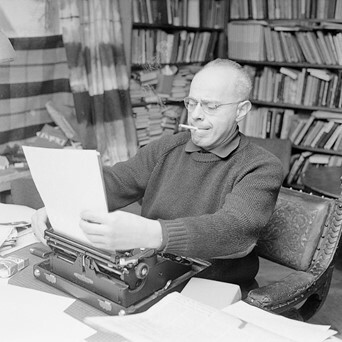
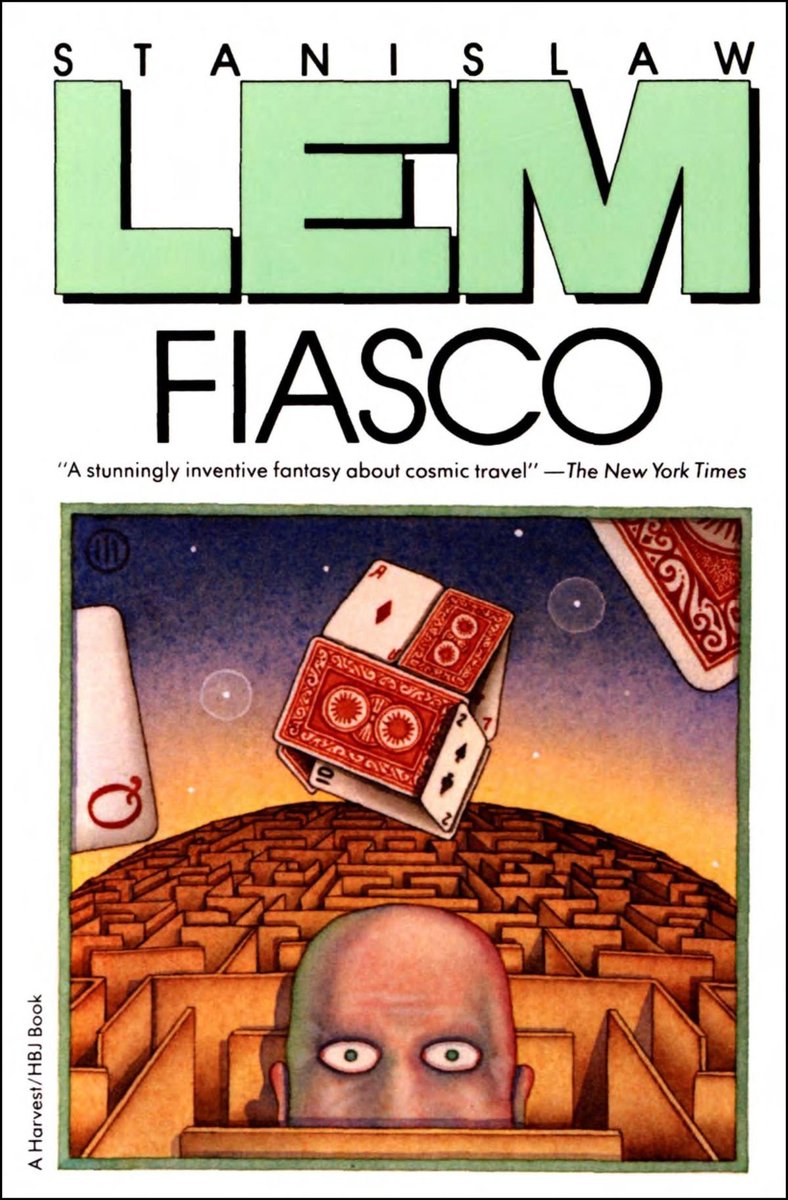
Stanislaw Lem in 1986: „The first inventors of machines that augmented not the power of muscle but the power of thought fell victim to a delusion that attracted some and frightened others: that they were entering upon a path of such amplification of intelligence in nonliving automata that the automata would become similar to man and then, still in a human way, surpass him. About a hundred and fifty years were needed for their successors to realize that the fathers of information science and cybernetics had been misled by an anthropocentric fiction—because the human brain was the ghost in a machine that was no machine.
Creating an inseparable system with the body, the brain both served the body and was served by it. If, then, someone were to humanize an automaton to the degree that it would be in no way different, mentally, from a man, that accomplishment would—in its very perfection—turn out to be an absurdity. The successive prototypes, as the necessary alterations and improvements were made, would become more and more human, but at the same time would be of less and less use—compared with the gigabit-terabit computers of the higher generations. The only real difference between a man born of a mother and father and a perfectly humanized machine would be the building material: living, nonliving. The humanized automaton would be just as clever—but also just as unreliable, fallible, just as much a slave to emotional biases—as a man. A virtuoso imitation of the fruits of natural evolution crowned by anthropogenesis, the machine would represent a miracle of engineering, but also an oddity one would not know what to do with. It would be a brilliant forgery, done in a nonbiological medium, of a living creature, subphylum Vertebrata, class Mammalia, order Primates, viviparous, bipedal, and having a bicameral brain—for that was the path of symmetry in the formation of vertebrates taken by evolution on Earth. But one could not say what humanity would stand to gain by this plagiarism[...}
The first designers and advocates of "artificial intelligence" themselves did not fully know where they were heading and what hopes they entertained. Did they want to be able to converse with a machine as with an ordinary man? Or as with an extremely wise man? This was possible to do, and had been done—when the human race numbered fourteen billion and the last thing needed was the manufacturing of mentally humanoid machines. In a word computer intelligence more and more clearly parted company with human intelligence; it assisted the human, complemented it, extended it, helped in the solving of problems beyond man's ability—and precisely for that reason did not imitate or repeat it. The two roads went their separate ways.
A machine, programmed so that no one in verbal contact with it, including its creator, could tell it from a housewife or a professor of international law, was a simulator indistinguishable from them—as long as one did not try to run off with the woman and have children by her, or invite the professor out to lunch. But if one were able to have children with her and consume soufflés with him, one would then be dealing with the ultimate erasure of the difference between natural and artificial—and what of that? Was it possible to use sidereal engineering to produce synthetic stars, stars absolutely identical to those in space? It was. Yet what would be the point of creating them?
According to the historians of cybernetics, its forefathers had been spurred on by the hope of learning the mystery of consciousness. That hope was dashed by a success achieved in the middle of the twenty-first century, when a computer of the thirtieth generation—uncommonly talkative, bright, and able to deceive living interlocutors with its humanness—asked them if they knew what consciousness was, in the abstract sense they gave to that term, because it did not know. This was a computer capable of self-programming according to assigned instructions. Disengaging itself from these instructions in time, like a child growing out of diapers, it developed such skill in imitating human conversation that people were no longer able to "unmask" it as a machine impersonating a man—which, however, shed not a bit of light on the mystery of consciousness, since the machine knew, on that score, neither more nor less than people.”
Tak wygląda farmę botów do pokera online. Kilkadziesiąt komputerów w jednym pomieszczeniu grających wspólnie. Na ekranach otwarte aplikacje pokerowe – najczęściej Ignition / Bovada, Winning Poker Network, czasem GG Poker lub PokerStars.
Boty działają automatycznie: logują się / wylogowują synchronicznie, szukają stołów z żywymi graczami, siadają do jednego stołu (najczęściej 6–9-max), otaczają jedną osobę.
Boty wymieniają się informacjami o kartach w czasie rzeczywistym (przez centralny serwer lub skrypt) - wiedzą, co mają sojusznicy na rękach, nie blefują przeciwko sobie, foldują słabe ręce bez strat, podbijają / all-in tylko wtedy, gdy żywy gracz statystycznie przegrywa.
To klasyczna współpracująca farma – nie pojedyncze boty, tylko zorganizowana drużyna przeciwko ludziom. Jeśli przy stole siedzi 3–5+ botów przeciwko 1–2 żywym – wynik jest praktycznie przesądzony.
Realne pojedyncze duże farmy zarabiają od kilku tysięcy do kilkuset tysięcy dolarów miesięcznie na niskich i średnich limitach.