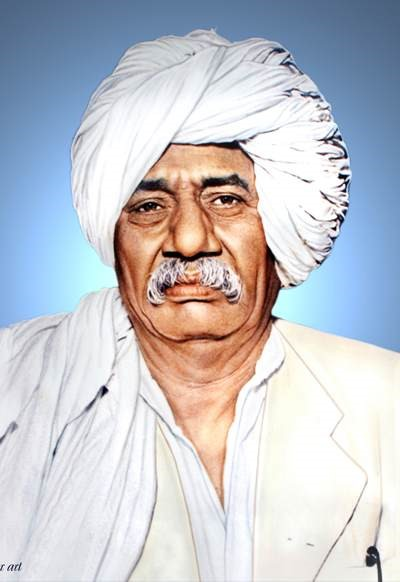
In 1948, British bankers told Vithalrao Vikhe Patil that uneducated farmers could not run a factory. Vithalrao responded by carrying a cloth bag through 44 villages, collecting 1 Rupee from every peasant. He built Asia’s 1st cooperative sugar mill & broke the British sugar monopoly forever. This is the story of how Small Change built a Great Nation.
In the early 1900s, India was the Sugarcane Basket of the world, but Indian farmers were starving. British-aligned private mills would buy sugarcane from farmers on credit. They would under-weigh the crop, delay payments for months, & often pay half the market price. Farmers were perpetually in debt. They were growing the gold (sugar), but lived in copper (poverty).
The sugar refined from Indian cane would travel to London, be packaged in fancy tins, & sold back to the Indian elites at 10x the price. Vithalrao Vikhe Patil had only studied up to the 4th grade. But he had a PhD in Hardship. He approached the British-minded bankers for a loan to build a local refinery so farmers could process their own cane.
They laughed him out of the room. The narrative was that Indians cannot handle heavy machinery, & uneducated farmers cannot manage a balance sheet. Vithalrao did not go back to the bank. He went back to the dirt.
Vithalrao started a walk that lasted weeks. He carried a simple cloth bag (Jholi) through 44 villages in the Pravara region of Maharashtra. The Pitch was "Give me 1 rupee. Not for charity, but for your freedom." Poor farmers, who did not even have 2 meals a day, dug into their savings. They gave their last rupee because Vithalrao promised them they would no longer be sellers of raw material, but owners of the finished product.
He raised the capital from the sweat of the peasantry. No British banks, no colonial debt. Against all odds, in 1948, the Pravara Sahakari Sakhar Karkhana (Pravara Cooperative Sugar Factory) was registered. It was Asia’s 1st successful cooperative sugar factory.
He sought the help of Dhananjayrao Gadgil (a visionary economist) to design a People’s Engine. For the 1st time in history, the Profits did not go to a CEO in London; they were distributed back to the farmers based on the weight of the cane they brought in.
The village of Loni transformed from a dusty outpost into a hub of hospitals, schools, & engineering colleges, all funded by Sugar Money. Vithalrao’s Sugar War created the blueprint for the Cooperative Movement in India.
This model was so successful that it was later applied to Milk. W/o Vithalrao’s "1 Rupee" victory, there would be no Amul. Today, India is the world’s largest producer of sugar, & 50%+ of it comes from the cooperative sector.
Vithalrao proved that Industrialization does not have to be Top-Down (from the rich to the poor); it can be Bottom-Up. He showed that a million 1 Rupees are more powerful than a million-pound loan from a British bank.
Vithalrao Vikhe Patil built a Backbone. He proved that an uneducated Indian farmer could run a multi-million dollar industry better than a British bureaucrat.
Next in who after the Ramanujan Series? He lived a life of absolute silence in a small town in Andhra Pradesh, but his eqns are the loudest thing in Theoretical Physics today. Subbaramiah Minakshisundaram (1913-68) was the Ghost who figured out how to hear the shape of the universe. Long before String Theory existed, he was mapping the Heat Kernel, the logic of how energy moves across the curved fabric of reality. He died at 54, a man w/o statues/fame, yet his name is etched into the bedrock of Quantum Gravity. He is the titan who proved that even the most silent mind can capture the music of the infinite.
Born in 1913 in Trichur, Kerala Minakshisundaram (often called "Minakshi" by his peers) was the epitome of the quiet South Indian intellectual. He was a student of the legendary Ananda Rau (the same man who mentored many of our Logic Ghosts). In the 1930s, while India was fighting for independence, Minakshi was fighting to understand the nature of infinite series.
He did not have a massive team/a govt grant. He worked with a pencil & paper, often in the scorching heat of Guntur & Waltair, exploring the Spectral properties of math long before it was fashionable.
He solved a problem that links the Music of a shape to its Geometry. In 1949, along with Åke Pleijel, he introduced the Minakshisundaram-Pleijel Zeta Function. Think of a drum. The shape of the drum determines the notes it can play. Minakshi created the math that goes the other way, if you know the notes (the eigenvalues), you can figure out the shape of the manifold.
He pioneered the Heat Kernel expansion. This is the math that describes how heat spreads across a curved surface. Whether it is heat moving across a computer chip/information spreading across the event horizon of a black hole, Minakshi’s logic is the OS.
He was a man of Monastic Focus. He spent the majority of his career at Andhra University, Waltair. He was not interested in the power corridors of Delhi/the fame of Bombay. He was famously humble. He would often give away his most brilliant ideas to his students, letting them take the credit. He did not want to be a Celebrity Scientist; he wanted to be a Working Mathematician.
He died at the age of 54 in 1968. He was at the height of his powers, just as the world of Quantum Field Theory was beginning to realize they needed his math to understand the vacuum of space.
We will not find his name on major airports/national schemes. In India, he is a Ghost. However, if we open a textbook on String Theory/Spectral Geometry at Harvard/Princeton, his name is everywhere. He is 1 of the most cited Indian mathematicians in the history of modern physics.
In fact, every time a physicist calculates the Vacuum Energy of the universe, they are using the Minakshisundaram coefficients. #WhoAfterRamanujan
Today I learnt that the German word for "gathering", or "assembly" is Sammeln.
Stunned, because it is exactly the same as the Hindi word for it- Sammelan.
🤯
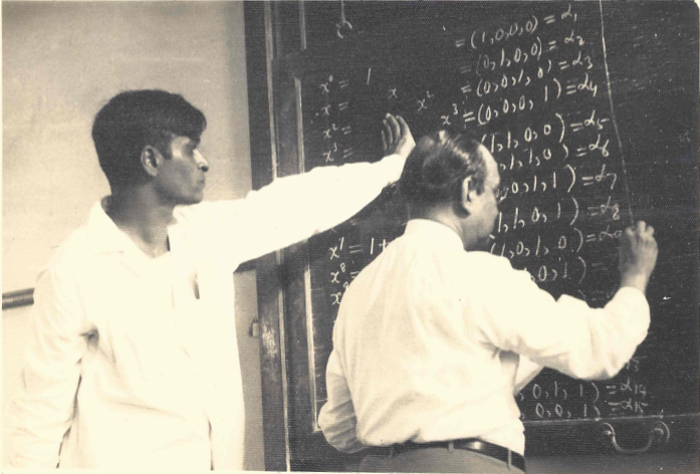
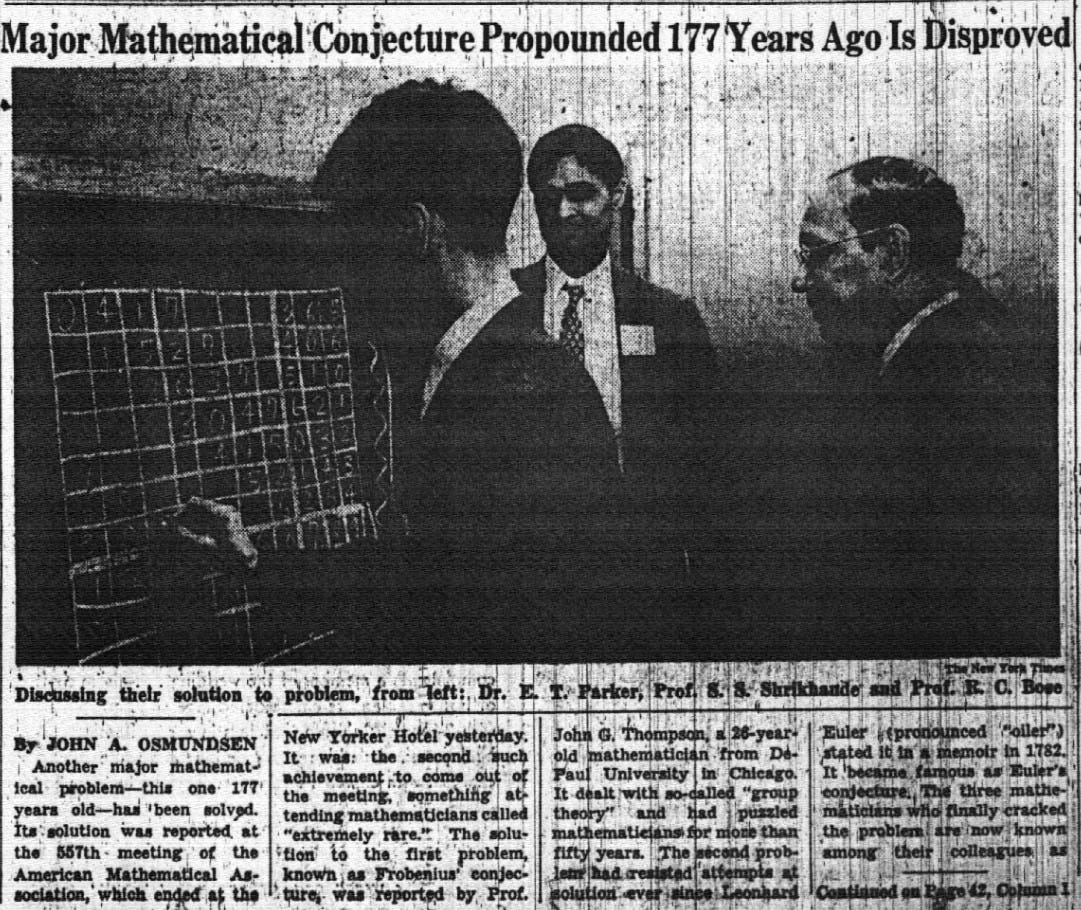
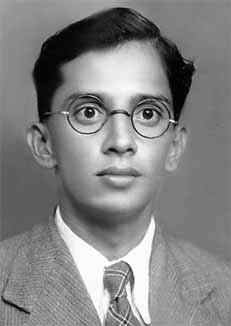
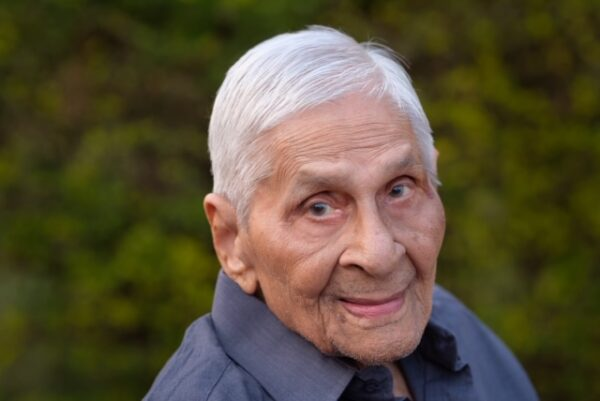
Next in who after the Ramanujan Series? He was the son of a flour mill worker who made the front page of the New York Times for disproving a 177 yr old conjecture by Euler. He lived to 102, a ghost in India, but a God in the world of Graph Theory & Combinatorics, Shri Sharadchandra Shankar Shrikhande (1917-2020).
Born in 1917 in Sagar, Madhya Pradesh, he was the son of a man who worked in a flour mill. Money was so tight that education was a luxury. He studied at the Govt Science College in Nagpur. His genius was raw & unpolished until he caught the attention of another Indian legend, R.C. Bose. In the late 1940s, he went to the University of North Carolina. He was not there to learn; he was there to disrupt the foundations of Western mathematics.
For 177 yrs, the world accepted a conjecture by Leonhard Euler (1 of the greatest mathematicians in history). Euler predicted that certain types of Latin Squares (the math behind Sudoku & experimental design) could not exist for specific numbers like 10, 14, 22, etc. In 1959, Shrikhande, along with R.C. Bose & E.T. Parker, disproved Euler’s conjecture. They constructed Graeco-Latin squares of order 10 & 22.
The news was so big it made the front page of the New York Times. They were nicknamed the "Euler Spoilers."
In graph theory, he discovered a unique, highly symmetrical structure now known globally as the Shrikhande Graph. It is a strongly regular graph with 16 vertices, a fundamental building block in the math of Network Symmetry.
Shrikhande lived to be 102 yrs old. Despite being a global titan, he lived a quiet, unassuming life in India. When he returned to India to head the Department of Mathematics at Mumbai University, he did not seek fame. It is said that even within his extended family & bloodline, many did not realize the magnitude of his achievement. To them, he was just a retired prof. To the world, he was the man who disapproved Euler.
His work on Latin squares is the foundation for efficiently testing 1000s of variables in agriculture, medicine, & statistics. Every time we solve a Sudoku puzzle, we are playing in a mathematical playground shaped by the kind of structures Shrikhande helped perfect. The Shrikhande Graph is used to study symmetrical networks & how systems can remain robust even if some parts fail.
While most Indian celebrities dream of a mention in a local paper, Shrikhande was literally a Front Page Hero in New York in 1959, yet he remained a Ghost in Nagpur & Mumbai.
क्लास रूम में #Kabirकबीर कबीर, जायसी और तुृलसी को बरसों पढ़ाया, खासकर कबीर को। भक्तिकाव्य का अध्ययन करते हुए देशभाषा में व्यक्त आरंभिक आधुनिकता का महत्व समझा, पाठकों और श्रोताओं के सामने रखा।
भक्ति के लोकवृत्त की धारणा प्रस्तावित की।
महाभारत, नेहरू और सारे कामों के साथ आरंभिक आधुनिक भारत के इतिहास के साथ एंगेजमेंट लगातार चलता रहा है। कबीर-ग्रंथावली के परिमार्जित संस्करण के बाद जन गोपाल पर किताब ( डेविड लोरेंजन के साथ) आ चुकी है।
और भी कामों का विचार मन में है।
पिछले बरस @Rekhta रेख्ता के मित्रों के अनुरोध पर उनके लर्निंग प्रोग्राम के लिए, कबीर के समय और उनकी कविता के बारे में सिलसिलेवार बातचीत की थी, कुछ लेक्चर्स की शक्ल में। अब ये लेक्चर्स जल्दी ही रेख्ता लर्निंग पर बतौैर कोर्स के उपलब्ध होंगे।
आप सबकी सूचनार्थ निवेदन...🙏🙂
Ian Bishop: "Why were you instantly looking around after completing the century?"
Kohli: "I was surprised to not find Rajiv Shukla on the pitch next to me."
Navjot Singh Sidhu with greatest quote of all time in " I lean on stats like a drunken man leans on a lamp post, not for illumination but just for support".
@_amitbehere Misrepresentation of categories.
Whole of China stops for at least two weeks, work and production gets delayed during the Chinese New Year. Doesn’t mean it has no value.
Similarly, unlike CNY, Kumbh Mela has always shown a rise in local economy.
Very myopic perspective.
The Boxing Day Test crowd is going to be huge.
But it’s not going to beat the all-time record.
That was 350,534. To see Bradman.
The most ever for a Test.
And I think it was the best Test ever.
If you’ve never heard about it please enjoy this thread. #indvsaus#ausvind
Found an interview I’d done with Saurabh Netravalkar in 2009. He’d just scored 91% in his 10th exams, was singing in a choir & dreaming of a long Ranji career with Mumbai. Here he is 15 years on, knocking over Rohit Sharma & Virat Kohli in a #T20WorldCup match. Life, I tell you