Aerospace Engineer ,Political Analyst and Lifelong learner
BS.Engineering-USA
Bachelor of Commerce-S.A
Bachelor of Business Admin-MSU
Master of Com -S.A
MBA-USA
When Performance Inspires Continuity: The Mr. Tirivangani Story Behind the ED2030 and ED2037 Debate.
Politics is often shaped by perception, performance, and public confidence. Over the past few years, Zimbabwe has witnessed growing conversations around ED2030, ED2037, and lately even ED2050. What began as a resolution adopted at the ZANU PF Annual People's Conference has gradually evolved into recurring calls from some sections of society urging President Emmerson Dambudzo Mnangagwa to remain at the helm beyond his current constitutional term.
Rather than dismissing these voices outright, perhaps the more meaningful question is this: Why are some people advocating for the President to stay longer?
Too often, public discourse quickly descends into broad accusations of corruption and the alleged misuse of public resources. Such claims are frequently repeated in political debates, yet many are presented without accompanying evidence or detailed analysis. Equally important is the need to examine measurable achievements and tangible outcomes that have emerged during President Mnangagwa's tenure, especially given the difficult economic environment marked by sanctions, global inflation, the COVID-19 pandemic, climate-related challenges, and other external shocks.
1. The supporters of the President often point to several notable developments during his administration, including:
2. The rehabilitation and construction of major roads and highway infrastructure across the country.
The accelerated development of dam projects aimed at improving water security and irrigation.
3. The expansion of the national electricity generation capacity through projects such as Hwange Units 7 and 8.
4. Increased investment in mining and the pursuit of the vision of transforming Zimbabwe into an upper-middle-income economy.
5. The modernization of border posts, including the Beitbridge Border Post.
6. Growth in the agriculture sector through initiatives such as the Pfumvudza/Intwasa programme, which has contributed to improved food production in several seasons.
7. The rehabilitation and upgrading of hospitals and health facilities.
8. Increased investment in education infrastructure through the construction and refurbishment of schools.
9. The resumption of direct flights between Harare and London after more than two decades, symbolizing renewed international engagement.
10. The continued implementation of the "Zimbabwe is Open for Business" policy aimed at attracting foreign direct investment.
Whether one agrees with every policy or not, these are developments that supporters cite as evidence of leadership they believe should be allowed more time to consolidate.
Experience is another factor frequently raised in the discussion. In almost every profession, organizations recruit and retain experienced individuals because experience often enhances judgment, strategic thinking, and institutional memory. Politics is no different. President Mnangagwa has spent decades in public service, occupying several senior government and party positions. To many supporters, that experience is viewed as an asset rather than a liability.
This debate reminds me of an old Shona story from our village in Mapanzure.
There lived a respected elder called Mr. Tirivangani. He was known throughout the community for his kindness, wisdom, and willingness to help others. Whenever villagers needed someone to represent them in community meetings or mediate disputes, one name would always be mentioned first Mr. Tirivangani. His reputation had been built not through loud speeches but through years of consistent service and integrity.
As time went on, he held several community leadership positions. Eventually, feeling that age was catching up with him and the responsibilities had become overwhelming, Mr. Tirivangani announced that he wished to step aside and rest.
The villagers were heartbroken.
They gathered to persuade him to reconsider. Their appeal was simple: they trusted him because they had witnessed his leadership firsthand. To them, replacing proven leadership with uncertainty did not seem like the wisest path.
The story was never about denying others an opportunity to lead. Rather, it reflected a timeless reality of human nature: people often seek continuity when they believe a leader has earned their confidence through consistent performance.
Whether one supports the ED2030 or ED2037 narrative or opposes it, understanding why such sentiments exist requires more than political slogans. It requires examining the reasons that motivate those making the call. For many supporters, the argument is not merely about personalities; it is about continuity, experience, institutional stability, and the belief that ongoing development programmes should be completed under the same leadership.
Ultimately, in any democracy, leadership debates should be grounded in evidence, performance, constitutional principles, and informed public discussion rather than emotion or rhetoric. The enduring conversation around ED2030 and beyond illustrates that, for a section of Zimbabweans, the combination of perceived achievements, accumulated experience, and confidence in President Mnangagwa's leadership explains why calls for continuity continue to resonate.@edmnangagwa@paultungwarara@zanupf_patriots@wicknellchivayo@RugareENGumbo1@OppaMuchinguri@Jamwanda2@nickmangwana@HeraldZimbabwe@KazembeKazembe3
The Robert Mugabe International Airport has outshined Johannesburg and Cape Town, emerging as the most advanced airport in the SADC region and ranking among Africa's top 5-star rated airports.
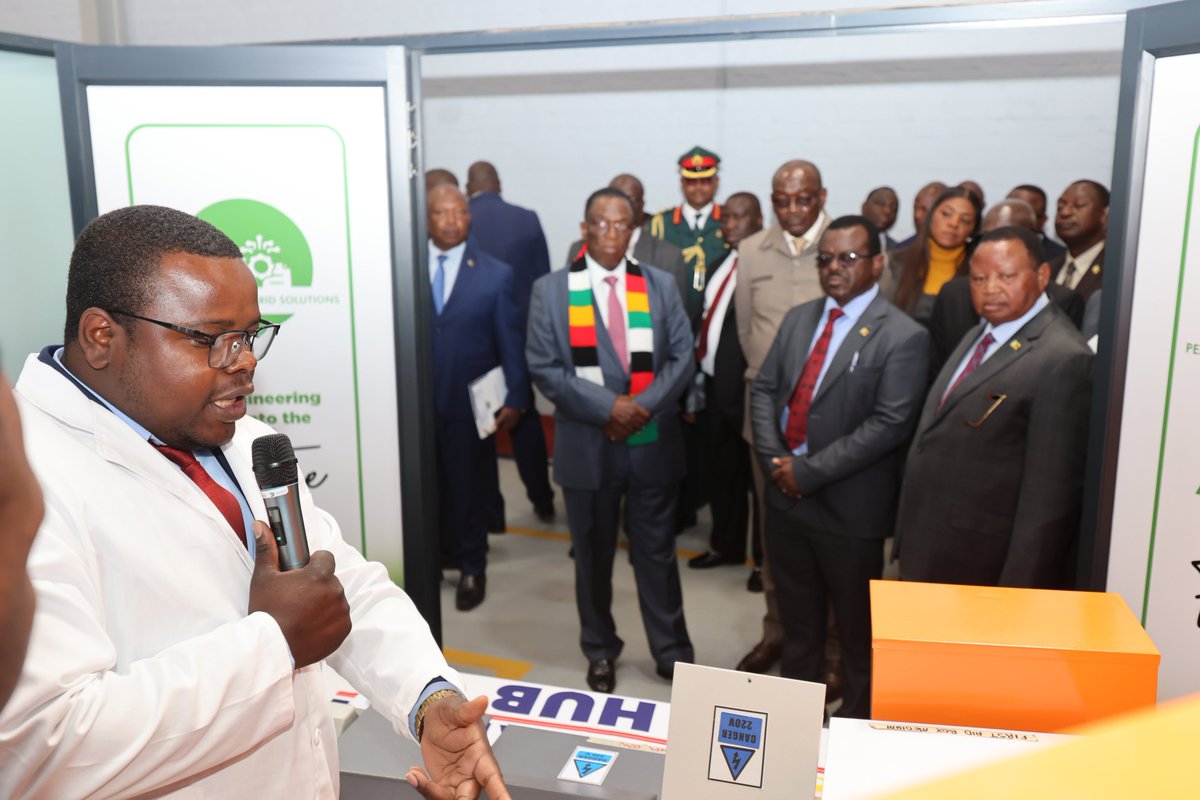
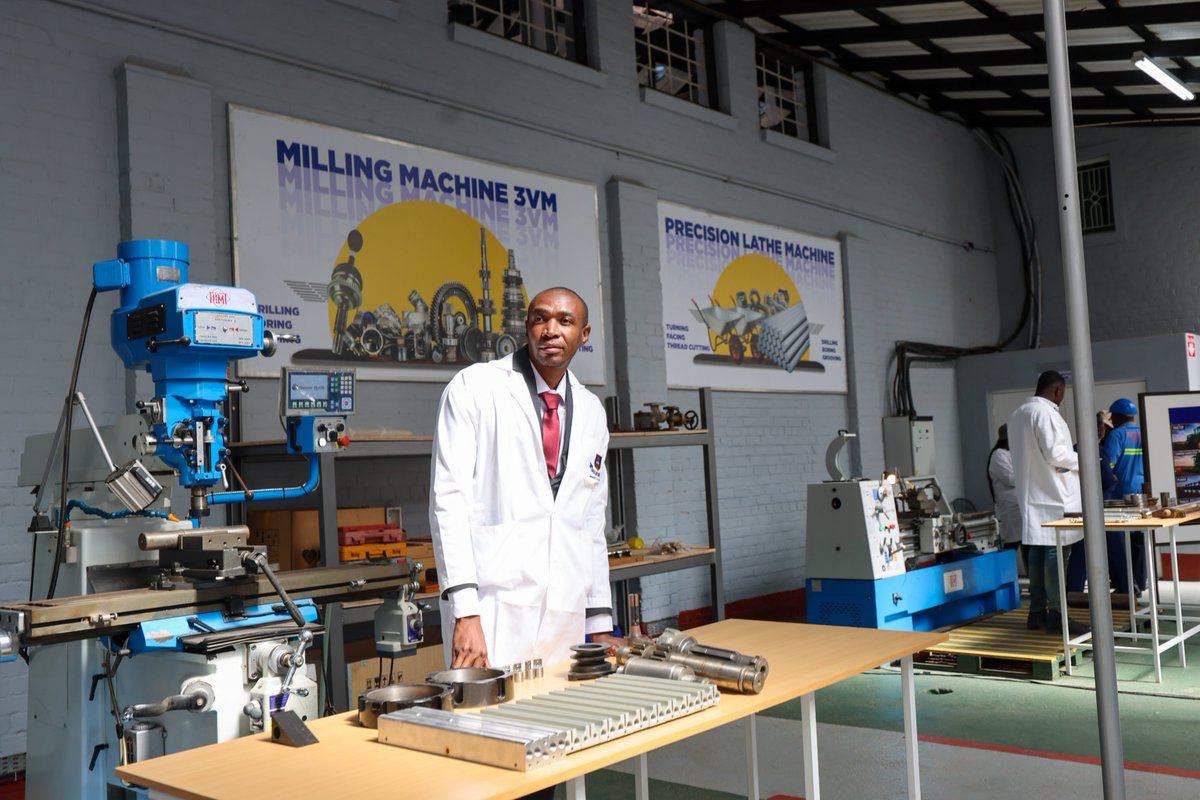
"Through the “Whole of Government and Society Approach”, let us continue to give our young talented boys and girls a chance to develop their ideas and exploit their full potential for the benefit of our beloved motherland, Zimbabwe. It is encouraging, Vice Chancellor, Prof Mapfumo that we now celebrate the successful outcomes of eleven Start-up companies, resident at the Industrial Incubation Centre.Well done" HE President ED Mnangagwa
When the Best Leave: The Story of VaMutema and the Politics of Defections In Zimbabwe.
"People rarely abandon strong institutions; they abandon uncertainty, division, or a loss of purpose."
The recent wave of political defections in Zimbabwe, in which some members of the opposition crossed over to the ruling party, has sparked intense public debate. As is often the case, many were quick to condemn those who changed political allegiance, branding them opportunists or traitors. Yet before passing judgment, it is worth asking a deeper question: Why do people leave organisations they once believed in?
There is an old Shona story about a respected villager called VaMutema.
For many years, VaMutema was the pride of the village. He was hardworking, disciplined, wise and successful. Parents would proudly tell their children, "Tinoda kuti ukure wakaita saVaMutema." Young men wished to become like him, and many people even desired to be associated with his family because his name symbolised integrity, industry and honour.
However, things gradually changed.
VaMutema abandoned the very values that had earned him respect. Instead of working diligently in his fields, he spent most of his time kundari, drinking beer, attending parties and neglecting his responsibilities. His productivity declined, his wealth diminished, and the respect he once commanded slowly disappeared. Before long, the same villagers who once admired him no longer wanted their children to emulate him. They did not necessarily hate VaMutema; they simply no longer saw in him the qualities they once admired.
The lesson is simple: people are naturally attracted to organisations or individuals that continue to inspire confidence, purpose and hope.
Political parties, much like churches, are voluntary organisations. Nobody is compelled to belong to one for life. Zimbabwe has many registered political parties, just as it has numerous churches. Every citizen is free to associate with the organisation whose vision, values and aspirations best align with their own.
History has shown that people frequently move from one church to another. Sometimes leadership changes, priorities evolve, or members simply feel that another congregation better meets their spiritual needs. Political organisations are no different. Individuals may reassess their beliefs, aspirations or expectations and choose to associate with another party.
For that reason, political defections should not automatically be interpreted as acts of betrayal or surrender. They may reflect changing personal convictions, evolving political circumstances or different assessments about which organisation best represents an individual's aspirations.
Supporters of the ruling party argue that recent defections demonstrate growing confidence in its leadership and direction, while supporters of opposition parties often contend that defections are driven by other political, strategic or personal considerations. Such differing interpretations are a normal feature of democratic politics.
Ultimately, organisations that remain united, relevant and responsive to the expectations of their members are more likely to retain loyalty. Those that experience prolonged uncertainty, internal conflict or declining public confidence may find it increasingly difficult to keep their members.
Just as the villagers stopped admiring VaMutema when he lost the discipline and purpose that once distinguished him, organisations too must continually earn the confidence of those who choose to belong to them.
Looking at the current political landscape, one could argue that ZANU PF has, over the years, managed to remain an organised and resilient political institution with a sustained vision and sense of purpose. It is this perceived stability and direction that many believe is drawing some members from opposition parties into its ranks. Whether one agrees with their decision or not, the continued movement of people towards ZANU PF suggests that many see in the party a platform that they believe better aligns with their aspirations and political future. In politics, as in life, people are naturally attracted to organisations that project confidence, consistency and a clear sense of direction.
In the end, people seldom leave simply because another option exists. More often, they leave because they believe their hopes, values or future are better served elsewhere.@nickmangwana ,@edmnangagwa ,@LynneStactia ,@ProfJNMoyo ,@Jamwanda2 ,@enkudheni ,@KMutisi ,@paultungwarara ,@wicknellchivayo ,@ChinamasaPA ,@zanupf_patriots ,@nelsonchamisa
No matter the nonsense they post about me , I will not bend to support fake opposition that is not fighting to change anything but to be included in the system! It is clear that there is no effort to change anything. They can fool other people, but they can’t fool everyone!! They are arrogant, they lack transparency, zero accountability. If they can’t account for small things, they will never be accountable for anything!
We're delighted to welcome @FlyAirZimbabwe to London Gatwick, with the launch of the UK's only direct service to Harare! ✈️
Operating three times a week from our South Terminal, the new route reconnects London Gatwick and Zimbabwe's capital for the first time in more than 14 years, offering passengers even more choice when travelling to Africa.
Demand for travel between Africa and London Gatwick continues to grow, with passenger traffic increasing by 72% since 2023. Harare becomes the latest addition to our expanding route network during a record summer that sees 63 airline partners operating from the airport.
We look forward to working with Air Zimbabwe and connecting more passengers to Zimbabwe and destinations across southern Africa.
Read the press release here: https://t.co/SuCUDO6Ywg
Zimbabwe received an accolade as one of Africa’s leaders in budget transparency. In the 2025 Open Budget Survey, the country scored 62 out of 100, ranking 3rd in Sub-Saharan Africa and 2nd in SADC, well above the regional average of 38 and the global benchmark for public access to budget information. Government remains committed to strengthening transparency, expanding citizen-friendly budget information, and deepening public participation and oversight throughout the budget cycle.
It was my distinct honour and privilege to officially commission two signature developments at the University of Zimbabwe: the Industrial Incubation Centre and the Specialist Medical Centre.These projects are a clear validation of our Heritage-based Education 5.0 Model.
Our higher and tertiary institutions remain critical cogs in the ongoing industrialisation, modernisation, and economic development of our great nation.I congratulate the University of Zimbabwe for realising yet another landmark achievement and successfully completing these vital facilities.
The Ministry of Health and Child Care ,together with related Agencies,are directed to remove the barriers of entry in the establishment of specialist health care facilities and services.
Hatidi ma gate-keepers, nema cartels mu health sector,vanhu vedu vachitadza kurapwa zvakanaka,nemutengo uripasi.Kwete.Ngative nehanya ,tikoshese hutano we vanhu vekwedu.Let those with ears hear this stern exhortation.
@waltermzembi Uuuu, where is @ZANUPF_Official on the list? What criteria was used to compile these rankings? Perhaps if more details are provided, we can make a more meaningful and informed contribution to the discussion.
The Old Man Who Blamed His Neighbours: Is "Infiltration" Zimbabwe's Biggest Political Myth?
There is an old Shona saying that reminds us, "Mhosva haingorambi iri yemuvakidzani nguva dzose." In our village, there was an elderly man who blamed every misfortune on his neighbours. If his cattle disappeared, it was the neighbours. If his crops failed, it was the neighbours. If his roof leaked, it was still the neighbours. Over time, the villagers realized that the real problem was not always the neighbours ,it was his refusal to take responsibility for his own shortcomings.
This story often comes to mind whenever I hear some opposition politicians repeatedly speak about "infiltration" within their political parties. Almost every time they fail to achieve a political objective or suffer internal divisions, the explanation is the same: the party has been infiltrated by agents allegedly sponsored by ZANU PF.
If infiltration is indeed as widespread and persistent as they claim, then one must ask a simple question: after spending decades in politics, why have they failed to develop effective systems to identify, prevent, and manage it? Any serious political organisation learns from experience and strengthens its internal structures over time.
Perhaps the real question is not whether there is infiltration, but whether "infiltration" has become a convenient excuse for poor leadership and weak governance. When disputes over power, influence, or financial resources erupt, it is often easier to point fingers at "state agents" than to acknowledge failures in leadership, accountability, or organisational discipline.
In some instances, even the sight of an unmarked vehicle or a car with tinted windows is quickly interpreted as evidence of state surveillance. Such assumptions raise another important question: does infiltration occur only in opposition parties? And when someone who once supported the opposition later decides to join ZANU PF, does that automatically make them an infiltrator, or could it simply be a change in political conviction?
Political organisations, like any institution, experience internal disagreements, leadership contests, and defections. These are not unique to Zimbabwe's opposition. Constantly attributing every setback to infiltration risks becoming a convenient scapegoat rather than an honest assessment of the party's internal challenges.
Ultimately, leadership is measured by the ability to solve problems, not merely explain them away. If infiltration is truly an unsolvable obstacle after so many years, then it raises serious questions about the leadership's capacity to govern. Zimbabweans deserve political leaders who accept responsibility, strengthen their institutions, and provide practical solutions instead of repeatedly offering the same explanation whenever things go wrong. Otherwise, the story begins to resemble that old man in the village who spent his entire life blaming his neighbours, while never stopping to examine the problems within his own homestead,@enkudheni@nickmangwana ,@Jamwanda2 ,@LynneStactia ,@ProfJNMoyo ,@nelsonchamisa
Great question indeed Cde. I think in the past Banks were naturally cautious because of currency instability, and policy uncertainty for years. Long-term industrial projects take time to generate returns, while the risks remain high. As a result, many financial institutions prefer short-term, safer investments that protect depositors’ and pensioners’ funds rather than committing capital to industries. However, with the growing economic stability being experienced, banks are now better positioned to align their lending with the country’s industrial development agenda.
Well said,Cde President E.D Mnangagwa @edmnangagwa I fully echo the sentiments expressed.
It is time for our financial institutions and the broader economic ecosystem to mobilize resources toward industry, manufacturing, and other productive sectors. Zimbabwe must prioritize producing more of what it consumes locally. Doing so will not only create jobs and stimulate economic growth but also ease pressure on our national current account by reducing unnecessary imports.
Imports should largely be reserved for goods and technologies that cannot be produced locally in the short to medium term. If we have the capacity to make it here, then we should support local production and build our own industries.
Let’s back Zimbabwean manufacturers and grow our economy from within.
No to importing toothpicks! 😜🇿🇼