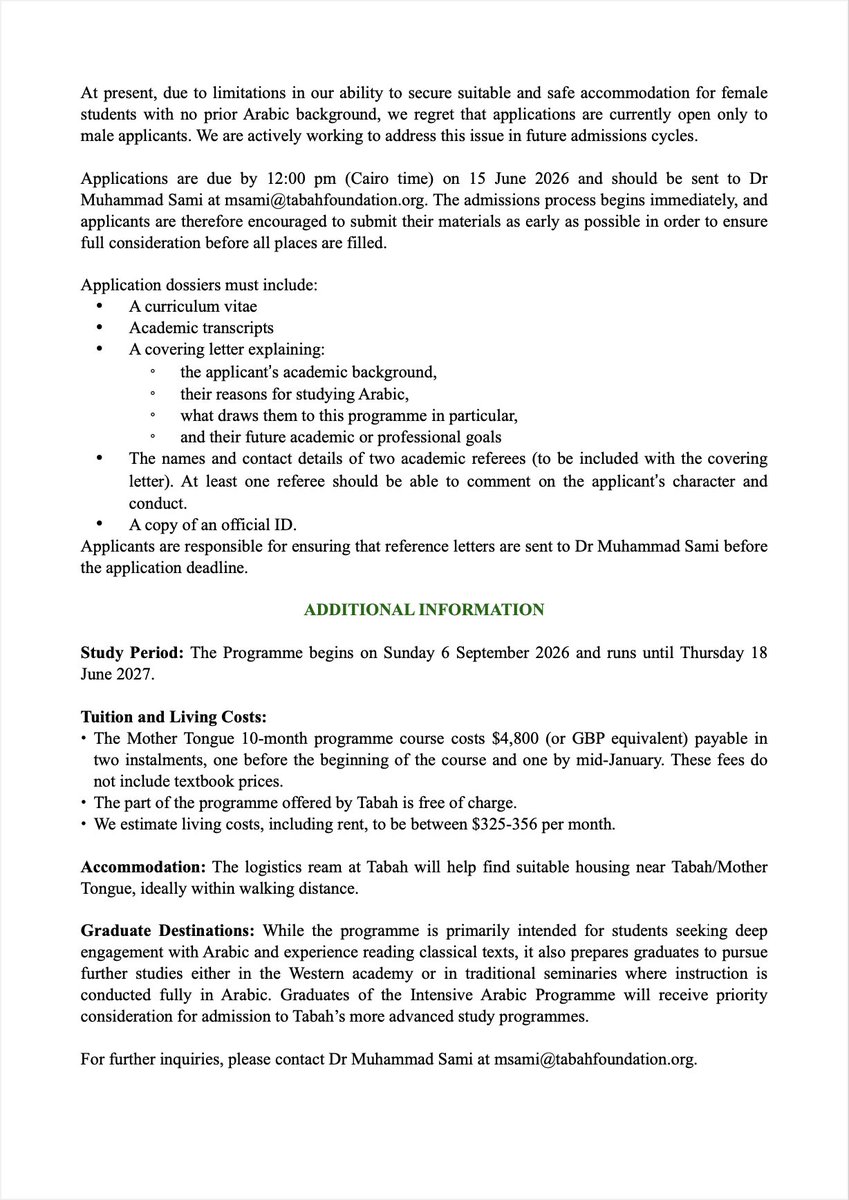
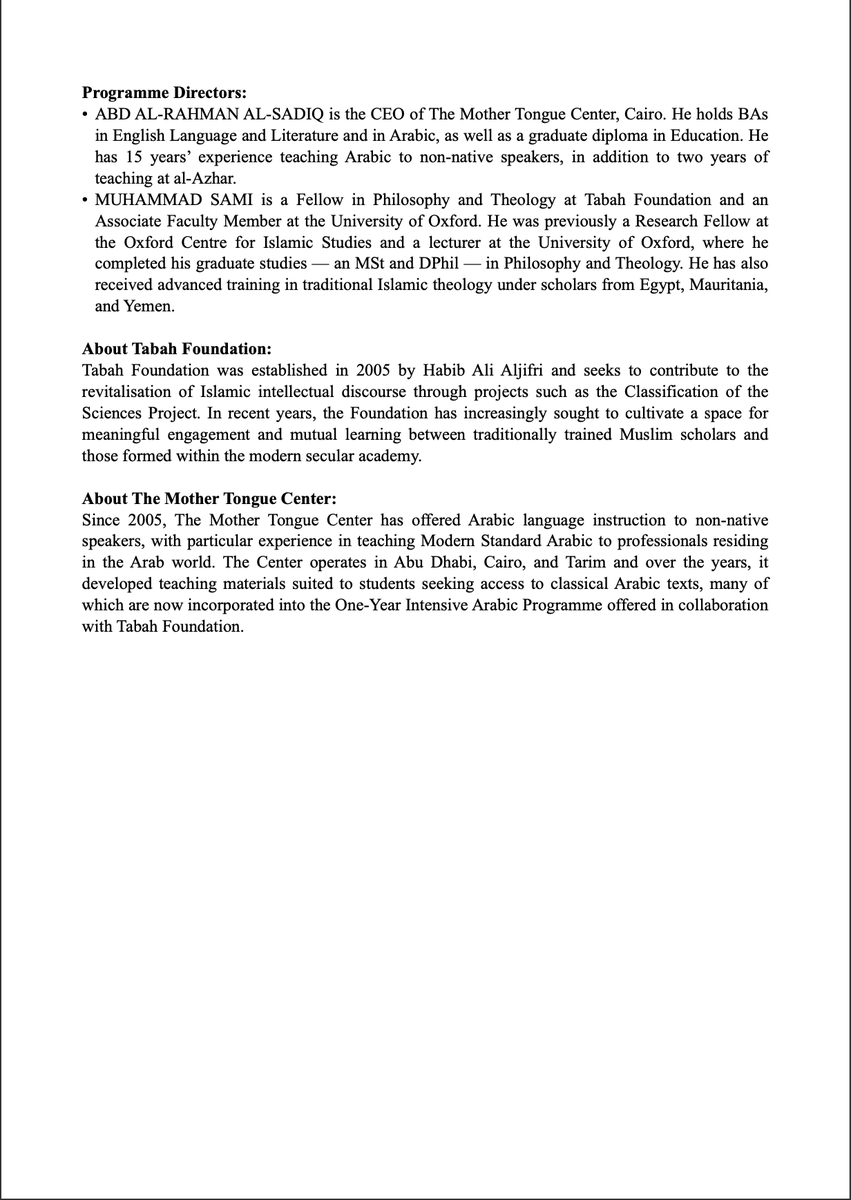
Applications are now open for a one year Cairo-based Arabic Intensive Programme that I'm directing. See the attached document for further details and please do get in touch if you're interested.
> that for a group of scholarly authorities who influence so-called 'neotraditionalists', Ghazali's teachings are more fitting for public theological and Sufi discourse than Ibn Arabi's.
I think there's something more than preferring Ghazali over Ibn Arabi here, for there's a widespread belief that Ibn Arabi's ideas aren't to be invoked in public and that engaging with his works requires some 'permission' from a spiritual or scholarly authority. All this to say >
But if they do so; they have to account for why? Why is Imam Ghazzali preferred over Ibn Arabi? What do we say about Ibn Arabi ideas. How Ibn Arabi is integrated matters here; not just for Sufism but within Neo-classical tradition in general.
@FaheemAMHussain Interesting piece, thanks for sharing it. I'm curious about the Mamluk-Ottoman distinction you make. Do you mean that the tradition is read through the lens of scholars writing in the Mamluk period or in historically Mamluk lands?
Applications are now open for a one year Cairo-based Arabic Intensive Programme that I'm directing. See the attached document for further details and please do get in touch if you're interested.
@ibnalyyaman wasalam. These are not naturally available but cases can be made for financial aid for outstanding applicants. This internal discussion only happens after the application deadline. I look forward to receiving your application documents and/or further inquiries by email.
@hbumar Wa alaykum assalam. Here are the details as per the call for applications. For further inquiries please contact me via email. I look forward to receiving your application.
@_bunyod_ wa alaykum assalam warahmatullahi wabarakatuh. I tried to message you but there's something wrong with chat. Could you please email me at msami[at]tabahfoundation[dot]org ?
Agreed. And I wonder whether it requires a radical reimagination of our relationship to the state and the limits of its authority, given its potential new position as an intermediary between individuals and corporate power.
Political and legal philosophy has been concerned with taming state power to ensure that it works for the common good, but the urgent need to tame growing corporate power for the same reason has been neglected. A credible 'AI ethics' needs to be part of the latter enterprise.
Many people dream about (and promote) a future without work. I think this is a very bad idea for reasons some of which are to be found in this excellent (and relatively short) piece.
What is the value of work and can play take its place in human life in the post-work world that might be ushered in by AI?
My paper 'Work and play in the shadow of AI'
Link below
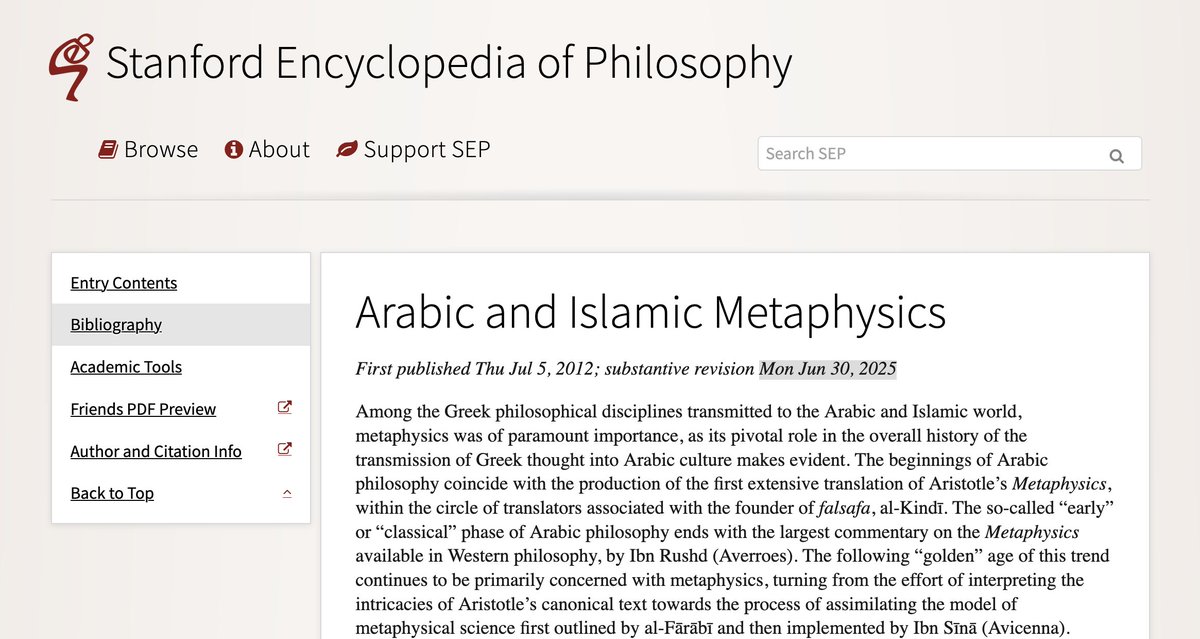
Grateful to the Stanford Encyclopedia of Philosophy for the publication of the substantive revision of the entry “Arabic and Islamic Metaphysics” (Jun 30, 2025)
https://t.co/anPAjZfaOk
It was a true pleasure returning to this book, which shaped much of my thinking about my DPhil project in its inception — this time delivering a response drawing on the works of commentators on Ibn Arabi.
What a pleasure for this afternoon's research seminar @OU_TheoReligion (generously held @CampionOxf) to have been an Islamic response by Mohammad Sami, in the Suffi philosophical tradition, to my book Participation in God.