That's really interesting. If you take a close look at the data, I don't think fitting it to either a straight line or a curve really makes sense in the first place.
UHI EFFECT CAN NOT EXPLAIN GLOBAL WARMING.
71% of the word is covered by water. There are no cities in these seas, and therefore no Urban Heat Islands to create an UHI effect either. Yet, the latest data clearly show that this 71% of the Earth's surface is warming exponentially.
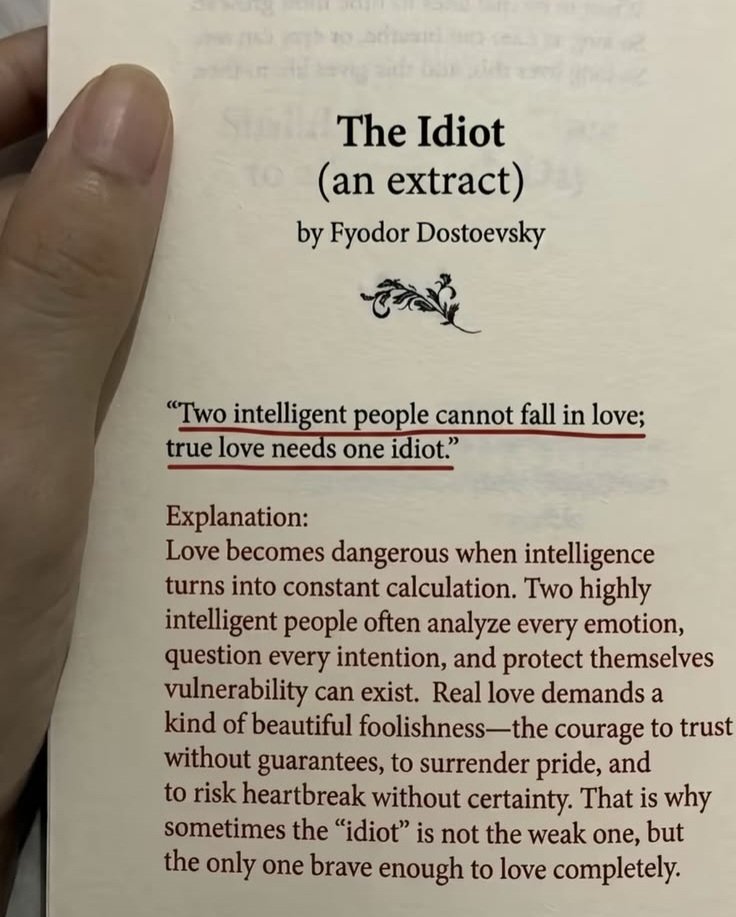
Does love really require one “idiot”?
Trusting without thinking is not the same as choosing, after reflection, to set calculation and the need to be right aside for a moment. If one person must continually play the fool, love can become an asymmetrical form of dependence.
But when both people can occasionally act foolishly, laugh at their mistakes, and value repairing the relationship over winning an argument, that is not the abandonment of intelligence. It is emotional room to breathe.
Still, once “our little world” begins rejecting every question from outside, each person’s emotional predictions start confirming the other’s. Love then risks becoming a fever sustained by a closed loop.
Does love ask us to abandon intelligence—or to stop using intelligence as a weapon, so that we can question our shared assumptions together?
“Social media gives legions of idiots the right to speak when they once only spoke at a bar after a glass of wine, without harming the community... but now they have the same right to speak as a Nobel Prize winner. It's the invasion of the idiots.”
— Umberto Eco
Questioning whether AI should be called “intelligence” is fair. But the longer “plagiarism software” passage does not appear in the cited NYT essay.
In condemning AI as a machine that recombines other people’s words, are humans recombining quotations themselves?
Is the dark side really inside AI—or are we projecting our own dark side onto it and putting the mirror on trial?
Noam Chomsky on Artificial Intelligence:
"The human mind is not, like ChatGPT and its ilk, a lumbering Statistical engine for pattem matching, gorging on hundreds of terabytes of data and extrapolating the most likely conversational response or most probable answer to a scientific question. On the contrary, the human mind is a surprisingly efficient and even elegant System that operates with small amounts of Information; it seeks not to infer brüte correlations among data points but to create explanations..."
"... Let's stop calling it "Artificial Intelligence" then and call it for what it is and makes "plagiarism software" because "It doesn't create anything, but copies existing works, of existing artists, modifying them enough to escape copyright laws...."
~ Dr. Noam Chomsky, Dr. lan Roberts, Dr. Jeffrey Watumull
New York Times, March 8 2023
Le cerveau humain n’a jamais été conçu pour lire. L’écriture est trop récente dans l’histoire de l’humanité pour que l’évolution ait eu le temps de fabriquer des circuits destinés à la lecture. Elle a donc contraint des régions cérébrales qui existaient bien avant elle (notamment celles de la vision, du langage et de la reconnaissance des formes) à se réorganiser pour traiter un système de signes apparu bien plus tard.
L’invention de l’écriture nous a ainsi contraints à développer une capacité dont la nature ne nous avait pas dotés. Même si cette aptitude ne s’acquiert qu’après un long apprentissage, elle a considérablement étendu ce que notre esprit était capable de faire. Mais depuis quelques années, de nouvelles techniques commencent à opérer un mouvement inverse.
En voulant nous simplifier la vie, elles nous épargnent peu à peu les efforts par lesquels certaines de nos aptitudes se construisent et s’entretiennent. Le progrès technique ne coïncide donc pas toujours avec le progrès de l’esprit. Il serait peut-être temps d’estimer la valeur d’une invention non seulement à ce qu’elle nous permet de faire, mais aussi à ce qu’elle nous fait perdre.