Under new conditions, when news media became more dependent on subscriptions (or viewership) than on advertising, the nature of flak changed. It was no longer elite flak that intimidated and disciplined newsrooms, but grassroots flak—the flak of the digital crowd.
As media shifted from advertising revenue to reader revenue (in The New York Times, this reversal occurred in 2012), negative feedback from “desired” audiences became more powerful than pressure from advertisers or elites.
2/3
If the cause of the Ethiopian famine had been a right-wing regime, it would probably be in every school curriculum alongside Live Aid.
The famine that produced the most-watched concert in history was caused by forced collectivization, forced grain seizures, and a deliberate policy of using hunger as a weapon against civilians. Four decades later, that half of the story still does not appear in most accounts of Live Aid.
“What’s wrong with loss of agency if it doesn’t cause pain?” assumes pain is the only negative.
Agency is what lets you respond to pain, meaning, obligation, love, fear, craving, and reality itself.
Lose agency and the problem is that something else is now deciding how you live.
Work gives us a very ordinary version of dukkha: agency collapsing while we wait for someone else to decide what matters.
People wait for priorities. Wait for strategy. Wait for alignment.
But meaning does not arrive fully formed from the org chart.
“We need more clarity” becomes dukkha when it stops being a request for help and becomes permission to stop thinking.
No process replaces caring enough to ask: what is this work for, who does it serve, what value does it create, and what am I willing to stand behind?
If you don’t do that work, urgency will. Politics will. Habit will. Whoever is loudest will.
No amount of money, status, or seniority replaces judgment. You can be very well paid and still have given up if all you do is wait for someone else to tell you what matters.
I hadn’t gotten dukkha / the First Noble Truth beyond the reductive “life is suffering” translation.
This framing explains it for me: the issue isn’t that pain exists. It’s that experience can collapse agency.
Craving narrows attention. Shame collapses possibility. Fear shrinks the future. Identity blocks updating. Dependence makes fear expensive. Even optimization can become captivity.
The point isn’t avoiding pain. It’s staying in contact with reality, keeping possibility open, and noticing when something that once served life has started consuming it.
That’s the real point of fuck-you money too. It’s not really about money. Money is one way to buy margin.
But money isn’t enough. It can reduce dependence without freeing you from craving, fear, status, identity, or the need to prove something.
The trick is finding the form of freedom your actual life needs, not copying the form that freed someone else.
Traditionally, what the Buddha said is presented as the Four Noble Truths.
The first one is typically stated as: "all of life is suffering"…and people usually hear "pain/distress" when they hear the word suffering.
But that's not actually what the word means.
To 'suffer' actually means to lose agency.
Let me explain...
To begin with, if that ("all of life is suffering") were the statement to be believed, it's false! Because suffering is a comparative term...and comparative terms can't be extended to everything.
That would be like saying everything is tall. It doesn't make any sense. Things are only tall relative to other things being shorter.
So first of all it doesn't really mean "all is", it's something more like "all is threatened by".
But what's the "all"?
Does it mean everything in existence?
Should we interpret it metaphysically?
Well, the Buddha himself was famously reticent to give any metaphysical interpretations to his statement.
So let's try and follow that. In order to get at that, let's note what this word (suffering) means:
To 'suffer' means to lose agency.
Why?
First of all, pain is highly disruptive, and secondly pain is associated usually with damage, and damage is a state in which we're often losing agency.
So don't hear just pain. The Buddha is not saying everything's painful. That's ridiculous. If everything was painful, nothing would be painful, because (again) this isn't an absolute kind of claim.
Instead, pay attention to this: most of the Buddha's metaphors are not pain metaphors, they're entrapment metaphors…being fettered, losing your freedom, losing your agency.
That's why the Buddha doesn't describe enlightenment in terms of relief…but he would famously say "just like wherever you dip into the ocean it has one taste: the taste of salt! No matter where you dip into my teaching, it has one taste: the taste of freedom".
What he seems to be saying is that all of your life is threatened with the possibility of losing your freedom.
So let's go from "all is suffering" to a "provocation": realize that all of your life is threatened with a loss of freedom, a loss of agency.
And there's a word for this kind of loss (that's often translated as suffering) which is "Dukkha". Dukkha, again, does not mean pain.
What does Dukkha mean?
Well, the etymology is: imagine you have a wheel, and it's off-center on its axis, so the axle is not properly going through the center of the wheel, and as the wheel is turning it's destroying itself. There's a self-destructiveness.
Or your arm is out of joint… and as you're moving your arm it's destroying itself.
It means like an empty gap that's sort of dirty…so that as things are moving within it they're destroying themselves.
The idea of something that's engaged in a process of self-destruction (which of course is one of the powerful ways you can lose your agency) is what's going on here.
So realize that all of your life is threatened (existentially threatened) by a capacity for self-destructive behavior, self-deceptive behavior.
A mundane version of this is “busy.”
Everyone is always busy. But often that means the world is deciding the priority stack for them.
Inbox, calendar, Slack, bills, guilt, urgency, other people’s needs.
The problem isn’t obligation. It’s when obligation leaves no room to ask what actually matters, what can wait, what can be renegotiated, and what I’m treating as non-negotiable because I’m too afraid to look.
Busyness becomes dukkha when you no longer have tasks; the tasks have you.
Tech/VC is the big one: funding and equity upside since 2019 created loads of fat roles that hit the 35-44 crowd hardest.
Demographics: smaller cohorts now sitting in the 45-59 band vs the fat boomer one a decade ago.
Early retirements: post-Covid bump among people with money (in the dip), pulling them out of that bucket.
Tech disruption: chipped away at some middle-age high earners (overlaps with the tech bit).
Explains the young peak and middle dip
Fable isn't the first.
In 1999 the department of defense blocked exports of the PowerMac G4 for crossing the 1 gigaflop threshold.
Steve Jobs turned it into an ad.
Barbell strategy for killing it in an age of superhuman AI:
Simultaneously get as close to AND stay as far away from AI as humanly possible.
1. Get close — play with AI models, use them to help you think, ask them to teach you about the world, get them to help you create, work with them to write code, understand what makes them tick, embed them into your everyday life, have fun.
2. Stay far away — learn to tell stories, make eye contact, build a team, lead with courage, connect far-flung ideas, build lifelong friendships, debate persuasively, think forbidden thoughts, handwrite ideas, confess your fears, fall in love.
Spend less time trying to master mental transformations that are purely mechanical — building spreadsheets, analyzing trades, balancing accounts, writing code by hand, following playbooks, searching for needles in haystacks. These are the emerging no-man's land, squarely the domain of AI.
Venture to the extremes. That’s where all the fun is anyway.
Book discovery now happens on TikTok/Instagram/BookTok—not bookstores. Covers must pop in tiny thumbnails, feel instantly shareable & “aesthetic,” and lower the intimidation factor for Gen Z/Millennials. Romance proved the formula, so publishers spread it to literary backlist to revive interest and sell more.
The media economy rewarded intensities, offering people low-cost expression, thus increasing noise and agitation. Reaching its extremes, engagement reversed into enragement, and now enragement is reversing into avoidance.
4/6
If the *only* impact of LLMs professionally was causing people to "think out loud" in a way which was routinely captured by computer systems and then could be operated on by computer systems, that would *by itself* be one of the most consequential changes in practice in 100 years
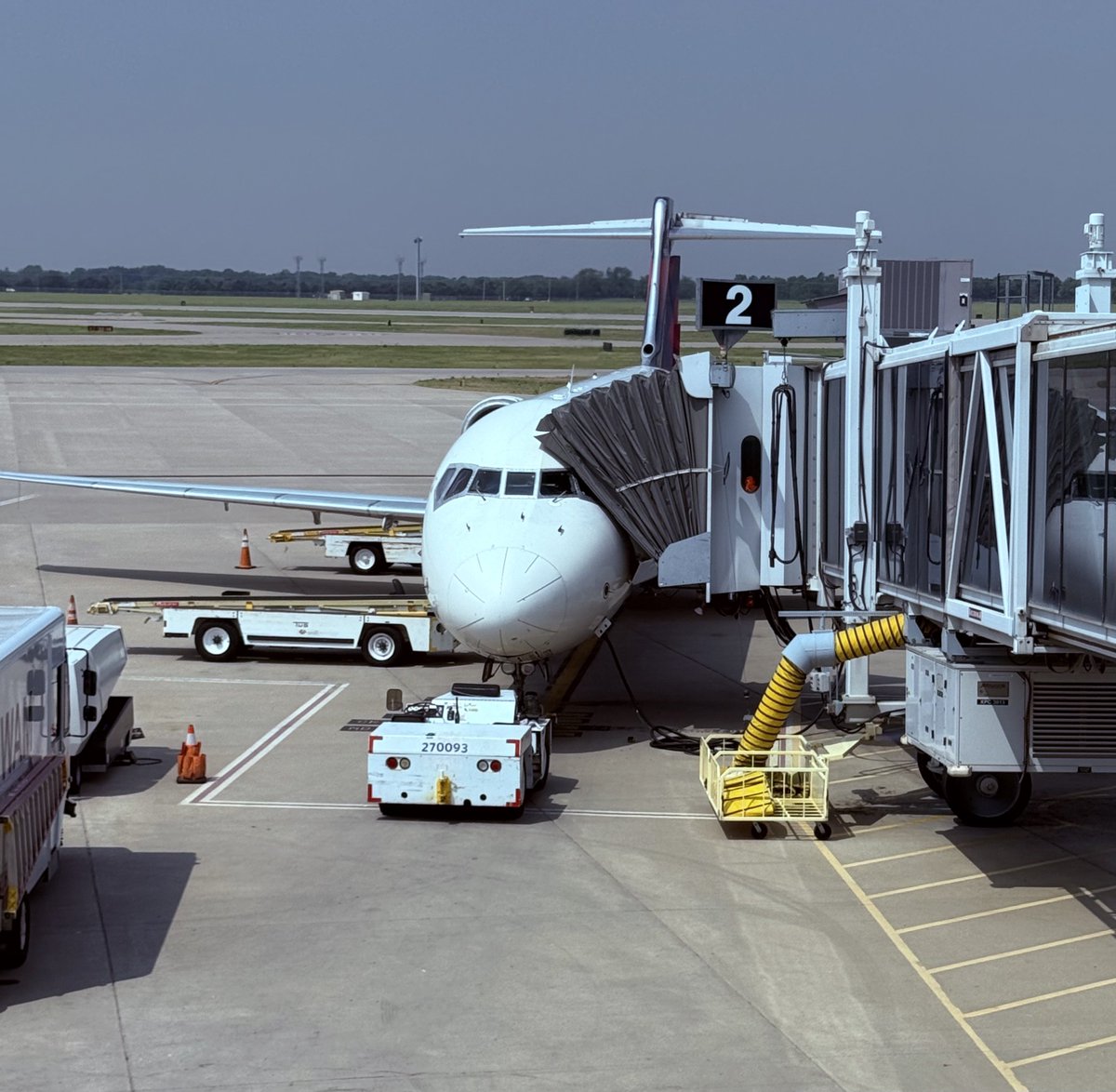
I just had the craziest experience at the airport.
We are about to board a flight to Atlanta when the pilot from the incoming plane walks out of the jetway. Guy is probably late 50s, salt and pepper hair, military look. The kind of pilot you instantly feel good about seeing on your flight.
Pilot walks over to the counter, gets on the PA system, and starts addressing everyone. “Folks, I’ve been doing this a long time. Flying one of these jets is easy. The hard part is looking at 130 people and telling them their flight is going to be delayed.”
Audible groans throughout the boarding gate. Most people here are flying to Atlanta as a layover before another flight. 130 people just had their day become a complete mess.
The pilot goes on. “I get it, trust me. But here’s the deal: During our landing, we had a small mechanical issue. I’m not your pilot for the next leg, but I don’t feel confident the jet’s safe to fly until we have a mechanical team look it over, and I don’t feel comfortable asking the next pilots to fly you guys until we get confirmation.”
He points at the agents next to him behind the counter: “Now, none of this is the agents’ fault. Please be kind to them. I’m the one who made this decision, not them, so any inconvenience you experience is my fault. Just please know that I don’t do this lightly, and I’m only doing it because I believe it’s in the best interests of everyone’s safety.”
Now this is where the story gets crazy. The pilot puts the microphone down, grabs his suitcase, and all the people in the gate…
Start clapping.
I’m not joking, everyone starts clapping for the guy. 130 people who just had their travel plans ruined give an ovation to the guy who made the decision and delivered the message.
All because he addressed them with decency and transparency, took ownership of the decision, made it clear that it was necessary, and explained why it was in everyone’s best interest.
It’s honestly one of the best examples of strong communication—of strong leadership, for that matter—that I’ve seen in a long time.
@Delta, whoever your Atlanta to Wichita pilot was this morning, he’s one of the good ones. Please tell him the delayed passengers of flight 1637 appreciate what he did.
𝐍𝐎, 𝐈𝐓'𝐒 𝐍𝐎𝐓 𝐀𝐈. 𝐈𝐓'𝐒 𝐂𝐀𝐋𝐋𝐄𝐃 𝐏𝐔𝐍𝐂𝐓𝐔𝐀𝐓𝐈𝐎𝐍.
I see it constantly now. Someone reads a post or an article and spots an em dash — that long horizontal line — and immediately declares it was written by AI. 𝐓𝐡𝐚𝐭'𝐬 𝐚𝐧 𝐞𝐦 𝐝𝐚𝐬𝐡, 𝐝𝐞𝐟𝐢𝐧𝐢𝐭𝐞𝐥𝐲 𝐂𝐡𝐚𝐭𝐆𝐏𝐓. You know who else uses em dashes? People who actually learned how English punctuation works.
I don't normally step on this particular soapbox — and I commit authorial malpractice by never trying to sell you my books — but I've authored over 30 of them. Many have been international bestsellers. Well over 𝟏,𝟎𝟎𝟎,𝟎𝟎𝟎 𝐜𝐨𝐩𝐢𝐞𝐬 in print, translated into 7+ languages, sold around the world. I am, amongst many other things, an actual author. So let me give you a quick education your grammar teachers apparently skipped.
The em dash — this thing right here — is one of the most versatile punctuation marks in the English language. It's called an "em dash" because in traditional typesetting, it was the width of the capital letter M in whatever typeface you were using. It serves three primary functions. First, it sets off a parenthetical statement within a sentence — like this one — when you want more emphasis than commas provide but less formality than parentheses. Second, it signals an abrupt break in thought or a dramatic pivot. Third, it introduces an explanation or amplification of what came before it. Writers have been using it for centuries. Emily Dickinson used em dashes so obsessively her manuscripts look like they were attacked by a horizontal line. Mark Twain used them constantly in dialogue. So did F. Scott Fitzgerald. None of them had access to ChatGPT.
Now for a bit of trivia most people never learn. There's also an 𝐞𝐧 𝐝𝐚𝐬𝐡 — slightly shorter, the width of the letter N. The en dash has a narrower purpose: it connects ranges. Pages 12–44. The years 1941–1945. The New York–London flight. It's the dash between two things that are connected but distinct. Most people have never heard of it, and most fonts render it just barely shorter than an em dash, which is why almost nobody notices the difference.
Both have been part of formal typography since the invention of movable type in the 15th century. Gutenberg's typesetters used varying dash lengths to organize text. By the 18th century, printers had standardized the em and en dash as distinct glyphs with distinct grammatical functions. This isn't some modern AI invention — it's older than the United States.
And if you use Microsoft Word, they're trivially easy to type. An en dash is Ctrl + Minus on the numeric keypad. An em dash is Ctrl + Alt + Minus on the numeric keypad. Word also auto-converts two hyphens (--) into an em dash if you have autocorrect enabled. That's why you see me use them in my books and in my posts — because I know they exist and I know the keyboard shortcut.
The reason AI chatbots use em dashes frequently is because they were trained on well-written text — books, journalism, academic papers — written by people who knew the rules. The AI learned proper punctuation from proper writers. That doesn't make proper punctuation a sign of AI. It makes it a sign of 𝐥𝐢𝐭𝐞𝐫𝐚𝐜𝐲.
For the record, the only things I use AI for are conjuring up a quick graphic — like the image on this post — or as a shortcut for preliminary research. Think of it as a Google accelerator. The writing? That's all me. It has been for 30+ books and countless social media posts such as this one.
If you've reached the end of this post, you now know more about dashes than most people who graduated with an English degree. And the next time you see an em dash and your first instinct is to scream "AI" — maybe consider that what you're actually looking at is someone who paid attention in class. Or someone whose grammar teachers didn't fail them quite as badly as yours failed you.
𝐓𝐡𝐞 𝐞𝐦 𝐝𝐚𝐬𝐡 𝐢𝐬 𝟓𝟎𝟎 𝐲𝐞𝐚𝐫𝐬 𝐨𝐥𝐝. 𝐒𝐭𝐨𝐩 𝐛𝐥𝐚𝐦𝐢𝐧𝐠 𝐢𝐭 𝐨𝐧 𝐭𝐡𝐞 𝐫𝐨𝐛𝐨𝐭𝐬.
Il y a encore quelques mois, je pensais exactement la même chose.
J'ai complètement changé d'avis.
Apprendre à coder, c'est pas une fin en soi. Personne ne va plus écrire 100% de son code à la main, c'est terminé. Mais apprendre à coder, c'est apprendre à penser.
Un bon ingénieur peut t'expliquer comment marchent les portes logiques d'un processeur, remonter jusqu'au haut niveau, et te dire pourquoi telle architecture est élégante et telle autre est fragile. C'est pas du code, c'est de la compréhension profonde des concepts.
C'est exactement comme un musicien. Tu peux utiliser des outils pour composer plus vite, mais si tu ne maîtrises pas l'harmonie, le rythme, la structure, tu produiras toujours des trucs médiocres. Les meilleurs musiciens sont ceux qui ont internalisé les fondamentaux au point de ne plus y penser.
Le code, c'est pareil. Les ingénieurs qui livrent les meilleurs produits avec l'IA sont ceux qui comprennent les concepts en profondeur à chaque couche de la stack.
Le métier change. La compétence reste.
Le métier d'ingénieur logiciel c'est pas de produire du code. C'est de comprendre des problèmes et d'utiliser la science informatique pour les résoudre. Le code c'est le medium, pas le métier. C'est comme dire que le métier d'architecte c'est de dessiner des plans. Non. Son métier c'est de penser des espaces. Le plan c'est juste l'output.
L'IA automatise l'output. Le code, le formatage, la boilerplate, le debug mécanique. Ce qu'elle n'automatise pas c'est la compréhension du problème, le choix d'architecture, le jugement sur les tradeoffs, la capacité à transformer un besoin flou en solution élégante.
Et d'ailleurs, pour vraiment être en harmonie avec le fait de produire du code avec des IA, il faut plus de rigueur, pas moins. Il faut respecter la discipline. Les data structures, l'architecture, les design systems, les design patterns, tout ce que l'informatique a produit comme savoir en 40 ans. L'IA génère du code à la vitesse de la lumière mais si t'as aucune compréhension de ce qui fait qu'un système tient dans le temps, tu vas générer de la dette technique à la vitesse de la lumière aussi. L'IA sans discipline c'est un lance-flammes dans les mains d'un enfant.
Et quand tu enlèves la couche mécanique et que tu ajoutes cette rigueur, ce qui reste c'est quoi ? Du goût. De l'intuition. De la vision. Les bons développeurs ont toujours été des artistes. Ils sentent quand une architecture est belle, quand une abstraction est juste, quand un système respire. L'IA ne fait que rendre ça visible. Elle enlève le bruit et il ne reste que le signal.
Et c'est pas juste vrai pour les devs. C'est vrai pour tout le monde. Quand l'IA absorbe l'exécution mécanique de chaque métier, tout le monde va devoir devenir une sorte d'artiste sur sa verticale. Le comptable qui a du goût pour les structures fiscales. Le marketeur qui sent les histoires. Le manager qui compose des équipes comme on compose de la musique. Chaque métier va se réduire à sa dimension artistique.
Et pourtant vous avez Dario Amodei qui répète à longueur de journée que les développeurs sont morts, que le software engineering est mort. Le CEO d'Anthropic. Le type qui vend des outils aux développeurs est en train de dire à ses propres clients qu'ils vont disparaître.
Il sait très bien que c'est faux. La data lui donne complètement tort. Il y a plus de développeurs aujourd'hui qu'il y a 5 ans. Il y a plus de code produit. Il y a plus de projets lancés. Plus c'est facile de coder, plus les gens codent, plus il y a besoin de gens qui savent penser les systèmes.
Mais "les développeurs sont morts" ça fait du clic. Ça fait de l'engagement. C'est une stratégie de communication, pas une analyse. Et c'est une stratégie cynique parce qu'elle crée de l'angoisse chez des millions de gens qui bossent dur pour nourrir leur famille.
La vérité c'est que l'IA ne tue pas les métiers. Elle tue les tâches. Et en tuant les tâches, elle révèle l'artiste qui dormait dans chaque métier. Le monde qu'on est en train de construire c'est un monde où tout le monde va devoir trouver son art. Et ça c'est pas une menace, c'est la meilleure nouvelle depuis longtemps.
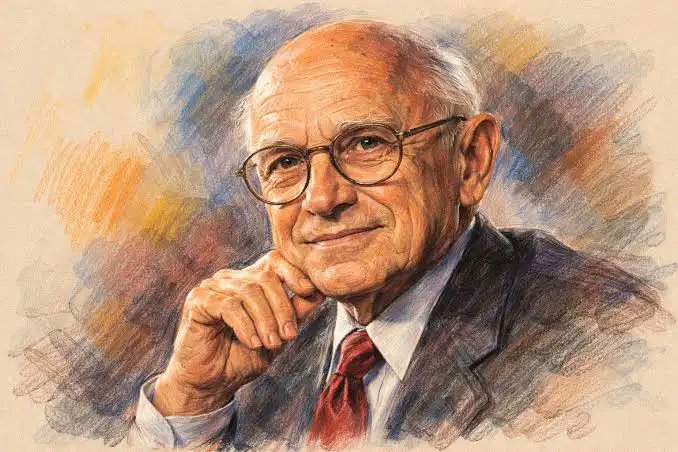
Milton Friedman (prix nobel d'économie) a dit un truc il y a 50 ans qui est encore plus vrai aujourd'hui. Et quasiment personne ne le comprend.
🧵
On lui pose la question : "Sans régulation sur les médicaments, des gens pourraient mourir en prenant des produits dangereux. Vous ne trouvez pas ça grave ?"
Sa réponse est un des retournements logiques les plus brillants de l'histoire de l'économie.
Oui, dit Friedman. Un médicament non régulé peut tuer des gens. C'est visible. C'est dans les journaux. C'est un scandale. Tout le monde le voit.
Mais ce que personne ne voit, c'est les gens qui meurent parce qu'un médicament qui aurait pu les sauver a été bloqué pendant 10 ans par le processus de régulation. Ce mort là, personne ne le compte. Personne ne fait sa une. Personne ne connaît son nom. Parce qu'il est mort de l'absence de quelque chose qui n'a jamais existé.
C'est l'asymétrie fondamentale de la régulation.
Le régulateur a deux types d'erreurs possibles. Erreur 1 : approuver un médicament dangereux. Résultat : scandale public, procès, le régulateur perd son poste. Erreur 2 : bloquer un médicament qui aurait sauvé des vies. Résultat : rien. Personne ne sait. Personne ne proteste. Les morts silencieux n'ont pas de porte-parole.
Du coup, le régulateur rationnel optimise pour éviter l'erreur 1. Toujours. Il rajoute des études. Des phases. Des comités. Des délais. Chaque couche de "sécurité" supplémentaire le protège, lui, au détriment des patients qui attendent.
Friedman estimait que la FDA avait probablement tué plus de gens en retardant des bons médicaments qu'elle n'en avait sauvé en bloquant des mauvais. C'est impossible à prouver précisément. Mais la logique est imparable.
Un exemple concret. Le bêta-bloquant Propranolol était disponible en Europe des années avant d'être approuvé aux États-Unis. Pendant ces années, des Américains mouraient de crises cardiaques qui auraient pu être évitées. Combien ? On ne le saura jamais. Parce qu'on ne compte pas les morts de l'inaction.
C'est le même principe partout. Pas que dans la médecine.
En France, les taxis autonomes sont bloqués par la régulation. Chaque année de retard, ce sont des accidents de la route qui auraient pu être évités. Mais personne ne compte ces morts là. On compte uniquement le premier accident d'un taxi autonome, qui fera la une de tous les journaux.
L'IA dans la médecine est ralentie par des processus d'approbation qui prennent des années. Des diagnostics qui pourraient être faits en secondes par un algorithme attendent des validations pendant que des patients attendent des mois pour un rendez-vous.
Le nucléaire a été bloqué pendant des décennies par la peur. Combien de gens sont morts de la pollution des centrales à charbon qui ont tourné à la place ? Personne ne les compte.
Le pattern est toujours le même. On voit le risque de l'action. On ne voit jamais le risque de l'inaction. Et comme le risque de l'inaction est invisible, le régulateur choisit toujours l'inaction. Parce que l'inaction ne produit pas de scandale.
Friedman résumait ça en une phrase : "Les gens qui ont été sauvés par la FDA sont visibles. Les gens qui sont morts à cause des retards de la FDA sont invisibles. Et dans une démocratie, le visible gagne toujours contre l'invisible."
La prochaine fois que quelqu'un vous dit "il faut plus de régulation pour protéger les gens", posez une seule question : combien de gens meurent en attendant que la régulation les autorise à vivre ?
La réponse est toujours plus grande que ce qu'on imagine. Mais personne ne la calcule. Parce que les morts de l'inaction n'ont pas de visage.