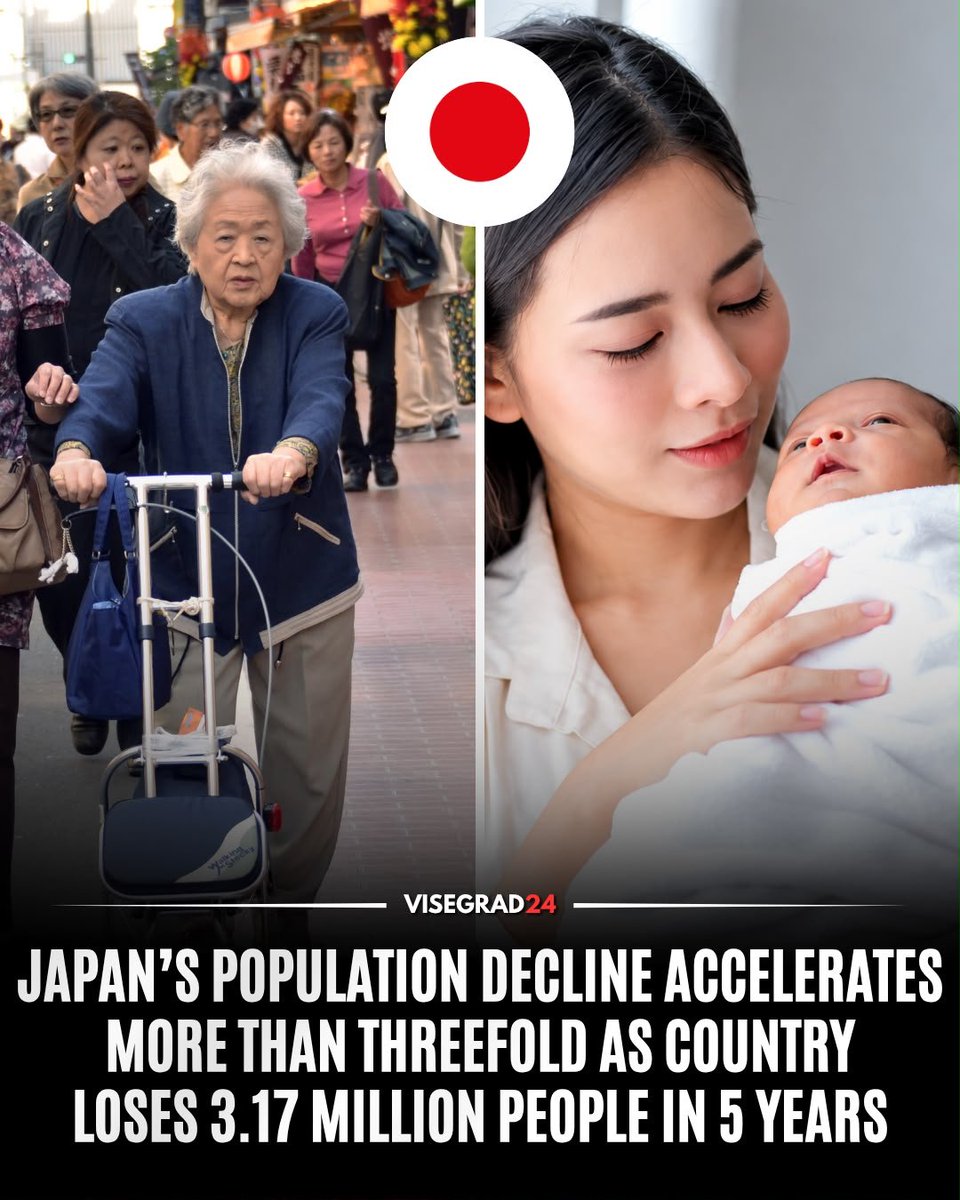
Japan’s population has fallen by 3.17 million in just five years, according to final data from the 2025 national census.
The country had 122.97 million inhabitants on October 1, 2025, down 2.5% from 126.15 million in 2020, the largest five-year population decline since Japan began conducting its national census in 1920.
Japan’s population fell just 0.7% between 2015 and 2020, compared with 2.5% over the latest five-year period.
The number of Japanese citizens alone fell 3.5% to 119.1 million, while the foreign population surged 39.8% to a record 3.84 million.
Nearly 30% of Japan’s population is now aged 65 or older.
Japan’s demographic crisis is being driven by persistently low birth rates and an aging population.
The Gaddafi name is returning to Libyan politics?
This was an unofficial online poll, not scientific national polling. But Aisha Gaddafi taking 141,502 votes, roughly 26% of more than half a million cast, may be significant for another reason.
Following the death of her brother Saif al-Islam Gaddafi, the political current associated with the former Jamahiriya has been left without its most prominent post-2011 figure. Now groups within that movement are publicly calling for Aisha to take his place, with Saif’s National Popular Movement reportedly backing her leadership.
Aisha has not announced a presidential campaign. But suddenly the daughter of Muammar Gaddafi is being discussed not simply as a symbol of her father’s legacy, but as a potential political figure in her own right.
Libya remains divided 15 years after NATO’s intervention and Gaddafi’s overthrow, while the country is once again wrestling with the legal framework for presidential and parliamentary elections.
The question now is whether Aisha intends to turn that legacy into an actual political movement.