We are seeking to understand current provision and models of #postpartum follow‑up for women at increased #cardiovascular risk following #pregnancy nationally and globally.
Please support us by completing and sharing the linked survey:
https://t.co/MzySDzkbW0
Today is World Preeclampsia Day.
The numbers still stop me in my tracks.
10 million women develop preeclampsia every year. Hypertensive disorders of pregnancy cause around 16% of maternal deaths globally — roughly 42,000 women in 2023. It is the second leading cause of maternal mortality after haemorrhage, and the single leading cause across much of Latin America.
And yet, while around 80% of expectant mothers have heard of preeclampsia, only 8% can correctly name all of its major symptoms.
That gap — between awareness and recognition — is where lives are lost.
This year's theme, "Know Her Symptoms," asks us to close it. Severe headache. Visual disturbance. Upper abdominal pain. Sudden swelling. Shortness of breath. Every clinician, every partner, every patient should be able to name these.
Two reasons for cautious optimism:
The WHO continues to refine its guidance on prevention and treatment — magnesium sulphate alone more than halves the risk of eclampsia, and low-dose aspirin and calcium supplementation are reshaping antenatal prevention. Last year the WHO also convened global experts to build consensus on a unified definition of preeclampsia, a foundational step for both research and clinical care.
And in December, the Gates Foundation, through its Grand Challenges initiative, backed Geneva-based nonprofit biotech EspeRare to advance a novel oral therapy — one designed from the start to be safe, effective and globally accessible, including in the low-resource settings carrying the heaviest burden.
We have the science. We have the funding momentum. We need the awareness to match.
Please share. Knowing the symptoms saves lives.
#WorldPreeclampsiaDay #KnowHerSymptoms #MaternalHealth #GlobalHealth #ObstetricMedicine #MaternalFetalMedicine @WHO@gatesfoundation@RCObsGyn@MidwivesRCM@isuog@NHSuk@NHSEngland @NHS_WTE @tapssupport@TwinsTrust
If you’ve performed CPR, witnessed a cardiac arrest, or supported a survivor - you’re a co-survivor.
Your healing matters too. That’s why we’ve created a dedicated resource hub to help guide and support you: https://t.co/WcAVmpuhKX
Applications are invited for: Sister / Charge Nurse in Paediatric Retrieval (PaNDR).
Are you a passionate, experienced Paediatric Critical Care Nurse ready for your next challenge? Apply via the link below.
https://t.co/38NIwWbaUy
📢 BAPM Framework Consultation Now Open
We’ve published a draft Framework on Central Venous Access Devices in Neonates.
Have your say and help shape best practice.
https://t.co/2P6y0P1Ay1
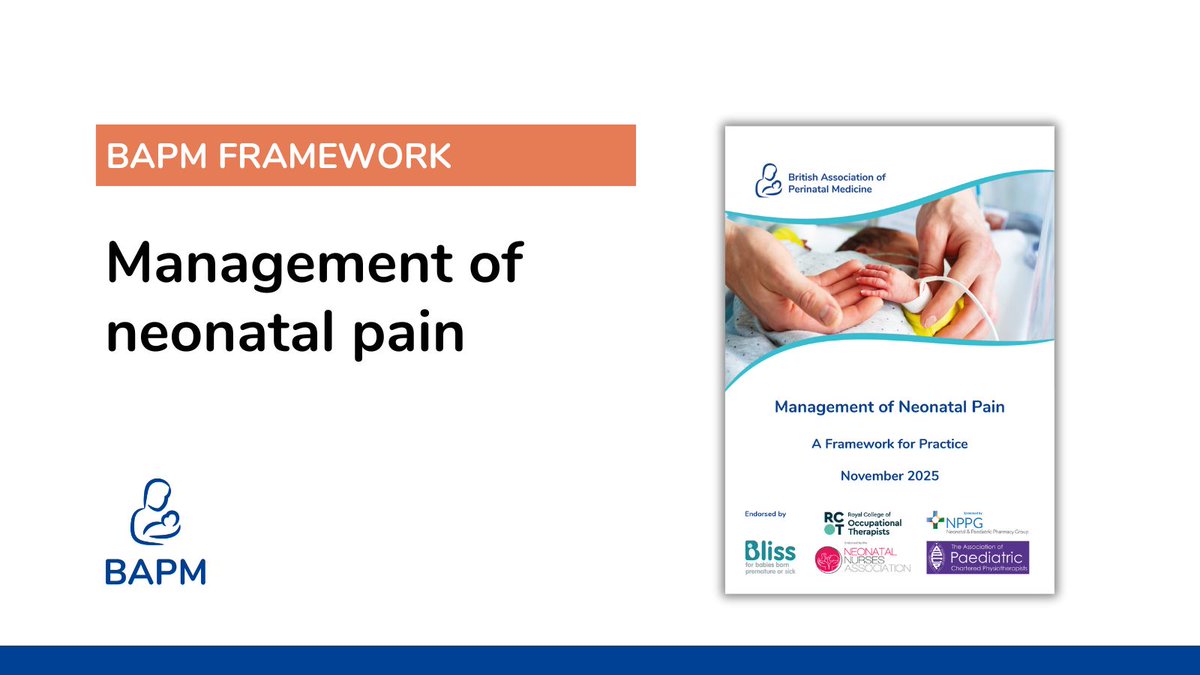
🆕 BAPM has published a new Framework for Practice: Management of Neonatal Pain.
This guidance supports healthcare professionals recognise, prevent and treat pain in newborns, helping develop local best practice across neonatal services.
Read more: https://t.co/OD0IiWNgSg
💜 World Prematurity Day Webinar: After the Neonatal Unit
📅 20 Nov ⏰ 1:00–2:30pm
Join BAPM & BANNFU for a free webinar exploring the lasting impact of prematurity, supporting families and improving long-term outcomes for children born preterm.
🔗 https://t.co/cZN1fGRRiP
Consultation is now open on a new DRAFT Framework for Practice: Transition from neonatal to paediatric care for babies with long term or complex healthcare needs.
Deadline for comments: 18 November.
View document: https://t.co/nDXdIaJAxY
Did you or your loved one experience PPROM -waters breaking early in pregnancy?
If so would you like to help us plan a new research study about PPROM?
Please join us 7.30-9pm on Monday 29th Sept. Sign up link in comments
Please share 🙏
BAPM has issued a Safety Alert regarding Covidien Aquaseal Chest Drains (Cardinal Health) – these are not appropriate for neonates or children.
Read more> https://t.co/dAb6gA5YL7
Today is #WorldPatientSafetyDay, with the theme safe care for every newborn and every child.
We've prepared two special episodes for you – one on safe care of pre-term babies and the other on paediatric medication safety.
🎧 Listen now: https://t.co/9rr4X6pFvv
It's #WorldPatientSafetyDay
Every child deserves safe, quality health care. But too many children worldwide are put at risk by unsafe care.
We call for action to prevent harm and build a safer future for every child 👉 https://t.co/z2OhM33SFm #PatientSafety@PMNCH
Today is #WorldPatientSafetyDay, focusing on ensuring safe care for every newborn and child. We'll be sharing examples of how the #NHS is doing this, and look forward to seeing posts from organisations across England and the rest of the world as they mark the day #PatientSafety
Join us for Professor Jane Hirst's Invited Lecture: Protecting pregnant women and babies from extreme heat in a warming planet.
📆 Thursday 18 September
⏰ 17.00 - 19.00
📍 UCL Great Ormond Street Institute of Child Health
More info here ⬇️
https://t.co/huzdSQ1GnR
The UKMCS & RCM are delighted to host the 2nd annual Midwives’ Symposium on 2 Oct 2025 🎉
A free online event exploring hot topics in maternal cardiology—open to all midwives, to boost knowledge, confidence & tools for safer, equitable care. https://t.co/KvcscizQDL