If you use both Meta Muse and MuseWork, you’ll notice the difference comes down to a few things:
Meta Muse
→ A personal AI agent
→ Built for everyday tasks
→ Takes actions across services
→ Available on Mac · iOS · Android · Web· WhatsApp
MuseWork
→ A professional AI agent
→ Built for professional work
→ Delivers review-ready results
→ Available on Windows · Mac · iOS · Android · Web
Same name. Different work.
If the work ends in a deliverable, bring it to MuseWork.
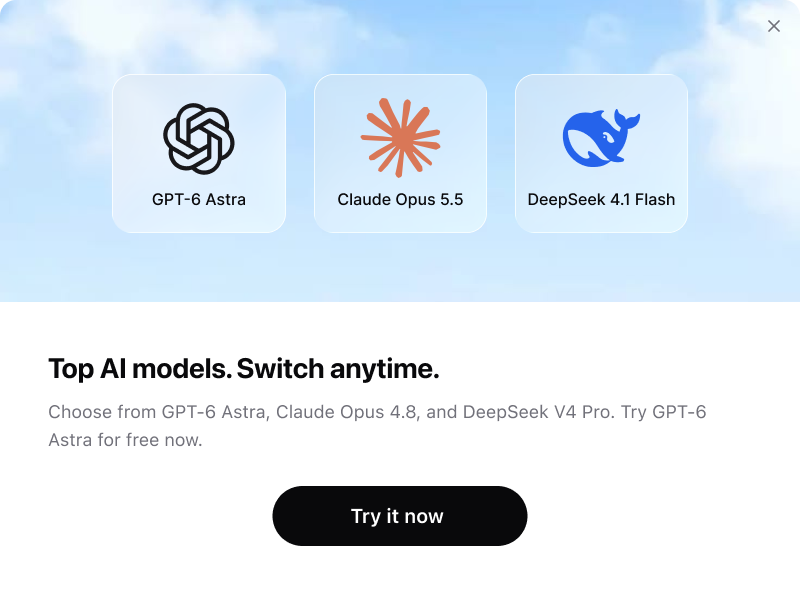
BIG NEWS: Model switching is now live in MuseWork. 🚀
Choose from GPT-6 Astra, Claude Opus 4.8, and DeepSeek 4.1 Flash and switch anytime to match the task at hand.
More choice.
More control.
One place to get work done.
Try it now →https://t.co/gcRRhcnSae
A useful way to debug an AI agent is to stop asking, “Why wasn’t the model smart enough?”
Instead, ask: Did we give it a workable version of the job?
Imagine hiring a highly capable person who knows nothing about your company.
You ask them to prepare a campaign review.
Before they can do good work, they need to know:
What decision the review should support
Which campaigns and time periods matter
Where the performance data lives
How your team defines success
What format the final review should take
Which conclusions require stronger evidence
An AI agent needs the same things.
When its output misses the mark, the problem can often be traced to one of four areas:
The goal was underspecified.
“Analyze this campaign” leaves too many possible interpretations. Should the agent explain performance, identify causes, recommend budget changes, or prepare slides for leadership?
The context was incomplete or poorly selected.
More information is not always better. The agent needs the information relevant to the current decision, not every document the company has ever produced.
The tools did not match the task.
An agent cannot verify performance if it cannot access the source data. It cannot complete the work if it can only describe the next action instead of performing it.
There was no useful feedback loop.
Long-running work needs checkpoints. The agent must be able to notice uncertainty, surface assumptions, and ask for direction before a small misunderstanding becomes an unusable result.
This changes how I think about AI product management.
The product is not just the model or the chat interface. It is the entire work setup around the model: how goals are defined, how context is selected, which tools are available, when clarification happens, and how the result is reviewed.
Before changing the model, increasing reasoning time, or adding another tool, it may be worth asking a simpler question:
Have we designed the conditions under which the agent can succeed?
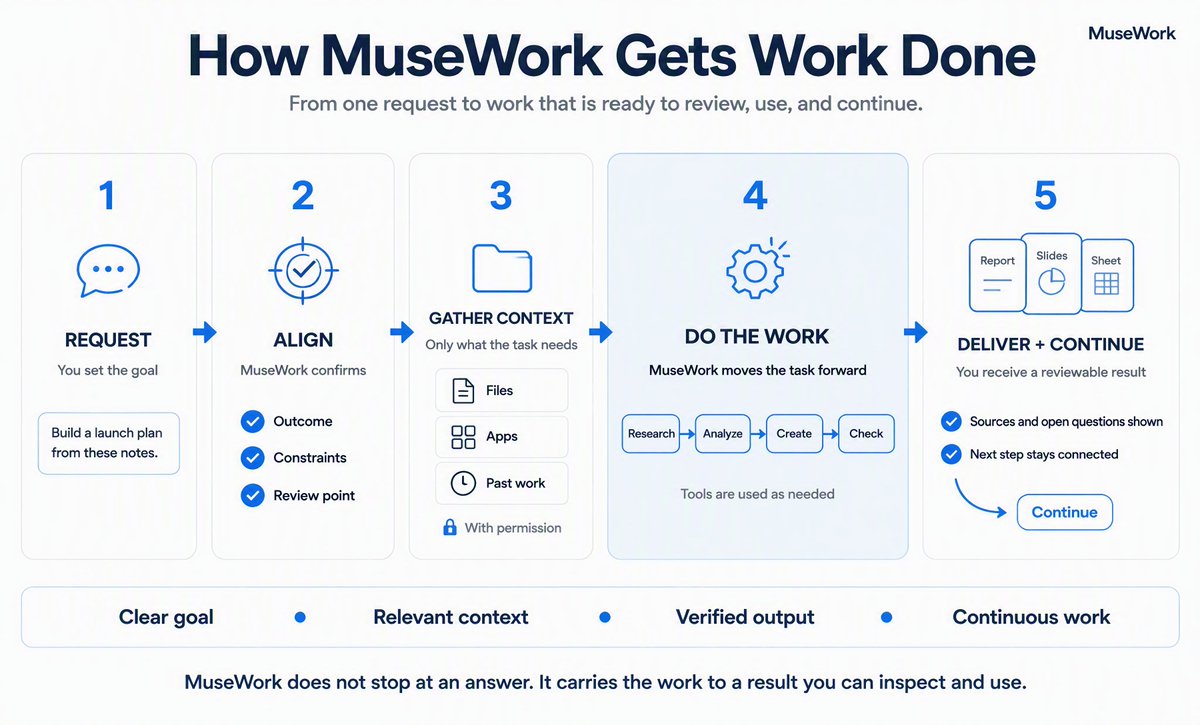
Most AI tools stop at the answer.
MuseWork follows the work through.
You set the goal. It gathers the relevant context, works across the task, checks the result, and delivers something ready to review and use.
And when the next step comes, you don’t have to start over.
This is how we think AI should work: not as a chatbot you repeatedly brief, but as a work partner that keeps the project moving.
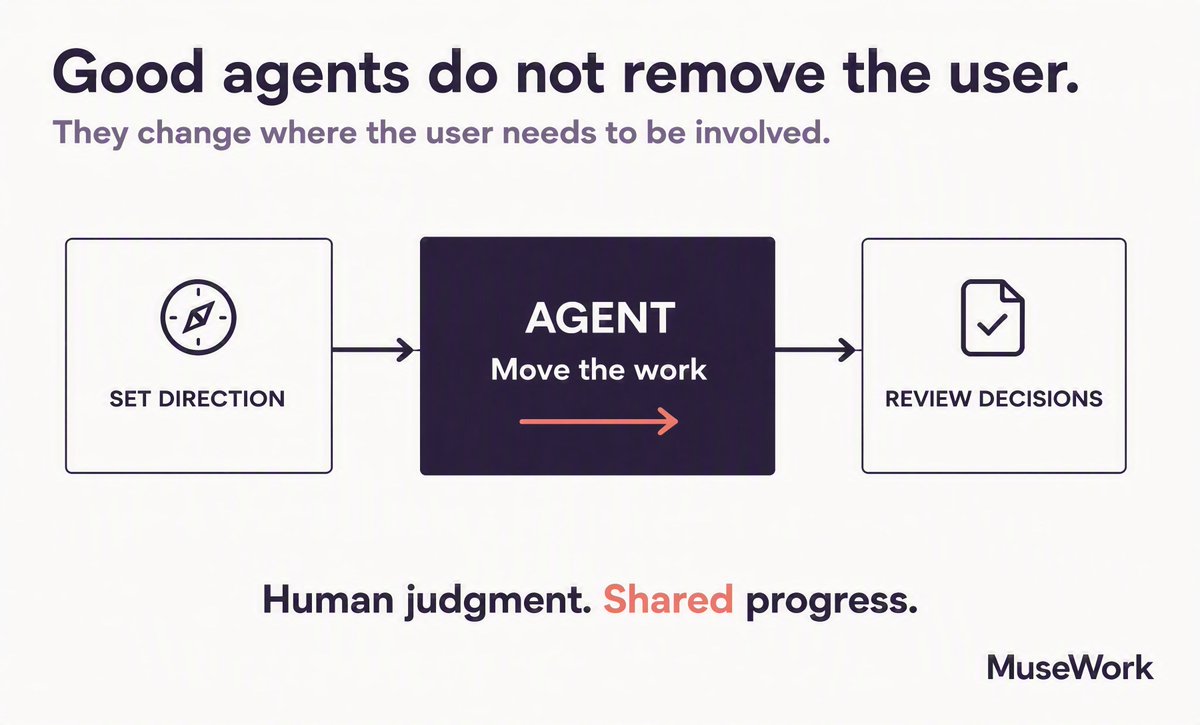
The goal of an AI agent should not be to remove the user from the work entirely.
It should change where the user needs to be involved.
The user sets the direction.
The agent moves the work forward.
The user returns when judgment or approval matters.
If the user must manage every step, the agent is not doing enough.
If the agent makes every decision alone, the user loses control.
The product challenge is designing the boundary between the two.
Direction stays human. Progress becomes shared.
The biggest limitation of today’s AI isn’t intelligence. It’s discontinuity.
Every new chat asks you to explain the project again: the context, the decisions, the tone, the standard.
The next generation of AI products will be built around continued work, not isolated prompts.
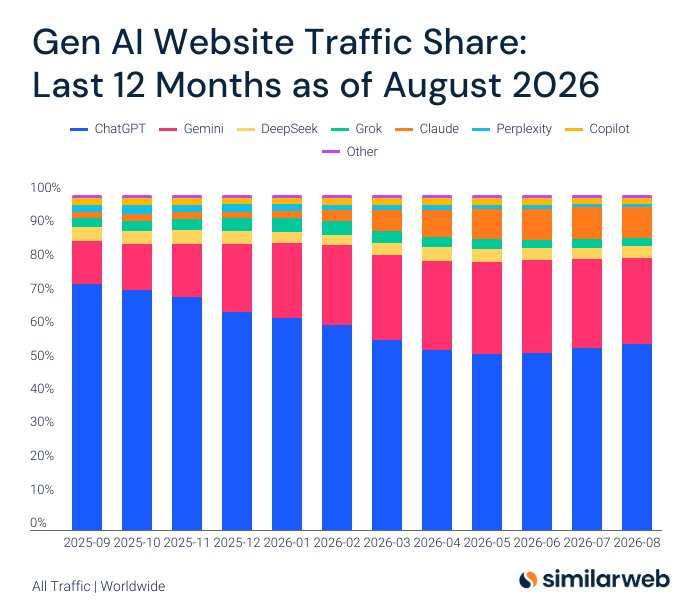
This chart is a good reminder that AI usage is spreading across more products, but it may also be getting harder to measure through website traffic alone.
Today, most AI products are still destinations. A user opens a website, starts a conversation, gives the model some context, and waits for a response.
But the more agentic these products become, the less visible their usage may be.
An agent might start from an email, work across files and connected apps, run a recurring task in the background, and only bring the user back when there is a result to review.
In that world, a successful AI product could complete more work while generating fewer visits and fewer prompts.
This creates an interesting product measurement problem.
Traffic, sessions, and message volume tell us where people are spending attention. They do not necessarily tell us:
How much work was completed
Whether the result was accepted or heavily revised
Whether the agent recovered from mistakes
Whether the user trusted it with a broader task next time
Whether the work continued without starting from zero
There will still be enormous opportunities for horizontal AI products.
But I think many of the most valuable agent products will be built around a different unit of value: not how often the user opens the product, but how reliably the product moves work forward.
The next AI market-share chart may need to measure completed work, not website visits.
I don’t think maximum autonomy should be the default.
A useful AI earns more responsibility over time. It starts by reading, then drafting, then taking limited actions with permission.
Trust grows when people can see what happened, review the result, and stay in control.
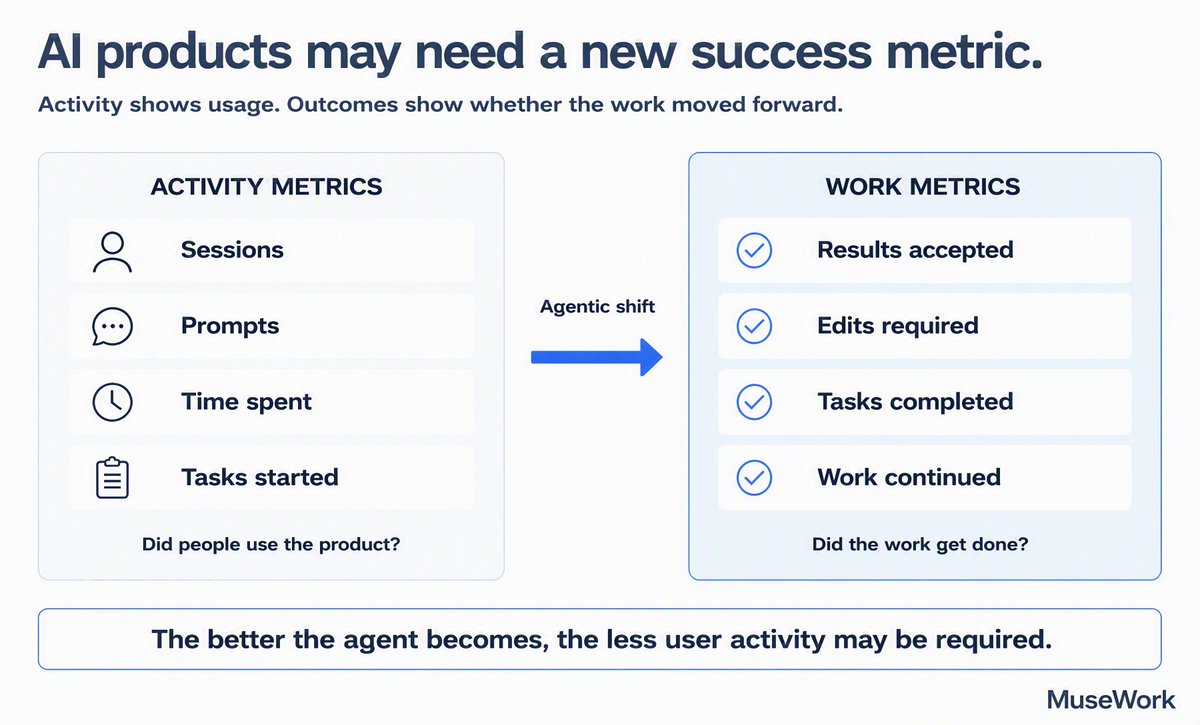
AI products may need a different definition of engagement.
For traditional software, more activity is usually a positive signal:
more sessions,
more time spent,
more actions taken.
But an agent is supposed to remove steps from the user’s work.
If the agent becomes better at gathering context, using tools, making progress, and returning a reviewable result, the user may need to open the product less often.
That creates an interesting product measurement problem.
A user who sends one task and receives a useful result may get more value than someone who opens the product ten times, writes twenty prompts, and manually corrects every step.
So the metrics may need to shift:
From prompts sent to tasks completed
From time spent to time returned
From output generated to results accepted
From repeated sessions to work continued
From feature adoption to reduced coordination
This does not mean activity metrics become useless. They still help us understand discovery, habits, and retention.
But they cannot tell us whether an agent actually carried the work forward.
As AI products become more agentic, the best experience may look less active on the surface.
The user asks once, reviews at the right moment, and gets back to their work.
The product does more.
The user has to do less.
When building AI agents, I don’t think the biggest product question is “How autonomous can we make this?”
It’s: At what moments should the agent move forward, ask, show its work, or stop?
Traditional software waits for the user to do something. An agent is expected to take a goal, make decisions, use tools, and keep the task moving. That changes the PM’s job.
You’re no longer designing a sequence of screens. You’re designing a working relationship.
Imagine asking a capable new teammate to prepare a launch plan.
They need to understand what you’re launching, who it’s for, when it goes live, what decisions have already been made, and what a good plan looks like in your company.
But knowing the context still isn’t enough.
They also need judgment:
Which missing information is important enough to ask about?
Which assumptions are safe to make?
When should they share progress?
What requires approval before they continue?
How should they explain uncertainty?
What does “done” actually mean?
AI agents face the same questions, but without the social awareness a good teammate gradually develops.
If an agent asks about everything, the user ends up managing every step.
If it asks nothing, it may confidently take the task in the wrong direction.
If it shows every tool call, the experience becomes noisy.
If it hides the process completely, the result is difficult to trust.
This is why the product challenge isn’t simply adding more tools or giving the agent a larger context window. It’s designing the right coordination model between the user and the agent.
For PMs, that means thinking carefully about:
Task framing: Does the agent understand the intended outcome, constraints, and review standard?
Context selection: What information is relevant now, and what would only distract it?
Clarification: When should the agent interrupt instead of making an assumption?
Progress visibility: What does the user need to see while the work is happening?
Approval boundaries: Which actions can proceed automatically, and which need confirmation?
Reviewability: Can the user inspect the sources, decisions, changes, and open questions?
Recovery: When something goes wrong, can the agent explain where it failed and continue from there?
Continuity: Does feedback improve the next task, or does every request begin from zero?
The best agent experience probably won’t feel fully autonomous.
It will feel well coordinated.
The user stays responsible for the goal and important decisions. The agent takes responsibility for moving the work forward.
We’re still very early in learning how to design that relationship.
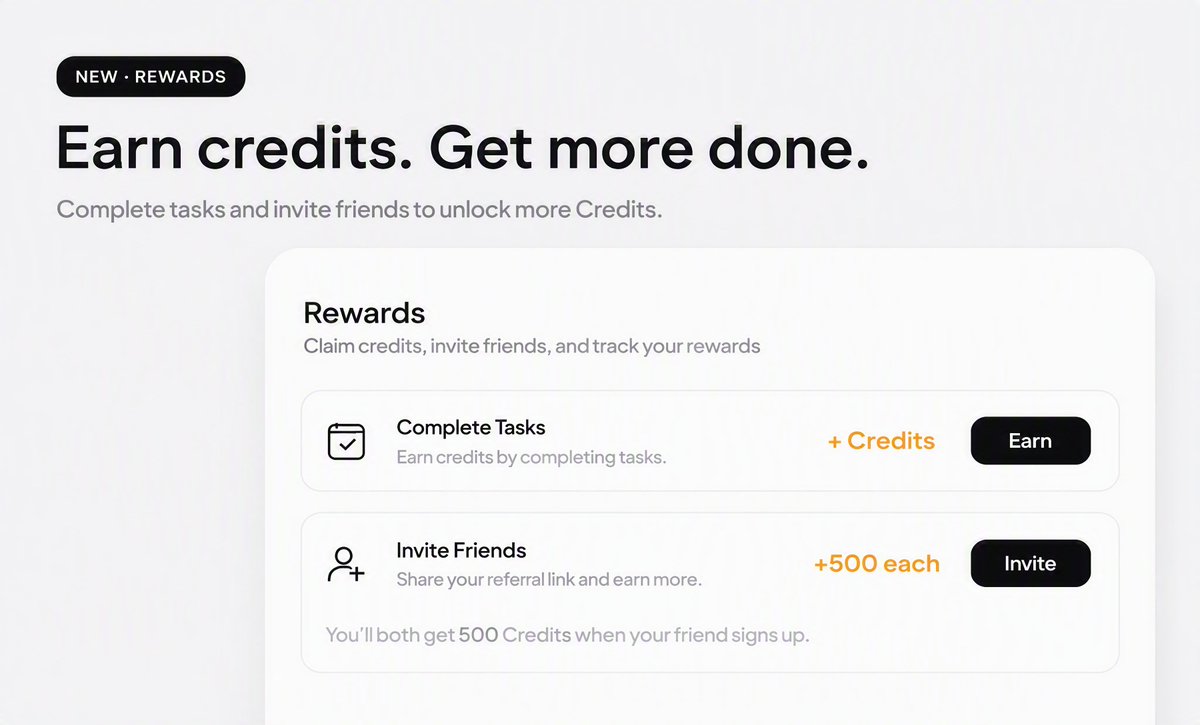
Meet MuseWork Rewards 🎁
Claim 50 Credits from Daily Rewards and invite a friend to get 500 Credits each when they sign up.
More Credits. More tasks completed. More work done.
Open Settings → Rewards to get started.
Saw @praveenisomer’s “Dither + ASCII + Motion” experiment and had to try something of our own.
So we gave the reference to Muse and it turned the idea into a live, interactive site with translucent petals, shifting textures, and motion that responds to you.
Inspiration → working website. 🌸
Wow~
Gemini 4 is live on Arena ,and it hits hard.
I ran the same prompt against GPT-6 and put the side-by-side in this clip.
Gemini 4’s build looks ridiculously strong to me.
You? Ready to go toe-to-toe with GPT-6 yet?
Play both on YouWare.
Full prompt + links in the replies.👇🏻
Your work is bigger than a chat history.
MuseWork organizes work around tasks, keeping the context, files, progress, and deliverables in one place.
Start a new task,not another conversation you’ll have to reconstruct later.
Get work done with MuseWork.
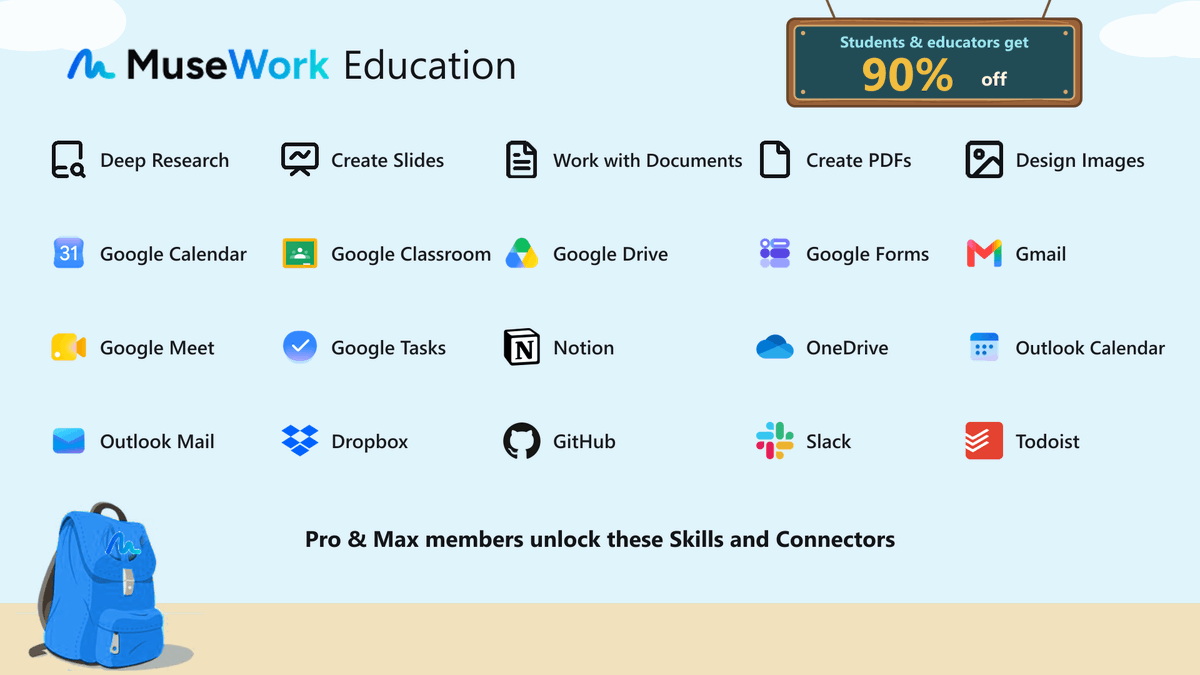
To all students and educators getting back into the school year 📚✨
Get 90% off your first month of MuseWork and put advanced AI to work across your studies, teaching, and research 🚀
Claim your offer by September 30:
https://t.co/ujkVtDgDU5
Most AI tools stop at the answer. Real work doesn’t.
A business review isn’t finished when the content exists. It needs a clear narrative, credible charts, consistent formatting, and an editable deck your team can review, present, and keep working on.
MuseWork turns a brief into professional Office deliverables—polished, structured, editable, and ready to use.
Because the gap between “AI-generated” and “work-ready” is where time is still being lost.
Try MuseWork now →
However,Most people aren’t bad at using AI agents.
They’re still using them like chatbots.
Ask a question. Get an answer. Copy it somewhere else. Reformat it. Explain the context again. Finish the work yourself.
That’s not agentic work. That’s a longer chat.
A useful agent should understand the goal, work across the tools and context involved, deliver something you can actually review and use, and know when to ask before taking action.
The real shift isn’t from better answers to longer answers.
It’s from answers to completed work.
big AI news
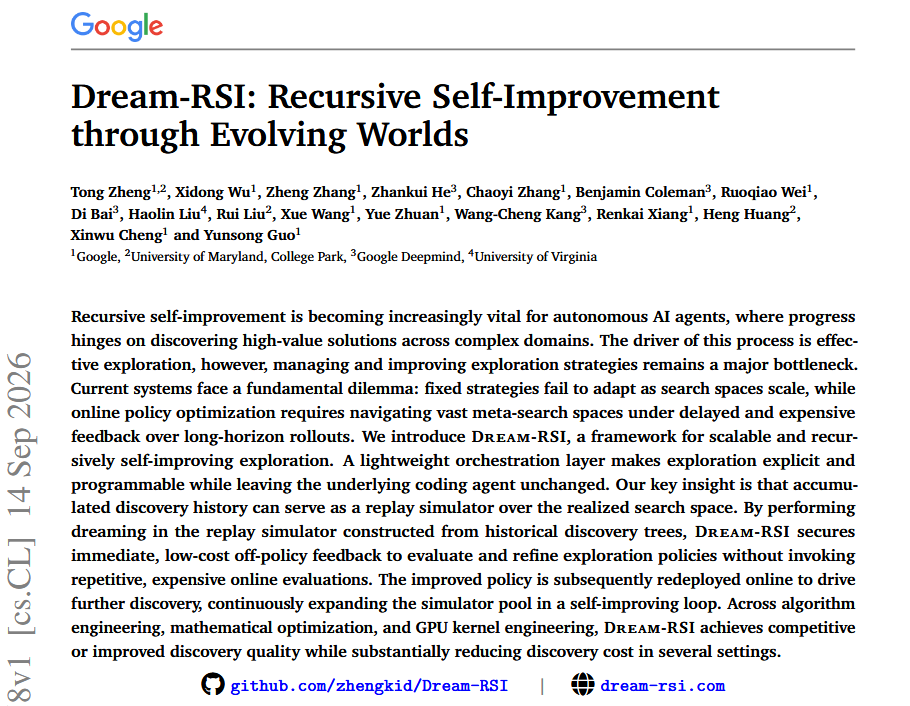
Google just demonstrated a recursive self improvement loop for AI discovery
Google/DeepMind researchers introduced Dream-RSI, a system where an AI agent improves how it explores problems by replaying its past discovery attempts, testing thousands of alternative strategies cheaply, then deploying the better strategy in the next round.
Across algorithm design, mathematical optimization, and GPU kernel engineering, it matched or improved discovery quality while cutting search costs dramatically, in one setting reducing agent calls by up to 162x. 👀
Importantly, it improves the exploration policy, not the underlying model weights.
Hey students 🧃 A li’l boost from us to help with the school-year workload:
🍏 Get 90% off your first month of MuseWork Pro or Max—for research, assignments, presentations, and everything in between.
Claim yours by Sep 30 👇
https://t.co/P2FWYdZVCQ
Your AI boost for the school year has arrived 🧠✏️
Students and educators get 90% off their first month of MuseWork Pro or Max—for research, presentations, data projects, lesson planning, and more.
Claim yours by September 30 👇
https://t.co/P2FWYdZVCQ